Category: Theology

  • The Role of Religion in the State Apparatus

    The Role of Religion in the State Apparatus

    Advertisements

    One of the primary functions of religion in the state apparatus is to provide a moral and ethical framework for governance. Many laws and policies are founded on religious principles and beliefs, shaping the values and norms of society. In some cases, religious institutions are directly involved in governing and decision-making processes, influencing policies on issues such as education, healthcare, and social welfare.

    Religion also plays a role in maintaining social cohesion and unity within a state. Shared religious beliefs and practices can foster a sense of community and solidarity among citizens, promoting social harmony and cooperation. In many countries, religious institutions serve as a platform for social and civic engagement, providing vital services and support to marginalised communities.

    However, the integration of religion into the state apparatus can also lead to challenges and conflicts. The imposition of religious laws and restrictions can infringe upon individual rights and freedoms, stifling dissent and diversity. Religious conflicts and divisions can also undermine social stability and political unity, fuelling tensions and violence within societies.

    Furthermore, the entanglement of religion and politics can create a hierarchical power structure where religious leaders hold significant influence over political decisions and policies. This can lead to the concentration of power and the marginalisation of minority groups who do not adhere to the dominant religious beliefs.

    In a democratic society, it is essential to strike a balance between respecting religious freedoms and maintaining the separation of church and state. Governments must uphold the principle of secularism, ensuring that all citizens have the freedom to practise their religious beliefs without undue interference from the state. At the same time, religious institutions should adhere to the rule of law and respect the rights and freedoms of all individuals, regardless of their religious affiliations.

    Ultimately, the role of religion in the state apparatus is a complex and nuanced issue that requires careful consideration and balance. While religion can provide a moral and ethical framework for governance and foster social cohesion, it must not be used to justify discrimination, oppression, or the violation of human rights. By promoting tolerance, inclusivity, and respect for diversity, societies can harness the positive aspects of religion while mitigating its potential negative consequences in the state apparatus.

  • Exploring Astral Projection: Beyond the Physical Realm

    Exploring Astral Projection: Beyond the Physical Realm

    Advertisements

    Astral projection, also known as an out-of-body experience, is the practice of deliberately leaving one’s physical body and travelling in a spiritual or astral form to different realms. This phenomenon has been practised for centuries by various cultures and spiritual traditions, and many believe it is a way to gain a deeper understanding of the self and the universe.

    The concept of astral projection is based on the idea that our consciousness is not limited to our physical body. It is believed that we have an energy body or astral body that is capable of travelling outside of our physical form. Through meditation, visualisation, and relaxation techniques, individuals can learn to separate their consciousness from their physical body and explore different planes of existence.

    Many people who have practised astral projection report feeling a sense of peace, freedom, and connectedness during their out-of-body experiences. They often describe meeting other beings, visiting different dimensions, and gaining insights into their own spiritual journey. Some even claim to have had profound spiritual awakenings and profound revelations about the nature of reality.

    While astral projection can be a powerful and transformative experience, it is important to approach it with caution and respect. It is essential to practise proper grounding and protection techniques to ensure a safe and positive journey. It is also important to set clear intentions and maintain a strong connection to your physical body, as astral projection can be disorienting and potentially harmful if not done properly.

    If you are interested in exploring astral projection, there are many resources available to help guide you on your journey. Books, workshops, and online communities can provide valuable information and support as you delve into this mystical practice. Remember to approach astral projection with an open mind and a willingness to learn, as it can be a profound and enlightening experience for those who are ready to explore the depths of their own consciousness.

    In conclusion, astral projection is a fascinating practice that has the potential to deepen your understanding of yourself and the universe. By exploring the realms beyond our physical limitations, you may uncover hidden truths about the nature of reality and your place within it. So, why not take the leap and embark on a journey into the astral realm? You never know what wonders await you on the other side.

  • Psychological Effects of Engaging in Metaphysical Practices and Rituals

    Psychological Effects of Engaging in Metaphysical Practices and Rituals

    Advertisements

    One of the key psychological benefits of engaging in metaphysical practices is the promotion of mindfulness and relaxation. Many metaphysical practices, such as meditation and yoga, involve focusing the mind and body on the present moment, which can help reduce stress and anxiety. By practising mindfulness through metaphysical rituals, individuals may experience a greater sense of peace and calm in their daily lives.

    Additionally, engaging in metaphysical practices can also foster a sense of connection and community. Many metaphysical practices involve rituals and ceremonies that are performed with others, creating a sense of unity and shared experience. This sense of community can help individuals feel supported and understood, leading to improved mental well-being.

    Furthermore, engaging in metaphysical practices can also help individuals tap into their intuition and inner wisdom. Practices such as tarot card readings or crystal healing can help individuals access their subconscious thoughts and feelings, leading to greater self-awareness and personal growth. By connecting with their intuition, individuals may gain valuable insights into their thoughts, emotions, and behaviours, ultimately leading to a deeper understanding of themselves.

    Despite the potential psychological benefits of engaging in metaphysical practices, it is important to approach these practices with an open mind and critical thinking. While these practices can be powerful tools for personal growth and self-discovery, it is essential to remain grounded and sceptical of any claims that seem too good to be true. By approaching metaphysical practices with a sense of curiosity and discernment, individuals can explore the psychological effects of these practices while maintaining a healthy sense of scepticism.

    In conclusion, engaging in metaphysical practices and rituals can have a profound impact on an individual’s psychological well-being. From promoting mindfulness and relaxation to fostering a sense of community and connection, these practices offer a unique opportunity for personal growth and self-discovery. By approaching these practices with an open mind and critical thinking, individuals can harness the psychological benefits of metaphysical practices while exploring the mysteries of the unseen forces that shape our reality.

  • Empirical Research to Validate or Refute the Psychological Theories of Metaphysics

    Empirical Research to Validate or Refute the Psychological Theories of Metaphysics

    Advertisements

    Psychological theories of metaphysics seek to uncover how our perceptions, beliefs, and experiences shape our understanding of reality. These theories propose that our mental constructs play a crucial role in shaping our experiences and perceptions of the world around us.

    However, in order to validate or refute these psychological theories of metaphysics, empirical research is needed. Empirical research involves collecting and analysing data to test hypotheses and theories in a systematic and objective manner. By conducting empirical research, psychologists can gather evidence to support or challenge the validity of psychological theories of metaphysics.

    One way in which empirical research can be used to validate psychological theories of metaphysics is through the use of experiments. Researchers can design experiments to manipulate variables related to metaphysical concepts, such as perception, belief, and consciousness, and observe how these manipulations affect participants’ perceptions and experiences.

    For example, a study could manipulate participants’ beliefs about the nature of reality (e.g., by exposing them to different philosophical perspectives) and then measure how these beliefs influence their perceptions of the world around them. By collecting data on participants’ cognitive processes and experiences, researchers can gain insights into how psychological factors shape our understanding of metaphysical concepts.

    Additionally, empirical research can also be used to explore the relationship between psychological states and metaphysical experiences. For example, researchers could investigate how mindfulness practices or altered states of consciousness impact individuals‘ perceptions of reality and their beliefs about the nature of existence.

    By collecting data on participants’ psychological states and experiences, researchers can uncover how mental processes influence our perceptions of metaphysical concepts. This research can provide valuable insights into the mechanisms underlying our understanding of reality and the impact of psychological factors on our metaphysical beliefs.

    One of the key psychological theories of metaphysics is the concept of the self. Metaphysical theories often posit that the self is more than just a biological entity, but rather a complex combination of physical, mental, and spiritual elements. Empirical research has sought to explore how individuals define and perceive themselves, and how these perceptions impact their beliefs and behaviours.

    One study, published in the Journal of Personality and Social Psychology, found that individuals who had a strong sense of self-identity were more likely to exhibit greater resilience in the face of adversity. This supports the idea that our understanding of the self can have significant psychological implications.

    Another area of interest is the connection between metaphysical beliefs and well-being. Research has shown that individuals who hold spiritual or religious beliefs tend to report higher levels of subjective well-being and life satisfaction. This suggests that metaphysical beliefs can play a role in shaping our overall psychological health.

    Furthermore, some studies have explored the impact of metaphysical beliefs on decision-making and moral judgements. For example, research published in the Journal of Experimental Psychology found that individuals who were primed with thoughts of spirituality were more likely to make altruistic decisions in a hypothetical scenario. This suggests that metaphysical beliefs can influence how we perceive and interact with the world around us.

    While empirical research has provided some insights into the psychological theories of metaphysics, there is still much to be explored. The field of psychology is constantly evolving, and researchers are continually uncovering new connections between our beliefs, thoughts, and behaviours.

    In conclusion, empirical research has the potential to validate or refute the psychological theories of metaphysics by providing evidence-based insights into the complexities of human cognition and behaviour. By integrating experimental methods with philosophical inquiry, we can gain a deeper understanding of how metaphysical beliefs shape our perceptions of reality and influence our psychological well-being.

  • Unravelling the Origins of Consciousness: A Journey into the Mind

    Unravelling the Origins of Consciousness: A Journey into the Mind

    Advertisements

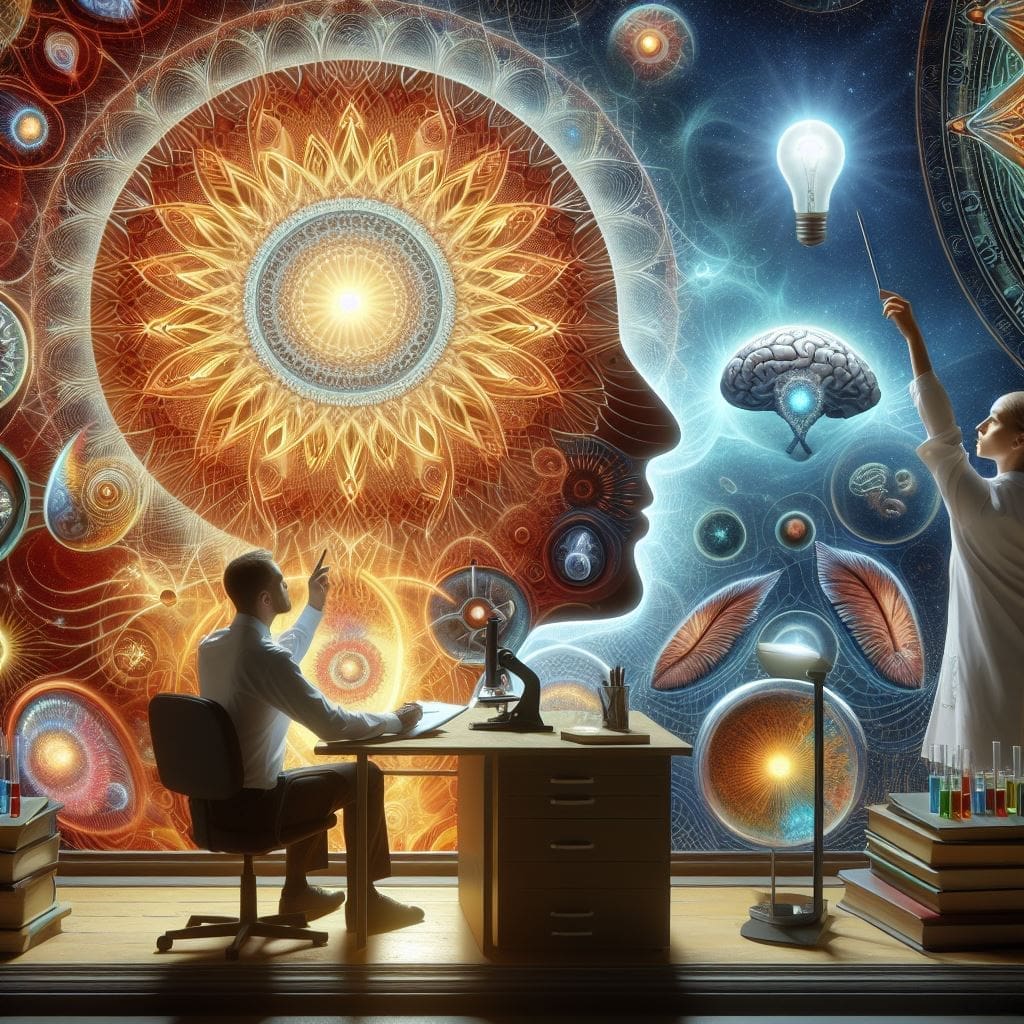
    There are many theories and ideas about the origins of consciousness, and scientists and philosophers have been debating this issue for years. One popular theory is that consciousness is a product of the brain. The brain is a complex organ that processes information, stores memories, and controls our behaviours and emotions. Some scientists believe that consciousness is simply a byproduct of the brain’s activities, and that it emerges from the interactions of neurons and other cells in the brain.

    Another theory is that consciousness is a fundamental property of the universe, much like gravity or electromagnetism. This idea suggests that consciousness is not limited to humans or other animals, but is a universal force that exists throughout the cosmos. Proponents of this theory argue that consciousness is a fundamental aspect of reality that cannot be reduced to physical processes in the brain.

    There are also more mystical and spiritual explanations for the origins of consciousness. Some religious traditions believe that consciousness is a gift from a divine being or higher power, and that it is a manifestation of the soul or spirit. Others believe in the concept of reincarnation, which suggests that consciousness is eternal and exists beyond the physical realm.

    Ultimately, the origins of consciousness remain a mystery. While scientists have made great strides in understanding the brain and its functions, the nature of consciousness itself continues to elude us. Perhaps the answer lies in a combination of physical, philosophical, and spiritual explanations. Regardless of its origins, consciousness is a fascinating and complex phenomenon that continues to inspire awe and wonder in those who ponder its mysteries.

  • Dante’s Vision of Hell: Inferno

    Dante’s Vision of Hell: Inferno

    Advertisements

    The first circle of Hell is Limbo, where unbaptised but virtuous pagans reside. The second circle is for the lustful, where they are punished by being blown around in a fierce wind. The third circle is for the gluttonous, who are forced to lie in a slushy mess of garbage and filth. Each circle of Hell is meticulously described by Dante, with grotesque and haunting imagery that serves to emphasise the severity of the sins being punished.

    One of the most iconic moments in “Inferno” is Dante’s encounter with Satan himself at the centre of Hell. Satan is depicted as a three-headed monster, each head chewing on a different sinner – Judas, Brutus, and Cassius. This image of Satan as the ultimate punisher of sinners is a powerful reminder of the consequences of one’s actions in life.

    Throughout the poem, Dante encounters various historical figures and individuals who have committed sins that have landed them in Hell. Each encounter serves as a lesson for Dante, as he learns about the consequences of sin and the importance of living a virtuous life.

    Ultimately, “Inferno” is a cautionary tale about the consequences of sin and the importance of living a moral and virtuous life. By vividly depicting the horrors of Hell, Dante creates a powerful reminder of the eternal consequences of one’s actions. The poem serves as a testament to the enduring power of literature to provoke thought and reflection on the human condition.

  • How Were Humans Created?

    How Were Humans Created?

    Advertisements

    One of the most widely known creation stories comes from the book of Genesis in the Bible. According to this creation myth, God created the first man, Adam, and the first woman, Eve, in his own image. They were placed in the Garden of Eden and given dominion over the Earth. However, after disobeying God’s command not to eat from the tree of knowledge, they were banished from the garden and forced to toil for their survival.

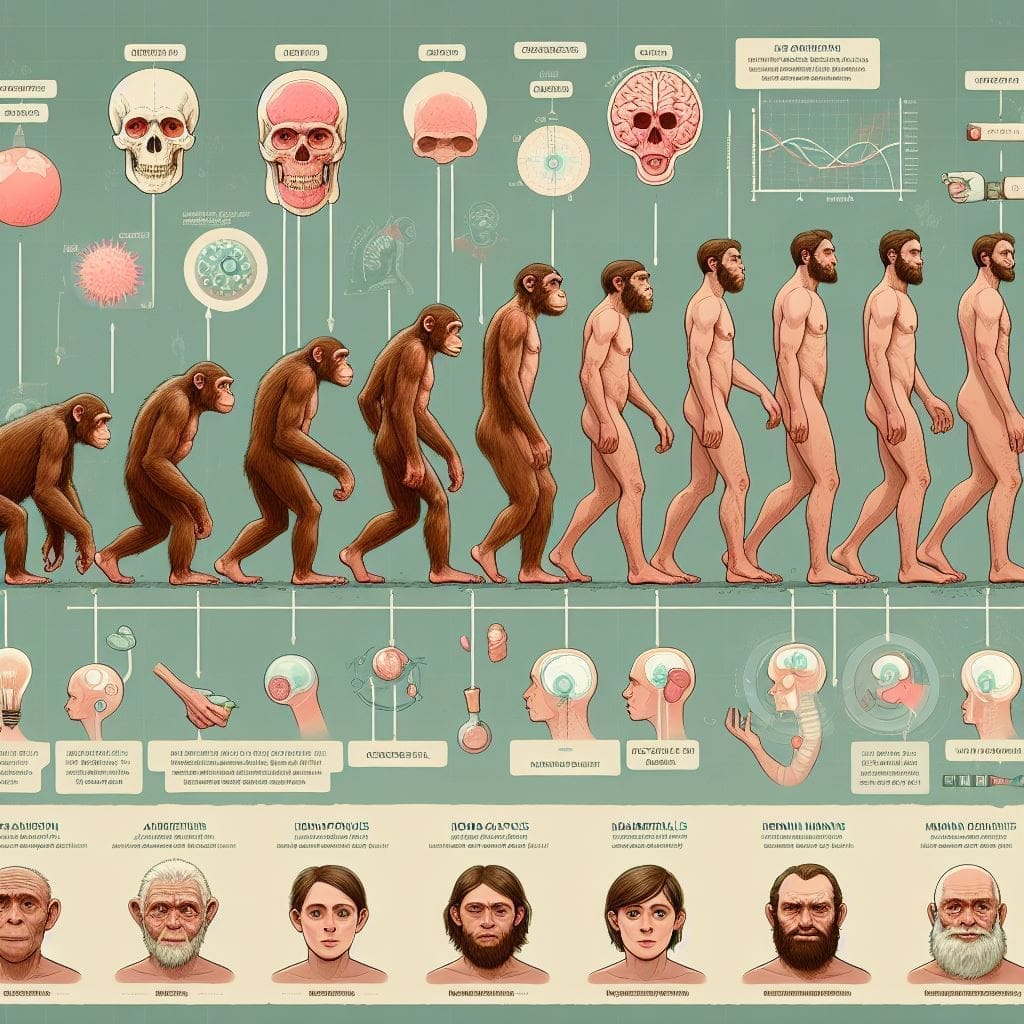
    On the other side of the spectrum, evolutionary biologists have provided a different explanation for the creation of humans. Through the process of evolution by natural selection, humans are said to have evolved from earlier primates over millions of years. This theory is supported by fossil evidence, genetic studies, and comparative anatomy, all of which point to a gradual development of human-like traits over time.

    The debate between creationism and evolution has been a contentious one, with each side passionately defending their beliefs. However, there are also those who believe in a combination of both explanations, known as theistic evolution. In this view, God is seen as the ultimate creator who used the process of evolution to bring about the diversity of life on Earth, including humans.

    Ultimately, the question of how humans were created may never have a definitive answer. It is a complex and multifaceted topic that touches on issues of faith, science, and philosophy. Regardless of one’s beliefs, it is clear that humans are a remarkable species with a history that is still being uncovered and understood. In the end, perhaps the most important thing is to continue exploring and seeking the truth about our origins, wherever that may lead us.