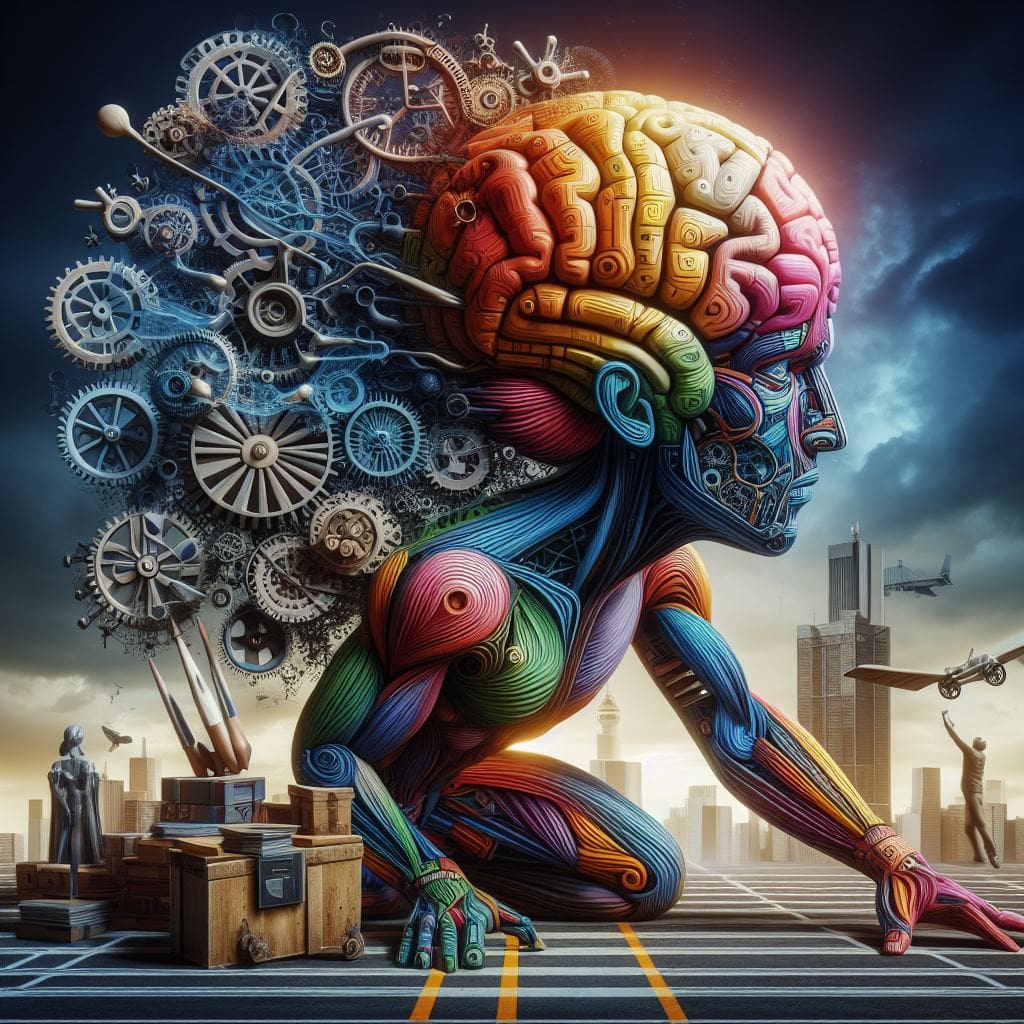

The human mind is a remarkable tool capable of astonishing feats of logic, creativity, and understanding. However, it is not infallible, and there are distinct limitations to its abilities. In this blog post, we delve into the fascinating intricacies of the human mind and explore the boundaries that exist, preventing us from fully understanding the complexities of the world.
1. Cognitive Biases
One major limitation arises from our inherent cognitive biases. Our beliefs, experiences, emotions, and cultural backgrounds shape our thinking process, leading to confirmation bias, the tendency to favour information that confirms our pre-existing beliefs. This bias can hinder our ability to objectively analyse and comprehend new ideas or alternative perspectives. Recognising our biases and actively seeking diverse opinions can help mitigate this limitation.
2. Information Overload
In the digital age, we are bombarded with an overwhelming amount of information. While it is incredible to have access to vast knowledge, our minds struggle to process the sheer volume effectively. This results in cognitive overload, causing us to overlook important details and make errors in judgement. Developing efficient information filtering techniques and honing our critical thinking skills can help us navigate this limitation.
3. Limited Perception
Our perception of reality is limited by our sensory organs. We only perceive a fraction of the electromagnetic spectrum, hear a restricted range of sounds, and have limited taste and smell sensitivity. As a result, we may fail to comprehend the true nature of reality, including phenomena that exist beyond our perceptual capabilities. Science and technology, such as telescopes and microscopes, help extend our senses and overcome this limitation.
4. Memory Constraints
Memory is an essential cognitive function, but it has its limitations. Our memories are highly selective and prone to distortion. Details are forgotten or altered over time, and we often remember events through the lens of our emotions, leading to bias. The inability to recall or accurately store information can impede our understanding of past events and hinder our decision-making. Employing mnemonic techniques and understanding memory’s fallibility can aid in optimising our cognitive processes.
5. Complexity of Systems
Many aspects of the world, particularly in fields like physics, biology, and social sciences, exhibit highly complex systems. Human minds struggle to comprehend intricacies such as chaotic behaviour, feedback loops, or emergent properties. Our cognitive limitations prevent us from fully understanding complex systems, often leading to simplified or erroneous models. Collaborative efforts, interdisciplinary research, and computer simulations can assist in unravelling the mysteries of complex systems.
7. Overcoming Limitations
7.1. Identify cognitive limitations: Recognise that the human mind has constraints and cannot process an unlimited amount of information.
7.2. Acknowledge biases: Understand that human thinking is influenced by biases and preconceived notions, which can affect judgement and decision making.
7.3. Recognise memory limitations: Realise that human memory is imperfect and can lead to inaccuracies and distortions.
7.4. Understand attention limitations: Know that the human mind has limited attention capacity and can easily be distracted or overwhelmed.
7.5. Accept processing limitations: Accept that the human mind has limitations in processing complex or abstract information, leading to simplification or misunderstanding.
7.6. Seek external input: Recognise the importance of seeking diverse perspectives and expertise to overcome limitations and expand understanding.
7.7. Embrace continuous learning: Cultivate a mindset of curiosity and continuous learning to overcome the limitations of the human mind.
7.8 Utilise tools and technologies: Leverage tools, techniques, and technologies to augment human cognitive abilities and compensate for limitations.
Conclusion
While the human mind possesses incredible abilities, it has inherent limitations that hinder our comprehensive understanding of the world. Cognitive biases, information overload, limited perception, memory constraints, and the complexity of systems pose challenges to our pursuit of knowledge. However, by acknowledging these limitations, embracing curiosity, and employing strategies to mitigate their impact, we can continue to push the boundaries of our understanding and unlock new frontiers of knowledge. Ultimately, it is through constant exploration and intellectual humility that we will expand our minds and bridge the gap between what we know and what remains unknown.
Share this:

You Might Also Enjoy Reading