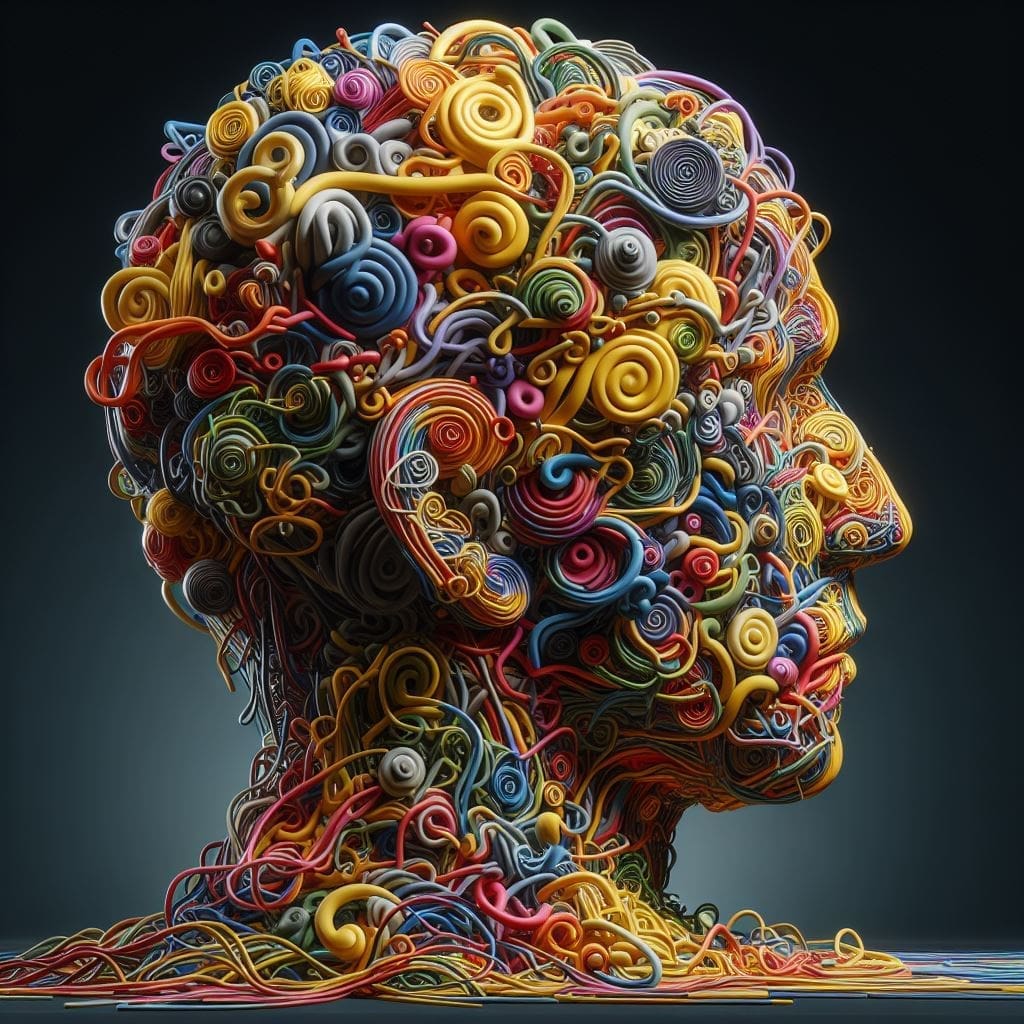

In the vast world of psychology, there are many theories and approaches that have shaped our understanding of the human mind and behaviour. One intriguing perspective that stands out is Gestalt psychology. Developed in the early 20th century by Max Wertheimer, Wolfgang Köhler, and Kurt Koffka, Gestalt psychology offers a unique lens through which we can examine perception, cognition, and problem-solving.
The term “Gestalt” derives from the German word for “shape” or “form.” At its core, Gestalt psychology emphasises the notion that the whole is greater than the sum of its parts. In other words, it suggests that the perception of an object or an experience is not solely determined by its individual elements, but rather by how these elements are organized and perceived as a whole.
One of the key principles of Gestalt psychology is that our minds have a tendency to structure information and perceive it in meaningful ways. This principle is beautifully illustrated by the famous optical illusion known as the “Gestalt Switch”. When looking at a picture that can be seen as either a vase or two faces in profile, the mind effortlessly switches between the two interpretations, highlighting how our brains organise visual stimuli into coherent and meaningful wholes.

Another fundamental concept of Gestalt psychology is that of the “figure-ground” relationship. This concept proposes that when we perceive a visual scene, we immediately distinguish between the main object of focus (the figure) and the background against which it stands (the ground). The relationship between the figure and the ground is crucial for our perception of the scene and impacts how we interpret and make sense of what we see.
Gestalt psychology can also shed light on problem-solving and creativity. According to the Gestaltists, our minds have a natural tendency to seek out patterns and organise information in a way that is consistent and meaningful. This inherent cognitive process can be observed in the principle of “insight. Insight occurs when we suddenly and spontaneously understand the solution to a problem or experience a “lightbulb moment. This moment of clarity is often attributed to our brain’s ability to reorganise and perceive information in new and meaningful ways.
Furthermore, Gestalt psychology suggests that creativity arises from a reorganisation of existing elements into a new and meaningful whole. Artists, musicians, and inventors often rely on this process of restructuring information to create novel and original works. This idea stands in contrast to the traditional view that creativity is solely derived from individual elements or traits.
Overall, Gestalt psychology offers a fascinating perspective on perception, cognition, and problem-solving. Its emphasis on the whole being greater than the sum of its parts challenges our traditional reductionist approaches and highlights the importance of understanding the organisation and structure of information. By studying Gestalt psychology, we can gain a deeper appreciation for the complexity of the human mind and the ways in which we perceive and make sense of the world around us.
Share this:

You Might Also Enjoy Reading