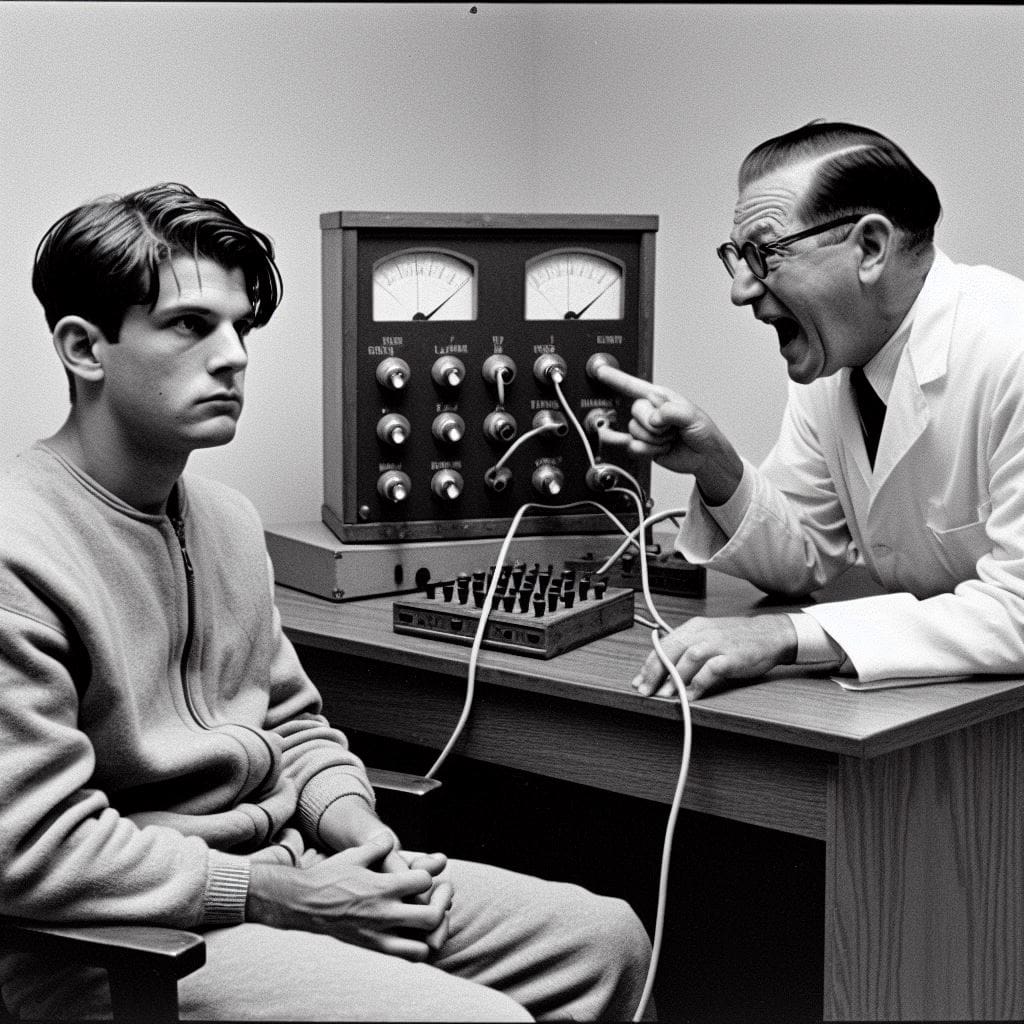
In the realm of psychology, objectless states are a fascinating phenomenon that challenges our conventional understanding of perception and the human mind. These states refer to the conscious experience where individuals perceive or are aware of something that is seemingly non-existent or not directly present. In this blog post, we will delve deeper into the concept of objectless states, explore their different manifestations, and discuss the possible implications and explanations behind this intriguing mental phenomenon.
Definition and Examples
Objectless states can manifest in various ways. One common experience is when individuals have vivid flashback episodes, where they re-experience particular moments or events from the past. These flashbacks can be triggered by sensory stimuli or spontaneous occurrences, and they often transport individuals to another time and place, even though the objects and people involved may not physically be present.
Another example of objectless states is observed during hallucinations, which can arise from various causes such as psychiatric disorders, drug use, or sensory deprivation. Hallucinations create a vivid perception of something that isn’t actually present in the external environment. From seeing imaginary objects or people to hearing voices or sounds that nobody else can perceive, these hallucinatory experiences provide a window into how our minds can generate perceptions independent of external stimuli.
Potential Explanations and Mechanisms
Explaining objectless states is complex, as they challenge our traditional understanding of perception as being strictly bound to external stimuli. However, several theories attempt to shed light on this intriguing phenomenon.
1. Memory and Perception Interplay: One possible explanation suggests that objectless states may be triggered by the interplay between memory and perception. Our memories form a vast network of experiences that can be reactivated, causing objectless states to arise. These states occur when the mind recreates parts of a remembered environment, temporarily blurring the line between past and present.
2. Neural Activation and Abnormalities: Neurological research has shown that objectless states are linked to specific patterns of neural activation. Functional magnetic resonance imaging (fMRI) studies have identified abnormal activity in brain regions associated with perception and memory in individuals experiencing objectless states. These findings suggest that certain neurological conditions or dysfunctions may enhance the occurrence of objectless states.
3. Cognitive Processes and the Brain’s “Simulation” Ability: The human brain has an inherent ability to simulate different scenarios and predict possible outcomes, even in the absence of immediate sensory input. This cognitive process might be at play during objectless states as the brain “fills in” the missing sensory information. This hypothesis suggests that our minds have a highly adaptive capacity to create meaning and experiences even when there is no immediate external stimulus.
Implications and Future Research
Understanding objectless states has significant implications for several areas of psychology. By unravelling the mechanisms behind these states, researchers can gain insights into the workings of memory, perception, and consciousness itself. Additionally, a better understanding of objectless states may hold promising applications in therapeutic interventions for conditions involving traumatic memories, hallucinations, and altered perceptions.
Future research endeavours should focus on refining experimental methods to study objectless states and developing theoretical frameworks that reflect the complex interplay between cognition, perception, and memory. By doing so, we can continue to peel back the layers of this enigmatic psychological phenomenon, offering new avenues for understanding the human mind.
Conclusion
Objectless states in psychology reveal the intricacies of our mind’s ability to perceive and experience phenomena that may not exist in the external world. Whether through vivid flashbacks or hallucinatory episodes, these states provide a glimpse into the malleability and complexity of our perception and memory processes. While many questions about objectless states remain unanswered, ongoing research offers hope for a deeper understanding of this fascinating phenomenon and its potential applications in therapeutic contexts.
Share this:

You Might Also Enjoy Reading