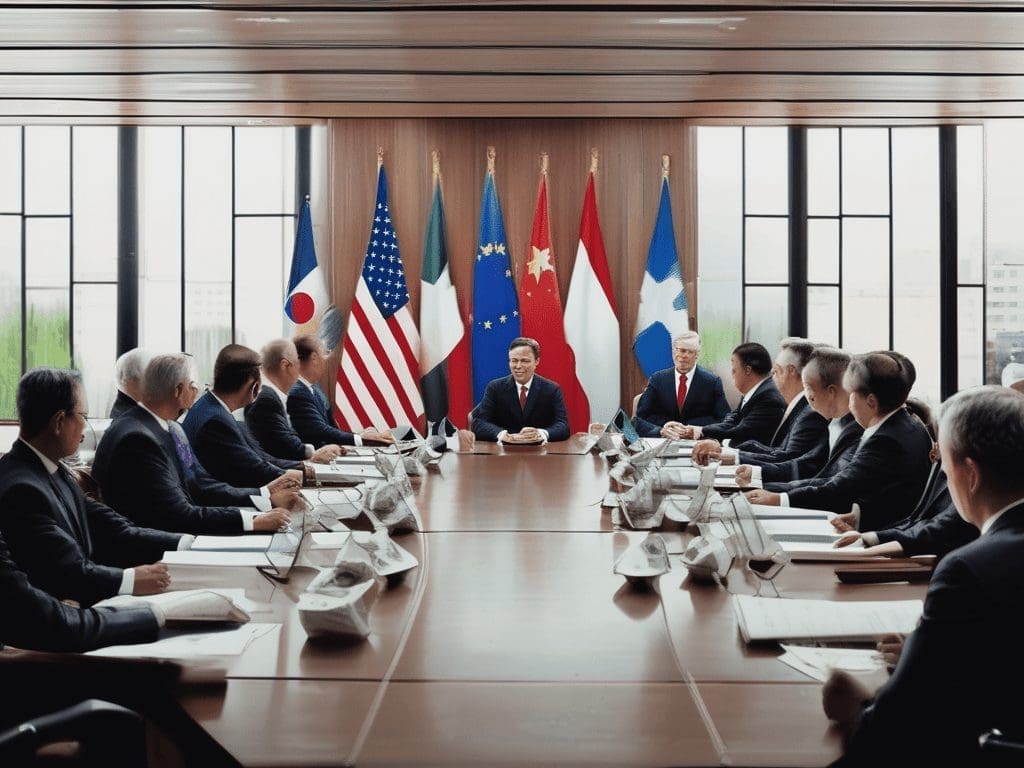
In 2026, U.S. Marines continue to serve at diplomatic posts across the world — from the corridors of embassies in Tokyo and Seoul to consulates in some of the most geopolitically sensitive cities on the planet. These are not the combat-oriented figures of popular imagination, though many have been that too. A Marine deployed on a diplomatic foreign mission — most formally through the Marine Security Guard (MSG) programme, administered jointly by the U.S. Marine Corps and the U.S. Department of State — occupies a uniquely complex psychological and professional role. They are simultaneously a military service member, a representative of American foreign policy, a security professional operating in a civilian diplomatic environment, and a cultural ambassador whose every interaction carries institutional weight (ShareAmerica, 2026). Understanding the psychological profile of this individual — how they are selected, how they are trained to think, and what psychological architecture underpins their capacity to function effectively in such demanding, multidimensional contexts — offers a compelling window into one of the most psychologically sophisticated roles in modern military service.
The Marine Security Guard: Scope and Context
The Marine Security Guard programme, in its current formal structure, has existed since December 1948, though the relationship between the Marine Corps and American diplomatic missions dates to the earliest years of the Republic — Continental Marines accompanied John Adams on his 1778 diplomatic voyage to France (ShareAmerica, 2026). Today, more than 450 Marine Security Guards are trained annually at the MSG School at Quantico, Virginia — a joint Marine Corps and State Department facility — for deployment to more than 170 U.S. embassies and consulates worldwide (U.S. Department of State, 2020). Their primary mission is the prevention of compromise of classified material and the protection of diplomatic personnel and facilities. But the reality of the role extends far beyond that functional brief into a richly layered psychological experience shaped by isolation, responsibility, cultural immersion, and the sustained maintenance of professional composure under conditions of persistent ambient threat.
In Japan — where U.S. Marines operate across embassy posts in Tokyo, at Camp Fuji, and through the III Marine Expeditionary Force exercises that have expanded significantly in the context of the current Indo-Pacific security environment — the diplomatic dimension of Marine deployment is particularly pronounced. The U.S.-Japan alliance is one of the most strategically significant bilateral relationships in the world, and the Marines who serve within it do so in a context defined by meticulous diplomatic sensitivity, deep cultural differences, and the geopolitical weight of the western Pacific theatre (USNI Proceedings, 2024).
The Cryptographic Linguist
Within the sprawling architecture of United States military intelligence, few occupational specialties demand as complex and multidimensional a psychological profile as the Marine Corps Cryptologic Language Analyst — colloquially referred to as a cryptographic linguist. Operating under Military Occupational Specialty (MOS) 2641 and its family of enhanced specialisms, these individuals are tasked with monitoring, transcribing, translating, and exploiting intercepted foreign communications in support of signals intelligence (SIGINT) operations, while simultaneously maintaining the technical proficiency to install, operate, and maintain sophisticated electronic intercept equipment (Operation Military Kids, 2026). When deployed on diplomatic foreign missions — stationed in countries such as Japan, operating from military barracks alongside host-nation forces and diplomatic personnel — the psychological demands of this role expand still further. What emerges is a profile of extraordinary cognitive complexity: a person trained to inhabit multiple identities simultaneously, to think in multiple languages at a neurological level, to hold classified knowledge in strict compartmentalisation, and to maintain psychological stability within a life structured by institutional constraint and cultural dislocation.
Selection and Baseline Cognitive Traits
The pathway into the cryptographic linguist specialism is itself psychologically selective in ways that distinguish it sharply from broader Marine Corps recruitment. Candidates for MOS 2641 must demonstrate a minimum score on the Defense Language Aptitude Battery (DLAB) — a specialised cognitive assessment designed not to test existing language knowledge but to measure the neurological capacity to acquire new linguistic systems rapidly and accurately (United States Marine Corps Intelligence, n.d.). High DLAB performers consistently demonstrate superior working memory, pattern recognition under conditions of ambiguity, and the ability to extract structural rules from novel symbolic systems — cognitive traits that map closely onto the broader construct of fluid intelligence.
Before language training begins, candidates complete the Tactical SIGINT Operators Course, establishing their technical and procedural foundation in electronic warfare, signals collection, and communications security (COMSEC) (Operation Military Kids, 2026). Language training then follows at the Defense Language Institute Foreign Language Center (DLIFLC) at the Presidio of Monterey in California — one of the world’s most intensive immersive language programmes, where students may spend between 36 and 64 weeks in near-total linguistic immersion before achieving the minimum Defence Language Proficiency Test (DLPT) threshold of Level 2 in listening and reading, with a career goal of Level 3 across all assessed modalities. For those assigned East-Asian-related specialisms, this process demands not merely vocabulary acquisition but the mastery of a logographic writing system, a pitch-accent phonological system, and a complex web of sociolinguistic register that encodes social hierarchy into every utterance.
Thinking in Multiple Languages: The Neuropsychology of the Military Linguist
The experience of operating at high proficiency in a second language fundamentally alters the architecture of cognition in ways that the psychological and neuroscientific literature has increasingly documented. High-proficiency bilinguals and multilinguals demonstrate measurably greater cognitive flexibility — the ability to shift between cognitive tasks, suppress irrelevant information, and manage competing response tendencies — compared to monolingual controls (MindfulSpark, 2025). For the cryptographic linguist, this cognitive flexibility is not merely an incidental benefit of language learning — it is an operationally critical asset. The ability to monitor incoming audio streams, extract semantic content, recognise culturally embedded implications, and simultaneously assess intelligence value requires a level of parallel cognitive processing that most individuals are never called upon to sustain.
Research further confirms that bilingual individuals demonstrate stronger inhibitory control — the executive function responsible for suppressing dominant or automatic responses in favour of contextually appropriate ones (Boski et al., 2025). In the context of diplomatic foreign deployment, this capacity is indispensable. A linguist stationed in Japan who is simultaneously processing intercepted communications, interfacing with Japanese military or diplomatic counterparts, and operating within the constraints of an American military institutional identity must suppress the cognitive and linguistic defaults of one system in order to function fully within another — repeatedly, fluidly, and often within the span of the same working hour.
Bicultural Identity and the Diplomatic Deployment Context
Prolonged immersion in a foreign cultural environment — living on a military barracks in Japan, conducting work that demands deep familiarity with Japanese language, communication norms, and cultural values — inevitably produces what the psychological literature describes as bicultural identity development: the internalisation of two cultural frameworks within a single coherent self-concept (MindfulSpark, 2025). Research has consistently demonstrated that bicultural individuals possess measurably greater cognitive flexibility, heightened capacity for perspective-taking, stronger creative problem-solving, and more sophisticated social empathy than their monocultural counterparts (Boski et al., 2025).
For the Marine Corps cryptographic linguist on a Japan-based diplomatic mission in 2026, the bicultural experience carries both operational advantages and psychological tensions. On the one hand, genuine cultural immersion enables a quality of intelligence assessment that surface-level translation cannot replicate: the capacity to interpret not merely what is said but what is meant within its specific sociolinguistic and cultural context — what Japanese communication theory describes through the construct of tatemae and honne, the gap between public presentation and private truth. On the other hand, the sustained occupation of a bicultural in-between space — belonging fully to neither the Japanese environment in which one operates nor the American military institutional world to which one formally belongs — generates a form of identity ambiguity that research has linked to elevated psychological stress when unaddressed (Heward et al., 2024).
Compartmentalisation: The Trained Architecture of Psychological Separation
Perhaps the most psychologically distinctive feature of the cryptographic linguist’s cognitive profile is the trained capacity for compartmentalisation — the ability to maintain strict and habitual separation between different domains of knowledge, experience, and identity. The handling of classified signals intelligence material demands that the individual develop and sustain psychological walls between what they know in a professional capacity and how they engage with the world in every other dimension of their life (Williamson et al., 2024). This is not a vague cultural norm — it is a formally trained and legally mandated cognitive posture, reinforced through security clearance obligations, operational security (OPSEC) protocols, and the ongoing threat of security investigation for any lapse.
The psychological literature on military compartmentalisation identifies it as a double-edged phenomenon. As a protective mechanism, it serves a genuine function: by partitioning operational stress from personal life, it enables sustained high performance in environments of significant cognitive and emotional demand. In research examining UK Army and Royal Marine personnel deployed to Iraq and Afghanistan, compartmentalisation was identified as one of the primary psychological structures that buffered and held post-traumatic stress during active deployment — allowing individuals to maintain functional stability that might otherwise have collapsed under the weight of accumulated operational experience (Williamson et al., 2024). However, the same research found that when these compartmentalisation structures rupture — typically at the point of transition out of the military — the psychological material held within them can emerge with sudden and destabilising intensity.
Resilience Training and the Psychological Architecture of Readiness
The United States Marine Corps maintains a formal psychological resilience programme as part of its broader commitment to operational readiness, developed in alignment with the Department of Defense’s directive that each service component implement universal resilience-enhancing interventions (Meadows et al., 2022). For cryptographic linguists deployed on diplomatic foreign missions, resilience is not an abstract aspiration — it is a functional prerequisite. The personality traits most predictive of natural resilience in military contexts are low Neuroticism, high Conscientiousness, and an internal locus of control: the belief that one’s own actions meaningfully influence outcomes (JobCannon, 2026). Individuals carrying this profile demonstrate cortisol recovery rates approximately 2.4 times faster than those with opposite trait configurations — their physiological stress response activates and deactivates more efficiently, preserving cognitive performance in high-demand environments.
Research on foreign deployment and stress habituation, drawn from a longitudinal study of 91 soldiers across three measurement points before, during, and after a foreign mission, found that soldiers demonstrated measurable psychological habituation over time — decreasing anxiety, improved stress appraisal, and better mood — while their underlying biological stress response markers showed no parallel adaptation (Schmidt et al., 2022). The discrepancy between subjective adaptation and physiological arousal has significant clinical implications: soldiers and Marines may genuinely feel that they are handling deployment stress effectively, while their bodies continue to carry the unprocessed biological load of chronic operational demand.
Emotional Regulation and the Discipline of Restraint
One of the most psychologically significant dimensions of the diplomatically deployed Marine’s profile is the relationship between emotional experience and emotional expression. In conventional combat contexts, emotional arousal — controlled aggression, heightened alertness, adrenaline-driven decisiveness — is a functional and sometimes necessary feature of performance. In a diplomatic environment, these same emotional responses become operational hazards. A Marine stationed at a U.S. embassy in Tokyo who responds to a provocative encounter with visible aggression, cultural impatience, or institutional rigidity does not merely make a personal error — they generate a diplomatic incident in one of America’s most consequential bilateral relationships.
The Marine Corps’ approach to this challenge is rooted in what resilience researchers have described as the distinction between emotional suppression and emotional regulation — a distinction with significant implications for long-term psychological wellbeing. Suppression — the inhibition of emotional experience itself — is associated with increased physiological stress load and poorer long-term mental health outcomes in military populations (Stetz et al., 2024). Regulation — the management of emotional expression while preserving internal experience and processing — is what the most effective diplomatic security training aims to cultivate: a Marine who feels the frustration, processes it through established cognitive frameworks, and responds with the measured, professional composure that the mission demands.
Military Identity, Hidden Selves, and the Barracks Experience
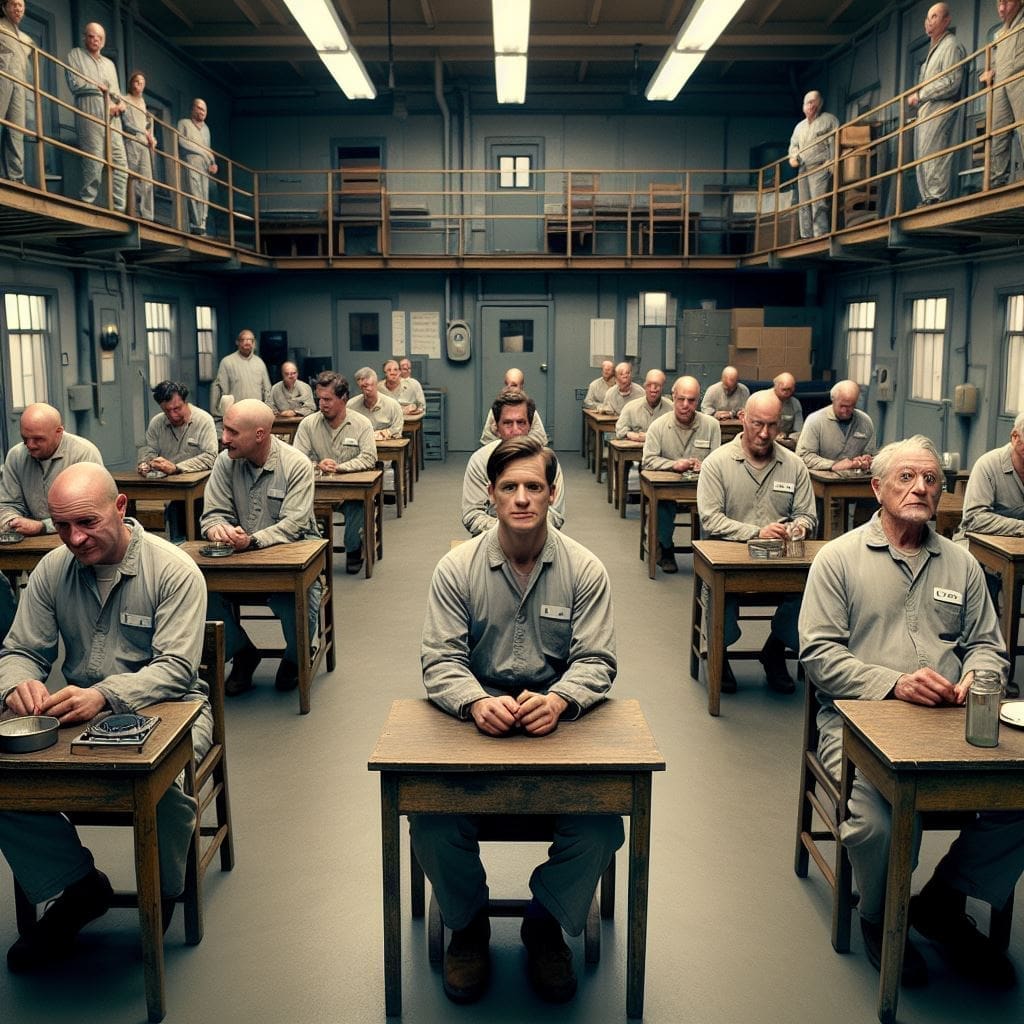
A major scoping review of military culture, identity, and mental health published in Military Medicine in 2024, drawing on 65 empirical studies, identified the most prevalent identity-related phenomena in military personnel as moral injury (46% of studies), hidden identities (29%), and loss of identity following transition (a recurring theme across multiple study designs) (Heward et al., 2024). For the cryptographic linguist living in Japanese military barracks, the concept of the hidden identity carries specific resonance. Their professional role demands the active concealment of the most substantive dimensions of their daily work from virtually everyone outside their immediate cleared operational community — including, in many cases, family members and close friends. The barracks environment provides unit cohesion and social structure, but it also functions as a hermetically sealed social world, intensifying the psychological experience of insider-outsider duality that characterises the diplomatic foreign deployment.
Neuroimaging research further reinforces the long-term biological consequences of this environment. A study examining prefrontal grey matter volumes in combat-deployed personnel found a significant negative association between deployment duration and grey matter density in the ventromedial prefrontal cortex and dorsal anterior cingulate cortex — regions critically involved in emotional regulation, fear extinction, and social decision-making (Veer et al., 2017). These structural changes were observed even in subclinical individuals without PTSD diagnoses, suggesting that the neurological cost of sustained deployment is not confined to those who develop diagnosable psychiatric conditions — it exists on a continuum across the deployed population.
Cross-Cultural Competence: The Thinking Required in Japan
For Marines deployed in Japan specifically, the cross-cultural dimension of psychological readiness is substantial. Japan’s cultural framework — structured around concepts of hierarchy, indirect communication, collective face-saving, and the avoidance of open confrontation — is, in multiple dimensions, the structural inverse of the direct, assertive, individual-centred communication style that Marine Corps training tends to produce. A Marine arriving in Tokyo without cultural preparation is not merely at a social disadvantage; they are a potential operational liability in an environment where inter-cultural misreading carries strategic consequences.
Research from the Marine Corps University Press examining military cross-cultural training programmes noted that while the U.S. military invested significantly in cultural competence training during the counterinsurgency era in Afghanistan and Iraq, the shift toward great power competition has seen some services reduce or eliminate cultural education requirements — a development the authors identified as a strategic vulnerability precisely at the moment when the diplomatic sophistication of forward-deployed forces matters most (Marine Corps University Press, 2023). For the diplomatically assigned Marine in Japan, this gap must be bridged — formally through pre-deployment cultural briefings, informally through the accumulated intelligence of Marines who have served in-country before.
The psychological profile that emerges from effective cross-cultural preparation is one of active cultural curiosity rather than passive tolerance — what psychologists term intercultural competence: the integrated ability to understand, adapt to, and engage effectively within a cultural context different from one’s own (Marine Corps University Press, 2023). In the context of the expanding U.S.-Japan defence relationship — which in 2024 and 2025 saw significant deepening of bilateral military coordination through the Security Consultative Committee, multilateral exercises including Keen Edge and Iron Fist, and the integration of Australian and other allied forces into previously bilateral training frameworks — this competence has become not merely a personal attribute but a strategic asset (USNI Proceedings, 2024).
3 Reasons Why Women Don’t Like Dating This Type of Men
On paper, it sounds thrilling. Someone fluent in multiple languages, intellectually exceptional, trained to notice everything. In practice? Brace yourself.
The same compartmentalisation that makes a cryptographic Marine Corps linguist operationally extraordinary makes them emotionally exhausting to date. They have spent years — quite literally — being trained to partition information, suppress personal disclosure, and reveal nothing they are not cleared to reveal. In a relationship, that does not suddenly switch off. You will ask how their day was. You will get nothing. Not because nothing happened, but because disclosure, to a deeply trained compartmentaliser, feels instinctively unsafe.
The ghosting is not malicious — it is structural. When emotional discomfort arises, the psychological default is withdrawal into the inner world. The closed system closes further. Messages go unanswered not out of cruelty but out of a deeply conditioned reflex to go dark under pressure. The coldness is not indifference either — it is inhibitory control mistaken for emotional unavailability. They are feeling everything. They have simply been trained, at a neurological level, to show nothing.
Is it personal? Probably not. Is it painful? Absolutely.
- Lack of Emotional Warmth: Due to the nature of their roles, these men are chameleons, and their true personality is not hidden, it just does not exist. They are simply what is needed for the job at hand, and whatever helps them achieve their goals. Sensitive personalities in particular are at risk of getting hurt by these individuals.
- Narcissistic Traits: Women are often shocked by men who exhibit abrupt behaviour. Due to the nature of their role, these individuals might simply not have the emotional capacity to form a secure bond with anyone, and their hearts have been desensitised. Not an appealing, and an often irreversible prospect.
- Poor Communication Skills: Communication is vital in any relationship, and men who struggle with effective communication can lead to misunderstandings and frustration. Women often value open, honest dialogue and may shy away from those who are unable to engage meaningfully.
Conclusion
The psychological profile of a Marine Corps cryptographic linguist deployed on a diplomatic foreign mission is one of the most cognitively and emotionally complex in contemporary military service. Cognitively, these individuals are selected and trained to think with a fluency and flexibility that most people will never approach — operating across multiple languages, cultural frameworks, and information security domains simultaneously. Psychologically, they are shaped by resilience training, compartmentalisation, bicultural identity development, and the sustained cognitive demands of inhabiting a classified professional world within the structure of military barracks life in a foreign country. What the research makes increasingly clear is that the very qualities that make these individuals operationally exceptional — their capacity for psychological separation, their tolerance for ambiguity, their trained suppression of emotional response — carry their own long-term costs that the military community, and society more broadly, must take seriously and attend to with the same rigour applied to their training.
References
Boski, P., Sharmin, R., Tariq, R., Ospanova, S., Kurapov, A. (2025) ‘Bicultural Competencies and Identities in Acculturation and Intercultural Relations’, Journal of Cross-Cultural Psychology. Available at: https://journals.sagepub.com/doi/10.1177/00220221251333123 (Accessed: 1 July 2026).
Heward, C., Li, W., Chun-Tie, Y. and Waterworth, P. (2024) ‘A Scoping Review of Military Culture, Military Identity, and Mental Health Outcomes in Military Personnel’, Military Medicine, 189(11–12), e2382. Available at: https://academic.oup.com/milmed/article/189/11-12/e2382/7688231 (Accessed: 1 July 2026).
JobCannon (2026) The Psychology of Military Personnel — Obedience, Resilience and Post-Service Identity. Available at: https://jobcannon.io/blog/psychology-of-military-personnel (Accessed: 1 July 2026).
Marine Corps University Press (2023) ‘Evaluating Military Cross-Cultural Training Programs’, Expeditions with MCUP. Available at: https://www.usmcu.edu/Outreach/Marine-Corps-University-Press/Expeditions-with-MCUP-digital-journal/Evaluating-Military-Cross-Cultural-Training-Programs/ (Accessed: 25 June 2026).
Meadows, S.O., Miller, L.L. and Robson, S. (2022) ‘Resilience Enhancing Programs in the U.S. Military: An Exploration of Theory and Applied Practice‘, Military Psychology. Available at: https://pmc.ncbi.nlm.nih.gov/articles/PMC11057578/ (Accessed: 1 July 2026).
MindfulSpark (2025) Bicultural Identity: The Mental Health Strengths of Living Between Worlds. Available at: https://mindfulspark.org/2025/10/07/bicultural-identity-the-mental-health-strengths-of-living-between-worlds/ (Accessed: 1 July 2026).
Operation Military Kids (2026) USMC Cryptologic Language Analyst (MOS 2641) Guide 2026. Available at: https://www.operationmilitarykids.org/usmc-cryptologic-linguist-mos-2671-2676/ (Accessed: 1 July 2026).
Schmidt, M.V. et al. (2022) ‘Mental but no bio-physiological long-term habituation to repeated social stress: A study on soldiers and the influence of mission abroad’, Frontiers in Psychiatry. Available at: https://www.ncbi.nlm.nih.gov/pmc/articles/PMC9797525/ (Accessed: 1 July 2026).
ShareAmerica (2026) Diplomacy’s Shield: The U.S. Marine Security Guard. U.S. Department of State. Available at: https://share.america.gov/diplomacys-shield-us-marine-security-guard/ (Accessed: 25 June 2026).
Stetz, T.A., Stetz, M.C. and Bliese, P.D. (2024) ‘Resilience Enhancing Programs in the U.S. Military: An Exploration of Theory and Applied Practice’, Military Psychology, 36(3), pp. 241–252. Available at: https://pmc.ncbi.nlm.nih.gov/articles/PMC11057578/ (Accessed: 25 June 2026).
United States Marine Corps Intelligence (n.d.) PMOS 2641, Cryptologic Language Analyst — Career Information. Available at: https://www.intelligence.marines.mil/Portals/133/Docs/Careers/2641-Information.pdf (Accessed: 1 July 2026).
U.S. Department of State (2020) Marine Security Guard Training. Available at: https://2017-2021.state.gov/marine-security-guard-training/ (Accessed: 25 June 2026).
USNI Proceedings (2024) ‘Diplomacy for Better Stand-In Force Access in Japan’, Proceedings, September 2024, Vol. 150/9/1,459. Available at: https://www.usni.org/magazines/proceedings/2024/september/diplomacy-better-stand-force-access-japan (Accessed: 25 June 2026).
Veer, I.M. et al. (2017) ‘Military deployment correlates with smaller prefrontal gray matter volume and psychological symptoms in a subclinical population’, Translational Psychiatry. Available at: https://www.ncbi.nlm.nih.gov/pmc/articles/PMC5438025/ (Accessed: 1 July 2026).
Williamson, V. et al. (2024) ‘Holding and rupture: Describing post-traumatic stress among former UK Army and Royal Marine personnel deployed to Iraq and Afghanistan’, BMJ Open. Available at: https://www.ncbi.nlm.nih.gov/pmc/articles/PMC11315309/ (Accessed: 1 July 2026).
Share this:

You Might Also Enjoy Reading