Category: Theology

  • Difference Between Stonemasons and Freemasons

    Difference Between Stonemasons and Freemasons

    Advertisements

    Stonemasons are artisans who specialise in working with stones to create structures such as buildings, statues, and monuments. They have been around for centuries, dating back to ancient civilisations such as the Egyptians and Greeks. Stonemasons use tools such as chisels, hammers, and saws to cut and shape stones into the desired size and form. They are highly skilled craftsmen who require a great deal of precision and attention to detail in their work.

    On the other hand, Freemasons are members of a fraternal organisation that dates back to the early 17th century. Freemasonry is a worldwide organisation that is dedicated to promoting moral and ethical values, charity, and brotherhood among its members. While Freemasonry does have connections to the construction industry – many of its rituals and symbols are based on the tools and practices of stonemasons – the organisation is primarily focused on personal development and community service rather than actual construction work.

    One key difference between stonemasons and Freemasons is that stonemasons are professionals who work in the construction industry, while Freemasons are members of a social organisation. Additionally, stonemasons typically work independently or for construction companies, while Freemasons meet in lodges and participate in rituals and ceremonies that are unique to their organisation.

    In conclusion, while both stonemasons and Freemasons have connections to the world of stone work, they are distinct professions with their own sets of practices and traditions. Stonemasons are skilled craftsmen who work with stones to create structures, while Freemasons are members of a fraternal organisation that focuses on personal development and community service. Knowing the difference between the two can help to avoid confusion and misunderstanding when discussing these related but distinct professions.
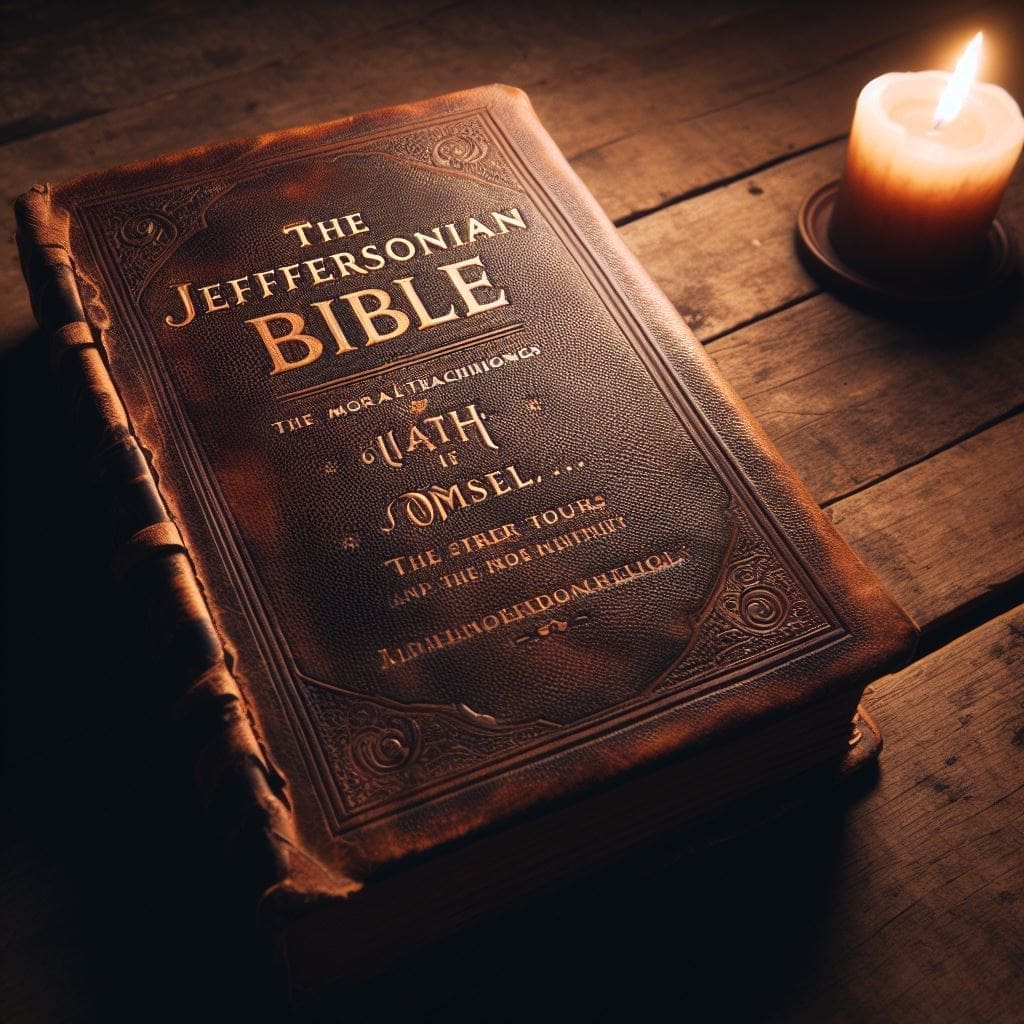

  • The Jeffersonian Bible: The Moral Teachings of Thomas Jefferson

    The Jeffersonian Bible: The Moral Teachings of Thomas Jefferson

    Advertisements

    In 1804, Jefferson began his project to create a version of the Bible that he felt was more in line with his own beliefs and values. Jefferson was a firm believer in the separation of church and state , and he was also critical of the traditional Christian doctrines of the time. He wanted to create a Bible that focused solely on the moral teachings of Jesus, rather than the supernatural elements and miracles that he believed had been added to the text over time.

    Jefferson meticulously went through the Gospels of Matthew, Mark, Luke, and John, cutting and pasting passages that he felt were the true teachings of Jesus. He eliminated all references to miracles, the divinity of Jesus, and other supernatural elements. What he was left with was a shorter, more focused version of the Bible that he believed reflected the true moral teachings of Jesus.

    This version of the Bible, often referred to as the Jefferson Bible or The Life and Morals of Jesus of Nazareth, was not published during Jefferson’s lifetime. It was eventually compiled and published posthumously in 1895 by the U.S. Government Printing Office. The Jefferson Bible has since been reprinted and studied by scholars and historians who are interested in Jefferson’s unique perspective on religion and morality.

    The Jeffersonian Bible provides an interesting glimpse into the mind of one of America’s most influential Founding Fathers. Jefferson’s project reflects his scepticism of organised religion and his belief in the importance of individual morality and ethical behaviour. While the Jeffersonian Bible may not be a traditional interpretation of the Christian Gospels, it offers valuable insights into Jefferson’s personal beliefs and values.

    Overall, the Jeffersonian Bible remains a fascinating and thought-provoking work that continues to spark discussion and debate among scholars, religious leaders, and historians. It serves as a reminder of the importance of questioning traditional beliefs and exploring new interpretations of ancient texts. Jefferson’s efforts to create his own version of the Bible highlight his commitment to intellectual freedom and his dedication to seeking truth and understanding in all aspects of life.

  • Awakening the Universal Mind: Exploring the Depths of Cosmic Consciousness

    Awakening the Universal Mind: Exploring the Depths of Cosmic Consciousness

    Advertisements

    The term “cosmic consciousness” was popularised by the American philosopher and psychologist, Richard Maurice Bucke, in his 1901 book of the same name. In this work, Bucke describes his own personal experience of cosmic consciousness, which he defines as a state of unity and connection with the universe that transcends the limitations of individual ego and self.

    Many spiritual traditions and philosophies also speak of cosmic consciousness, often referring to it as a state of enlightenment or awakening. In Hinduism, for example, the concept of “Brahman” describes the ultimate reality that underlies all existence, and the goal of spiritual practice is to attain a state of unity with this cosmic consciousness.

    In Buddhism, the idea of cosmic consciousness is expressed through the concept of “interbeing” or “interconnectedness”, which emphasises the interconnectedness of all things and the realisation that the self is an illusion.

    In the Western mystical tradition, figures such as Ralph Waldo Emerson and William James have written about the experience of cosmic consciousness as a profound and life-changing event that opens up new levels of awareness and understanding.

    In today’s world, the concept of cosmic consciousness is gaining more attention as people seek to find meaning and purpose in a chaotic and uncertain world. Practices such as meditation, yoga, and mindfulness are helping individuals to tap into this higher level of awareness and to experience a sense of connection with the universe.

    While cosmic consciousness is often described as a transcendent state that is beyond the reach of most people, it is ultimately a natural and inherent aspect of our existence. By cultivating mindfulness, compassion, and awareness in our daily lives, we can begin to tap into this cosmic consciousness and experience the interconnectedness and unity of all things.

    In a world that often seems fragmented and divided, the concept of cosmic consciousness offers a powerful reminder of our shared humanity and interconnectedness with all of life. It reminds us that we are not separate from the universe, but rather an integral part of its vast and intricate tapestry. By embracing this cosmic consciousness, we can tap into a source of wisdom and insight that can guide us on our journey towards greater meaning, purpose, and fulfilment.

  • Albert Einstein’s Ideas About God

    Albert Einstein’s Ideas About God

    Advertisements

    Einstein was often asked about his beliefs in God, and his answers were always thought-provoking. While he did not adhere to a specific religious tradition, Einstein did believe in a higher power or cosmic intelligence that governed the universe. He once famously said, “I believe in Spinoza’s God who reveals himself in the orderly harmony of what exists, not in a God who concerns himself with the fates and actions of human beings.”

    Einstein’s conception of God was not the traditional personal deity that many people believe in. Instead, he saw God as a unifying force that underlay all of physical existence. He believed that the laws of nature and the order of the universe were evidence of a higher intelligence at work.

    Einstein’s ideas about God were deeply rooted in science and reason. He saw no conflict between his scientific pursuits and his belief in a higher power. In fact, he often argued that science and religion were not mutually exclusive, but rather two different ways of understanding the world.

    Einstein’s views on God were not easily defined or categorised. He believed in a God that transcended the limitations of human understanding and perception. His ideas were complex and nuanced, reflecting his own deep thinking and contemplation of the mysteries of the universe.

    In a world where science and religion are often seen as opposing forces, Einstein’s ideas about God offer a unique perspective. He reminds us that there is more to the universe than what we can see and measure, and that there may be a higher intelligence at work that we cannot fully comprehend.

    Whether or not one agrees with Einstein’s ideas about God, it is clear that his beliefs were deeply held and thoughtfully considered. His insights continue to challenge and inspire us to think more deeply about the nature of existence and the mysteries of the universe.

  • Parapsychology: Key Concepts

    Parapsychology: Key Concepts

    Advertisements

    Key concepts in parapsychology include extrasensory perception (ESP), which refers to the ability to acquire information through means other than the known senses. This can manifest in various forms, such as telepathy, the ability to communicate thoughts or information without using verbal or physical cues, or clairvoyance, the ability to perceive events or objects beyond the range of normal human senses.

    Another key concept in parapsychology is psychokinesis, which involves the ability to influence or manipulate objects or events using only the mind. This phenomenon is often studied in the context of experiments involving random number generators or dice, where participants attempt to influence the outcome through mental intention alone.

    Parapsychologists also study near-death experiences, out-of-body experiences, and reincarnation, all of which challenge traditional notions of consciousness and the nature of reality. Research in these areas often involves case studies and surveys of individuals who have reported such experiences, as well as controlled experiments designed to test the validity of these claims.

    Critics of parapsychology argue that the field lacks sufficient empirical evidence to support its claims and that many of the phenomena studied can be explained through psychological or physiological mechanisms. Sceptics point to the lack of reproducible results in key experiments and the potential for biases to influence researchers’ findings.

    Despite these criticisms, parapsychologists continue to conduct research in the hopes of uncovering new insights into the nature of consciousness and the potential for human abilities beyond what is currently understood. While the field may remain on the fringes of mainstream science, it continues to intrigue and captivate those who are curious about the mysteries of the human mind and the limits of our understanding of the universe.

  • The Gift of Sight: Exploring the Power of Clairvoyance

    The Gift of Sight: Exploring the Power of Clairvoyance

    Advertisements

    The word clairvoyance is derived from the French words “clair,” meaning clear, and “voyance,” meaning vision. Essentially, clairvoyance is the ability to see clearly beyond the normal range of human vision. Those who possess this gift are able to access information that is not readily available through the five senses, such as glimpses of the past, present, or future, or insights into the thoughts and emotions of others.

    The power of clairvoyance can be both fascinating and frightening. Many people are sceptical of the idea of psychic abilities, dismissing them as mere parlour tricks or wishful thinking. However, there are countless stories of individuals who have experienced unexplainable phenomena that can only be attributed to clairvoyance.

    One of the most famous examples of clairvoyance is the case of Edgar Cayce, also known as the “Sleeping Prophet.” Cayce would enter a trance-like state and provide detailed information about a person’s health, past lives, and future events. His accuracy was so astounding that he gained a huge following and is still revered today as one of the greatest psychics of all time.

    But clairvoyance is not just reserved for a select few individuals. We all have the potential to tap into our own psychic abilities and harness the power of clairvoyance. By honing our intuition and learning to trust our inner guidance, we can develop our own psychic gifts and gain a deeper understanding of the world around us.

    So how can we explore the power of clairvoyance in our own lives? One way is through meditation and visualisation exercises. By quieting the mind and focusing on a specific question or intention, we can open ourselves up to receive intuitive insights and messages. Journalling our experiences and practising mindfulness can also help us develop our psychic abilities and strengthen our connection to the spirit world.

    Ultimately, the gift of sight is a powerful tool that can provide us with valuable insights and guidance in our lives. By embracing our psychic abilities and learning to trust our intuition, we can tap into the wisdom of the universe and gain a deeper understanding of ourselves and the world around us. So let us open our minds and hearts to the possibilities of clairvoyance and explore the vast potential of the human spirit.

  • The Psychology of the Complete Zohar

    The Psychology of the Complete Zohar

    Advertisements

    But what is the psychology behind the Complete Zohar? How does it impact our minds and emotions, and why is it considered a powerful tool for personal transformation and growth?

    One of the key aspects of the Zohar is its emphasis on the interconnectedness of all things. The text teaches that everything in the universe is connected and that we are all part of a larger, cosmic web of existence. This can have a profound impact on our psychology, as it encourages us to see ourselves as part of something greater than ourselves and to cultivate a sense of unity and interconnectedness with all beings.

    Another important aspect of the Zohar is its focus on the power of the mind. The text teaches that our thoughts and beliefs have the power to shape our reality and that by cultivating positive and harmonious thoughts, we can attract positive experiences and outcomes into our lives. This is in line with many principles of modern psychology, which teach that our thoughts and beliefs can significantly impact our emotions, behaviours, and overall mental health.

    The Zohar also delves into the nature of the human soul and the deeper, spiritual aspects of our being. It teaches that each individual has a divine spark within them and that by connecting with this spark, we can tap into our true potential and live a more meaningful and purposeful life. This emphasis on the spiritual dimension of our existence can be incredibly empowering and can help individuals find greater meaning, purpose, and fulfilment in their lives.

    Overall, the Complete Zohar is a profound and powerful text that can have a transformative impact on our psychology. By teaching us about the interconnectedness of all things, the power of the mind, and the spiritual nature of our being, the Zohar can help individuals cultivate a deeper sense of purpose, meaning, and connection in their lives. It is no wonder that this ancient text continues to inspire and guide individuals on their spiritual journey towards enlightenment and self-realisation.