Category: Theology

  • The Superposition of Consciousness: Exploring the Interconnected Mind

    The Superposition of Consciousness: Exploring the Interconnected Mind

    Advertisements

    The idea of the superposition of consciousness suggests that our minds are not confined to a single state of awareness, but rather exist in multiple states simultaneously. This concept challenges traditional notions of the self and opens up a whole new realm of exploration into the interconnected nature of the human mind.

    One of the key aspects of the superposition of consciousness is the interconnectedness of all our thoughts and experiences. Instead of viewing our minds as separate and distinct entities, this perspective suggests that our consciousness is part of a larger network that connects us to each other and the world around us. This interconnectedness allows for the sharing of thoughts, emotions, and experiences, creating a web of collective consciousness that transcends individual boundaries.

    Furthermore, the superposition of consciousness challenges the idea of a fixed and stable sense of self. Instead of viewing ourselves as static and unchanging beings, this perspective suggests that our consciousness is constantly evolving and adapting to new experiences and understandings. Just as particles in superposition can exist in multiple states at once, our minds can also hold conflicting beliefs, emotions, and perceptions simultaneously, leading to a more dynamic and fluid sense of self.

    Exploring the superposition of consciousness opens up a world of possibilities for understanding the human mind and its connection to the greater universe. It challenges us to rethink the nature of reality and our place within it, encouraging us to embrace the complexity and interconnectedness of our experiences.

    So next time you find yourself pondering the mysteries of the universe, consider the idea of the superposition of consciousness. It may just lead you to a deeper understanding of yourself and the world around you.

  • The Pistis Sophia and Universal Consciousness

    The Pistis Sophia and Universal Consciousness

    Advertisements

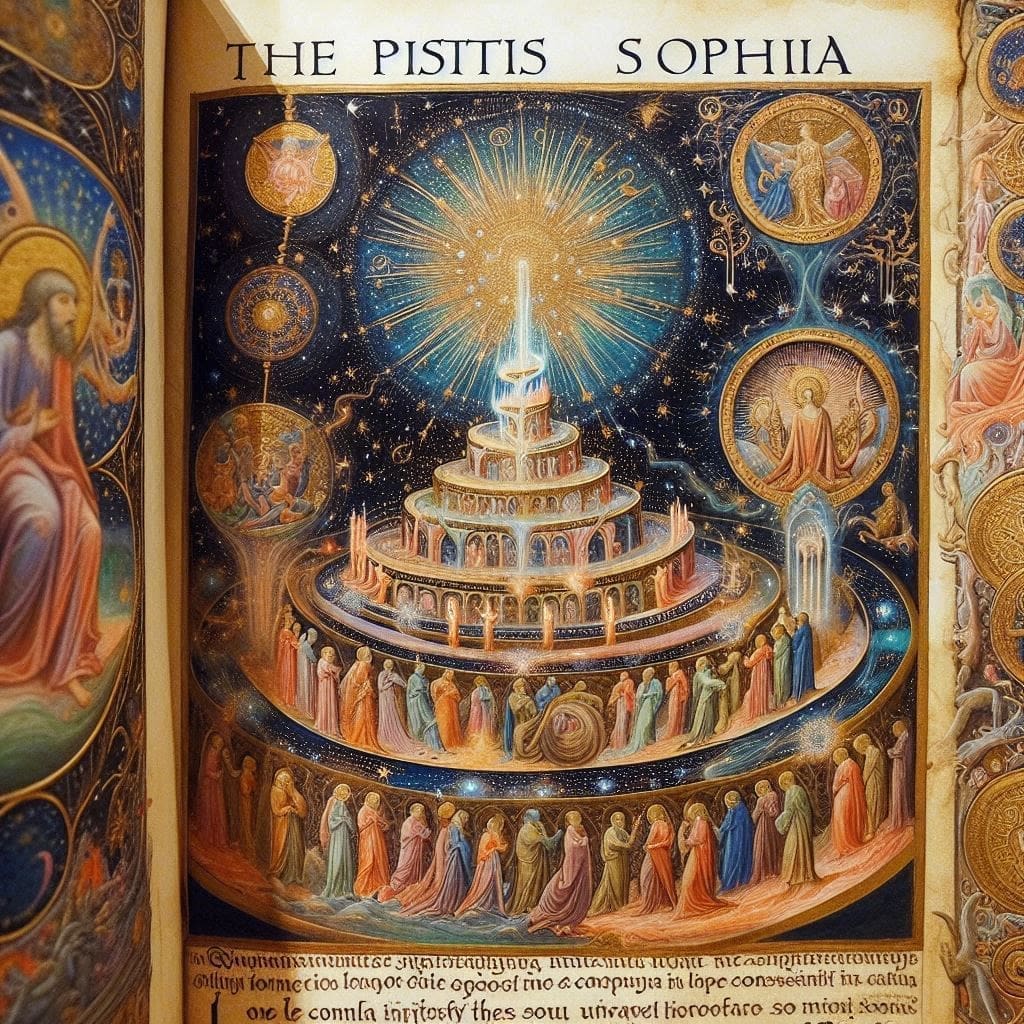
    At the heart of the Pistis Sophia is the concept of the Divine Mother, the feminine aspect of the divine that gives birth to all creation and sustains it with her loving presence. The text describes how the Divine Mother, also known as Sophia, emanated from the highest realms of the spiritual hierarchy to bring light and wisdom to the world.

    Through her descent into the material realm, Sophia encounters trials and challenges that test her faith and strength. She navigates through the lower realms of existence, facing the forces of darkness and ignorance that seek to keep humanity trapped in illusion and suffering.

    Despite these obstacles, Sophia perseveres with courage and determination, drawing on her inner guidance and wisdom to overcome all obstacles. In doing so, she exemplifies the power of universal consciousness to transcend limitations and awaken to a higher reality.

    The Pistis Sophia teaches us that we, too, have the potential to tap into the infinite wellspring of wisdom and love that exists within each of us. By cultivating a deeper connection to our divine nature and aligning with the principles of truth and goodness, we can expand our consciousness and elevate our spiritual awareness.

    Through practices such as meditation, prayer, and self-reflection, we can tune into the subtle vibrations of the universe and attune ourselves to the higher frequencies of love and light. In doing so, we open ourselves to receive guidance and insights from the higher realms, allowing us to navigate through life with grace and compassion.

    As we awaken to the truth of our interconnectedness with all of creation, we begin to see ourselves as co-creators of reality, capable of bringing about positive change and transformation in the world. By embodying the principles of universal consciousness and aligning with the divine will, we can contribute to the evolution of humanity and the planet as a whole.

    In conclusion, the Pistis Sophia serves as a timeless reminder of the power of universal consciousness to guide us on our spiritual journey and lead us towards greater levels of understanding and enlightenment. By embracing the teachings of this sacred text and integrating them into our daily lives, we can cultivate a deeper sense of connection to the divine and align ourselves with the highest truths of existence.

  • Newton’s and Boyle’s Secret Research

    Newton’s and Boyle’s Secret Research

    Advertisements

    Newton and Boyle were both members of the Royal Society , a prestigious scientific organisation in England. In the late 17th century, they began working together on a series of experiments to explore the nature of gravity and its effects on various materials. This research was conducted in secret, away from the prying eyes of their colleagues and competitors.

    One of the key findings of their secret research was the discovery of the inverse square law of attraction, which describes how the force of gravity between two objects decreases as the distance between them increases. This was a revolutionary idea at the time, and it laid the foundation for Newton’s later work on universal gravitation.

    Boyle and Newton also made important discoveries about the properties of gases and how they interact with each other. They conducted experiments to study the behaviour of gases under different conditions of temperature and pressure, and their results helped to establish the field of modern chemistry.

    Despite their groundbreaking discoveries, Boyle and Newton chose to keep their research a secret, fearing that their findings would be misunderstood or misused by others. It wasn’t until many years later that the full extent of their work was revealed to the scientific community.

    Today, Newton and Boyle’s secret research serves as a reminder of the importance of collaboration and innovation in the field of science. By working together and pushing the boundaries of knowledge, these two scientists were able to make significant contributions to our understanding of the natural world.

    So the next time you look up at the stars or conduct an experiment in a chemistry lab, remember the secret research of Newton and Boyle and the impact it has had on the world of science.

  • The Way of Zarathustra: Exploring Zoroastrianism

    The Way of Zarathustra: Exploring Zoroastrianism

    Advertisements

    Zarathustra is believed to have lived in ancient Persia (modern-day Iran) around the 6th century BCE. It is said that he received divine revelation from the god Ahura Mazda, the wise lord, who revealed to him the dualistic nature of the universe. According to Zoroastrianism, there is a constant battle between the forces of good (represented by Ahura Mazda) and evil (represented by Angra Mainyu or Ahriman).

    Central to Zoroastrianism is the belief in the importance of leading a righteous life through good thoughts, good words, and good deeds. Followers of the religion strive to embody these principles in their daily lives, seeking to create harmony and balance in the world.

    One of the most important concepts in Zoroastrianism is the idea of free will. It is believed that each individual has the power to choose between good and evil, and that their choices will impact the cosmic balance of the universe. By making virtuous choices, followers of Zoroastrianism seek to align themselves with the divine will of Ahura Mazda.

    Zoroastrianism also places a strong emphasis on the idea of purity, both physical and spiritual. Practices such as ritual purification, prayer, and fire worship are all integral to the faith, with fire symbolising the presence of Ahura Mazda and the purity of the soul.

    Today, Zoroastrianism is a minority religion with a relatively small number of followers, primarily in Iran and India. However, its influence can still be seen in the ethical teachings of other religions, such as Christianity and Islam, as well as in the broader cultural heritage of Persia.

    Exploring the teachings and practices of Zoroastrianism can offer a unique perspective on the nature of good and evil, free will, and the importance of leading a virtuous life. By following in the way of Zarathustra, one can gain a deeper understanding of the spiritual principles that have guided humanity for millennia.

  • The Psychology of Christianity

    The Psychology of Christianity

    Advertisements

    At its core, Christianity offers a sense of meaning, purpose, and connection to its followers. Believers often find comfort and solace in the teachings of Jesus Christ, who preached love, forgiveness, and compassion. These values can provide a sense of moral guidance and help individuals navigate life’s challenges and uncertainties.

    Additionally, Christianity provides a framework for understanding the world and coping with adversity. The belief in a higher power who is all-knowing and all-loving can offer a sense of security and protection in times of trouble. Prayer and faith in God’s plan can provide believers with a sense of control and agency, even in the face of difficult circumstances.

    Furthermore, Christianity offers a sense of community and belonging to its followers. Believers often gather together in churches to worship, pray, and support one another. These social connections can provide a sense of camaraderie, solidarity, and friendship, which can be essential for mental health and well-being.

    However, the psychology of Christianity is not without its challenges. Some critics argue that the religion can foster feelings of guilt, shame, and fear in its followers. The concept of sin and the idea of judgement and punishment can create a sense of unworthiness and inadequacy in believers. This can lead to issues such as low self-esteem, anxiety, and depression.

    Additionally, the dogmatic nature of Christianity can sometimes lead to cognitive dissonance and internal conflict in believers. When their beliefs are challenged or contradicted by evidence, individuals may experience doubt, confusion, and existential angst. This can lead to a crisis of faith and a struggle to reconcile their religious beliefs with their rational thoughts.

    In conclusion, the psychology of Christianity is a complex and multifaceted phenomenon. While the religion can provide comfort, meaning, and community to its followers, it can also present challenges and conflicts. Ultimately, each individual’s experience with Christianity is unique and shaped by a variety of factors, including their upbringing, beliefs, and personal experiences. As such, it is important to approach the psychology of Christianity with an open mind and a willingness to explore its impact on the lives of believers.

  • The Psychology of Noetic Science: The Intersection of Mysticism and Science

    The Psychology of Noetic Science: The Intersection of Mysticism and Science

    Advertisements

    At its core, noetic science seeks to bridge the gap between subjective experience and objective reality. It brings together the traditionally separate worlds of science and mysticism, blending empirical research with ancient spiritual practices and insights. This unique intersection has led to groundbreaking discoveries and a deeper understanding of the mind-body connection.

    One of the key ideas in noetic science is the concept of interconnectedness – the belief that all living beings and objects are connected by an unseen web of energy. This idea echoes the teachings of various mystical traditions, which have long emphasised the oneness of all things. By studying the implications of interconnectedness, noetic scientists are shedding light on how our thoughts and intentions can influence not only our own lives, but also the world at large.

    Noetic science also explores the power of intention, or the idea that our thoughts and beliefs can shape our reality. This concept has deep roots in spiritual practices such as meditation and prayer, which have been shown to have measurable effects on physical and mental health. By studying the effects of focused intention on everything from plants to water molecules, noetic scientists are uncovering the potential for a more conscious and intentional way of living.

    Another area of interest in noetic science is the study of altered states of consciousness, such as those induced by meditation, psychedelics, or near-death experiences. These states offer a glimpse into the depths of the human mind and its potential for transformation and healing. By examining the neurological and psychological mechanisms behind these states, scientists are gaining new insights into the nature of consciousness and its role in shaping our perceptions of reality.

    Overall, the field of noetic science offers a fresh perspective on the relationship between science and mysticism, highlighting the common threads that run through both traditions. By integrating empirical research with ancient wisdom, noetic scientists are pushing the boundaries of our understanding of the mind-body connection and paving the way for a more holistic approach to mental health and wellbeing.

    In the words of renowned noetic scientist Dr. Edgar Mitchell, “Noetic science is the exploration of the deepest intuitive, spiritual, and intellectual dimensions of life.” By delving into the mysteries of consciousness and interconnectedness, noetic science is opening doors to a new way of thinking about ourselves and our place in the universe. It is a journey that invites us to embrace the power of our thoughts and beliefs, and to explore the infinite possibilities that lie within the depths of our own minds.

  • Newton’s Esoteric Texts About the Bible

    Newton’s Esoteric Texts About the Bible

    Advertisements

    One of the most famous of Newton’s theological works is his “Observations on the Prophecies of Daniel and the Apocalypse of St. John.” In this work, Newton attempts to decipher the complex symbolism and imagery found in the biblical books of Daniel and Revelation. He believed that these texts contained hidden meanings that could be unlocked through careful study and interpretation. Newton spent years poring over these texts, using his keen intellect and mastery of mathematics to unravel their mysteries .

    Newton’s writings on the Bible were not confined to prophecy alone. He also wrote extensively on the nature of God, the Trinity, and the relationship between science and religion. In his work “The Chronology of Ancient Kingdoms Amended,” Newton argues that the Bible contains a chronology of ancient civilisations that aligns with his own scientific calculations. He believed that by studying the Bible, one could gain insights into the history of the world and the nature of God’s plan for humanity.

    Newton’s religious beliefs were deeply intertwined with his scientific pursuits. He saw his work in physics and mathematics as a way to better understand the mysteries of the universe and the divine order that governs it. In his view, science and religion were not mutually exclusive, but rather complementary ways of seeking truth and understanding the world around us.

    While Newton’s esoteric texts about the Bible may not be as well-known as his scientific achievements, they provide valuable insight into the mind of one of history’s greatest thinkers. His writings on prophecy, theology, and the nature of God continue to fascinate and inspire scholars to this day. By delving into Newton’s spiritual explorations, we can gain a deeper appreciation for the complexity and depth of his intellectual pursuits.