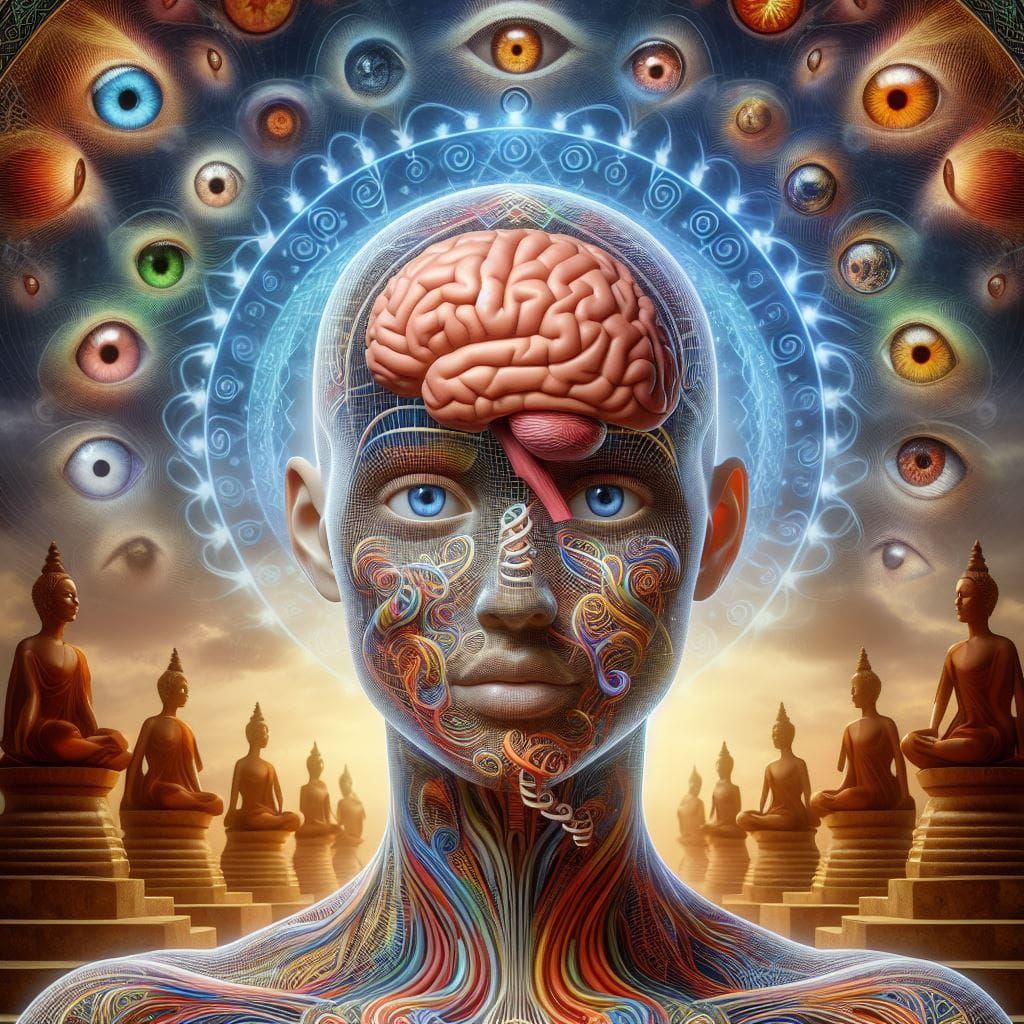

Sigmund Freud, the Austrian neurologist and the father of psychoanalysis, revolutionised our understanding of the human mind, paving the way for the exploration of our deepest thoughts and desires. His theories have had a profound impact on various aspects of society, including the world of popular culture. In this blog post, we delve into the fascinating connection between psychoanalytic ideas and their influence on the media.
One of Freud’s most famous concepts is the idea of the unconscious mind. According to Freud, our unconscious thoughts and desires play a significant role in shaping our behaviours. This idea is often portrayed in popular culture as characters struggle between their conscious desires and unconscious impulses.
One excellent example is the hit television series “Mad Men.” Set in the 1960s, it follows the lives of advertising executives on New York’s Madison Avenue. The character of Don Draper embodies the Freudian concept of a troubled individual battling with his unconscious desires. Draper’s addiction to alcohol and numerous extramarital affairs can be seen as manifestations of his unconscious drives.
In addition to the theme of the unconscious mind, Freud’s Oedipus complex has also found its way into pop culture. The Oedipus complex refers to a child’s subconscious sexual desire for the parent of the opposite sex. Although controversial, this idea has influenced numerous movies and TV shows.
One example is the psychological thriller “Fight Club,” based on Chuck Palahniuk’s novel. The film portrays the main character, played by Edward Norton, as having an alter ego, Tyler Durden, who represents his repressed desires and fantasies. These repressed desires are ultimately embodied in a complex, twisted father/son relationship between him and Brad Pitt’s character. The film’s analysis of masculinity and its exploration of the unconscious mind align with Freudian ideas.
Apart from Freud’s psychoanalytic theories, his ideas on dreams and the interpretation of symbolism have permeated into pop culture. Films such as Christopher Nolan’s “Inception” and Darren Aronofsky’s “Black Swan” delve into the realms of dreams and the blurred lines between reality and fiction. These films encapsulate the notion of hidden desires manifesting themselves through the symbolic imagery of dreams, as Freud himself emphasised.
Moreover, Freud’s theories of defence mechanisms have been widely portrayed in popular culture as characters try to cope with anxiety and trauma. These mechanisms, such as repression, denial, and projection, provide fertile ground for dramas and conflicts in movies and TV shows. For instance, in the critically acclaimed series “Breaking Bad,” the protagonist, Walter White, represses his feelings of guilt and fear by immersing himself in his alter ego as a dangerous drug lord.
In conclusion, Freudian ideas have left an indelible mark on popular culture by shaping the themes, plots, and characters we see in movies, TV shows, and literature. The unconscious mind, Oedipus complex, dreams, symbolism, and defence mechanisms all contribute to the rich tapestry of storytelling in pop culture. Whether intentionally or not, our fascination with Freud’s ideas speaks to their enduring relevance, as they provide a comprehensive framework for understanding the complex human psyche that we often encounter in the media we consume.
Share this:

You Might Also Enjoy Reading