Tag: Politics

  • Gender, Race, and Crime: An Intersectional Analysis of Theoretical Perspectives

    Gender, Race, and Crime: An Intersectional Analysis of Theoretical Perspectives

    Advertisements

    Gender has long been recognised as a significant determinant of crime. Traditionally, men have been overrepresented in criminal statistics, leading to the development of theories such as social learning theory and control theory, which argue that males are socialised to be more aggressive and impulsive, leading to higher rates of criminal behaviour. However, it is crucial to acknowledge that gender is not a monolithic category, and that the experiences of women, nonbinary individuals, and transgender individuals must also be taken into account when analysing crime.

    Race also plays a significant role in shaping individuals’ interactions with the criminal justice system. People of colour, particularly Black and Latinx individuals, are disproportionately represented in arrest and incarceration rates. The intersection of race and crime has been examined through theories such as strain theory and labelling theory, which highlight the impact of systemic racism and discrimination on communities of colour.

    When gender and race intersect, the dynamics of crime become even more complex. Intersectionality theory, developed by KimberlΓ© Crenshaw, posits that individuals’ experiences are shaped by multiple intersecting identities, such as race, gender, and class. For example, Black women may face unique challenges in the criminal justice system due to the intersection of their race and gender, such as being perceived as more aggressive or threatening than white women.

    Understanding the intersection of gender, race, and crime is essential for developing more effective crime prevention and intervention strategies. By considering how these intersecting identities shape individuals’ experiences, we can work towards a more equitable and just criminal justice system. Additionally, by recognising the unique challenges faced by marginalised communities, we can work towards dismantling systems of oppression that perpetuate cycles of crime and incarceration.

    In conclusion, an intersectional analysis of theoretical perspectives on gender, race, and crime is essential for understanding the complex dynamics that influence individuals’ interactions with the criminal justice system. By acknowledging the interconnected nature of these factors, we can work towards a more just and equitable society for all.


  • Why Does Spain Censor its Own History in School Curricula?

    Why Does Spain Censor its Own History in School Curricula?

    Advertisements

    One of the most controversial topics that often gets overlooked in Spain’s history textbooks is the Spanish Civil War. This conflict, which lasted from 1936 to 1939, pitted the left-wing Republicans against the right-wing Nationalists led by General Francisco Franco. The war with Franco’s victory and the establishment of a dictatorship that lasted until his death in 1975.

    The dictatorship of Franco was a dark period in Spain’s history, marked by political repression, censorship, and human rights abuses. However, many history textbooks in Spain gloss over this period, focusing instead on the country’s achievements during his rule.

    There are several reasons why Spain censors its own history in school curricula. One reason is the desire to present a more positive image of the country to its citizens and the rest of the world. By focusing on Spain’s achievements and downplaying its darker moments, the government may be trying to create a sense of national pride and unity among its citizens.

    Another reason for the censorship of history in Spain’s school curricula could be to avoid potential conflicts or controversies. The Spanish Civil War is still a sensitive topic for many Spaniards, with different groups having differing opinions on the causes and consequences of the conflict. By glossing over this period of history, the government may be trying to avoid stirring up old wounds and divisions within society.

    However, by censoring its own history, Spain is doing a disservice to its citizens. Understanding and learning from the mistakes of the past is crucial for a country to move forward and build a better future. By omitting important events from its history textbooks, Spain is hindering its citizens’ ability to fully grasp the complexities of their nation’s past.

    It is important for Spain to reconsider its approach to teaching history in schools and to ensure that students are given a well-rounded and accurate portrayal of the country’s past. Only by confronting the darker chapters of its history can Spain truly move forward and build a more inclusive and democratic society.

  • The Fine Line of Political Correctness

    The Fine Line of Political Correctness

    Advertisements

    At its core, political correctness is the idea that language and actions should be used in a way that avoids offending or marginalising certain groups of people, particularly those who have historically been oppressed or discriminated against. This can manifest in a variety of ways, from avoiding using derogatory terms or stereotypes to being mindful of how one’s actions may affect others.

    Supporters of political correctness argue that it is crucial for creating a more inclusive and equitable society. By being conscious of our words and actions, we can create a more welcoming and respectful environment for all individuals, regardless of their background or identity.

    However, critics of political correctness often claim that it goes too far and stifles free speech. They argue that by policing language and behaviour, we are limiting our ability to have open and honest discussions about important issues. They also fear that political correctness can lead to a culture of fear, where individuals are afraid to speak their minds for fear of being labelled as insensitive or offensive.

    So, where does the truth lie? It’s important to strike a balance between being respectful and inclusive, while also allowing for open dialogue and differing opinions. It’s possible to be mindful of the impact of our words and actions, without stifling free expression.

    In the end, political correctness is about being aware of the power of language and the importance of treating others with respect and dignity. It’s about creating a society where everyone feels valued and included, regardless of their background or identity. By being mindful of our language and actions, we can work towards creating a more compassionate and understanding world for all.

  • From Roswell to Men in Black: The Top UFO Conspiracy Theories

    From Roswell to Men in Black: The Top UFO Conspiracy Theories

    Advertisements

    1. Roswell Incident: Perhaps the most famous UFO conspiracy theory of all, the Roswell incident occurred in 1947 in Roswell, New Mexico. According to official reports, a weather balloon crashed in the area, but many believe that the debris actually came from an alien spacecraft. Witnesses claimed to have seen alien bodies at the crash site, leading to speculation that the government was hiding evidence of extraterrestrial life.

    2. Area 51: Another well-known UFO conspiracy theory revolves around Area 51, a secretive military base in Nevada. Many believe that the government is testing and reverse-engineering alien spacecraft at the base, leading to numerous sightings of UFOs in the area. Some even claim that the government is working with alien beings to develop advanced technology.

    3. Men in Black: The Men in Black are mysterious individuals who are said to visit witnesses of UFO sightings and intimidate them into silence. According to reports, these men dress in black suits and drive black cars, and are believed to be government agents tasked with suppressing information about UFOs. Some even believe that the Men in Black are themselves extraterrestrial beings.

    4. Project Blue Book: Project Blue Book was a government-led investigation into UFO sightings that took place from 1952 to 1969. While the official report stated that most sightings could be explained as natural phenomena or misidentifications, many believe that the government was actually hiding evidence of alien encounters. Some believe that the government’s true motive was to study and harness alien technology.

    5. The Phoenix Lights: In 1997, thousands of people in Phoenix, Arizona reported seeing a large V-shaped formation of lights in the night sky. While officials claimed that the lights were merely flares from military aircraft, many believe that the sighting was evidence of a massive UFO. Some even claim that the government orchestrated the event as a distraction from other UFO activity.

    Whether you’re a sceptic or a true believer, there’s no denying the enduring fascination with UFO conspiracy theories. From Roswell to Men in Black, these tales of government secrecy and extraterrestrial encounters continue to captivate audiences around the world. Whether you believe in aliens or not, the truth is out there – or so they say.

  • How to Encourage Dissent: Building the Foundations for Future Leaders

    How to Encourage Dissent: Building the Foundations for Future Leaders

    Advertisements

    1. Create a culture of open communication: Encouraging dissent starts with creating a culture where people feel comfortable speaking up and sharing their opinions. Make sure that all team members feel heard and valued, regardless of their position or level within the organisation. Encourage open communication and create channels for feedback and discussion.

    2. Lead by example: As a leader, it’s important to model the behaviour you want to see in others. Encourage dissent by actively seeking out different viewpoints and ideas, and by welcoming feedback and criticism. Make it clear that you value diverse perspectives and that dissent is not only allowed, but encouraged.

    3. Establish ground rules: While encouraging dissent is important, it’s also important to establish ground rules for how dissent should be expressed. Encourage respectful and constructive criticism, and make it clear that personal attacks or negativity will not be tolerated. Encourage team members to focus on the issue at hand rather than attacking individuals.

    4. Provide opportunities for dissent: Actively seek out opportunities for dissent by creating spaces for debate and discussion. Encourage team members to challenge assumptions, think critically, and question the status quo. Consider implementing processes like devil’s advocacy or red teaming to encourage dissent and alternative viewpoints.

    5. Reward dissent: Recognise and reward team members who speak up and dissent in a constructive way. Show appreciation for those who challenge the status quo and bring new ideas to the table. By rewarding dissent, you can reinforce the behaviour and encourage more team members to speak up.

    Encouraging dissent can be challenging, but with the right approach, it can lead to increased creativity, innovation, and collaboration within your team or organisation. By creating a culture of open communication, leading by example, establishing ground rules, providing opportunities for dissent, and rewarding the behaviour, you can foster a positive and productive environment where diverse viewpoints are valued and encouraged.

  • Cracks in the System: The State of Flawed Democracy

    Cracks in the System: The State of Flawed Democracy

    Advertisements

    One of the most glaring issues facing democracies today is the rise of authoritarian leaders who manipulate the democratic process to consolidate power and suppress dissent. From Hungary to Turkey to the United States, we have seen leaders who undermine the independence of the judiciary, restrict freedom of the press, and erode the checks and balances that are meant to ensure the government’s accountability to the people. These leaders often rely on fear-mongering and false promises to deceive the public into supporting their authoritarian agenda, exploiting the very democratic institutions that are meant to safeguard against tyranny.

    Another major issue facing democratic systems is the growing influence of money and special interests in politics . As corporate donations and lobbying efforts continue to shape policy decisions, the voice of the average citizen is drowned out by the interests of the wealthy elite. This has led to a system where politicians prioritise the needs of big donors over the needs of the general population, perpetuating inequality and eroding trust in the democratic process.

    Furthermore, the rise of social media and online misinformation has further exacerbated the flaws in democratic systems. With the spread of fake news and misinformation, voters are bombarded with distorted information that can sway their opinions and influence their voting behaviour. This has led to the polarisation of society, with people retreating into echo chambers where their beliefs are constantly reinforced, leading to a breakdown in rational discourse and compromise.

    In light of these challenges, it is clear that the state of democracy is in a precarious position. However, this does not mean that we should abandon the concept of democracy altogether. Rather, it is a call to action for all citizens to take a stand against the erosion of democratic principles and work towards a more inclusive and accountable system of governance.

    By holding our leaders accountable, speaking out against injustice, and actively participating in the democratic process, we can help to strengthen the foundations of democracy and ensure that our voices are heard. Only by acknowledging and addressing the cracks in the system can we hope to create a more just and equitable society for future generations.

  • Political Views and Ideologies: Behind the Curtain

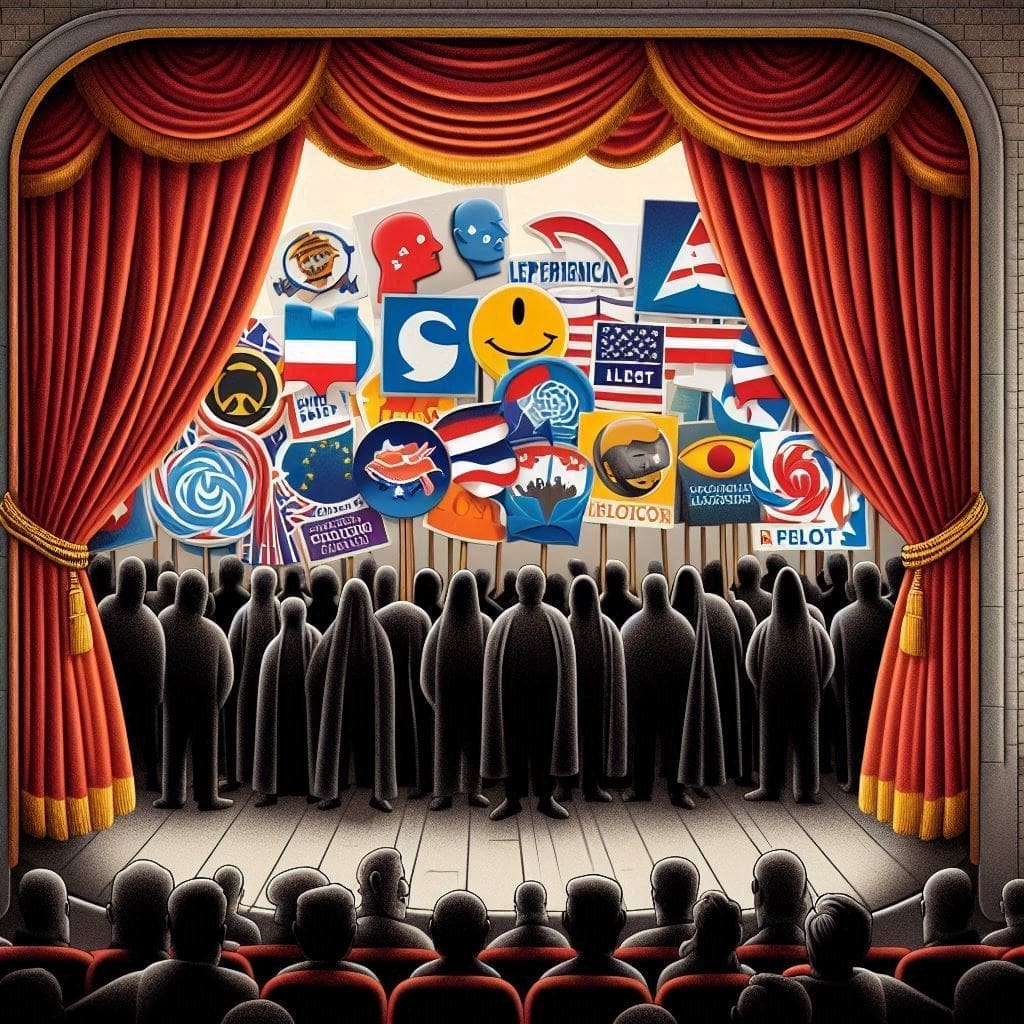
    Political Views and Ideologies: Behind the Curtain

    When it comes to politics, people often fall into one of two camps: left or right, liberal or conservative. These labels are often used to quickly categorise someone’s political beliefs, but behind the curtain of these broad ideologies lies a complex web of beliefs, values, and experiences that shape an individual’s political views.

    Political ideologies are not one-size-fits-all. While someone may identify as a liberal, they may not agree with all liberal policies and values. Similarly, a conservative may not adhere to all conservative beliefs. It is important to recognise that political views are nuanced and multi-faceted, shaped by a myriad of factors such as upbringing, education, culture, and personal experiences.

    One’s political views are often influenced by their family and community. Growing up in a conservative household may lead someone to adopt conservative beliefs, while being exposed to liberal ideas in college may push someone towards a more liberal ideology. Our social circles and the media we consume also play a role in shaping our political views, reinforcing our beliefs and values or challenging them with alternative perspectives.

    Personal experiences also play a significant role in shaping political ideologies. Someone who has experienced discrimination or hardship may be more inclined to support policies that address social and economic inequality, while someone who has achieved success through hard work may prioritise individual freedom and limited government intervention.

    It is important to recognise the complexity of political beliefs and not to pigeonhole individuals based on a broad label. By engaging in open and respectful dialogue, we can better understand the nuances behind someone’s political views and foster a deeper understanding of the diverse perspectives that shape our society.

    In conclusion, political views and ideologies are not simply black and white. Behind the curtain of broad labels lie a complex web of beliefs, values, and experiences that shape an individual’s political identity. By recognising the nuances and diversity of political beliefs, we can foster a more inclusive and understanding political discourse.