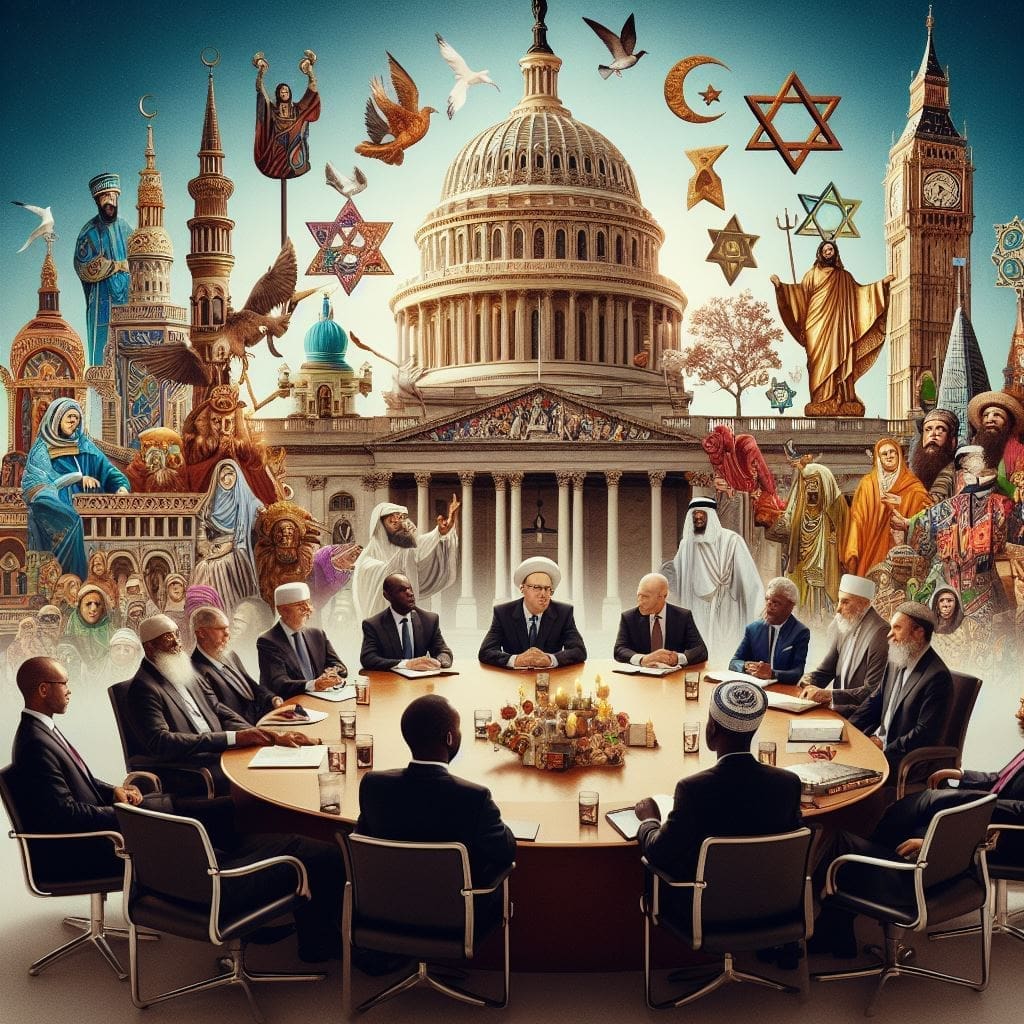
Religion has always played a significant role in shaping societies and influencing the state apparatus. Throughout history, rulers and governments have utilised religion to legitimise their power, control their subjects, and maintain social order. The relationship between religion and the state is complex and multifaceted, with both positive and negative implications.
Advertisements
One of the primary functions of religion in the state apparatus is to provide a moral and ethical framework for governance. Many laws and policies are founded on religious principles and beliefs, shaping the values and norms of society. In some cases, religious institutions are directly involved in governing and decision-making processes, influencing policies on issues such as education, healthcare, and social welfare.
Religion also plays a role in maintaining social cohesion and unity within a state. Shared religious beliefs and practices can foster a sense of community and solidarity among citizens, promoting social harmony and cooperation. In many countries, religious institutions serve as a platform for social and civic engagement, providing vital services and support to marginalised communities.
However, the integration of religion into the state apparatus can also lead to challenges and conflicts. The imposition of religious laws and restrictions can infringe upon individual rights and freedoms, stifling dissent and diversity. Religious conflicts and divisions can also undermine social stability and political unity, fuelling tensions and violence within societies.
Furthermore, the entanglement of religion and politics can create a hierarchical power structure where religious leaders hold significant influence over political decisions and policies. This can lead to the concentration of power and the marginalisation of minority groups who do not adhere to the dominant religious beliefs.
In a democratic society, it is essential to strike a balance between respecting religious freedoms and maintaining the separation of church and state. Governments must uphold the principle of secularism, ensuring that all citizens have the freedom to practise their religious beliefs without undue interference from the state. At the same time, religious institutions should adhere to the rule of law and respect the rights and freedoms of all individuals, regardless of their religious affiliations.
Ultimately, the role of religion in the state apparatus is a complex and nuanced issue that requires careful consideration and balance. While religion can provide a moral and ethical framework for governance and foster social cohesion, it must not be used to justify discrimination, oppression, or the violation of human rights. By promoting tolerance, inclusivity, and respect for diversity, societies can harness the positive aspects of religion while mitigating its potential negative consequences in the state apparatus.
Antisemitism, or hatred and prejudice towards Jewish people, has sadly been a recurring issue throughout history. While it is often associated with Christian and European societies, it is important to also acknowledge that Islamic antisemitism is a very real and significant problem that cannot be ignored.
Advertisements
Islamic antisemitism can take various forms, from the denial of the Holocaust to the propagation of conspiracy theories about Jewish people controlling the world. These beliefs are often rooted in misinterpretations of religious texts or fuelled by political tensions in the Middle East.
One common misconception that fuels Islamic antisemitism is the belief that Jews and Muslims are perpetual enemies due to historical conflicts. While it is true that there have been conflicts between these two groups in the past, it is crucial to remember that peaceful coexistence is not only possible but has been a reality for many Jews and Muslims throughout history.
Furthermore, it is important to recognise that antisemitism goes against the core values of Islam. The Quran emphasises the importance of respect and tolerance towards all people, regardless of their religion or background. Prophet Muhammad himself had close relationships with Jewish communities and advocated for peaceful coexistence.
It is essential for Muslims to challenge and combat antisemitism within their communities. This can be done through education, promoting interfaith dialogue, and standing up against hateful rhetoric and actions. By fostering understanding and empathy, we can work towards creating a more inclusive and harmonious society for all.
In conclusion, Islamic antisemitism is a serious issue that must be addressed and confronted. By promoting tolerance, understanding, and respect, we can work towards eradicating hatred and building a more peaceful and inclusive world for all.
Corruption in politics is a global issue that undermines democracy, hampers economic development and erodes public trust in government. While corruption can take many forms and exist at various levels of government, some politicians have gained notoriety for their involvement in corrupt practices. In this blog post, we will take a look at some of the most corrupt politicians in the world.
Advertisements
1. Vladimir Putin (Russia)
As the President of Russia since 2000, Vladimir Putin has been accused of amassing a vast fortune through corrupt means. His regime has been associated with widespread bribery, cronyism, and embezzlement of state funds. Critics allege that Putin has used his position of power to enrich himself and his inner circle at the expense of the Russian people. These accusations have sparked international concern and have led to sanctions being imposed by various countries as a means of pressuring the Russian government to address these alleged corrupt practices. Additionally, investigative journalists and political opponents have sought to expose and challenge Putin’s alleged corrupt activities, leading to a highly contentious and polarising political landscape within Russia and beyond. The accusations against Putin and his administration have significantly shaped global perceptions of Russia’s governance and leadership, contributing to ongoing debates and geopolitical dynamics.
2. Jacob Zuma (South Africa)
Jacob Zuma, the former President of South Africa, faced numerous corruption allegations during his time in office. He was implicated in a series of scandals, including the misuse of public funds for personal gain and his ties to the controversial Gupta family. Zuma’s corrupt practices ultimately led to his resignation in 2018. The allegations against Zuma were a matter of significant public concern, leading to widespread protests and calls for his accountability. The impact of his actions reverberated across South African politics, highlighting the importance of transparency and integrity in leadership. The case of Jacob Zuma serves as a stark reminder of the consequences of corrupt behaviour at the highest levels of government, and the ongoing efforts to combat such misconduct in the pursuit of a just and equitable society.
3. Rodrigo Duterte (Philippines)
Rodrigo Duterte, the President of the Philippines, has been a controversial figure throughout his time in office. Accusations of presiding over a government rife with corruption and human rights abuses have plagued his administration. The allegations range from extrajudicial killings and money laundering to illicit drug trafficking. Critics have pointed fingers at Duterte and his allies, claiming that they have used their positions of power to enrich themselves and maintain control over the country. These issues have sparked international concern and debate, prompting calls for investigations and accountability. As the Philippines continues to grapple with these challenges, the impact of Duterte’s tenure on the nation’s political landscape and international relations remains a topic of intense scrutiny and discussion.
4. Viktor Orban (Hungary)
Viktor Orban, the Prime Minister of Hungary, has held his position since 2010 and has been known for his controversial leadership style and policies. His government has faced criticism both domestically and internationally for its alleged involvement in corrupt practices and authoritarian tendencies. Orban has been accused of using state resources to benefit his political allies, tightening control over the media, and compromising the independence of the judiciary.
Moreover, his tenure has been marred by allegations of embezzlement and cronyism, further adding to the controversy surrounding his leadership. This has led to concern among some observers about the state of democracy and rule of law in Hungary under Orban’s leadership. The situation has sparked debates and raised questions about the future of democratic institutions in the country, as well as its standing within the European Union.
Orban’s approach to governance has polarised both domestic and international opinion, with supporters lauding his efforts to protect Hungary’s national sovereignty and promote conservative values, while critics express concerns about democratic backsliding and erosion of essential freedoms. This ongoing debate has brought the spotlight on Hungary’s domestic politics and its relationship with the broader European community.
5. Najib Razak (Malaysia)
Najib Razak, the former Prime Minister of Malaysia, was embroiled in the 1MDB scandal, one of the largest corruption scandals in history. He was accused of siphoning off billions of dollars from a state investment fund for personal gain and financing his lavish lifestyle. Najib was convicted of corruption in 2020 and sentenced to 12 years in prison. This scandal sent shockwaves through the political landscape of Malaysia and sparked widespread outrage among the citizens. It also brought global attention to the issue of corruption and financial misconduct at the highest levels of government.
The fallout from the 1MDB scandal continues to reverberate throughout Malaysia and beyond. It has led to calls for greater transparency and accountability in government, as well as significant changes in the country’s political leadership. Additionally, the scandal has prompted investigations into financial institutions and individuals connected to the case, shedding light on the intricate web of financial impropriety and offshore dealings.
The case also serves as a cautionary tale about the far-reaching consequences of unchecked corruption and the importance of upholding the rule of law. The efforts to hold Najib Razak and others involved accountable represent a significant step toward combating corruption and upholding justice. It stands as a reminder that no individual, regardless of their position or influence, is above the law, and that the pursuit of justice is essential for the integrity of a nation’s governance and its people.
Final Note
The prevalence of corrupt activities among politicians is indeed a pressing issue that undermines the integrity of government institutions and erodes public trust. The impact of corruption in politics extends beyond financial implications, as it also influences policymaking and distorts the allocation of resources, ultimately affecting the welfare of citizens. This pervasive problem demands robust accountability measures, stringent transparency regulations, and the unwavering application of the rule of law to effectively combat it.
In order to advance towards a more just and equitable society, it is imperative for citizens to actively engage in holding their leaders accountable and advocating for ethical conduct in governance. By demanding integrity and transparency from elected officials, individuals can contribute to fostering an environment where corrupt practices are not tolerated, and where the principles of justice and fairness prevail. Embracing these values is crucial to promoting a system that truly serves the interests of the public and upholds the fundamental tenets of democracy.
Apartheid was a dark period in South Africa’s history that lasted for almost fifty years, from 1948 to 1994. It was a system of institutionalised racial segregation and discrimination that privileged the white minority while oppressing the majority black population. This oppressive regime was put in place by the National Party government, who believed in the superiority of the white race and sought to maintain control over the country’s resources and power.
Under apartheid, every aspect of daily life was segregated based on race. Public facilities such as schools, hospitals, and beaches were designated for either whites or non-whites, with the latter receiving inferior services and resources. The Group Areas Act of 1950 forcibly removed non-white South Africans from their homes and communities and relocated them to designated areas, segregating cities and neighbourhoods along racial lines.
Perhaps the most egregious aspect of apartheid was the pass laws, which required non-white South Africans to carry passbooks at all times and restricted their movement within the country. This system of control was used to enforce labor exploitation, as non-white workers were forced to live and work in designated areas and could be arrested if found outside of their designated zones without a pass.
The brutal enforcement of apartheid led to widespread human rights violations, including police brutality, torture, and extrajudicial killings. The security forces of the apartheid regime were notorious for their violence against black South Africans, leading to countless deaths and disappearances.
Despite the oppressive nature of apartheid, resistance to the regime grew over time. The African National Congress (ANC) and other anti-apartheid organisations led protests, strikes, and acts of civil disobedience to challenge the unjust laws of apartheid. International pressure and sanctions also played a role in isolating the apartheid government and eventually forcing them to negotiate a peaceful transition to democracy.
In 1994, South Africa held its first democratic elections, and Nelson Mandela was elected as the country’s first black president. This marked the official end of apartheid and the beginning of a new era of reconciliation and healing for the nation.
Today, South Africa continues to grapple with the legacy of apartheid, as inequalities and injustices from that time still persist. While progress has been made in dismantling the racist policies of the past, there is still much work to be done to address the deeply ingrained social and economic disparities that continue to impact the country.
Apartheid serves as a painful reminder of the consequences of institutionalised racism and the importance of standing up against injustice. It is crucial for future generations to learn about this dark chapter in South Africa’s history and strive to build a more just and equitable society for all.
The terms “left wing” and “right wing” are often used in political discourse to describe opposing ideologies and stances on a variety of issues. But what do these terms really mean and why are they so often used to categorise political beliefs?
Advertisements
In political science, the concept of left wing and right wing originates from the seating arrangement of the French National Assembly during the French Revolution in the late 18th century. Those who were in favour of maintaining the status quo and keeping power in the hands of the monarchy sat on the right side of the assembly, while those who supported radical change and the ideals of the revolution sat on the left side.
Today, the terms left wing and right wing are used to describe a spectrum of political beliefs and ideologies. Left wing ideologies generally support social equality, government intervention in the economy, and progressive social policies. This can include beliefs in welfare programs, labour rights, environmental protections, and social justice initiatives.
On the other hand, right wing ideologies tend to prioritise individual freedoms, free markets, and limited government intervention. Right wing beliefs can include support for lower taxes, deregulation, traditional values, and a strong national defence.
It’s important to note that political beliefs are not always easily categorised into one of these two camps. There are individuals and groups who hold beliefs that fall somewhere in the middle of the spectrum or who may have a combination of left wing and right wing views.
In today’s political landscape, the terms left wing and right wing are often used to describe the broader ideological divide between liberals and conservatives. This divide can be seen in debates over hot-button issues such as healthcare, immigration, gun control, and climate change.
Understanding the differences between left wing and right wing ideologies can help us better navigate the complex world of politics and engage in productive discussions with those who hold different beliefs. By being open to hearing and considering other perspectives, we can work towards finding common ground and creating positive change in our society.
Discrimination is a harmful practice that can have far-reaching consequences for individuals and society as a whole. From racial and gender discrimination to discrimination based on sexual orientation or disability, these biases can impact people in various aspects of their lives, including their job opportunities, healthcare access, and overall well-being. But what many may not realise is that discrimination doesn’t just hurt the individuals who are targeted – it also harms society as a whole.
Advertisements
When we allow discrimination to persist, we are contributing to a society that is not only unjust but also economically and socially unproductive. Discrimination leads to disparities in income and wealth, which can fuel social unrest and undermine the stability of communities. This can result in higher rates of crime and violence, as well as decreased trust in institutions and government.
Furthermore, discrimination can also have a significant impact on the economy. When individuals are denied equal opportunities due to their race, gender, or other characteristics, it can limit their potential contributions to the workforce and hinder economic growth. This can lead to a less productive workforce, lower levels of innovation, and decreased competitiveness on a global scale.
In addition to the economic costs, discrimination also takes a toll on individuals’ mental and physical health. Studies have shown that experiencing discrimination can lead to increased levels of stress, anxiety, and depression, as well as physical health problems such as hypertension and heart disease. This not only affects the well-being of the individuals directly impacted but also places a strain on healthcare systems and resources.
So, what can be done to combat discrimination and its harmful effects? It starts with recognising and challenging our own biases and prejudices, and working towards creating a more inclusive and equitable society. This means implementing policies and practices that promote diversity and inclusion, as well as holding individuals and institutions accountable for discriminatory behaviour.
Ultimately, the costs of discrimination are too high for us to ignore. By working together to address and eliminate discrimination in all its forms, we can create a more just, prosperous, and harmonious society for all.
The relationship between church and state has always been a complex and controversial one. The church, with its moral authority and influence over its followers, has long played a role in shaping the policies and decisions of the state. While in some cases this influence has been positive, in others it has led to conflict and division.
Advertisements
One of the ways in which the church influences the state is through the endorsement of political candidates or parties. Religious leaders often use their platform to endorse candidates who align with their beliefs and values, and their followers may be swayed by these endorsements when casting their votes. In this way, the church can help sway the outcome of elections and shape the political landscape of a country.
The church also influences the state through its advocacy on issues such as abortion, LGBTQ rights, and immigration. Religious organisations often lobby lawmakers and advocate for policies that align with their religious beliefs, leading to changes in legislation and public policy. In some cases, this advocacy can be instrumental in shaping the moral compass of a nation and pushing for social change.
However, the church’s influence on the state is not always positive. In some cases, the church’s strict moral code can clash with the principles of democracy and individual freedom. For example, the Catholic Church’s stance on contraception and abortion has led to conflicts with governments that seek to protect women’s reproductive rights. In these cases, the church’s influence can be seen as limiting the freedoms and rights of individuals.
Overall, the church’s influence on the state is a complex and multifaceted issue. While the church can play a positive role in shaping policy and advocating for social change, it can also be a source of conflict and division. As society continues to evolve, it is important for both the church and the state to find ways to work together while respecting each other’s autonomy and values. Only through open dialogue and collaboration can we ensure a harmonious relationship between church and state.