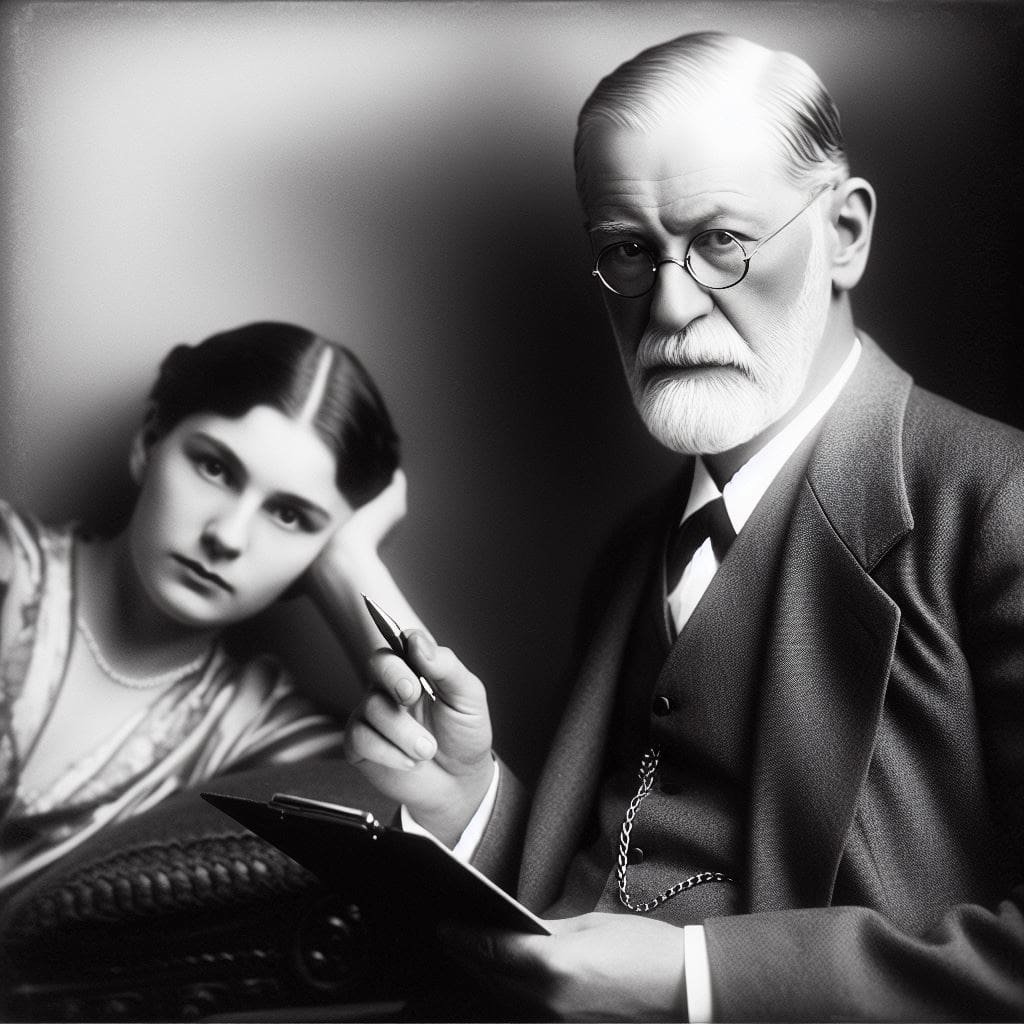
Within the vast realm of psychoanalytic theories, few thinkers manage to provoke as much fascination and controversy as Jacques Lacan. His conceptualisation of the “Real” challenges our understanding of the human psyche, offering an alternative perspective on libidinal drives that deviates from Freud’s traditional theories. In this blog post, we will delve into Lacan’s exploration of libidinal drives in the Real and unravel the enigmatic world he presents to us.
Understanding the Real
Lacan postulates that the human psyche operates within three distinct registers – the Real, the Imaginary, and the Symbolic. Unlike the Symbolic order, which is constituted by language and cultural symbols, the Real represents the unmediated, unknowable realm of raw and unfiltered experiences. It encompasses the impossible, the terrifying, and the ineffable aspects of our existence that cannot be easily expressed or reduced to our conscious understanding.
The Libidinal Drives in the Real
Lacan’s conceptualisation of the Real goes beyond Freud’s libido theory, which predominantly focuses on the satisfaction of sexual desires. Instead, Lacan suggests that the libidinal drives encompass a broader notion of desire that extends beyond sexuality alone. The Real inherently intertwines the libidinal drives with the unconscious, emphasising their function as manifestations of unfulfilled desires and cravings present in our daily lives.
The Subversion of Desires in the Symbolic
Lacan argues that when the libidinal drives emerge in the Symbolic register, our desires become structured and shaped by societal norms, language, and cultural constructs. This process leads to the repression and subversion of our true desires as they conform to socially acceptable forms. Consequently, we often find ourselves trapped within a network of linguistic and symbolic constraints that pervert our authentic needs.
The Lack and Jouissance
Within the Real, Lacan introduces the concept of the “lack” (manque), which symbolises an inherent incompleteness within the human psyche. This lack is not a void to be filled, but a fundamental aspect that characterises our desires, driving us to constantly search for something that remains elusive. Paradoxically, our pursuit of satisfaction only intensifies our longing, as our true desires necessitate an encounter with the Real, which is fundamentally unattainable.
Jouissance, a term often translated as “enjoyment,” carries connotations of excessive pleasure and pain, which emerge as a consequence of our encounters with the Real. Lacan proposes that our libidinal drives seek not only fulfilment but also a confrontation with the intense pleasure and discomfort that lies beyond our conscious comprehension. It is within the Real that our desires culminate, leading to an unbounded, overwhelming experience that transcends conventional notions of satisfaction.
Conclusion
Lacan’s conception of libidinal drives in the Real offers us a profound shift in understanding the intricacies of human desire, transcending the limits imposed by conventional psychoanalytic theories. By delving into the realms of the unattainable and acknowledging the inescapable lack that characterises our existence, we gain a deeper insight into the motivations and complexities of human nature. Embracing Lacan’s exploration of the Real grants us the opportunity to question the boundaries of our desires, urging us to engage more honestly with our authentic selves.
Share this:

You Might Also Enjoy Reading