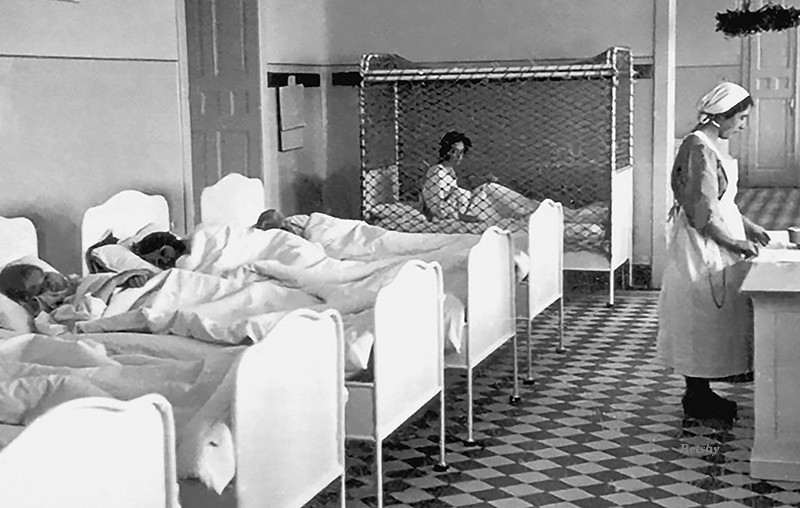


A perpetrator can isolate a victim from family and friends in order to have control over her mind. He may do this to ensure that the victim receives no external support from her network, and is therefore more suggestible and vulnerable to his tactics. Even if the perpetrator is unreliable in many ways, he wants the victim to feel that she needs him, and that she has to depend on him. Victims affected by this form of coercive control often gradually lose touch with their networks as the perpetrator’s demands for time and attention increase. This perpetrator wants to jail his victim, and will use manipulative techniques to make the victim feel guilty for not meeting his needs. This jailer wants to take over the victim’s life and wants the victim to leave her studies and/or job. The isolated victim loses touch with herself, and experiences low levels of self-esteem and confidence. Eventually, the victim can also lose all ability to make her own decisions, and will do as the perpetrator wants. Due to these interpersonal experiences of coercive abuse, the victim might develop social anxiety and might become further alienated into the perpetrator’s world. Therefore, isolation is one of the many risk factors for domestic abuse.
So what other risk factors are there? Even though domestic abuse can happen to anyone, protected characteristics under the Equality Act 2010 are also risk factors when it comes to domestic abuse. All these characteristics can increase the the likelihood of isolation, and can place victims at serious risk. Depending on the intersectionality of characteristics, some people might be more at risk of being abused than others. For instance, the evidence suggests that women are more at risk of being domestically abused than men, and that transgender and non-binary individuals also experience experience higher rates of domestic abuse. Therefore, it can be said that gender is a risk factor.
Furthermore, having mental health problems makes individuals more vulnerable and suggestible. Perpetrators of domestic violence look to exploit a victim’s vulnerabilities, and will prey on those who are either depressed or anxious. Individuals affected by this type of abuse tend to become isolated as a result of coercive control, and might find it more difficult to access support. Therefore, it can be said that mental illness is a risk factor.
Moreover, many perpetrators use religious beliefs as an excuse to engage in domestic abuse. For example, the perpetrator might tell the victim that the Bible says that women should be submissive to men, or that Dharma requires constant hedonism and sexual exploitation (e.g. cult leaders). Whatever the beliefs, perpetrators can sometimes make it difficult for the victims to reclaim their subjectivity, and will subjugate the victims based on these beliefs. The victim might also have different beliefs to her perpetrator, and this might escalate the abuse. Therefore, religion is a risk factor.
Also, a lot of perpetrators are homophobic and will abuse anyone who deviates from heterosexuality, at times even using punishment against the LGBTQ+ victim. The evidence shows that LGBTQ+ individuals experience higher rates of abuse due to their vulnerabilities, with bisexual women being the most affected group. Therefore, sexual orientation is a risk factor.
What’s more, many perpetrators abuse those whose age means they are more vulnerable, and indefensible, such as children and elderly people. These predators may get children or young people to commit acts to which they cannot give consent to as a result of immaturity (e.g. child sexual abuse). Therefore, age is a risk factor.
Furthermore, when people are ill or disabled, they are more vulnerable to harm. Perpetrators can at times exploit this vulnerability. The victim might feel like they are a burden to the perpetrator and might find it difficult to leave due to dependencies (e.g. financial factors). Therefore, disability is a risk factor when it comes to domestic abuse, and victims are more likely to experience such abuse for a prolonged period of time.
Finally, perpetrators at times exploit the vulnerabilities of those with a different ethnicity. For instance, if a person’s immigration status is uncertain, they might stay in a relationship out of fear of losing their visa. Also, those who do not speak English might find it harder to communicate their ordeals. Moreover, some cultures practise disturbing traditions such as female genital mutilation (FGM) and women with these cultural connections are more likely to experience abuse, including forced marriage and honour-based abuse. When it comes to forced marriage, children from specific cultures are more likely to experience childhood sexual abuse as a result of forced child marriage. Therefore, ethnicity is a major risk factor when it comes to domestic abuse.
In conclusion, the protected characteristics of the Equality Act 2010 can each be risk factors to potential domestic abuse, and it is important now more than ever that these characteristics are taken into account when safeguarding human beings. Furthermore, isolation is a major risk factor and a common trait which intersects with protected characteristics of identity.
Share this:

You Might Also Enjoy Reading