Tag: Theology

  • Ancient Arabic Order of Nobles of the Mystic Shrine

    Ancient Arabic Order of Nobles of the Mystic Shrine

    Advertisements

    The Shriners are a fraternal organisation that was founded in 1870 in New York City. Their origins can be traced back to the Masonic fraternity, with members who are Master Masons. The Shriners are known for their charitable work, particularly in the field of healthcare. They are perhaps best known for their network of 22 hospitals that specialise in treating children with orthopedic conditions, burns, spinal cord injuries, and cleft lip and palate.

    But what sets the Shriners apart from other charitable organisations is their sense of whimsy and fun. Members of the organisation are known for their distinctive red fezzes, which are emblazoned with the symbol of the organisation, a scimitar and crescent. The Shriners also have a rich tradition of parades, festivals, and other events that showcase their playful and lighthearted spirit.

    The Shriners also have a strong emphasis on camaraderie and brotherhood. Members of the organisation are known for their strong bonds of friendship and their dedication to supporting one another in both good times and bad . The Shriners also place a high value on community service, and members are encouraged to give back to their local communities through volunteering and charitable activities.

    In addition to their charitable work, the Shriners also have a rich history of symbolism and rituals. They draw inspiration from the Middle East and have adopted many symbols and traditions from that region. Members of the organisation participate in elaborate ceremonies and rituals that are meant to symbolise the journey of self-discovery and enlightenment.

    In conclusion, the Ancient Arabic Order of Nobles of the Mystic Shrine is a fascinating and unique organisation with a rich history and a strong commitment to charity and brotherhood. If you are interested in joining a fraternal organisation that values friendship, philanthropy, and fun, the Shriners may be the perfect fit for you.

  • The Spiritual Significance of the Pineal Gland: Exploring Its Role in Higher Consciousness

    The Spiritual Significance of the Pineal Gland: Exploring Its Role in Higher Consciousness

    Advertisements

    In many spiritual traditions, the pineal gland is believed to be a gateway to higher consciousness and spiritual awakening. The gland is often referred to as the third eye because it is said to be the seat of intuition and psychic abilities. It is believed that through meditation, visualisation, and other spiritual practices, one can activate and open the pineal gland, leading to heightened spiritual experiences and a deeper connection to the universe.

    In ancient Eastern spiritual traditions such as Hinduism and Buddhism, the pineal gland is seen as the centre of the chakra system, responsible for the integration of body, mind, and spirit. Yogis and meditation practitioners often focus on activating the pineal gland in order to achieve higher states of consciousness and enlightenment.

    In the Western esoteric tradition, the pineal gland is associated with the concept of the third eye and is believed to be the source of psychic abilities and spiritual insight. In the writings of mystics and philosophers such as Rene Descartes and Rudolf Steiner, the pineal gland is seen as a link between the physical and spiritual realms.

    Recent scientific research has also shed light on the role of the pineal gland in spiritual experiences. Studies have shown that the pineal gland produces and releases DMT (dimethyltryptamine), a powerful hallucinogenic compound that is believed to be responsible for mystical experiences and visions. This has led some researchers to speculate that the pineal gland may play a key role in facilitating spiritual and transcendent experiences.

    While the pineal gland’s role in spirituality is still largely shrouded in mystery, many people continue to explore and uncover its potential as a gateway to higher consciousness and spiritual growth. Whether through meditation, yoga, or other spiritual practices, the pineal gland remains a fascinating and mystical aspect of human consciousness that continues to captivate and inspire seekers on the spiritual path.

  • The Masonic Grand Lodge of England: Shaping Freemasonry for Over 300 Years

    The Masonic Grand Lodge of England: Shaping Freemasonry for Over 300 Years

    Advertisements

    The Grand Lodge of England is responsible for upholding the principles and values of Freemasonry, which include brotherhood, charity, and personal development. Members of the organisation come from diverse backgrounds and professions, united by their shared belief in the importance of moral and spiritual growth.

    One of the key aspects of the Grand Lodge of England is its commitment to charitable work. Freemasons are dedicated to giving back to their communities and supporting those in need. The organisation raises millions of pounds each year for various charitable causes, including medical research, education, and providing assistance to those affected by natural disasters.

    In addition to its charitable efforts, the Masonic Grand Lodge of England also focuses on promoting personal development and self-improvement among its members. Through its rituals, ceremonies, and teachings, Freemasons are encouraged to strive for excellence in all areas of their lives and to uphold the values of honesty, integrity, and compassion.

    Although Freemasonry has often been shrouded in mystery and misconceptions, the Grand Lodge of England operates with transparency and openness. The organisation welcomes men of all faiths and backgrounds who share a belief in the principles of Freemasonry. Membership is not based on wealth or social status, but on a commitment to personal growth and the betterment of society.

    As the oldest and most respected Grand Lodge in the world, the Masonic Grand Lodge of England continues to play a vital role in promoting the values of Freemasonry and serving as a beacon of light in a world that can often seem dark and uncertain. Its members work tirelessly to uphold the principles of brotherhood, charity, and personal development, making a positive impact on their communities and creating a better world for all.

  • Panpsychism Philosophy: Exploring Consciousness in the Universe

    Panpsychism Philosophy: Exploring Consciousness in the Universe

    Advertisements

    The notion of panpsychism can be traced back to ancient Greek philosophers such as Thales and Heraclitus, who believed that everything in nature has some form of consciousness or soul. In modern times, the concept has gained traction among thinkers such as Alfred North Whitehead and David Chalmers, who have explored the implications of a universe filled with consciousness .

    One of the key ideas in panpsychism is the idea that consciousness is not just a byproduct of brain activity, but a fundamental aspect of reality. This view challenges the traditional materialist perspective, which sees consciousness as arising from complex neural processes in the brain.

    Panpsychists argue that consciousness is a fundamental property of the universe, just like mass or energy. They suggest that even at the most fundamental level of reality, there is some form of consciousness present. This idea can be difficult to grasp, as it challenges our intuitions about what consciousness is and where it comes from.

    One of the implications of panpsychism is that everything in the universe, from rocks to plants to animals, has some form of consciousness. This view is sometimes referred to as panexperientialism, as it suggests that every entity in the universe has some form of experience or awareness.

    Panpsychism also raises interesting questions about the nature of consciousness and the mind-body connection. If consciousness is a fundamental aspect of reality, then how does it interact with physical matter? How does the mind emerge from the brain, if consciousness is present at all levels of reality?

    While panpsychism is still a controversial and debated perspective in philosophy and science, it offers a unique way of thinking about the nature of consciousness and the universe. By exploring the idea that the mind is present in everything, panpsychism challenges traditional views and opens up new possibilities for understanding the nature of reality.

    In conclusion, panpsychism offers a fascinating perspective on the mind and consciousness, suggesting that these phenomena are not limited to humans or other sentient beings, but are present in every aspect of the universe. By exploring this idea, we can gain new insights into the nature of reality and the role of consciousness in the cosmos.

  • The Non-Locality of Consciousness

    The Non-Locality of Consciousness

    Advertisements

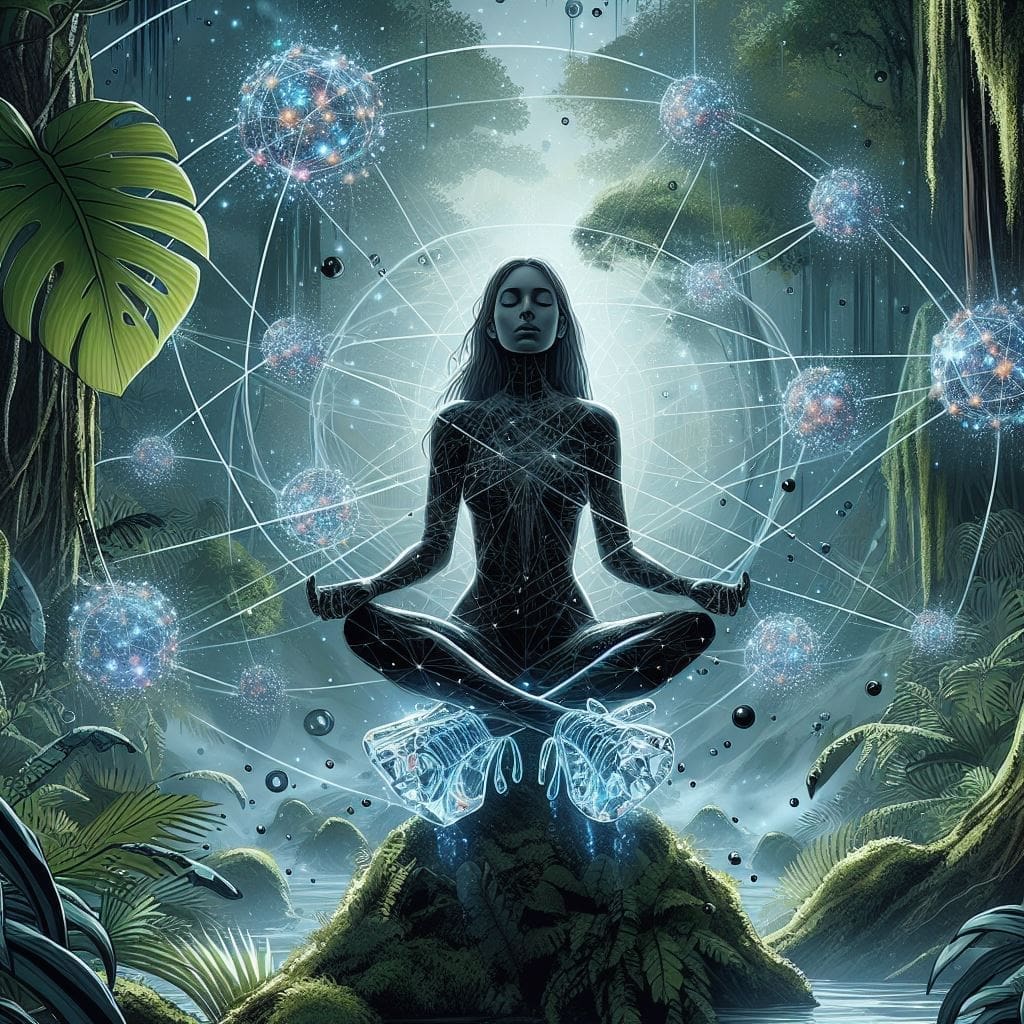
    This question is at the heart of the concept of the non-locality of consciousness. Non-locality refers to the idea that consciousness is not limited to a specific location in the brain or body, but rather is a universal and interconnected aspect of reality that transcends physical boundaries.

    One of the most well-known proponents of the non-locality of consciousness is the renowned physicist, Erwin Schrödinger. In his book “What is Life?” he argued that consciousness is a fundamental aspect of the universe, existing independently of the physical body. He believed that consciousness is a universal phenomenon that connects all living beings and is not confined to the individual brain.

    This idea is supported by various mystical and spiritual traditions, which have long held the belief that consciousness is an aspect of reality that exists beyond the physical body. In Eastern philosophy, for example, the concept of the “universal mind” or “collective consciousness” suggests that all beings are interconnected through a shared consciousness that transcends individuality.

    Recent advances in quantum physics have also shed light on the non-locality of consciousness. Quantum entanglement, a phenomenon in which two particles become connected and can influence each other’s states instantaneously regardless of the distance between them, suggests a form of non-local communication that challenges our traditional understanding of space and time.

    So what does the non-locality of consciousness mean for our understanding of reality? It suggests that consciousness is not confined to the physical body, but is a fundamental aspect of the universe that connects all living beings. It challenges the notion of individuality and separateness, pointing towards a more interconnected view of reality.

    Ultimately, the concept of the non-locality of consciousness invites us to explore the nature of the mind and to consider the possibility that consciousness is more than just a byproduct of brain activity. It opens up new avenues for exploring the nature of reality and our place within it, inviting us to expand our understanding of consciousness and its role in shaping our experience of the world.

  • Cognitive Processes Involved in Metaphysical Thinking

    Cognitive Processes Involved in Metaphysical Thinking

    Advertisements

    One of the key cognitive processes involved in metaphysical thinking is critical thinking. This involves analysing and evaluating arguments and beliefs, questioning assumptions, and considering alternative perspectives. Critical thinking helps us to sift through the vast array of metaphysical theories and ideas, separating the plausible from the implausible, and honing in on the most compelling arguments.

    Another important cognitive process in metaphysical thinking is imagination. Imagination allows us to envision alternative realities, to think beyond what is immediately apparent or known. It enables us to explore abstract concepts and potentialities, expanding our minds beyond the confines of the physical world.

    Memory is also crucial in metaphysical thinking, as it allows us to draw upon past knowledge and experiences to make connections and associations. By accessing our memory banks, we can retrieve relevant information and insights that can inform our understanding of metaphysical concepts and theories.

    Additionally, problem-solving plays a significant role in metaphysical thinking. When grappling with complex metaphysical questions, we often encounter obstacles and contradictions that require creative problem-solving skills to navigate. By approaching these challenges with a flexible and open-minded mindset, we can work through them and arrive at new insights and understandings.

    Lastly, abstract reasoning is essential in metaphysical thinking. This involves the ability to think conceptually, to consider ideas and principles without being tied to concrete examples or tangible evidence. Abstract reasoning allows us to explore the intangible and the metaphysical realm, unlocking new possibilities and avenues of thought.

    In conclusion, metaphysical thinking engages a variety of cognitive processes that work together to help us explore and understand the nature of existence, reality, and the human experience. By employing critical thinking, imagination, memory, problem-solving, and abstract reasoning, we can delve deep into the realms of metaphysics and expand our understanding of the world around us.

  • Scientific Evidence for the Metaphysical

    Scientific Evidence for the Metaphysical

    Advertisements

    One of the most intriguing areas of overlap between science and metaphysics is quantum physics. This branch of physics deals with the behaviour of particles at the smallest scales, and it has led to some mind-boggling discoveries that seem to align with metaphysical concepts. For example, the theory of quantum entanglement suggests that particles can become linked in such a way that their properties are correlated, even when they are separated by vast distances. This idea resonates with the metaphysical concept of interconnectedness and the idea that all things are fundamentally linked at a deeper level.

    Another interesting area of scientific evidence for the metaphysical is the study of near-death experiences (NDEs). While these experiences are often dismissed as hallucinations or the brain’s response to trauma, some researchers have found compelling evidence that suggests they may be a window into the afterlife or alternate dimensions. For example, studies have shown that some patients who have had NDEs report seeing and hearing things that they could not have known about otherwise, suggesting that their consciousness was able to exist outside of their physical body.

    Furthermore, research in the field of consciousness studies has also begun to uncover evidence that suggests the mind may be more than just a by-product of the brain. Some scientists have proposed the idea of a universal consciousness that connects all living beings, providing a scientific basis for metaphysical concepts such as collective consciousness and the idea of a greater spiritual reality.

    While these scientific findings are still in the early stages and have yet to be widely accepted by the scientific community, they provide intriguing support for certain metaphysical ideas. As our understanding of the natural world continues to evolve, it is becoming increasingly clear that science and metaphysics may not be as incompatible as once thought. Perhaps there is more to the universe than can be measured and observed through conventional scientific methods, and the study of metaphysics may offer valuable insights into the nature of reality that science alone cannot provide.