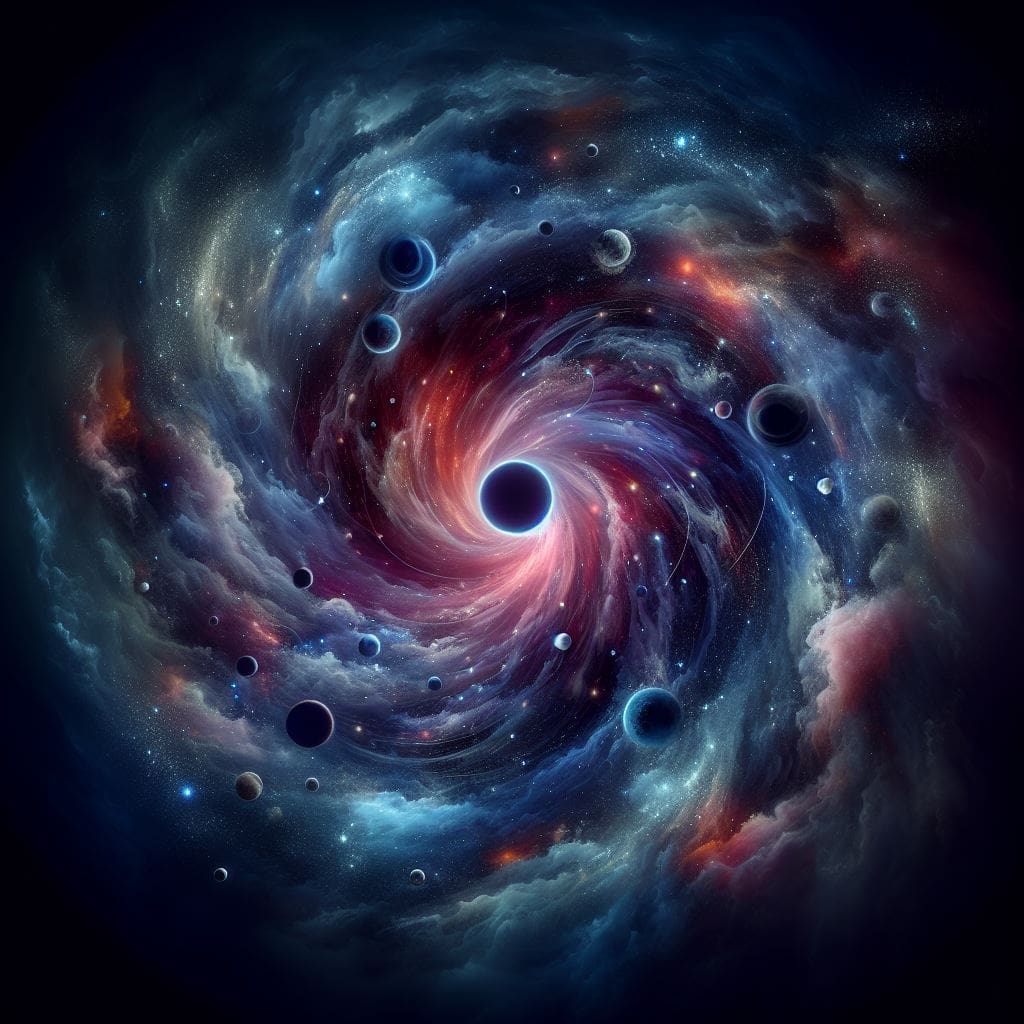

Gravitational compression is a fascinating phenomenon that occurs when objects in space become so heavy that they collapse under their own gravity, resulting in a significant decrease in size and an increase in density. This process can have a variety of effects on the object, from creating intense pressure and heat to potentially forming a black hole.
One of the most well-known examples of gravitational compression is the formation of a neutron star. When a massive star reaches the end of its life and explodes in a supernova, the core of the star can collapse under its own gravity, forming a super dense ball of neutrons. This compression causes the star to shrink to a size of only a few kilometres across, while still retaining the mass of the original star. This incredibly dense object has a gravitational pull so strong that even light cannot escape from it, making it one of the most extreme objects in the universe.
Another example of gravitational compression is the formation of a black hole. When a massive star collapses under its own gravity, it can create a singularity – a point of infinite density and zero volume. This singularity is surrounded by an event horizon, beyond which no light or matter can escape. The immense gravitational pull of a black hole is so strong that it distorts space and time around it, creating a gravitational field that can warp and bend light, making it appear to observers as if the black hole is “sucking in” everything around it.
Gravitational compression is not limited to massive stars and black holes – it can also occur on a smaller scale with objects like asteroids and comets. When a small body with enough mass collides with another object, the force of the impact can cause it to compress under its own gravity, forming a denser and possibly fractured object. This process can also generate heat and create new materials through chemical reactions, leading to the formation of new minerals and compounds.
Overall, gravitational compression is a powerful force that plays a crucial role in shaping the universe as we know it. From the formation of neutron stars and black holes to the evolution of smaller celestial bodies, this process has a profound impact on the structure and composition of the cosmos. By studying gravitational compression, scientists can gain a better understanding of the forces at work in the universe and the intricate processes that govern the evolution of celestial objects.
Share this:

You Might Also Enjoy Reading