
Gravitational tension is a fundamental force that governs the motion of objects in the universe. It is the force of attraction between two objects with mass, and it is responsible for keeping everything in its place. Without gravitational tension, the universe would be a chaotic mess, with objects flying off in every direction.
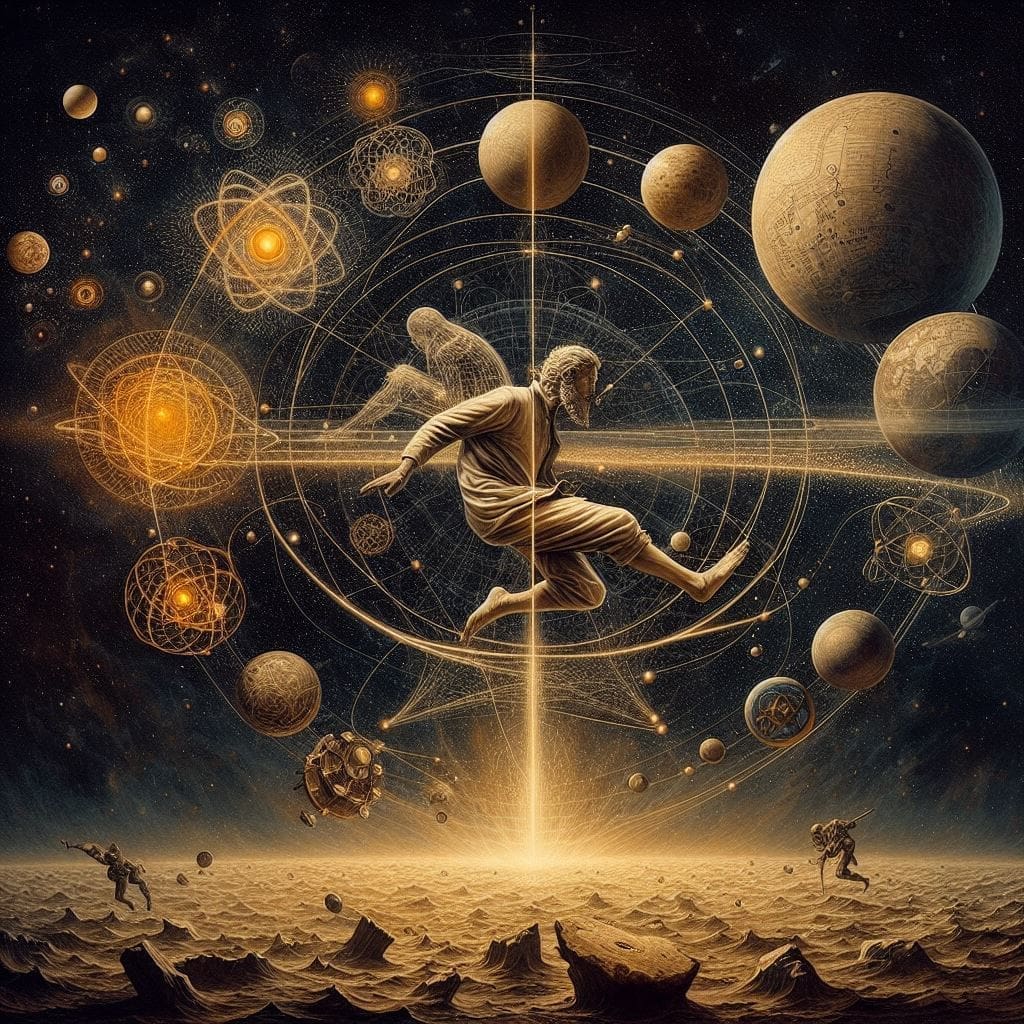
One of the most famous examples of gravitational tension is the force that keeps planets in orbit around the sun. The sun’s massive gravitational pull keeps the planets in their respective orbits, preventing them from drifting off into space. This tension also keeps the moon in orbit around the Earth, causing the tides to rise and fall.
Gravitational tension also plays a crucial role in the formation of galaxies and other large structures in the universe. The force of gravity causes matter to clump together, forming stars, planets, and other celestial bodies. Without this tension, the universe would be a barren wasteland, devoid of any structure or organisation.
In everyday life, we can see the effects of gravitational tension all around us. When we drop a ball, it falls to the ground because of the force of gravity pulling it downward. When we jump, we feel the pull of gravity bringing us back to the ground. Even the tides in the ocean are caused by the gravitational tension between the Earth, the moon, and the sun.
Understanding gravitational tension is essential for scientists and engineers to predict the motion of objects in space and on Earth. By studying the force of gravity, we can better understand how the universe works and how to navigate it safely.
In conclusion, gravitational tension is a powerful force that shapes the universe and keeps everything in its place. Without it, the universe would be a vastly different place, and life as we know it would not exist. So next time you look up at the stars, remember the force of gravity that keeps them in their place, and marvel at the wonders of the universe.
Share this:

You Might Also Enjoy Reading