Tag: Psychoanalysis

  • Drive Theory in Psychoanalysis

    Drive Theory in Psychoanalysis

    Advertisements

    According to Freud, humans are driven by two primary instincts or drives: the life instinct (Eros) and the death instinct (Thanatos). These drives operate on an unconscious level and play a crucial role in influencing our thoughts, emotions, and behaviour. The life instinct drives us to seek pleasure, satisfaction, and fulfilment, while the death instinct drives us to engage in destructive, aggressive, or self-destructive behaviour.

    At the core of Drive Theory is the concept of the unconscious mind. According to Freud, our true desires and motives are hidden in our unconscious, and our conscious mind has limited access to them. These unconscious drives can manifest in various ways, such as dreams, slips of the tongue, or even neurotic symptoms. For example, a person with an unresolved childhood trauma may develop a phobia or experience anxiety without apparent cause.

    Drive Theory also suggests that these unconscious desires can be channelled and expressed in different ways. Freud proposed the concept of sublimation, which refers to redirecting unacceptable or socially inappropriate desires into socially acceptable behaviours. For instance, someone with aggressive tendencies may channel their aggressive drives into sports or other competitive activities.

    Moreover, Drive Theory emphasises the role of conflict in shaping human behaviour. Freud posited that conflicts arise between our unconscious desires and societal norms, creating tension and anxiety. For example, a person who desires power and dominance may face conflicts with their ethical values or social rules. These conflicts can lead to internal struggles, known as intrapsychic conflicts, which can manifest as anxiety, depression, or other psychological disorders.

    While Drive Theory has faced criticism and evolved over time, it has nonetheless contributed significantly to the field of psychoanalysis. It initiated a broader understanding of the unconscious mind, highlighting how our unfulfilled desires and repressed thoughts can influence our behaviour. Drive Theory has opened doors for further exploration of topics such as dreams, symbols, and the interpretation of unconscious material, which have become fundamental aspects of psychoanalytic practice.

    However, it is important to acknowledge that Drive Theory is not without its limitations. Critics argue that it often lacks empirical evidence and that its reliance on sexual and aggressive drives oversimplifies human behaviour. Additionally, its deterministic nature may overlook the role of conscious decision-making and individual agency.

    In conclusion, Drive Theory in psychoanalysis provides valuable insights into the complex interplay between our unconscious desires and our behaviour. By understanding our biological drives and how they shape our thoughts and actions, we can gain a deeper understanding of ourselves and the people around us. While Drive Theory continues to evolve and adapt, its foundational ideas have had a lasting impact on the field of psychology and our understanding of human nature.

    Advertisements
  • Marcuse’s Conception of Eros: Revolutionising Love and Liberation

    Marcuse’s Conception of Eros: Revolutionising Love and Liberation

    Advertisements

    Reinterpreting Eros

    Marcuse argues that Eros, commonly associated with romantic and sexual love, extends beyond the personal realm and has the power to reshape society at large. He questions the prevailing notion of Eros as a mere instinctual drive confined to individual pleasure, advocating instead for an expanded and radical perspective. According to Marcuse, Eros possesses an inherently transformative quality that can challenge oppressive systems and generate profound social change .

    Eros and Repressive Civilisation

    Marcuse highlights how dominant repressive social structures, such as capitalism and patriarchy, attempt to suppress and limit the true potential of Eros. These systems commodify and instrumentalise love, reducing it to a mere tool for profit and control. By restraining genuine erotic desires, society dampens personal fulfilment and perpetuates an atmosphere of alienation, anxiety, and social conformity.

    Liberation through Erotic Radicalism

    Marcuse proposes that by embracing and reclaiming the liberating potential of Eros, individuals can challenge the status quo and strive towards greater liberation. He argues that a society that gives space to genuine erotic desires and authentic human connections can overcome the oppressive aspects of civilisation. In this vision, Eros becomes a catalyst for radical change, both on a personal and societal level.

    The Sexual Revolution

    One of the most significant implications of Marcuse’s conception of Eros is its connection to the sexual revolution. Marcuse argues that the radical liberation of Eros can lead to a fundamental transformation of societal norms and structures. By subverting the repressive sexual morality imposed by traditional institutions, individuals can foster a new form of intimate relationships that prioritise pleasure, consent, and emotional fulfilment.

    Beyond the patriarchal framework

    Marcuse also stresses the importance of dismantling patriarchal structures and gender roles, as they limit the true liberation and equality promised by erotic radicalism. He envisions a society where all genders and sexual orientations have equal access to the transformative power of Eros, not bound by archaic notions of power and control.

    Conclusion

    Herbert Marcuse’s conception of Eros presents a radical reimagining of love and its potential to create a more liberated and harmonious society. By challenging traditional views and embracing the transformative power of Eros, individuals can pave the way for personal fulfilment and revolutionary societal change. As we strive for a more compassionate and egalitarian future, understanding and incorporating Marcuse’s ideas on Eros can help us question existing norms and structures, fostering a society rooted in genuine connections, freedom, and liberation.

    Advertisements
  • The Intriguing Nature of Objectless States in Psychology

    The Intriguing Nature of Objectless States in Psychology

    Advertisements

    Definition and Examples

    Objectless states can manifest in various ways. One common experience is when individuals have vivid flashback episodes, where they re-experience particular moments or events from the past. These flashbacks can be triggered by sensory stimuli or spontaneous occurrences, and they often transport individuals to another time and place , even though the objects and people involved may not physically be present.

    Another example of objectless states is observed during hallucinations, which can arise from various causes such as psychiatric disorders, drug use, or sensory deprivation. Hallucinations create a vivid perception of something that isn’t actually present in the external environment. From seeing imaginary objects or people to hearing voices or sounds that nobody else can perceive, these hallucinatory experiences provide a window into how our minds can generate perceptions independent of external stimuli.

    Potential Explanations and Mechanisms

    Explaining objectless states is complex, as they challenge our traditional understanding of perception as being strictly bound to external stimuli. However, several theories attempt to shed light on this intriguing phenomenon.

    1. Memory and Perception Interplay: One possible explanation suggests that objectless states may be triggered by the interplay between memory and perception. Our memories form a vast network of experiences that can be reactivated, causing objectless states to arise. These states occur when the mind recreates parts of a remembered environment, temporarily blurring the line between past and present.

    2. Neural Activation and Abnormalities: Neurological research has shown that objectless states are linked to specific patterns of neural activation. Functional magnetic resonance imaging (fMRI) studies have identified abnormal activity in brain regions associated with perception and memory in individuals experiencing objectless states. These findings suggest that certain neurological conditions or dysfunctions may enhance the occurrence of objectless states.

    3. Cognitive Processes and the Brain’s “Simulation” Ability: The human brain has an inherent ability to simulate different scenarios and predict possible outcomes, even in the absence of immediate sensory input. This cognitive process might be at play during objectless states as the brain “fills in” the missing sensory information. This hypothesis suggests that our minds have a highly adaptive capacity to create meaning and experiences even when there is no immediate external stimulus.

    Implications and Future Research

    Understanding objectless states has significant implications for several areas of psychology. By unravelling the mechanisms behind these states, researchers can gain insights into the workings of memory, perception, and consciousness itself. Additionally, a better understanding of objectless states may hold promising applications in therapeutic interventions for conditions involving traumatic memories, hallucinations, and altered perceptions.

    Future research endeavours should focus on refining experimental methods to study objectless states and developing theoretical frameworks that reflect the complex interplay between cognition, perception, and memory. By doing so, we can continue to peel back the layers of this enigmatic psychological phenomenon, offering new avenues for understanding the human mind.

    Conclusion

    Objectless states in psychology reveal the intricacies of our mind’s ability to perceive and experience phenomena that may not exist in the external world. Whether through vivid flashbacks or hallucinatory episodes, these states provide a glimpse into the malleability and complexity of our perception and memory processes. While many questions about objectless states remain unanswered, ongoing research offers hope for a deeper understanding of this fascinating phenomenon and its potential applications in therapeutic contexts.

    Advertisements
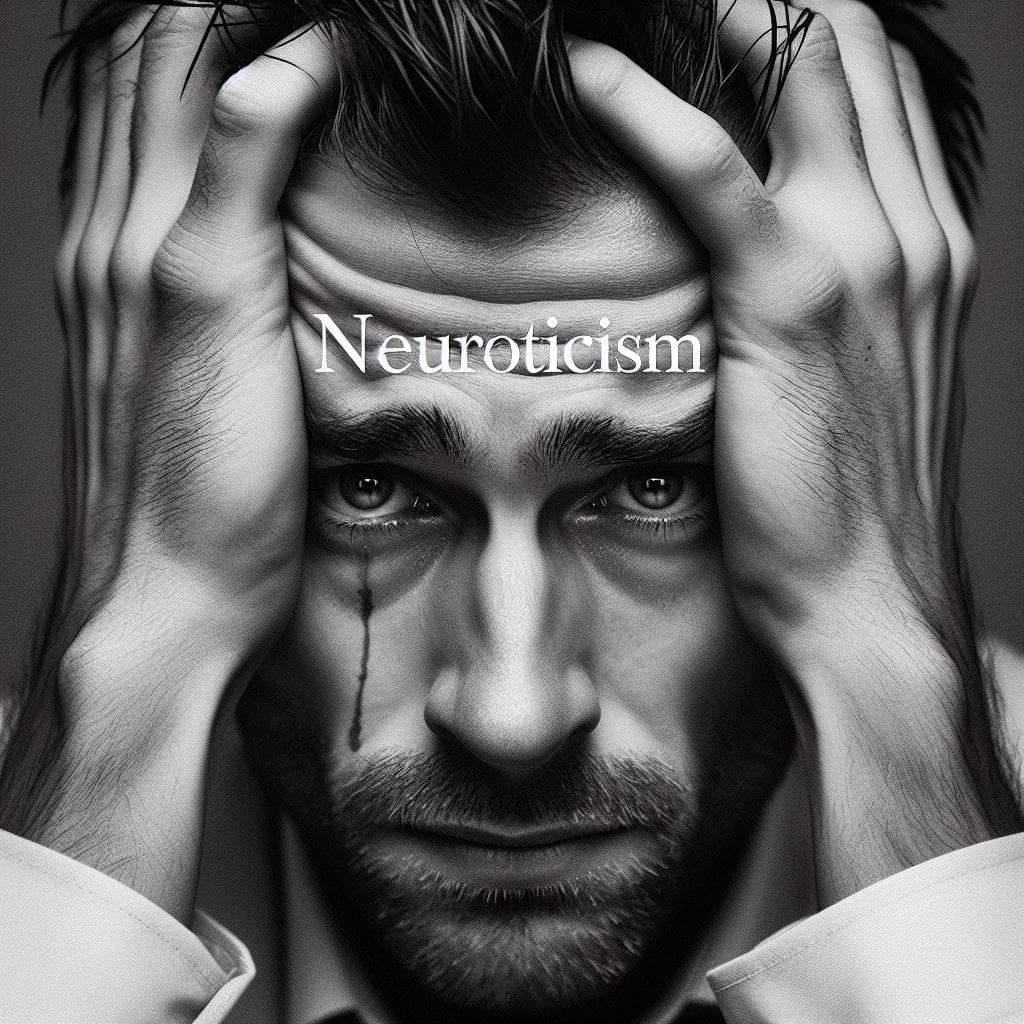
  • Neuroticism: Understanding the Complex World of Emotional Sensitivity

    Neuroticism: Understanding the Complex World of Emotional Sensitivity

    Advertisements

    Defining Neuroticism

    Neuroticism, one of the five personality traits identified by psychologists, measures an individual’s emotional stability or instability. A person scoring higher on the neuroticism scale demonstrates a tendency to experience more intense negative emotions such as fear, worry, anger, and sadness, often engaging in overthinking and rumination.

    Causes of Neuroticism

    While neuroticism can have a genetic component, environmental factors such as upbringing, childhood experiences, and exposure to chronic stress can also play a pivotal role in shaping this trait. Certain studies have also suggested that neuroticism can be influenced by neurological differences, such as an imbalance in brain chemicals like serotonin.

    Impacts on Life

    The emotional roller coaster experienced by individuals high in neuroticism can have a significant impact on their daily lives and long-term well-being. Neuroticism often correlates with increased vulnerability to mental health issues like anxiety disorders and depression. It can also affect interpersonal relationships due to excessive self-consciousness, frequent worrying, and emotional instability. Moreover, those high in neuroticism may struggle with decision-making, as they are more likely to overanalyse potential negative outcomes.

    Coping with Neuroticism

    Fortunately, there are various strategies individuals can employ to alleviate the burden of neuroticism and lead happier, more fulfilling lives:

    1. Mindfulness and self-compassion techniques: Practising mindfulness and self-compassion can help neurotic individuals better manage their emotions, reduce stress, and become more aware of their thoughts and reactions.

    2. Cognitive-behavioural therapy (CBT): Seeking professional help from a therapist trained in CBT techniques can provide valuable guidance in reframing negative thought patterns and promoting healthier coping mechanisms.

    3. Building resilience: Engaging in activities that promote resilience, such as exercise, meditation, and social support, can assist individuals in managing stress and increasing emotional stability.

    4. Self-care and stress management: Prioritising self-care activities and implementing stress-management techniques like time management, relaxation techniques, and adopting a healthy lifestyle can help reduce the impact of neuroticism in everyday life.

    Embracing one’s unique traits

    It is crucial to emphasise that neuroticism, like any other personality trait, is neither inherently good nor bad. While high neuroticism might have its challenges, embracing this trait and recognising its potential benefits, such as increased empathy and attention to detail, can empower individuals to capitalise on their strengths while mitigating the downsides.

    Conclusion

    Understanding neuroticism and its impact can be a stepping stone towards accepting and managing this personality trait more effectively. By implementing coping strategies, seeking support, and embracing personal growth, individuals high in neuroticism can navigate their emotional landscapes while fostering healthier relationships, enhancing well-being, and achieving a balanced life. Remember, neuroticism does not define you – it is merely an aspect of your intricate personality.

    Advertisements
  • The Difference Between ‘Unconscious’ and ‘Subconscious’

    The Difference Between ‘Unconscious’ and ‘Subconscious’

    Advertisements

    The unconscious and subconscious are two layers of the mind that exist beyond our conscious awareness. They shape our behaviour, thoughts, and emotions, but in different ways and with different degrees of control. Let’s delve deeper into each term to grasp their significance.

    Starting with the unconscious mind, it can be thought of as the hidden reservoir of experiences, memories, and emotions that are outside the realm of our conscious awareness. These aspects of our psyche have been repressed, forgotten, or stored away due to their overwhelming or traumatic nature. Freud, the father of psychoanalysis, believed that the unconscious was the primary driving force behind our behaviour and played a significant role in the formation of our personality. He proposed that our desires, fears, and unresolved conflicts all reside within the unconscious, influencing our thoughts and actions without our conscious control.

    On the other hand, we have the subconscious mind, which encompasses the aspects of our thoughts and perceptions that are just beneath the surface of our conscious awareness. Unlike the unconscious, the subconscious mind is accessible if we pay attention to it. It contains all the information absorbed by the conscious mind but temporarily stored away rather than being permanently repressed. Think of it as a powerful processing system that filters and organises the information we receive, influencing our beliefs, attitudes, and behaviours in subtle and often unnoticed ways.

    So, while the unconscious exerts an influence on our behaviour through deeply-rooted emotional experiences, the subconscious affects us through a continuous processing of information that shapes our perception and decision-making based on previously acquired knowledge.

    To better understand the difference, consider an analogy of an iceberg. The conscious mind, which is our active thinking and reasoning state, is represented by the tip of the iceberg visible above the water. The subconscious lies just below the surface, partially hidden yet accessible through exploration. Lastly, the unconscious lurks in the deep waters below, carrying influential elements that are difficult to reach without help or specific techniques like psychoanalysis or hypnosis.

    So why is understanding these distinctions important? Recognising that our thoughts and actions are not solely governed by our conscious mind empowers us to explore and address deeper layers of our psyche. By acknowledging the existence of the unconscious and subconscious, we can gain insights into hidden motivations, past traumas, and deeply ingrained patterns of behaviour, allowing for personal growth, healing, and self-awareness.

    Moreover, comprehending the different levels of our mind can help us become more aware of the factors influencing our decisions, leading to enhanced critical thinking and self-reflection. It can also pave the way for effective therapeutic interventions, as therapists can target the unconscious or subconscious to address past traumas, promote psychological well-being, and unlock a person’s potential.

    In conclusion, while the terms “unconscious” and “subconscious” are often used interchangeably, they refer to separate aspects of our mind. The unconscious is composed of deeply repressed material, influencing us through unresolved conflicts and desires, while the subconscious operates just below the conscious level, filtering and organising information to shape our thoughts and actions. Understanding these layers of our psyche opens up new paths for self-discovery, growth, and creating a life aligned with our true desires. So, dive beneath the surface and explore the profound workings of your mind!

    Advertisements
  • Narcissistic Principles: Deconstructing an Ego-centric Mindset

    Narcissistic Principles: Deconstructing an Ego-centric Mindset

    Advertisements

    Defining Narcissism

    Derived from Greek mythology, narcissism refers to an excessive preoccupation with oneself, one’s appearance, and an insatiable need for admiration. Narcissistic principles revolve around a distorted sense of self-importance, superiority, entitlement, and an overwhelming hunger for constant validation.

    Characteristics of Narcissistic Individuals

    Narcissistic individuals tend to exhibit several identifiable traits:

    1. Grandiosity: A narcissist often believes they are superior to others, showcasing a sense of grandiosity and entitlement. They have an inflated perception of their abilities, accomplishments, and uniqueness.

    2. Lack of Empathy: Empathy is a fundamental aspect of connecting with others emotionally. However, a narcissistic person typically lacks true empathy; their relationships often revolve around fulfilling their needs rather than taking others’ feelings into account.

    3. Manipulative Behaviour: Narcissists often excel at manipulation to maintain their sense of power and control. They use tactics such as gaslighting, guilt-tripping, and playing mind games to maintain an upper hand in their relationships.

    4. Fragile Self-Esteem: Contradictory to their apparent self-confidence, narcissists may have an extremely fragile self-esteem. They are easily threatened by any criticism or perceived lack of admiration, leading to defensive and aggressive behaviours.

    In a Nutshell, the Narcissist…

    1. Seeks admiration and validation from others.

    2. Exaggerates achievements and talents.

    3. Maintains a sense of entitlement.

    4. Exploits and manipulates others for personal gain.

    5. Lacks empathy towards others’ feelings and needs.

    6. Demonstrates arrogance and superiority.

    7. Reacts defensively to criticism or challenge.

    Coping with Narcissistic Individuals

    Encountering a narcissistic individual can be challenging, but there are strategies to navigate through such situations:

    1. Establish Boundaries: Clearly define your boundaries and enforce them consistently. Narcissists may push against these limits, but it’s crucial to maintain your sense of self and establish clear guidelines for interactions.

    2. Focus on Self-Care: Dealing with a narcissistic person can be emotionally draining. Prioritise self-care activities that rejuvenate your mental and emotional well-being, ensuring you have the strength to face these situations head-on.

    3. Seek Support: Reach out to friends, family, or a therapist who can provide a supportive environment to discuss your experiences and emotions. Networking with others who have faced similar encounters can be especially helpful.

    4. Educate Yourself: Gaining a deeper understanding of narcissism can help you develop strategies to handle such individuals effectively. Recognise their manipulation tactics, learn about healthy communication patterns, and assert your self-worth.

    Conclusion

    Although encountering individuals with narcissistic principles can be challenging, understanding the core aspects of narcissism empowers us to navigate these encounters with strength and resilience. By setting boundaries, focusing on self-care, seeking support, and continuously educating ourselves, we can protect our emotional well-being and maintain healthier relationships. Remember, it is essential to prioritise our own happiness and not let narcissistic principles consume our lives.

    Advertisements
  • Rational Choice Theory: Understanding Human Decision-Making

    Rational Choice Theory: Understanding Human Decision-Making

    Advertisements

    At its core, Rational Choice Theory posits that individuals are rational actors who strive to maximise their interests and achieve the most favourable outcomes. By acting in a calculated manner, humans weigh the costs and benefits associated with each available choice. These choices may be influenced by both internal factors, such as personal preferences and goals, as well as external factors, like social norms and constraints.

    To better understand this theory, it is crucial to delve into its fundamental assumptions. Firstly, it assumes that individuals have complete information about the available options and outcomes, enabling them to assess and compare them accurately. Secondly, it assumes that individuals possess consistent preferences and possess the ability to rank these preferences. Finally, it assumes that individuals act independently and make decisions on their own accord without external coercion.

    The Rational Choice Theory proposes that individuals engage in a decision-making process that involves a thorough assessment of the costs and benefits associated with each possible choice. By assigning utility values to various outcomes, individuals compare and evaluate different options, ultimately selecting the one with the highest expected utility. Utility, in this context, refers to the subjective satisfaction or pleasure an individual derives from a particular outcome.

    Furthermore, Rational Choice Theory recognises that individuals are subject to constraints that can shape their decision-making process. These constraints could be financial limitations, time constraints, or even restrictions imposed by social norms and obligations. For instance, a person with limited financial resources may prioritise cost in their decision-making process, while societal expectations may influence an individual’s choices in adherence to cultural norms.

    The implications of this theory are vast and extend to a wide range of fields, including economics, sociology, and political science. In economics, Rational Choice Theory provides a basis for understanding consumer behaviour and market dynamics. It assumes that individuals act as rational consumers who aim to maximise their satisfaction while making purchasing decisions. In sociology, this theory offers insights into issues like collective action and social exchange, providing a framework to analyse how individuals interact and make choices in social settings. Additionally, in political science, Rational Choice Theory underpins the study of voting behaviour and political decision-making, examining how individuals navigate their self-interests within a political context.

    While Rational Choice Theory provides valuable insights into human decision-making, critics argue that it oversimplifies the complexity of human behaviour. They argue that it neglects the influence of emotions, social norms, and cultural factors that can shape decision-making processes. Additionally, opponents suggest that the assumption of complete information overlooks the reality of imperfect knowledge and uncertainty faced by individuals in real-world scenarios.

    Quick Instructions for Daily Practice

    1. Identify the decision or choice that needs to be made.

    2. Determine the possible options or alternatives.

    3. Assess and assign a value or utility to each option based on preferences and outcomes.

    4. Evaluate the costs and benefits associated with each option.

    5. Make a rational decision by selecting the option with the highest utility or value.

    6. Consider any potential risks or uncertainties in the decision-making process.

    7. Implement the chosen option and monitor the outcomes.

    8. Reflect and learn from the decision experience for future choices.

    Conclusion

    In conclusion, the Rational Choice Theory has become a significant framework for understanding human decision-making. By considering individuals as rational actors striving to maximise their self-interests, this theory reveals the underlying mechanisms guiding human choices. By taking into account the calculations individuals make based on costs, benefits, and utility, researchers can gain valuable insights into decision-making processes in various fields. However, as with any theory, it is important to acknowledge both its strengths and limitations, understanding that human behaviour is a product of a complex interplay of factors beyond pure rationality.

    Advertisements