I decided to go into forensics because since I was a child, I had a natural gift of dealing with troubled individuals so as to keep myself safe. I grew up in Colombia during the 90s, a time when the Constitution of 1991 was established, and a time when violence, narco-cartels, the paramilitary, satanic sects, death squads, and fresh magnicides took place. Indeed, utter political chaos was the status quo. Yes, Colombia was in deep crisis during this decade, and psychological deviations were all over the place. What seemed normal everywhere, was also a hyper-manifestation, and hypernormalisation of what now is classified as abnormal.
Among the many ills of Colombia, were sexual deviations. And that’s how my ‘career’ into forensic psychoanalysis began when I was only six years old.
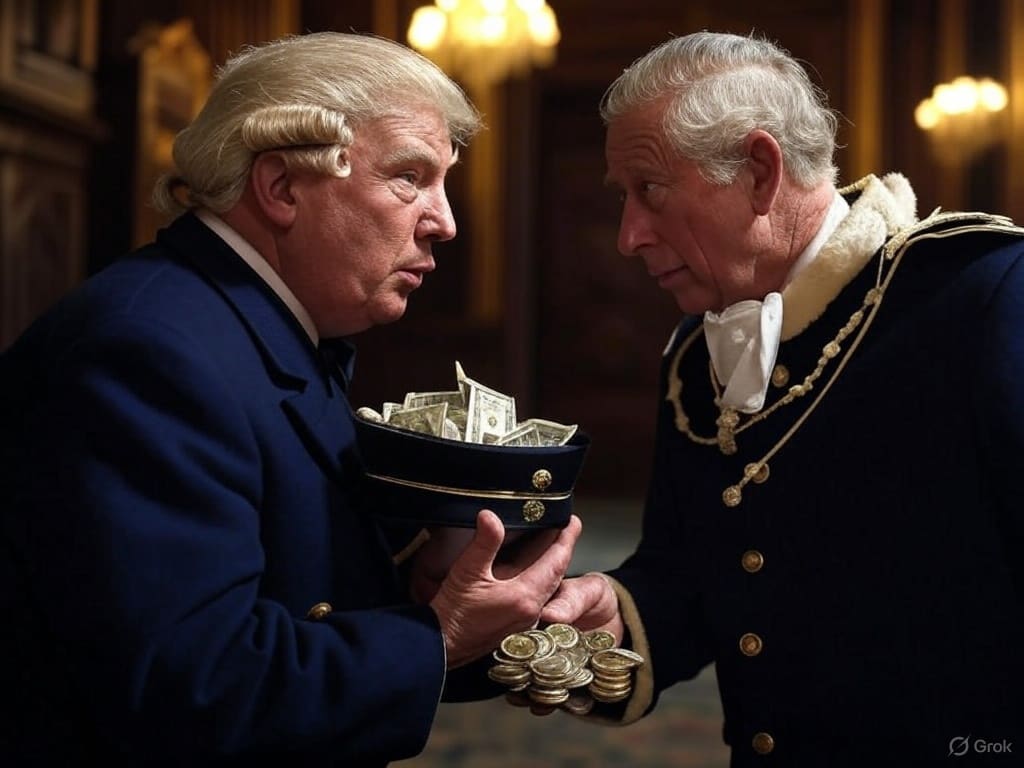
In 2025, Donald Trump, back as U.S. President, has introduced a set of trade policies called “reciprocal tariffs.” These tariffs are taxes on goods coming into the U.S., designed to match what other countries charge the U.S. for its exports. The idea is to make trade “fair” in Trump’s view, by protecting American businesses and jobs. But these changes aren’t just about the U.S.—they’re sending ripples across the world, and the UK is feeling the impact. Let’s break down what these tariffs are, how they’ll hit the UK, and what it might mean for everyday people and the economy.
Advertisements
What Are Trump’s Reciprocal Tariffs?
First, let’s get the basics. A tariff is like a fee a country puts on stuff it imports—like cars, food, or steel. Trump’s plan, rolled out in April 2025, starts with a 10% tariff on everything the U.S. buys from other countries, kicking in on April 5. Then, on April 9, he’s adding extra tariffs on specific countries based on how much they sell to the U.S. compared to what they buy back. For example, China gets hit with a whopping 54% tariff, the European Union (EU) gets 20%, and the UK faces a 10% rate—though some worry it could climb higher later.
Trump says this is about fairness. He argues that countries like the UK charge the U.S. too much for its goods (like through taxes like VAT), while the U.S. has been too soft in return. He also wants to bring manufacturing back to America by making foreign goods pricier. But here’s the catch: these tariffs don’t just affect U.S. shoppers—they change things for countries like the UK that sell to the U.S.
How Does the UK Trade with the U.S.?
The UK and U.S. are big trading buddies. The UK sends over £60 billion worth of goods to the U.S. every year—think luxury cars like Rolls-Royce, whisky from Scotland, and medicines from companies like AstraZeneca. In return, the UK buys stuff like tech gadgets, food, and energy from the U.S. This back-and-forth supports jobs and keeps prices steady. But Trump’s tariffs are shaking things up.
Direct Hit: Higher Costs for UK Exports
The most obvious effect is on UK businesses that sell to the U.S. Starting April 5, 2025, that 10% tariff means American companies importing UK goods—like a £100,000 Aston Martin—will pay an extra £10,000 to the U.S. government. That’s a big jump. Some U.S. buyers might swallow the cost, but many will either pass it on to American customers (making UK goods pricier) or just buy less from the UK. For industries like car manufacturing, where 18% of UK car exports go to the U.S., this could mean fewer sales and maybe even job cuts.
Take whisky as another example. Scotland’s whisky industry sends a lot to the U.S.—it’s a huge market. A 10% tariff might not sound like much on a £50 bottle, adding just £5, but if American shops and bars start buying less because of the extra cost, that hits Scottish distilleries hard. Experts reckon sectors like this could see exports drop by up to a fifth if the tariffs stick.
Knock-On Effects: Prices and Jobs in the UK
So, what does this mean for people in the UK? Well, it’s not just about exports. If UK companies lose U.S. customers, they might have to cut costs—sometimes by laying off workers. Car factories, whisky makers, and even drug companies could feel the pinch. Fewer jobs mean less money floating around in towns that rely on these industries.
Then there’s the flip side: goods coming into the UK from the U.S. Right now, the UK hasn’t slapped tariffs back on U.S. imports, hoping to keep talks friendly and maybe dodge worse tariffs later. But if the UK does retaliate—say, with a 10% tax on American iPhones or beef—prices here could rise. A £500 phone could jump to £550, and that’s before shops add their own markup. Food prices might creep up too, especially if trade gets messier.
The Bigger Picture: Economic Growth Takes a Hit
The UK’s economy isn’t in great shape to start with—growth is slow, and the government’s trying to balance its books. Trump’s tariffs could make things trickier. The Office for Budget Responsibility (OBR) warned that if the U.S. and others keep raising tariffs, UK growth could shrink by 0.6% this year and 1% next year. That’s billions of pounds lost. Another group, the National Institute of Economic and Social Research (NIESR), thinks the damage could be even worse—up to 3% less growth over five years.
Why? Because when trade slows, everything slows. Less money comes into the UK from exports, and businesses get nervous about investing. Plus, if the U.S. economy stumbles under its own tariff costs (more on that later), it’ll buy less from everyone, including the UK. It’s like a domino effect.
Inflation and Interest Rates: A Balancing Act
Here’s where it gets personal for UK households. Tariffs can push prices up—economists call this inflation. If UK businesses struggle and goods get pricier, people might demand higher wages to keep up. That could force the Bank of England to keep interest rates high (they’re at 4.5% now) to stop prices spiralling. High rates mean pricier mortgages and loans, but better returns for savers. The Bank’s already hinted tariffs are making them cautious about cutting rates soon.
On the other hand, some say prices might drop at first. If countries like China can’t sell to the U.S. because of huge tariffs, they might send cheap steel or gadgets to the UK instead. That could be a short-term win for shoppers, but it’d hurt UK companies trying to compete.
The Pound and Global Trade Chaos
The pound’s value could wobble too. When trade gets rocky, investors get jittery, and the pound might fall against the dollar. A weaker pound makes imports—like oil or tech—costlier, adding more pressure on prices. It’s a bit of a vicious circle.
Globally, Trump’s tariffs are sparking a trade war. The EU’s already planning £22 billion in counter-tariffs on U.S. goods like jeans and whiskey. If the UK gets dragged in, it could face a tough choice: side with the U.S. for a better deal, or stick closer to the EU, its biggest market. Prime Minister Keir Starmer’s trying to play it cool, pushing for a U.S. trade deal to soften the blow, but it’s a gamble.
Winners and Losers in the UK
Not everyone’s affected the same way. Big UK drug firms like GSK, which get 40-50% of sales from the U.S., might struggle with tariffs on ingredients crossing borders. Luxury car makers could lose out if American buyers switch to homegrown brands. But some UK businesses—like clothing makers—might see a tiny boost if U.S. shoppers turn to British brands over pricier EU ones.
For regular people, it’s mostly bad news. Higher prices at the shop, fewer jobs in some areas, and maybe a bumpier economy overall. Pension pots could take a hit too, since many are tied to stock markets that tanked after Trump’s announcement—think 4-6% drops in a day.
What’s Next?
The UK government’s in a tight spot. Starmer’s team wants to avoid a trade war, but if Trump hikes tariffs further—say, to 20% because of the UK’s 20% VAT—they might have to fight back. Talks for a U.S.-UK trade deal are ongoing, but there’s no guarantee they’ll dodge the worst. Meanwhile, businesses are bracing for a rocky 2025, and households might need to tighten their belts.
In short, Trump’s 2025 reciprocal tariffs are a big deal for the UK. They’ll likely mean higher costs, slower growth, and some tough times ahead. It’s not all doom—there could be short-term bargains—but the overall vibe is uncertainty. How it all shakes out depends on how the UK, U.S., and the world play their next moves. For now, it’s a waiting game with real stakes for everyone.
Donald Trump started his new presidency in January, 2025. Since then, he’s made some big changes to how the country handles trade with other nations. One of his key moves was introducing gigantic tariffs. Today, April 3, 2025, some big changes are kicking off with how the U.S. deals with stuff coming in from other countries. President Trump has just rolled out a bunch of new tariffs—think of them as extra taxes slapped on imported goods. These tariffs are all about protecting American businesses and workers, but they’re stirring up a ton of debate and worry. Let’s break it down in a chill, easy way.
Advertisements
What Are Tariffs?
Picture this: you’re grabbing a toy made in China from the store. Normally, you’d pay the price tag plus maybe some sales tax. But with a tariff, the government tacks on an extra fee because that toy came from another country. Suddenly, it’s pricier, which might make you think, “Hey, maybe I’ll get the U.S.-made one instead.” That’s the whole idea—tariffs make foreign stuff cost more to give local industries a fighting chance.
Why do governments use tariffs? The main idea is to help businesses and workers at home. If foreign goods cost more, people might choose to buy things made in their own country instead. This can protect local companies and keep jobs from going away. For example, if a toy from China costs more because of a tariff, you might pick a toy made in the U.S. instead, helping American toy makers.
Trump’s 2025 Tariffs: The Details
Trump’s new tariffs are pretty huge. Here’s the rundown:
10% Baseline Tariff: Every single thing coming into the U.S.—cars, clothes, electronics, you name it—gets hit with an extra 10% tax. No exceptions.
Reciprocal Tariffs: On top of that, some countries get an even bigger whack because Trump thinks they’ve been unfair with trade. China’s the big one—they’re facing an extra 34%, so their total tariff is 44% (10% + 34%). Other places like the European Union, Japan, and India are also getting higher tariffs, based on stuff like how much they sell to us versus what they buy from us.
These tariffs aren’t random—they’re meant to match or punish what other countries charge U.S. goods, plus tackle things like trade surpluses (when they export more to us than we do to them).
Why’s Trump Doing This?
So, what’s the deal? Trump says it’s all about fixing trade imbalances and saving American jobs. He’s convinced that countries like China have been playing dirty—selling us tons of stuff while barely buying from us, or using tricks like keeping their currency cheap to undercut U.S. prices. By jacking up the cost of their goods here, he’s hoping companies will start making more stuff in the U.S. instead. Plus, he thinks it’ll force other countries to cut better trade deals and shrink the trade deficit—that’s the gap between what we import and export.
What Could Happen? The Good and the Bad
Here’s where it gets tricky. These tariffs could shake things up in a bunch of ways:
The Upside (Maybe)
More U.S. Jobs? If foreign goods get too pricey, companies might build factories here instead of overseas. That could mean more manufacturing gigs.
Fairer Trade? Trump’s betting other countries will back off their own tough rules to avoid these tariffs, levelling the playing field.
The Downsides (Yikes)
Higher Prices: Everyday stuff—like your phone, shoes, or even groceries—could cost more if companies pass on the tariff costs to you.
Business Struggles: Companies that need imported parts (think car makers or builders) might see their costs shoot up, which could mean layoffs or slower growth.
Retaliation: Other countries aren’t happy. China and the EU are already talking about slapping tariffs on U.S. stuff like soybeans, cars, or whiskey. That could tank demand for American exports.
Real talk: if you’re buying a smartphone made in China, that 44% tariff might hike the price. Or if you’re a farmer shipping soybeans to China, their retaliatory tariffs could make your crop too expensive, cutting your sales.
The Big Debate
People are all over the place on this. Some folks cheer it on, saying it’s about time the U.S. stood up to countries that’ve been unfair—they think it’ll bring back jobs and make trade legit. Others? Not so much. They say tariffs are a clumsy fix that hit regular people—like you and me—with higher prices and could even mess up jobs in industries tied to global trade. Economists can’t agree either—some think targeted tariffs could work, but these broad ones might spark a trade war or tank the economy. Even Trump’s own party is split; a few senators tried to stop some tariffs, but no dice so far.
How’s This Different From Before?
This isn’t Trump’s first tariff rodeo. Back in his first term, he hit specific stuff like steel and aluminium from certain countries. But these 2025 tariffs? They’re way bigger, covering everything and cranking up the heat with those reciprocal rates. It’s a major escalation.
When’s It All Happening?
The tariffs got announced on April 2, and since today’s April 3, the ball’s rolling. They’ll hit in stages: the 10% baseline starts April 5, and the extra reciprocal ones kick in April 9. But the process is underway now, so it’s real.
What’s the Bottom Line?
Trump’s tariffs are a gutsy play to tilt trade in America’s favour. They might boost some industries and push other countries to rethink their game. But the risks? Higher prices, struggling businesses, and ticked-off trading partners who hit back. It’s a mixed bag—no one’s 100% sure how it’ll shake out. If you’re shopping for imported stuff, watch those prices. If you’re in exports, brace for some bumps. Either way, these tariffs are flipping the trade script, and we’re all along for the ride.
So, there you go—Trump’s 2025 tariffs in a nutshell, no fancy jargon needed! What do you think—good move or big mess?
In recent years, the rise of digital antisemitism has become a troubling trend that is spreading globally. From hateful propaganda on social media platforms to Holocaust denial websites, there is a concerning normalisation of anti-Jewish sentiment online that is seeping into the real world with dangerous consequences.
Advertisements
The information warfare is very real. I’ve had to block people who seemed to harass me simply for being into Judaism. I have witnessed how Palestinian propaganda is Goebbelian in nature, and yet, barely anyone seems to be educated enough to tell when information is weaponised. People will let the media manipulate their emotions; and often the new propaganda overrides the education they received at school about the Nazi Holocaust. Despite all efforts, the public have easily become antisemitic really fast. Politicians are making profits out of war.
One of the main reasons for the increase in digital antisemitism is the anonymity and accessibility of the internet. People can hide behind pseudonyms and fake profiles while spreading hateful messages without facing any consequences. This has emboldened individuals and groups to express their antisemitic views more openly, leading to a normalisation of hate speech that can quickly spread and influence others.
People think that October 7th was not brutal, but it certainly was, marking a pivotal moment that shook the foundations of our beliefs about safety and humanity. Then we have some Christians claiming they are the “new Israel” and invalidating Jewish people’s existence, a stance that not only marginalises an entire community but also deepens societal divides. The world is hectic, mad, and dangerous as never before; political tensions are rising, and misinformation spreads like wildfire, leaving many in a state of confusion and fear. These are dark ages, where compassion seems to be overshadowed by strife, and the basic tenets of coexistence are challenged daily, urging us to reconsider how we engage with one another in a rapidly changing landscape.
Social media platforms, in particular, have become breeding grounds for antisemitism. Posts demonising Jews or denying the Holocaust are not only allowed to stay up but often go viral, reaching a wide audience and perpetuating harmful stereotypes. Algorithms that prioritise engagement and controversial content only exacerbate the issue, pushing antisemitic messages further into the mainstream. It is happening in Telegram group chats. There are horrible stickers which demonise the Jew, and these cartoons are similar to Nazi cartoons published just before World War II. A decade ago, all this would have been unacceptable. But since jihadist propaganda spread, it has shockingly become hypernormalised to hate the Jewish people.
Rabbi Shraga Simmons (Aish, 2024) explained how digital platforms such as Wikipedia are currently being weaponised against Israel and the Jewish people, highlighting the alarming trend of misinformation and biased narratives that often distort historical facts and present a skewed portrayal of events. This manipulation of online resources not only undermines the integrity of educational platforms but also fosters a climate of misunderstanding and hostility towards Israel. By examining specific examples, Rabbi Simmons sheds light on the broader implications of such digital warfare, urging the Jewish community and supporters of Israel to remain vigilant and proactive in countering these narratives with truth and factual evidence. Furthermore, my Youtube channel was banned after I posted a short video of my Tanakh. I was accused of “Spam”. Clearly, this was an injustice, and a great loss for me.
The problem is how this digital antisemitism leads to direct discrimination and hate crime against Jews all over the world. The consequences of this digital antisemitism are far-reaching and troubling. It can fuel real-world violence and discrimination against Jewish individuals and communities. In the past few years, we have seen a rise in hate crimes targeting Jews, including deadly attacks on synagogues and verbal harassment on the streets. The normalisation of antisemitism online only serves to validate these hateful actions and make them seem more acceptable to those who hold prejudiced views.
For instance, recently an Italian restaurant refused to serve a Jewish couple as a result of antisemitic information about the war in Gaza. They were told by the hotel manager: “Good morning. We inform you that the Israeli people as those responsible for genocide are not welcome customers in our structure” (The Associated Press, Market Beat, 2024). They had used Booking.com to make the reservation, and this incident naturally led the Booking company to remove the specific hotel from their services, and even the Israeli Ministry of Foreign Affairs investigated the situation.
It is crucial that we address this issue head-on and work towards combating digital antisemitism. Social media companies must take a stronger stance against hate speech on their platforms and enforce their community guidelines more rigorously. Education and awareness campaigns can also help to debunk myths and stereotypes about Jewish people, promoting understanding and tolerance instead.
Ultimately, it is up to all of us to stand up against digital antisemitism and all forms of hate speech. By actively challenging and calling out antisemitic rhetoric whenever we encounter it, we can help to create a more inclusive and welcoming online environment for everyone. Let us work together to dismantle the normalisation of antisemitism and build a world where discrimination and hatred have no place.
Iraq is calling such a decision a “strictly religious move,” which raises significant concerns about the implications for women’s rights and child protection. The Telegraph (Sebouai, 2024) reports: “The governing coalition says the move aligns with a strict interpretation of Islamic law and is intended to protect young girls from ‘immoral relationships,’” but this justification overlooks the potential harms that may arise from such a policy. By lowering the age of consent to nine, the government risks normalising child marriage and perpetuating cycles of abuse, all under the guise of religious adherence.
Critics argue that this approach not only betrays the fundamental rights of women and girls but also ignores the broader global movement towards elevating the age of consent to ensure better protection against exploitation. The ramifications of such a decision could be far-reaching, impacting societal attitudes towards young girls, their education, and their autonomy in an already fragile political climate.
And yes, it makes sense that Islam as a religion takes biased action to justify Muhammad’s issues. There has been much controversy surrounding the marriage of Prophet Muhammad to Aysha, as it is believed that she was only six years old at the time. Many critics of Islam cite this as evidence of the religion’s supposed lack of respect for women’s rights and the age of consent. After all, it’s been a long time that Islamic scholars have been trying to destigmatise and justify Muhammad’s paedophilia.
Nevertheless. everyone knows that girls of that age still do not have the capacity to understand and/or give consent; therefore, subjugating her to a sexual activity would be legalised rape. Furthermore, their physical appearance is undeveloped, they have no breasts or hips. In other words, they still do not look like women. So why are there people who think it is normal or acceptable to desire a defenceless child? How can Iraq come up with such a horrible psychopathology in 2024?
Yes, the great prophet of Islam married a six years old girl, and consummated the marriage when she was nine years old. In some Islamic traditions and interpretations, this is seen as a culturally accepted practice of the time. However, in modern times, many find this age difference concerning and disgusting. Whilst Islamic scholars will say that during the 7th century it was culturally acceptable to marry children, what can they say about Iraq’s “pride” for their paedophilia?
Indeed, Muhammad was—by definition—a paederast. This statement is a controversial and sensitive topic that continues to spark debate in religious and academic circles alike. Iraq’s constitution establishes Islam as the official religion and states that no law can contradict the established provisions of Islam, emphasising the deep intertwining of faith and governance in the region.
Many scholars argue that the founder of Islam truly loved Aysha, portraying their relationship as one built on mutual affection, respect, and companionship, while also highlighting that she was indeed happy with him during their time together. However, this interpretation is not without its critiques, as differing perspectives bring to light the complexities surrounding their union, contextualised by cultural and historical factors of the time, making it a subject worthy of extensive scrutiny and discussion among historians, theologians, and sociologists alike. All this can be questioned when we understand consent and sexual psychology.
Finally, the Telegraph (Sebouai, 2024) also reports that women will have no right to divorce their husbands under any condition, to have child custody, and to have a right to inheritance, which raises significant concerns about women’s autonomy and well-being in society. This lack of legal protections not only perpetuates gender inequality but also places numerous families at risk of destabilisation, as women may find themselves trapped in abusive or unfulfilling marriages without any legal recourse. Moreover, the implications extend beyond individual relationships, threatening the stability of communities as a whole, as the absence of rights for women reinforces a cycle of poverty and lack of opportunity for future generations.
In conclusion, the marriage of Prophet Muhammad to Aysha at a young age is controversial by today’s standards, and Iraq has taken legal and religious action based on Islamic hermaneutics, to attempt to legalise child rape, paederasty, and the subjugation of women. In 2024, this is an extreme and unacceptable move.
On Sunday 10th November, 2024 we had a mass shooting in England (BBC News, 2024). It was the same day we also had a mass stabbing (Sky News, 2024). Both incidents happened in East London. I was lucky to come across the news somehow, but the reality is that neither of these incidents made it to news’ headlines, and were quickly forgotten. Are we starting to get used to these events taking place in this jurisdiction?
Advertisements
That is how it began in the United States. First, everyone saw the headlines of mass shootings taking place every few years. For instance, in April, 1999, the prolific Columbine mass shooting took place (CNN, 2024). It shocked everyone, and the entire world witnessed it. The next mass shooting took place 8 years later. It was also shocking and it was actually larger in its impact. Then, every 2-3 years a mass shooting would take place, until it rose to several incidents per year. Nowadays, people in the US are used to this happening on a daily basis (Knutson, J., Axios, 2023). According to Schroering (2024), nearly 43,000 people were shot and killed last year in the United States and 125 people are, on average, shot and killed every day there.
Back in the Day Mass Shootings Shocked Great Britain
The small city of Plymouth in the United Kingdom was shocked when a mass shooting took place on a quiet summer day in 2021. The perpetrator, Jake Davison, a 22-year-old man with a history of mental health issues, went on a shooting spree, taking the lives of 5 innocent people before turning the gun on himself. Among the victims was his own mother.
It was later revealed that Davison had been struggling with severe depression and feelings of isolation for years. He had a troubled childhood, marked by neglect and abuse, which had left deep scars on his psyche. Despite numerous attempts to seek help, Davidson’s mental health deteriorated to the point where he felt he had no other option but to lash out in violence.
The tragic incident in Plymouth shed light on the need for better mental health support and interventions for individuals like Davison who are at risk of harming themselves or others. It also sparked a debate on gun control laws in the UK, as Davison had obtained his weapon legally before carrying out the attack.
In the aftermath of the shooting, the community of Plymouth came together to support the families of the victims and to advocate for better mental health resources in the city. The case of Jake Davison serves as a sobering reminder of the devastating consequences that can occur when mental health issues are not properly addressed and when individuals are able to access firearms without adequate screening and oversight.
Gun Violence in the UK Nowadays 🩸
In the last year, mass shootings have become a disturbingly prevalent occurrence in the UK, leaving many wondering why this trend has escalated. While the UK has historically had strict gun control measures in place, mass shootings have still managed to make their way onto the nation’s headlines with alarming frequency.
Play
There are several factors that may contribute to the rise of mass shootings in the UK. One possible reason is the glorification of violence in the media, which can desensitise individuals to the consequences of using guns in violent acts. The portrayal of guns as a symbol of power and dominance in popular culture can inadvertently influence vulnerable individuals to seek out firearms as a means of asserting control over others.
Another factor that may be contributing to the prevalence of mass shootings in the UK is the issue of mental health. Many of the perpetrators of mass shootings in the UK have been found to have a history of mental illness or emotional instability. Despite efforts to improve mental health services in the UK, there is still a stigma surrounding mental health issues that can prevent individuals from seeking help before it is too late.
In addition, social and economic factors may also play a role in the increase of mass shootings in the UK. Disenfranchised individuals who feel marginalised by society may turn to violence as a means of expressing their frustrations and gaining attention. Economic disparities and lack of access to education and opportunities can also contribute to feelings of hopelessness and desperation that may drive individuals to commit violent acts.
While there is no one-size-fits-all solution to addressing the rise of mass shootings in the UK, it is clear that a multifaceted approach is necessary. Stricter gun control measures, increased funding for mental health services, and efforts to address social and economic inequalities are all important steps that can be taken to help prevent future tragedies.
Final Thoughts
As it can be seen, what first seemed to be a sensationalist headline, became secondary news due to its prevalence and frequency. Is this now happening in the United Kingdom? Even more worrying is the fact that these types of incidents are becoming prevalent in every continent. Is there a forensic mental health pandemic? When will forensic mental health be taken seriously enough to get the World Health Organisation (WHO) involved in the mitigation of this epidemiology?
Ultimately, it is crucial for the UK government and society as a whole to come together to address the root causes of mass shootings and work towards creating a safer and more secure nation for all its citizens. Only by addressing the underlying issues that contribute to violence can we hope to prevent future mass shootings in the UK.
Michel Foucault was a prominent French philosopher and social theorist known for his work on power, knowledge, and institutions. One of his most influential concepts is the idea that power is not just something that is held by a few individuals or institutions, but is rather something that permeates all aspects of society and is exercised in various ways.
Advertisements
Foucault argued that power is not just about coercion or force, but is also about the ability to define and shape reality. In other words, power is about controlling what is considered to be true or false, normal or abnormal, acceptable or unacceptable. This means that those who have power can impose their own views and values on society, shaping how people think and behave.
Knowledge plays a crucial role in this process. Foucault believed that knowledge is always intertwined with power, as those who have the ability to produce and disseminate knowledge also have the ability to shape how society understands itself. Institutions, such as schools, hospitals, and prisons, are key sites where knowledge and power intersect, as they are where certain forms of knowledge are produced and used to control and regulate individuals.
In this way, institutions become mechanisms for the exercise of power, as they shape the way people think and act. For example, in a prison, knowledge about criminality and punishment is produced and used to control the behaviour of inmates. Similarly, in a school, knowledge about subjects such as history and science is used to shape the minds of students and define what is considered to be important or valuable.
Foucault’s concept of power and its relationship to knowledge and institutions has profound implications for how we understand society and the ways in which power operates. It challenges us to look beyond overt displays of power and to consider the more subtle ways in which power is exercised in our everyday lives. By recognising the interconnectedness of power, knowledge, and institutions, we can begin to critique and challenge the systems of control that shape our society and work towards a more just and equitable world.