Tag: Politics

  • Understanding the Iran-Israel Conflict: Key Factors

    Understanding the Iran-Israel Conflict: Key Factors

    Advertisements

    Iran, an Islamic republic, has been a vocal supporter of the Palestinian cause and has often called for the destruction of Israel. On the other hand, Israel sees itself as a Jewish state surrounded by hostile Arab and Muslim countries, including Iran , which it perceives as a threat to its existence.

    The conflict between Iran and Israel has manifested itself in various ways over the years, including through proxy wars, cyberattacks, and hostile rhetoric. Iran has backed militant groups such as Hezbollah in Lebanon and Hamas in Gaza, both of which have carried out attacks against Israel. Israel, on the other hand, has conducted airstrikes in Syria, where Iran has a significant military presence, in an effort to prevent the transfer of weapons to Hezbollah.

    The nuclear issue has also been a major point of contention between Iran and Israel. Iran’s nuclear program has been a source of concern for Israel, which fears that Iran could develop nuclear weapons and pose a threat to its security. In response, Israel has advocated for tough sanctions on Iran and has not ruled out the possibility of military action to prevent Iran from acquiring nuclear weapons.

    Despite the tensions between the two countries, there have been some attempts at diplomacy and dialogue. The Iran nuclear deal, also known as the Joint Comprehensive Plan of Action (JCPOA), was signed in 2015 with the aim of limiting Iran’s nuclear program in exchange for the lifting of sanctions. However, the US withdrawal from the deal in 2018 and the subsequent re-imposition of sanctions have further strained relations between Iran and Israel.

    The conflict between Iran and Israel is complex and multifaceted, with deep-rooted historical, religious, and political factors at play. As long as these issues remain unresolved, the conflict is likely to continue, with potentially dangerous consequences for the region and beyond. It is crucial for both countries to find a way to de-escalate tensions and engage in meaningful dialogue to address their differences and work towards peace and stability in the Middle East.

  • Racial Preferences in the NHS: A Barrier?

    Racial Preferences in the NHS: A Barrier?

    Advertisements

    Racial preferences in the NHS can manifest in various ways. One common issue is the lack of diversity among healthcare professionals. Studies have shown that there is a lack of representation of minority ethnic groups in key roles within the NHS , which can lead to disparities in the way care is delivered to patients from different racial backgrounds. This lack of diversity can also result in discrimination and bias in the diagnosis and treatment of patients.

    Another issue related to racial preferences in the NHS is the unequal distribution of resources and funding. Research has shown that healthcare services in areas with higher minority populations tend to receive fewer resources and investment compared to those in predominantly white areas. This can result in disparities in the quality of care and health outcomes for individuals from minority ethnic groups.

    Furthermore, racial preferences can also impact the experiences of patients within the NHS. Studies have shown that patients from minority ethnic backgrounds are more likely to report feeling discriminated against or treated unfairly by healthcare professionals. This can lead to mistrust of the healthcare system and deter individuals from seeking necessary care.

    Addressing racial preferences in the NHS requires a multi-faceted approach. This includes increasing diversity among healthcare professionals, ensuring equal access to resources and funding for healthcare services, and implementing initiatives to address discrimination and bias within the system. It is also essential for healthcare providers to receive cultural competency training to ensure that they are able to provide high-quality care to individuals from diverse backgrounds.

    Ultimately, addressing racial preferences in the NHS is crucial for ensuring that all individuals receive equitable and high-quality healthcare services. By acknowledging and addressing these issues, the NHS can work towards creating a more inclusive and equitable healthcare system for all individuals, regardless of their race or background.

  • Pro-Russia Sentiment is Almost Perceived as Terrorism in Britain

    Pro-Russia Sentiment is Almost Perceived as Terrorism in Britain

    Advertisements

    For those who openly express support for Russia or its actions, they may find themselves facing accusations of being pro-Russia, or even being labelled as terrorists. This situation has created a chilling effect on free speech and public discourse, where individuals feel they cannot openly discuss their views without fear of being vilified or marginalised. The atmosphere of suspicion fosters a climate where dissenting opinions are not only unwelcome but also dangerously scrutinised, leading many to self-censor in an effort to avoid backlash from peers or authorities. As a result, important conversations around geopolitical issues become stifled, depriving society of diverse perspectives and critical analyses that could contribute to a more nuanced understanding of complex global dynamics.

    One of the main reasons why being pro-Russia in the UK is dangerous is due to the ongoing conflict between Russia and Ukraine, which has deeply polarised public opinion and created a tense atmosphere. The annexation of Crimea by Russia in 2014 marked a significant turning point in international relations, with many countries viewing it as a blatant violation of international law. In addition, the recent war ignited by Putin’s special military operation has led to widespread condemnation from the international community, including the UK government and various advocacy groups, who argue that such aggression cannot be tolerated. Those who openly support Russia’s actions in Ukraine are not only seen as unpatriotic but also face potential social and professional repercussions, being labelled as traitorous by many in the UK populace. This sentiment is exacerbated by the extensive media coverage highlighting the suffering faced by the Ukrainian people, making it increasingly difficult for supporters of Russia to voice their opinions without encountering backlash and isolation from their peers.

    Furthermore, the UK government has accused the Russian government of meddling in its internal affairs, including the 2016 Brexit referendum and the 2019 general election. The UK GOV (n.d.) classes the Federal Security Service (FSB, formerly known as KGB) of the Russian Federation as “malicious”. These allegations suggest that Russia may have employed various tactics, such as disinformation campaigns and cyber attacks, to influence the outcomes of these significant events. This continued interference from abroad has not only raised concerns about the integrity of democratic processes in the UK but has also further fueled anti-Russian sentiment among the British populace. With many viewing those who support Russia as a threat to national security, there is an increasing call for stronger measures to be taken against any perceived foreign aggressions. This heightened atmosphere of suspicion has also led to widespread debates about the impact of foreign influence on national sovereignty and the need for robust defences to protect democratic institutions.

    This perception of pro-Russia sentiment as terrorism is not only unfair but also dangerous, as it oversimplifies a multifaceted issue that deserves careful consideration and nuanced discussions. It stifles productive dialogue and prevents a deeper understanding of complex geopolitical issues that arise from historical, cultural, and economic contexts. By labelling dissenting opinions in such a way, we risk alienating individuals who might otherwise contribute to meaningful conversations about peace and cooperation. It also plays into the hands of those who seek to divide us and create further distrust and animosity between nations. Instead of fostering an atmosphere of collaboration, this approach fuels polarisation, making it even more difficult to find common ground and work toward solutions that benefit all parties involved.

    Being pro-Russian in the UK can also have serious consequences for one’s personal and professional life. Many employers are wary of hiring individuals with pro-Russian leanings, fearing that they may be a security risk or could potentially compromise sensitive information. Additionally, those who openly support Russia may face social ostracism and even harassment from their peers.

    It is important to remember that having different opinions or perspectives on international relations does not make someone a terrorist. It is essential to engage in respectful and open discussions, even when we disagree with each other. By demonising those who hold differing views, we only deepen the divide and make it more difficult to find common ground and solutions to global challenges.In light of these challenges, it is essential for those who hold pro-Russian views in the UK to be mindful of the potential consequences of their beliefs. While it is important to have freedom of speech and the right to express one’s opinions, it is also important to consider the potential impact of those opinions on one’s personal and professional life.

    In conclusion, being pro-Russia in the UK is a risky proposition that can have serious consequences. It should not be automatically equated with terrorism. It is essential to approach discussions with an open mind and a willingness to listen and learn from different perspectives. Only through respectful dialogue and understanding can we hope to build a more peaceful and cooperative world.

  • The Political Beliefs of Muhammad Ali: A Legacy of Advocacy

    The Political Beliefs of Muhammad Ali: A Legacy of Advocacy

    Advertisements

    One of the key aspects of Ali’s political beliefs was his opposition to the Vietnam War. In 1967, Ali famously refused to be drafted into the military , citing his religious beliefs as a member of the Nation of Islam and his opposition to the war as reasons for his refusal. He famously said, “I ain’t got no quarrel with them Viet Cong” and “No Viet Cong ever called me n****r.” This decision cost him his boxing title and led to a contentious legal battle that ultimately resulted in his conviction for draft evasion.

    Ali’s stance on the Vietnam War made him a controversial figure at the time, but it also solidified his reputation as a champion for civil rights and social justice. He spoke out against racism and segregation in the United States, and he was a vocal advocate for the rights of African Americans.

    In the aftermath of 9/11, Ali made a powerful statement in which he expressed his deep sorrow and condolences for the victims and their families. He firmly denounced the actions of the terrorists responsible for the attack, stating that they did not represent the true teachings of Islam. In an interview following the attack, Ali made it clear that terrorism has no place in Islam, and that those who commit acts of violence in the name of religion are misguided and do not understand the true message of Islam. He urged people to not judge all Muslims based on the actions of a few extremists, and to instead come together in unity and understanding.

    In addition to his opposition to the war, Ali was also known for his advocacy for religious freedom and tolerance. He converted to Islam in the 1960s and changed his name from Cassius Clay to Muhammad Ali, a decision that was met with both praise and criticism. Despite facing backlash for his beliefs, Ali remained steadfast in his commitment to his faith and used his platform to educate others about Islam.

    Ali’s political beliefs were not limited to domestic issues – he also spoke out against apartheid in South Africa and supported humanitarian causes around the world. He used his fame and influence to raise awareness for various causes, including poverty, hunger, and education.

    In conclusion, Muhammad Ali’s political beliefs were a central part of his identity as a public figure. He was a fearless advocate for social justice and civil rights, and he used his platform to speak out against injustice and oppression. His legacy as both a boxer and a social activist continues to inspire people around the world to this day.

  • Is it Moral to Purposely Make Russia Poor?

    Is it Moral to Purposely Make Russia Poor?

    Advertisements

    The answer to this question is not a simple one. On one hand, holding a government accountable for its actions is important, and economic sanctions can be an effective way to do so. By targeting key industries and individuals with ties to the government, sanctions can coerce a state to change its behaviour.

    However, it is important to consider the impact of these measures on the people of Russia. While economic sanctions may be successful in weakening the government, they can also have devastating effects on the civilian population. Inflation, unemployment, and shortages of essential goods are just some of the consequences that ordinary Russians may have to bear as a result of economic sanctions.

    Furthermore, deliberately making a country poor can have long-lasting consequences that go beyond the intended target. A weakened economy can lead to political instability, social unrest, and even conflict, all of which can have far-reaching implications for the region and the world. For instance, prior to World War II, Germany was facing an economic crisis.

    So, while it may be necessary to take action against governments that engage in harmful behaviors, we must also consider the moral implications of our actions. Is it right to punish an entire population for the actions of their government? Is there a better way to hold a state accountable without causing harm to innocent civilians?

    Ultimately, the decision to impose economic sanctions on Russia or any other country must be made carefully, weighing the potential benefits against the potential costs. It is important to consider the humanitarian implications of such measures and to seek alternative solutions that do not harm the innocent. As we navigate the complex world of international relations, we must strive to uphold our values of justice, compassion, and respect for human dignity.

  • NATO’s Long-Range Missiles, Russia, and World War III 

    NATO’s Long-Range Missiles, Russia, and World War III 

    ‘While people are saying, “Peace and security,” destruction will come on them suddenly, as labour pains on a pregnant woman, and they will not escape’

    ~1 Thessalonians 5:3.

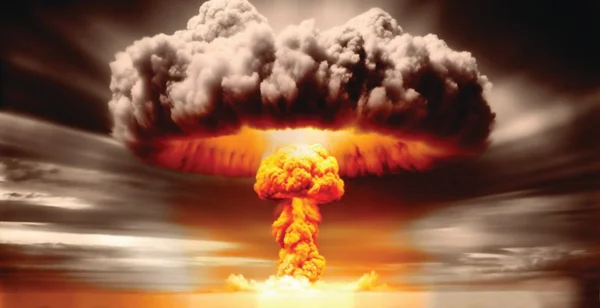
    Western propaganda says that we are not at war yet. This is false. We are at war, and people in the UK are being led to believe that none of this is happening. The government is fully aware that they are strategically attempting to trigger Russia. The media will begin scapegoating Russia, in order to place blame on them for things currently happening in Europe. This is designed to convince Italy, France, and Spain, among many other European countries, that Russia has malicious intentions towards them in an attempt to further isolate Russia, and to eventually discredit Giorgia Meloni’s anti-Islam stance. This is all a psychological operation being carried out by the British government, and it favours Islam.  

    Deep down, the imperialist agenda is worse than any other current agenda. Prime Minister Keir Starmer already took a number of measures which aim to protect the criminals, and to criminalise normal people. Dangerous offenders are being released early from jail in order to make space for people who might have posted something as innocuous as “who the fuck is allah?” on social media, or that have verbally expressed such a thing publicly. These extreme measures protect Islam, rapists, and paedophiles. They neglect victims, and radicalise otherwise normal individuals who feel threatened by displacement and replacement. 

    The Ministry of Defence (MOD) in the UK has authorised Ukraine to use long-range missiles against Russia. These NATO missiles, when used in the offence of a country, become the trigger which unfolds a series of unfortunate events. The UK’s capabilities are enormous, and should never be underestimated. The UK is capable of causing sabotages in allied countries only to scapegoat Russia. Yes, the UK is capable of eliminating and creating evidence to accomplish any of their goals. 

    Russia is currently being overwhelmed with aggression emanating from the UK and the US, and being applied through Ukraine as a proxy. Will Vladimir Putin give in to the fear-mongering being propagated by Western propaganda? No. The world stands with Russia. Africa, Asia, and Latino America increasingly support Russia. But the best news is that Israel might also be siding with Russia next. 

    For a long time, Western countries have used Israel as a token, claiming they are pro-semite. But here in the UK, no prime minister or home secretary has ever taken as extreme measures to protect Jews, as the current government does to protect Islamist criminals. Even pro-Hamas activists are being protected. Indeed, Benjamin Netanyahu can increasingly notice the two-tier nature of Western culture, and the hypocritical diplomatic stance they hold. 

    The UK decided to stop trading weapons with Israel, abandoning Israel when it is most at risk. This betrayal was condemned by Netanyahu, and this is why now it is more likely than ever before that Russia and Israel will become allies. This is positive when it comes to truth and justice, and for the change the subdeveloped nations pray and hope for. 

    Eschatological theorists believe that both Russia and Israel have a prophetic role to play in the great tribulation being awaited by Christians. The labour party in the UK has proved that they will put any sort of abhorrent human being over their own people, and over the vulnerable and innocent. Those who believe in prophecies, expect the UK to face epidemics, plagues, natural disasters, and conflicts. All these outcomes, according to the Bible, are dictated by God and are a direct repercussion of social immorality and injustices. 

    The UK government is pro-Islam, anti-semitic, and anti-Christian. Paedophiles are justified based on their Islamic religion, and their Jewish or Christian victims are not protected. Rapists are allowed to walk free, and this is indeed creating tensions all over the planet. For instance, it is no surprise that Iraq supports the UK, and that Iran naturally does not. Iraqi culture is a culture of female subjugation. 

    Even though the UK claims to be taking de jure measures to combat misogyny, the truth is that de facto wise, women continue to be under-represented even in jobs where oestrogen performs more efficiently than testosterone. This cultural misogyny is also reified in NICE reports which show that Borderline Personality Disorder (BPD) is the most abused condition in the UK. Also, in the way that the current administration is persecuting the English indigenous people, as well as other ethnicities, in order to safeguard the Iraqi people, and the Ukrainian people. 

    Prime Minister Keir Starmer has gone as far as cutting funds of the elderly in order to spend such taxpayer money supporting Ukraine’s terrorist attacks against Russian civilians. As a matter of fact, now Ukraine is placing innocent Russian civilians in concentration camps. The Western media continues to be an accomplice of such a crime, as they barely report on these gruesome details of reality. Canada is now also being vocal about participating in World War III.

    The UN secretary, Antonio Guterres condemns the Jew, but nowhere does he condemn the paedophile that effects child marriage. Indeed, the UN was created as a pro-semite organisation, and has been contaminated by Islam. Now the UN secretary general cares about Yemen and Palestine, but only because that is where paedophiles are found, and such seems to be the ultimate protected characteristic  of this organisation. Yes, the UN no longer seems to want to eliminate Nazism. Instead, they try to eliminate self-defence, and to protect the perpetrators, whilst neglecting the victim

    All in all, it is natural to see why many people pray and hope for a new world order. Why care about the paedophile, instead of the child? Why protect the Nazi instead of the Jew? Why jail the defender of the nation, instead of the terrorist? When justice fails, change is a necessity. 

  • Iran-Britain Conflict: Oil, Nuclear Program, and Escalating Tensions

    Iran-Britain Conflict: Oil, Nuclear Program, and Escalating Tensions

    Advertisements

    One of the major sources of conflict between Iran and Britain has been the issue of British intervention in the Iranian economy and politics. In the early 20th century, Britain controlled much of Iran’s oil industry through the Anglo-Persian Oil Company, now known as BP. This control over Iran’s oil resources gave Britain significant leverage over the Iranian government , leading to resentment and hostility from the Iranian people.

    Another point of contention between Iran and Britain has been the issue of Iranian nuclear capabilities. Britain, along with other Western nations, has been critical of Iran’s nuclear program, fearing that it could be used to develop nuclear weapons. As a result, Britain has imposed economic sanctions on Iran in an effort to curb its nuclear ambitions. This has further strained relations between the two countries, with Iran viewing Britain’s actions as meddling in its internal affairs.

    In recent years, the conflict between Iran and Britain has escalated, with incidents such as the seizure of a British oil tanker by Iran in 2019. This incident led to increased tensions between the two nations and prompted the UK to deploy warships to the region to protect British interests.

    Despite these tensions, there have been efforts to improve relations between Iran and Britain. In 2016, Iran reached a landmark nuclear deal with world powers, including Britain, in which Iran agreed to limit its nuclear program in exchange for the lifting of economic sanctions. This deal was seen as a step towards easing tensions between the two countries, although it has since been threatened by the withdrawal of the United States in 2018.

    Overall, the conflict between Iran and Britain remains a complex and ongoing issue that is influenced by a range of factors, including historical grievances, political differences, and regional tensions. It is crucial for both nations to engage in dialogue and diplomacy to address their differences and work towards a peaceful resolution of the conflict.