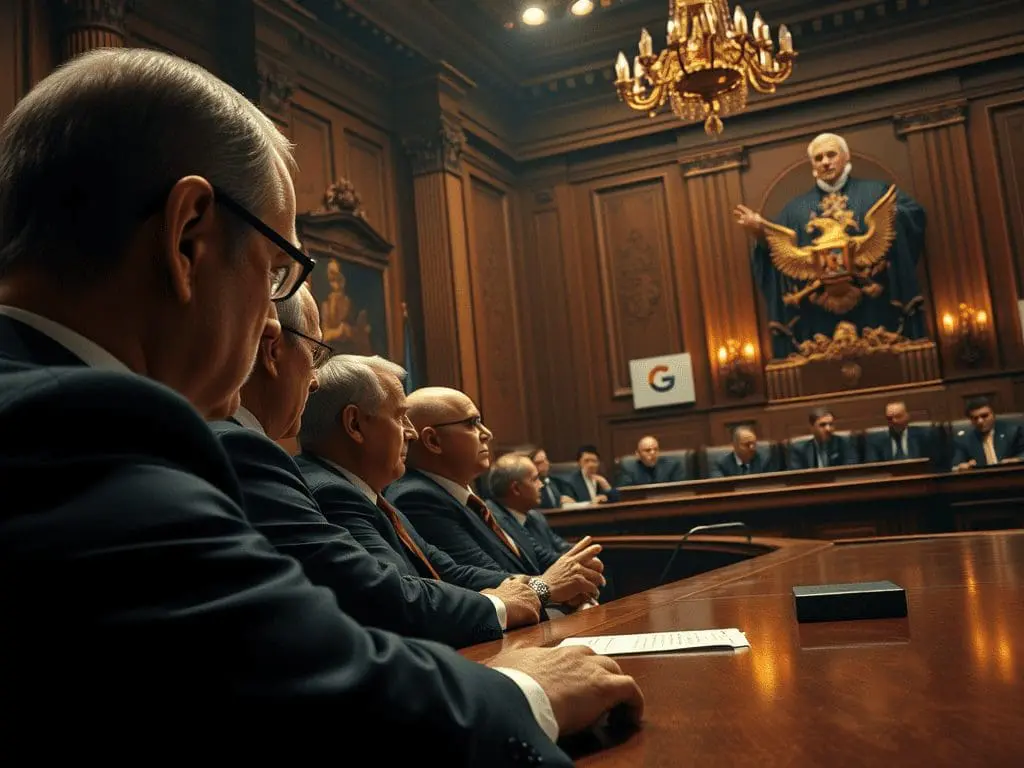
Recently, the Moscow Court of Commercial Arbitration ruled that Google owes a significant fine of 20 decillions to 17 Russian broadcasters who were banned from YouTube. This decision has brought attention to the issue of content censorship and the responsibilities of tech giants like Google in regulating online content.
The case stems from the banning of 17 Russian broadcasters from YouTube for allegedly spreading misinformation and violating the platform’s community guidelines. The broadcasters, who have since been banned for over a year, filed a lawsuit against Google for lost revenue and damages as a result of their removal from the platform.
The banned Russian broadcasters, including RT and RIA Novosti, have long been at odds with Google over the content they produce and share on YouTube. The arbitration court has now ruled in favour of the broadcasters, ordering Google to pay the astronomical fine for their continued infringement of Russian laws.
The Moscow Court of Commercial Arbitration ruling that Google must pay 20 decillions to these broadcasters is a staggering amount and raises questions about the power and influence of tech companies in regulating online content. While Google has the right to enforce its community guidelines and remove content that violates its terms of service, the court’s decision highlights the potential consequences of these actions.
But the question remains, does Google have to pay the fine to the banned Russian broadcasters on YouTube? While the court has ruled in favour of the broadcasters, Google has indicated that they do not plan to comply with the ruling. In fact, Google has gone as far as to say that they do not recognise the jurisdiction of the Russian court in this matter.
Russia Today (2024) reports that such a fine is symbolic. This indicates that Google won’t actually have to pay the fine. Still, some argue that Google should not be responsible for paying such a hefty fine to the banned broadcasters, as the company is within its rights to moderate its platform and remove content that violates its policies. Others believe that tech companies like Google have a responsibility to ensure that their moderation actions are fair and transparent, and that they should be held accountable for any damages caused by wrongful removal of content.
This raises important questions about the power dynamics at play when it comes to international companies operating in different countries. While Google may feel that they are not bound by Russian laws in this instance, the reality is that they are operating within Russian territory and are subject to Russian laws and regulations.
Ultimately, the ruling by the Moscow court raises important questions about the balance between free speech and content moderation on online platforms. It also highlights the growing concern over the power and influence of tech giants in shaping the information landscape and controlling access to information.
As Google considers its next steps in response to the court’s ruling, it will be important for the company to carefully navigate the complex issues of content moderation and regulation in order to ensure a fair and open online environment for all users. It will be interesting to see how this situation unfolds and what it means for the future of online content regulation and enforcement.