

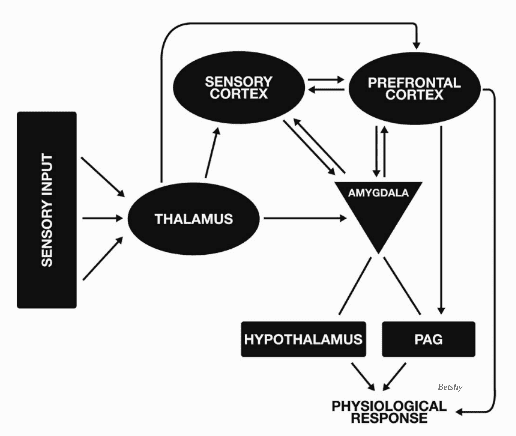
Figure:
Schematic diagram showing primary structures and connections within the emotion processing network.
Reference:
Grimshaw, G.M., 2018. Affective neuroscience: a primer with implications for forensic psychology. Psychology, Crime & Law, 24(3), pp.258–278.
Share this:

You Might Also Enjoy Reading

Breatharianism is a controversial and extreme dietary practice that claims…

Roman Abramovich is a Russian billionaire and past owner of…

In any group setting, from workplaces to social circles, decision-making…

Eros, the Greek god of love and desire, has been…


In our continuous quest to comprehend the complexity of human…

Temporary narcissism is a term used to describe a period…


Fantasies have often been seen as mere whimsical daydreams or…

Narcissistic abuse is a form of emotional abuse that is…

Thermodynamics is a branch of physics that deals with the…

In any workplace, the power of the people cannot be…