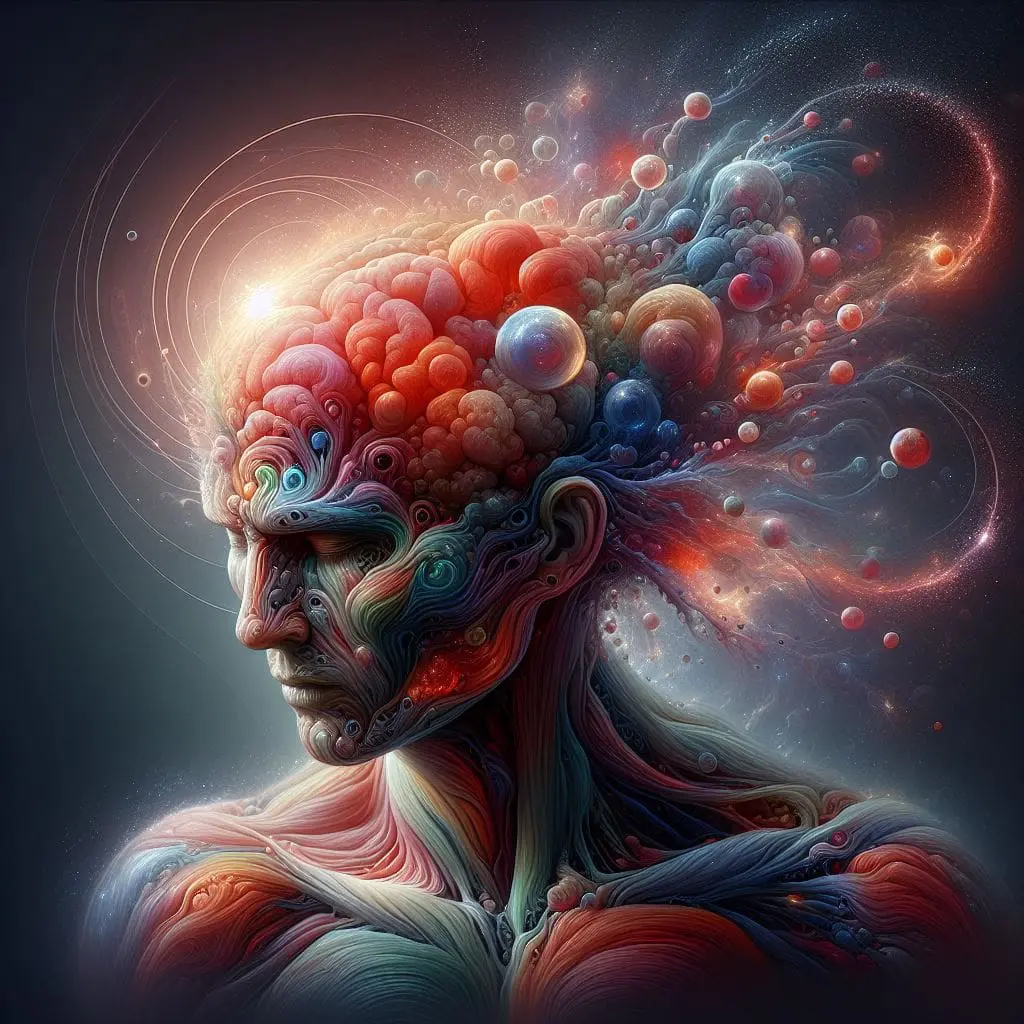
Mental processes are the underlying mechanisms that enable us to perceive, think, and respond to the world around us. Our minds are constantly engaged in various mental activities that allow us to interact with our environment and make sense of our experiences. Understanding the different types of mental processes can provide insight into how our minds work and how we can optimise our cognitive abilities.
1. Perception
Perception is the process of organising and interpreting sensory information to create a meaningful understanding of the world. Our senses gather information from the environment, and our brain processes and interprets this information to construct a mental representation of our surroundings. Perception allows us to recognise objects, people, and events, and make sense of their meaning and significance.
2. Attention
Attention refers to the ability to selectively focus on specific stimuli while filtering out irrelevant or distracting information. It is crucial for information processing and cognitive control. We use attention to concentrate on important tasks, sustain our focus, and switch our attention between different stimuli as required. Attention can be conscious or unconscious, and its limitations can affect our ability to perform tasks efficiently and accurately.
3. Memory
Memory is the mental process that involves encoding, storing, and retrieving information. It allows us to retain past experiences, knowledge, and skills and use them for present and future situations. memory is not a single entity; it consists of different types such as sensory memory, short-term memory, and long-term memory. Each plays a distinct role in encoding different types of information and maintaining it for various durations.
4. Thinking and problem-solving
Thinking encompasses the mental processes involved in forming thoughts, organising information, and making decisions. It involves cognitive activities like reasoning, judgement, and critical thinking. Problem-solving is a particular type of thinking that involves finding solutions to complex and challenging tasks or situations. Our thinking processes can be influenced by various factors such as biases, emotions, and cultural influences.
5. Language and communication
Language is a unique mental process that enables us to communicate our thoughts, ideas, and emotions to others. It involves various linguistic abilities, including understanding, speaking, reading, and writing. Language provides us with a powerful tool for expressing ourselves, sharing knowledge, and connecting with others. The process of language acquisition and the ability to comprehend and produce coherent speech involve complex cognitive mechanisms.
6. Emotion and motivation
Emotion and motivation are closely related mental processes that drive our behaviour and influence our cognitive functions. Emotions shape our perceptions, thinking, and decision-making. They provide us with valuable information about the significance and relevance of our experiences. Motivation, on the other hand, propels us to take action and pursue goals. It affects our attention, memory, and problem-solving, and contributes to our overall well-being.
Conclusion
Understanding these different types of mental processes can help us gain insight into how our minds work, and how we can enhance our cognitive skills. By recognising the importance of perception, attention, memory, thinking, language, and emotion in our daily lives, we can make conscious efforts to optimise and improve our mental functioning. Whether it is improving our focus through mindfulness exercises, expanding our vocabulary to enhance communication, or developing problem-solving strategies, the knowledge of these mental processes empowers us to harness our cognitive abilities to their fullest potential.
Share this:

You Might Also Enjoy Reading