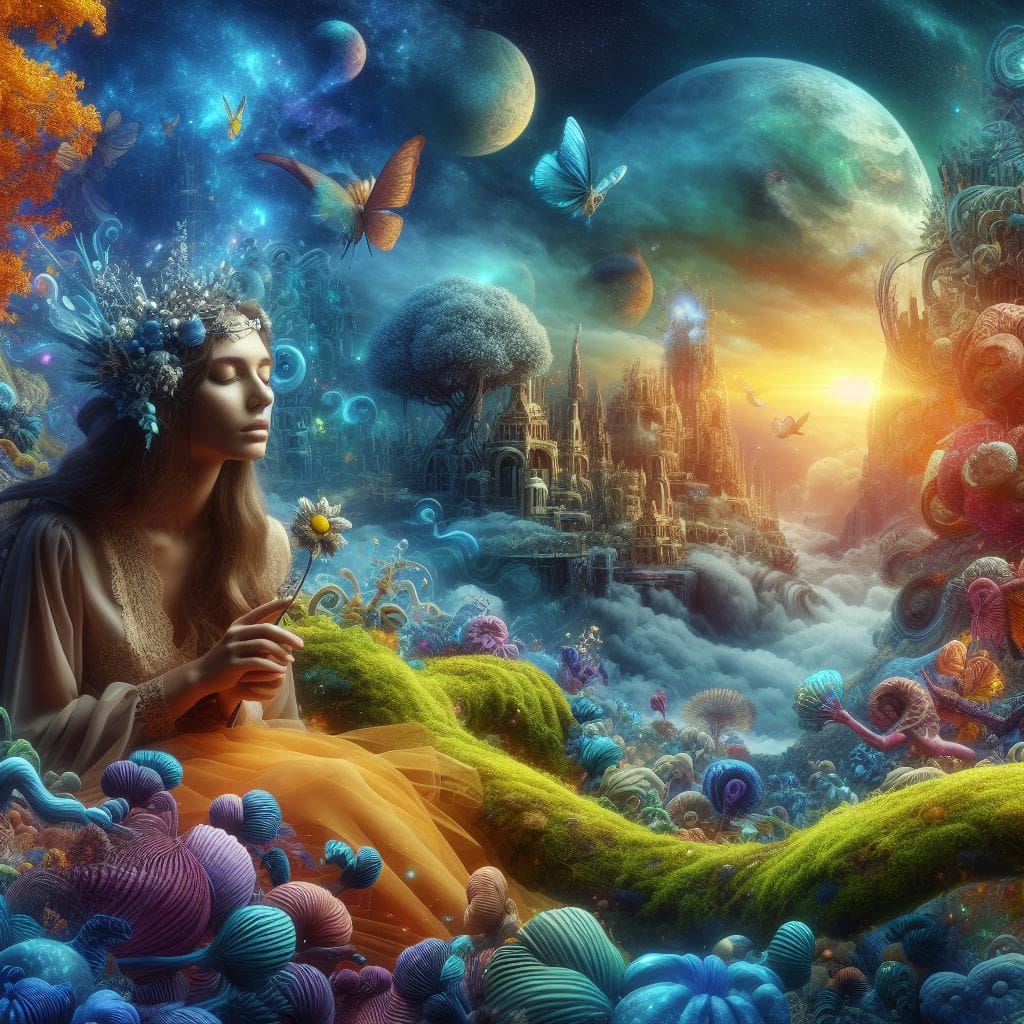
Tag: Imagination

  • The Psychology of Fantasies: Exploring the Power of Imagination

    The Psychology of Fantasies: Exploring the Power of Imagination

    Advertisements

    1. Understanding the Nature of Fantasies

    Fantasies encompass a broad range of imaginative thoughts, scenarios, and desires that can be conscious or unconscious. They often serve as an outlet for creativity, wish fulfilment, or a means to explore unfulfilled aspects of one’s life. By building these imaginary narratives, individuals can experiment with different identities, explore taboo desires, or find solutions to real-life challenges.

    2. Emotional Catharsis and Escapism

    Fantasies provide a healthy escape from the rigours of everyday life, offering an emotional catharsis that allows individuals to temporarily set aside their anxieties, stressors, and problems. Such imaginative journeys transport us to a world full of endless possibilities, where we can experience anything without judgement or consequences.

    3. Exploring Unconscious Desires and Fears

    Psychoanalytic theories propose that fantasies provide a space for individuals to express their unconscious desires, fears, and unresolved conflicts. These deep-seated emotions often remain hidden in our subconscious yet manifest through symbolic representations in fantasies. By analysing these symbolic elements, one can gain insight into underlying psychological complexities and work towards resolving them.

    4. Self-Reflection and Personal Growth

    Fantasies can serve as a powerful tool for introspection, helping individuals clarify their values, goals, and aspirations. By exploring various scenarios in their minds, individuals can gain a deeper understanding of their own core desires, motivations, and strengths. This self-reflection paves the way for personal growth, self-discovery, and enhanced self-awareness.

    5. Therapeutic Potential

    Therapists often employ the technique of guided imagery, a form of fantasy-based visualisation, to help clients examine deeper emotions, traumas, and unresolved conflicts. By exploring the subconscious through fantasy, individuals can gain valuable insights and initiate the healing process. Furthermore, fantasy-based therapies like psychodrama or role-playing can allow individuals to experiment with new behaviours, fostering personal development and self-confidence.

    Conclusion

    By understanding the psychology of fantasies, we begin to appreciate the significant role they play in our lives. Through imaginative narratives, we escape, explore, and forge new paths towards personal growth and self-realisation. Embracing fantasies as a means of self-reflection and utilising them therapeutically can unlock a world of untapped potential, offering invaluable insights into our emotions, desires, and inner complexities. So, indulge in your wildest daydreams, because within them lies the power to shape your reality.

    Advertisements
  • The Psychology of Imagination: Unlocking the Power of the Mind

    The Psychology of Imagination: Unlocking the Power of the Mind

    Advertisements

    Imagination is a complex construct influenced by various psychological processes. One key factor is creativity, the ability to generate unique and valuable ideas. Imagination and creativity complement each other, as imagination serves as the foundation from which creative ideas can be born. Studies have shown that individuals who engage in creative activities, such as painting, writing, or playing an instrument, exhibit enhanced imagination skills over time.

    The role of perception cannot be overlooked either. Our imagination often relies on our stored memories and perceptions of the world around us. These mental representations allow us to interpret, reconstruct, and conjure up new scenarios that go beyond what we have directly experienced. For example, when we read a novel, our imagination allows us to visualise the characters and settings based on the author’s descriptions, creating a unique and personal experience.

    Furthermore, the psychology of imagination intersects with emotions. Emotions have a significant influence on the content and intensity of our imaginative experiences. Positive emotions, such as joy or excitement, can lead to more vivid and creative images, while negative emotions, such as fear or anxiety, may generate heightened and sometimes distressing mental images. Considering this connection between emotions and imagination can help us better understand the impact of our thoughts and fantasies on our emotional well-being.

    Daydreaming is another fascinating aspect of imagination. Whether it’s during a mundane task or a moment of relaxation, people often engage in spontaneous and elaborate daydreams. Daydreaming provides an opportunity for our minds to wander freely, allowing us to explore alternative realities, relive past experiences, or envision future possibilities. Surprisingly, studies have shown that daydreaming can be beneficial for problem-solving and enhancing creativity, as it allows the mind to make unexpected connections and associations.

    The psychology of imagination is not only limited to individual experiences but also extends to social interactions. Shared imaginary worlds, such as those found in literature, movies, or gaming, offer a collective imaginative experience. These shared narratives act as a bridge between different individuals, enabling a sense of belonging and shared identity. Societies have cultivated mythologies and folklore for centuries, using the power of imagination to connect people and shape cultural values.

    Understanding the psychological facets of imagination has practical implications in various fields. From education to therapy, harnessing the power of imagination can yield numerous benefits. In classrooms, teachers can incorporate imaginative activities to enhance learning, encouraging students to visualise concepts and think creatively. In therapy, techniques like guided imagery allow individuals to tap into their imagination to confront and process complex emotions.

    In conclusion, the psychology of imagination is a multidimensional and captivating topic. It encompasses creativity, perception, emotions, daydreaming, and social interactions. Imagination is a potent tool that stimulates innovation, promotes empathy, and enhances problem-solving skills. By recognising and harnessing the power of our imagination, we can unlock the vast potential of our minds and create a world full of endless possibilities.

    Advertisements