Category: Science

  • The Non-Locality of Consciousness

    The Non-Locality of Consciousness

    Advertisements

    This question is at the heart of the concept of the non-locality of consciousness. Non-locality refers to the idea that consciousness is not limited to a specific location in the brain or body, but rather is a universal and interconnected aspect of reality that transcends physical boundaries.

    One of the most well-known proponents of the non-locality of consciousness is the renowned physicist, Erwin Schrödinger. In his book “What is Life?” he argued that consciousness is a fundamental aspect of the universe, existing independently of the physical body. He believed that consciousness is a universal phenomenon that connects all living beings and is not confined to the individual brain.

    This idea is supported by various mystical and spiritual traditions, which have long held the belief that consciousness is an aspect of reality that exists beyond the physical body. In Eastern philosophy, for example, the concept of the “universal mind” or “collective consciousness” suggests that all beings are interconnected through a shared consciousness that transcends individuality.

    Recent advances in quantum physics have also shed light on the non-locality of consciousness. Quantum entanglement, a phenomenon in which two particles become connected and can influence each other’s states instantaneously regardless of the distance between them, suggests a form of non-local communication that challenges our traditional understanding of space and time.

    So what does the non-locality of consciousness mean for our understanding of reality? It suggests that consciousness is not confined to the physical body, but is a fundamental aspect of the universe that connects all living beings. It challenges the notion of individuality and separateness, pointing towards a more interconnected view of reality.

    Ultimately, the concept of the non-locality of consciousness invites us to explore the nature of the mind and to consider the possibility that consciousness is more than just a byproduct of brain activity. It opens up new avenues for exploring the nature of reality and our place within it, inviting us to expand our understanding of consciousness and its role in shaping our experience of the world.

  • Superposition and Parallel States: The Power of Possibility

    Superposition and Parallel States: The Power of Possibility

    Advertisements

    In quantum physics , the idea of superposition allows particles to exist in multiple states simultaneously, until a measurement is taken and the particle collapses into a single state. This suggests that possibilities are not limited to a single outcome, but rather a multitude of potential outcomes that exist in parallel until a choice is made or an action is taken. This idea of parallel states can be applied to our own lives, where we are constantly faced with choices and decisions that lead to different outcomes.

    By embracing the concept of superposition and parallel states, we can tap into the power of possibility and potential. Instead of feeling limited by our current circumstances or the choices we have already made, we can recognise that there are infinite possibilities available to us at any given moment. This mindset allows us to approach challenges with a sense of curiosity and openness, rather than fear or resistance.

    When we embrace the idea of superposition and parallel states, we can see that the power of possibility is truly limitless. We are not bound by a single path or outcome, but rather have the ability to explore multiple options and potential outcomes simultaneously. By remaining open to all possibilities, we can navigate through life with a sense of flexibility and adaptability, allowing us to make choices that align with our values and goals.

    In a world that often feels chaotic and uncertain, the concept of superposition and parallel states can offer us a sense of empowerment and agency. We are not passive bystanders in our own lives, but active participants in creating our own reality. By acknowledging the power of possibility and embracing the idea that multiple outcomes can exist simultaneously, we can approach life with a sense of purpose and intention, knowing that we have the power to shape our own destiny.

    In conclusion, the concepts of superposition and parallel states offer us a new way of looking at the world and our place within it. By understanding that possibilities are not limited to a single outcome, but rather exist in parallel until a choice is made, we can harness the power of possibility and potential in our lives. By embracing this mindset, we can navigate through life with a sense of curiosity, flexibility, and empowerment, allowing us to make choices that align with our true desires and aspirations.

  • The Psychology of Chaos Theory

    The Psychology of Chaos Theory

    Advertisements

    But beyond the realm of mathematics and science, chaos theory also holds valuable insights into the inner workings of the human mind and behaviour. The psychology of chaos theory explores how individuals react and adapt to unpredictable and chaotic environments, and how these experiences can ultimately shape our thoughts, emotions, and actions.

    One key concept in chaos theory is the idea of sensitivity to initial conditions. This means that slight variations in the starting point of a system can have major implications for its future behaviour. In psychology, this can be seen in how individuals respond to unexpected events or disruptions in their lives. For some, a minor setback can lead to feelings of anxiety or frustration, while others may view it as an opportunity for growth and learning.

    Another important aspect of chaos theory is the concept of self-organisation. This is the idea that complex systems have an inherent ability to adapt and evolve in response to changing circumstances. In the realm of psychology, this can be seen in how individuals cope with chaos and uncertainty in their lives. Some may resort to rigid routines and control mechanisms to try and impose order on their surroundings, while others may embrace the chaos and find new ways to thrive in the midst of uncertainty.

    Chaos theory also highlights the interconnectedness of systems and the ripple effects that small changes can have on the overall structure of a system. In psychology, this can be observed in how individual behaviour can influence the dynamics of relationships, groups, and even entire societies. A single person’s actions or decisions can have far-reaching consequences that may not be immediately apparent.

    Ultimately, the psychology of chaos theory reminds us of the inherent complexity and unpredictability of the human experience. By embracing the chaos and uncertainty in our lives, we can learn to adapt, grow, and thrive in the face of adversity. Instead of fearing the unknown, we can harness the power of chaos to make sense of the world around us and navigate the ever-changing landscape of our minds and emotions.

  • Accelerated Cellular Growth in the Brain

    Accelerated Cellular Growth in the Brain

    Advertisements

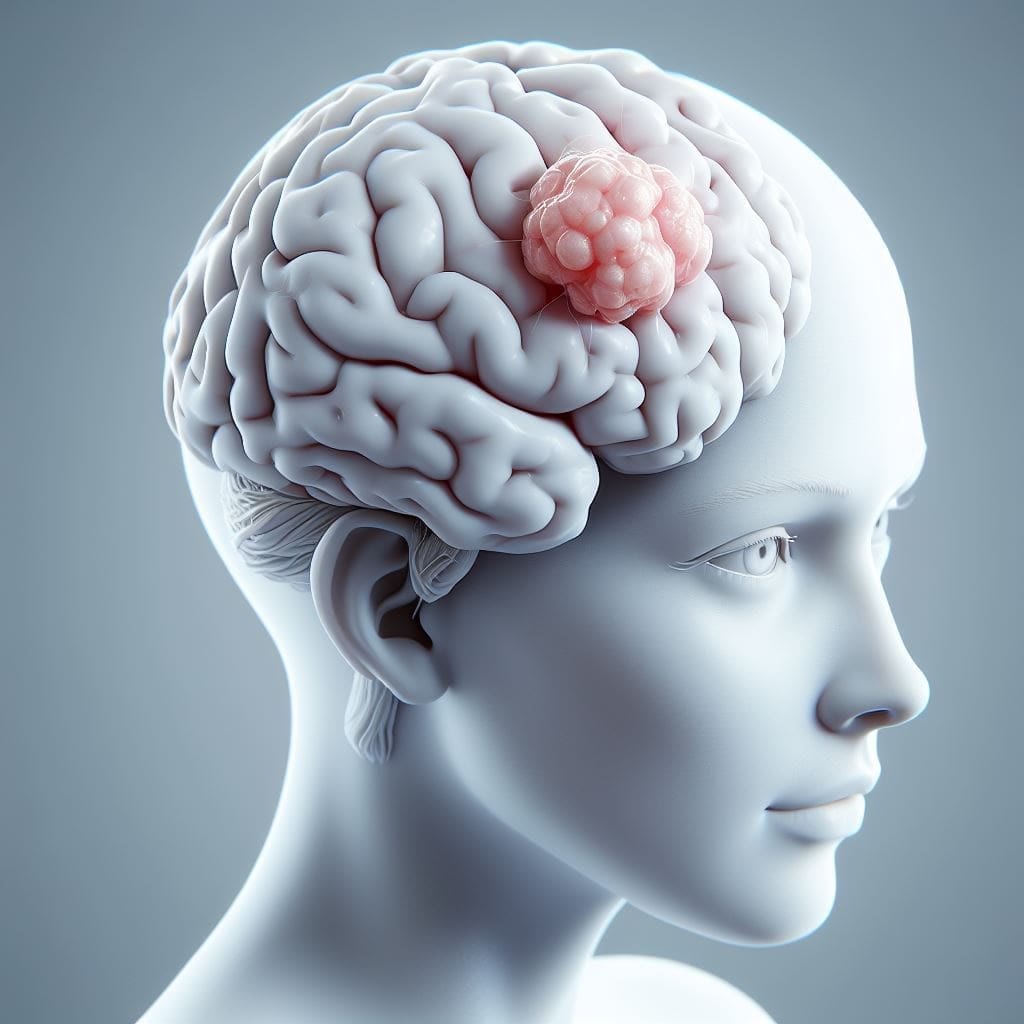
    Accelerated cellular growth in the brain, also known as hyperplasia, can occur for a variety of reasons. One common cause is a tumour, which is an abnormal growth of cells in the brain that can lead to various symptoms such as headaches, seizures, and cognitive impairments. Another possible cause is a genetic condition that causes the cells in the brain to grow at an unusually fast rate.

    When cellular growth in the brain is accelerated, it can have serious consequences for an individual’s health. The excess cells can put pressure on surrounding brain tissue, leading to inflammation and damage. This can result in symptoms such as headaches, dizziness, and difficulties with memory and concentration.

    Treatment for accelerated cellular growth in the brain typically involves removing the abnormal cells through surgery or radiation therapy. In some cases, medication may also be used to help control the growth of cells and prevent further complications.

    Research into accelerated cellular growth in the brain is ongoing, as scientists work to better understand the underlying causes of this condition and develop more effective treatments. By gaining a deeper understanding of how cellular growth is regulated in the brain, we can hope to improve outcomes for those affected by hyperplasia.

    In conclusion, accelerated cellular growth in the brain is a complex and potentially dangerous condition that requires prompt and effective treatment. By continuing to study this phenomenon, researchers can work towards developing better therapies to help those affected by this condition. If you or someone you know is experiencing symptoms of accelerated cellular growth in the brain, it is important to seek medical attention promptly to receive the appropriate care.

  • How the Mind Interacts with Matter

    How the Mind Interacts with Matter

    Advertisements

    One of the key theories that attempt to explain this interaction is dualism, which suggests that the mind and matter are two separate entities that interact with each other in some way. This idea dates back to the ancient Greeks, particularly the philosopher Plato, who believed that the mind and body were distinct and independent from each other.

    On the other hand, monism argues that the mind and matter are ultimately the same thing, and that what we perceive as mental phenomena are ultimately rooted in the physical world. This perspective is often associated with thinkers like the philosopher Spinoza, who saw the mind as an aspect of the physical universe.

    In more recent times, scientific advancements have shed new light on the relationship between the mind and matter. For example, neuroscience has shown us how the brain processes information and influences our thoughts, emotions, and behaviours. Studies have also revealed the ways in which our mental states can impact our physical health, through mechanisms such as the mind-body connection and the placebo effect.

    Moreover, quantum physics has introduced the idea that the mind may have a role in shaping reality at a fundamental level. The famous double-slit experiment, for instance, demonstrates how light behaves differently depending on whether it is observed or not. Some theorists suggest that consciousness may play a significant role in determining the nature of physical reality.

    As we continue to explore the mysteries of the mind and matter, it is clear that our understanding of their relationship is far from complete. The complex interplay between these two realms offers a rich and challenging field of study for philosophers, scientists, and anyone curious about the nature of existence.

    In the end, perhaps the key to understanding how the mind interacts with matter lies in embracing a holistic perspective that recognises the interconnectedness of all things. By exploring the connections between our mental experiences and the physical world around us, we may come to a deeper understanding of the profound and mysterious relationship between mind and matter.

  • The Dark Side of Bio-Science: Modern Biological Weapons and Their Deadly Potential

    The Dark Side of Bio-Science: Modern Biological Weapons and Their Deadly Potential

    Advertisements

    Biological weapons are some of the deadliest and most terrifying weapons in existence. These weapons use living organisms or their byproducts to harm or kill humans , animals, or plants. The potential for devastation with biological weapons is almost unimaginable, as they have the ability to spread rapidly and be virtually undetectable until it is too late.

    One of the most notorious examples of biological weapons in recent history is the Anthrax attacks in the United States in 2001. Letters containing powdered Anthrax spores were sent to several media outlets and government offices, resulting in five deaths and 17 people getting sick. The attacks caused widespread panic and raised concerns about the potential for bio-terrorism.

    The rise of modern biological weapons poses a serious threat to global security. Not only are these weapons capable of causing mass casualties and chaos, but they also have the potential to be used by terrorist organisations and rogue states to carry out attacks without leaving a trace. The ability to manipulate genes and create new strains of pathogens means that the potential for new, more deadly biological weapons is constantly increasing.

    Despite the grave risks associated with biological weapons, the development and use of these weapons continue to be a pressing concern for governments and international organisations. Efforts to prevent the proliferation of biological weapons include the Biological Weapons Convention , which bans the development, production, and stockpiling of biological weapons. However, enforcement of the convention is challenging, and the threat of biological weapons remains very real.

    It is essential for the international community to remain vigilant and proactive in addressing the issue of biological weapons. This includes investing in research and technology to detect and counteract biological threats, strengthening global health security systems, and promoting transparency and collaboration among nations. By taking proactive measures to prevent the use of biological weapons, we can help ensure the safety and security of our world for generations to come.

  • Aurora Borealis: Why Do Northern Lights  Happen?

    Aurora Borealis: Why Do Northern Lights  Happen?

    Advertisements

    But what exactly causes the Aurora Borealis to occur?

    The answer lies in the Earth’s atmosphere and its interaction with particles from the sun. The sun constantly emits a stream of charged particles known as the solar wind. When this solar wind reaches the Earth, it interacts with our planet’s magnetic field.

    The Earth’s magnetic field acts as a protective shield, deflecting most of the solar wind away from the planet. However, some of these charged particles are able to penetrate the magnetic field and enter the Earth’s upper atmosphere near the poles.

    When these particles collide with atoms and molecules in the Earth’s atmosphere, they transfer their energy to these particles, causing them to become excited. As these excited particles return to their normal state, they release photons of light, creating the vibrant patterns and colours of the Aurora Borealis.

    The colours of the Northern Lights are determined by the type of gas molecules that are being excited by the charged particles. Oxygen molecules typically produce green and red light, while nitrogen molecules produce blue and purple light.

    The intensity and frequency of the Aurora Borealis can vary depending on the activity of the sun. During periods of high solar activity, such as solar flares or coronal mass ejections, the solar wind is stronger and more charged particles reach the Earth, resulting in more frequent and intense displays of the Northern Lights.

    Overall, the Aurora Borealis is a stunning reminder of the interconnectedness of the Earth and the sun. It serves as a beautiful reminder of the complex and dynamic processes that occur in our atmosphere and beyond. So the next time you witness the Northern Lights dancing in the sky, take a moment to appreciate the scientific marvel that is unfolding before your eyes.