Category: Philosophy

  • Progressing as a Society: Overcoming Immature Ideologies and Sophomoric Concepts

    Progressing as a Society: Overcoming Immature Ideologies and Sophomoric Concepts

    Advertisements

    In British English, “sophomoric” refers to behaviour, ideas, or language that is overly simplistic, immature, or pretentious, particularly when considered characteristic of a young and inexperienced person.

    One of the most prevalent immature ideologies is black-and-white thinking, also known as binary or dualistic thinking. This type of mentality sees the world in absolutes, with no room for nuance or complexity. Individuals who adhere to black-and-white thinking often demonise those who hold opposing views, refusing to engage in meaningful dialogue or seek common ground. This type of mentality is not only intellectually lazy, but also perpetuates division and animosity among communities.

    Another immature ideology is tribalism, the instinctive loyalty to one’s own group or tribe at the expense of others. This mentality often leads to discrimination, prejudice, and conflict, as individuals prioritise their own interests over those of others. Rather than fostering empathy and understanding, tribalism divides people based on superficial characteristics such as race, religion, or political affiliation. By perpetuating a “us versus them” mentality, tribalism hinders progress and inhibits social cohesion.

    Furthermore, another common sophomoric concept is the belief in conspiracy theories. These theories, which often lack empirical evidence or logical reasoning, appeal to individuals who feel disillusioned or marginalised by mainstream narratives. By subscribing to conspiracy theories, individuals reject established facts and science in favour of sensationalist and often baseless claims. This not only perpetuates misinformation and confusion, but also erodes trust in institutions and undermines societal stability.

    In order to combat immature ideologies and sophomoric concepts, it is essential to promote critical thinking, open-mindedness, and intellectual curiosity. By engaging in respectful and constructive dialogue, individuals can challenge their own beliefs and consider alternative perspectives. By cultivating empathy and understanding, individuals can bridge divides and promote unity among diverse communities. By valuing evidence and reason, individuals can discern fact from fiction and reject misinformation and conspiracy theories.

    In conclusion, exploring and confronting immature ideologies and sophomoric concepts is essential for personal growth and societal progress. By challenging black-and-white thinking, tribalism, and conspiracy theories, individuals can foster a more inclusive, compassionate, and rational society. It is only by transcending simplistic beliefs and embracing complexity and nuance that we can truly evolve and thrive as a global community.

  • The Population Apocalypse Equation

    The Population Apocalypse Equation

    Advertisements

    One way to conceptualise this looming crisis is through what has been called the Population Apocalypse Equation. This equation considers various factors that contribute to population growth and its impact on our planet. It looks at things like birth rates, death rates, fertility rates, and resource availability to predict potential outcomes for the future.

    The Population Apocalypse Equation takes into account the exponential growth of the human population and how it is outpacing the Earth’s ability to sustain it. With the global population expected to reach 9.7 billion by 2050, the strain on resources like water, food, and energy will only continue to increase.

    In order to avoid a population apocalypse, we need to take action now. This means implementing sustainable practices that promote conservation and reduce waste. It also means addressing issues like gender inequality and lack of access to family planning services, which can help curb population growth.

    But perhaps most importantly, we need to shift our mindset and prioritise the well-being of our planet over short-term gains. This might mean making sacrifices in our own lifestyles in order to ensure a brighter future for generations to come.

    The Population Apocalypse Equation serves as a stark reminder of the challenges we face as a global community. It’s up to us to take responsibility and work towards a more sustainable future for all. The time to act is now, before it’s too late.

  • Cracks in the System: The State of Flawed Democracy

    Cracks in the System: The State of Flawed Democracy

    Advertisements

    One of the most glaring issues facing democracies today is the rise of authoritarian leaders who manipulate the democratic process to consolidate power and suppress dissent. From Hungary to Turkey to the United States, we have seen leaders who undermine the independence of the judiciary, restrict freedom of the press, and erode the checks and balances that are meant to ensure the government’s accountability to the people. These leaders often rely on fear-mongering and false promises to deceive the public into supporting their authoritarian agenda, exploiting the very democratic institutions that are meant to safeguard against tyranny.

    Another major issue facing democratic systems is the growing influence of money and special interests in politics . As corporate donations and lobbying efforts continue to shape policy decisions, the voice of the average citizen is drowned out by the interests of the wealthy elite. This has led to a system where politicians prioritise the needs of big donors over the needs of the general population, perpetuating inequality and eroding trust in the democratic process.

    Furthermore, the rise of social media and online misinformation has further exacerbated the flaws in democratic systems. With the spread of fake news and misinformation, voters are bombarded with distorted information that can sway their opinions and influence their voting behaviour. This has led to the polarisation of society, with people retreating into echo chambers where their beliefs are constantly reinforced, leading to a breakdown in rational discourse and compromise.

    In light of these challenges, it is clear that the state of democracy is in a precarious position. However, this does not mean that we should abandon the concept of democracy altogether. Rather, it is a call to action for all citizens to take a stand against the erosion of democratic principles and work towards a more inclusive and accountable system of governance.

    By holding our leaders accountable, speaking out against injustice, and actively participating in the democratic process, we can help to strengthen the foundations of democracy and ensure that our voices are heard. Only by acknowledging and addressing the cracks in the system can we hope to create a more just and equitable society for future generations.

  • Friedrich Nietzsche: Key Concepts

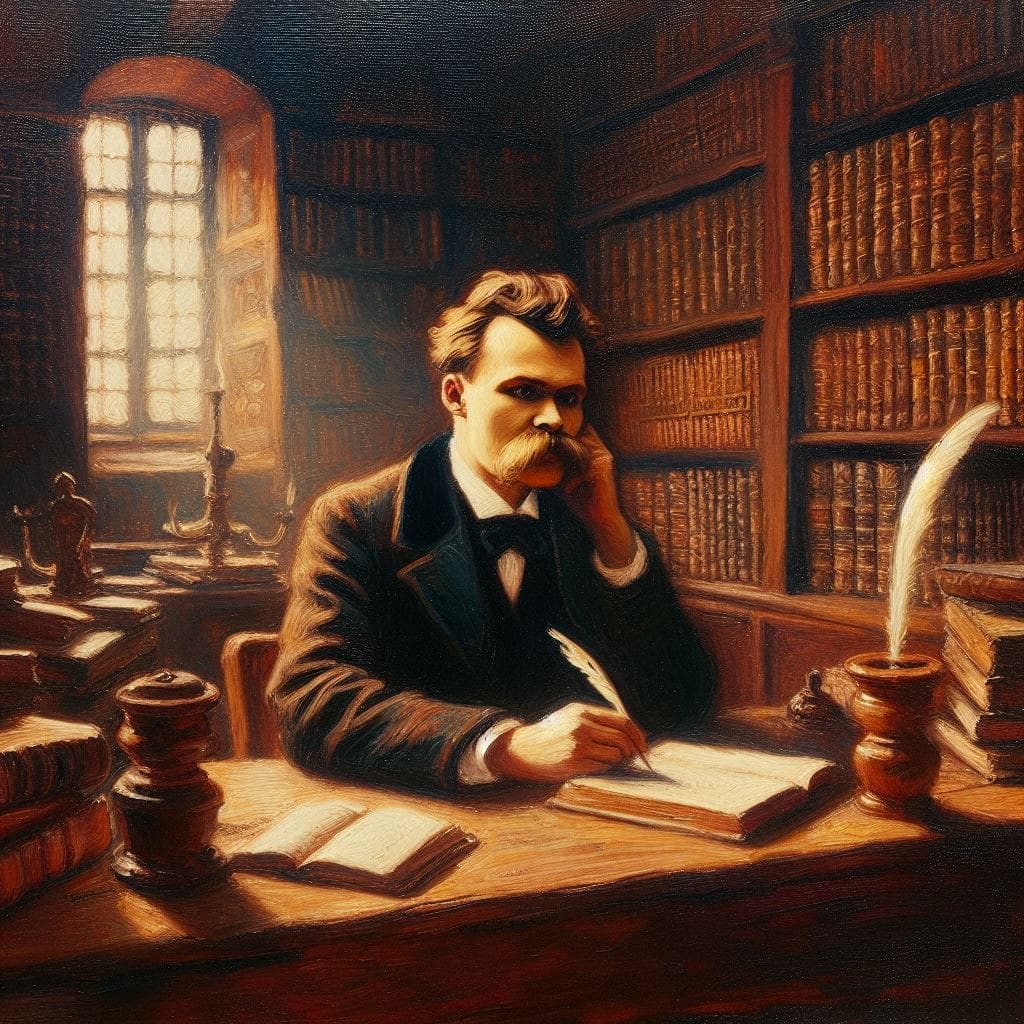
    Friedrich Nietzsche: Key Concepts

    Advertisements

    One of the key concepts in Nietzsche’s philosophy is the idea of the “will to power.” For Nietzsche, all living beings are driven by a fundamental desire to assert their power and influence over their environment. This drive is not necessarily a conscious one, but rather a basic instinct that motivates all of our actions and decisions. Nietzsche believed that society and culture often suppress this will to power, leading to a sense of alienation and nihilism in individuals.

    Nietzsche also famously proclaimed the idea of the “Ubermensch,” or “Overman.” The Ubermensch is a hypothetical individual who has transcended conventional morality and societal norms, and has created his own values based on his own will to power. The Ubermensch is a figure of self-overcoming and self-realisation, who is able to embrace the chaos and uncertainty of existence without succumbing to despair or resentment.

    Another central concept in Nietzsche’s work is the idea of “eternal recurrence.” Nietzsche posited the theory that time is infinite and cyclical, and that all events and experiences will repeat themselves endlessly. This concept serves as a challenge to individuals to live their lives in a way that they would be willing to repeat them again and again, embracing both the joys and sorrows of existence.

    Nietzsche’s philosophy is often misunderstood and misinterpreted, in part due to his provocative and often ambiguous writing style. However, his ideas continue to resonate with readers and thinkers alike, as they grapple with questions of meaning, morality, and human nature. Nietzsche’s work remains a touchstone for those interested in exploring the complexities of the human condition and seeking to live authentically in a world that often seems chaotic and uncertain.

  • Overpopulation and Spiritual Discontent

    Overpopulation and Spiritual Discontent

    Advertisements

    But one aspect of overpopulation that is often overlooked is the impact it has on our spiritual well-being. Many people experience a sense of spiritual discontent in a world that feels overcrowded and chaotic. This can manifest in feelings of isolation, disconnection, and a lack of purpose or meaning in life.

    As the world becomes more crowded, our connections to others can become diluted. We may feel lost in a sea of people, struggling to find our place and form deep, meaningful relationships. This sense of disconnection can lead to feelings of loneliness and alienation, which can weigh heavily on our spiritual well-being.

    In addition, overpopulation puts a strain on our natural environment, leading to pollution, deforestation, and depletion of resources. This can disrupt our sense of harmony and connection to the earth, which many people find to be a source of spiritual nourishment.

    Furthermore, overpopulation can also exacerbate social inequalities and injustices, leading to feelings of anger, frustration, and hopelessness. When we see so many people struggling to survive, it can be difficult to maintain a sense of faith in humanity and a belief in the inherent goodness of people.

    So what can we do to combat this spiritual discontent in the face of overpopulation? One important step is to cultivate a sense of mindfulness and gratitude in our daily lives. By appreciating the small moments of beauty and connection that we encounter, we can find solace and meaning in the midst of chaos.

    We can also strive to build stronger, more meaningful connections with others, even in a crowded world. By fostering empathy, compassion, and understanding in our relationships, we can combat feelings of isolation and disconnection.

    Finally, we can work towards creating a more sustainable and equitable world for future generations. By advocating for policies that promote population control, environmental conservation, and social justice, we can help alleviate the strains that overpopulation places on our spiritual well-being.

    In conclusion, overpopulation is not just a problem of numbers – it is a problem that affects our spiritual well-being as well. By acknowledging and addressing the spiritual discontent that can arise in a crowded world, we can work towards creating a more harmonious and fulfilling existence for ourselves and for future generations.

  • Difference Between Atheism and Agnosticism

    Difference Between Atheism and Agnosticism

    Advertisements

    Atheism is the belief in the non-existence of gods. Atheists do not believe in any gods or higher powers and reject the idea of a divine being or beings. Atheism is often characterised by a lack of belief in supernatural entities and a reliance on empirical evidence and reason. Atheists may hold a variety of philosophical and moral beliefs, but at their core, they do not believe in the existence of a deity.

    On the other hand, agnosticism is the belief that the existence of a god or gods is unknown or unknowable. Agnostics do not take a definitive stance on the existence of a higher power and acknowledge that the question of god’s existence may never be answered definitively. Agnostics may be open to the possibility of a god but feel that there is not enough evidence to make a conclusive determination.

    One key difference between atheism and agnosticism is the certainty of belief. Atheism asserts a definite position on the existence of gods, while agnosticism allows for ambiguity and uncertainty. Atheists are confident in their disbelief, while agnostics are open to the possibility of a god but remain sceptical due to a lack of evidence.

    Another distinction between atheism and agnosticism is the scope of belief. Atheism specifically addresses belief in gods or higher powers, while agnosticism pertains to the ability to know or determine the existence of a god. Atheists may have strong convictions about the absence of gods, while agnostics focus on the limitations of human knowledge and understanding.

    In conclusion, atheism and agnosticism are two distinct positions on the existence of gods. Atheism asserts a lack of belief in gods, while agnosticism acknowledges the uncertainty and unknowability of the question. Both perspectives offer valuable insights into the nature of belief, scepticism, and the search for truth. Ultimately, the choice between atheism and agnosticism is a personal one that reflects an individual’s beliefs, values, and experiences.

  • Foucault’s Theories on Surveillance and Disciplinary Mechanisms

    Foucault’s Theories on Surveillance and Disciplinary Mechanisms

    Advertisements

    One of Foucault’s most influential works on this topic is his book “Discipline and Punish: The Birth of the Prison.” In this seminal work, Foucault traces the evolution of disciplinary mechanisms from medieval forms of punishment to the modern prison system. He argues that modern surveillance and control are not simply about punishing individuals for their transgressions, but rather about shaping and moulding them into compliant, productive members of society.

    Foucault introduces the concept of the “panopticon,” a hypothetical prison design in which a single guard can observe all inmates without them knowing whether they are being watched or not. This constant surveillance creates a sense of internalised discipline, as individuals regulate their own behaviour out of fear of being punished. The panopticon serves as a metaphor for how surveillance operates more broadly in society, shaping our actions and conformity to social norms.

    Foucault also explores the concept of “biopower,” or the ways in which institutions and governments exert control over populations through surveillance and regulation of bodies and behaviours. This form of power operates at the level of the population as a whole, rather than just on individual subjects. Biopower is evident in practices such as public health campaigns, surveillance technologies, and social welfare programs that aim to manage and control populations for the greater good.

    In addition to the panopticon and biopower, Foucault introduces the idea of “disciplinary society,” in which individuals are subject to constant surveillance and regulation in schools, prisons, hospitals, and other institutions. The goal of disciplinary society is to produce obedient, docile subjects who conform to societal expectations and norms.

    Foucault’s theories on surveillance and disciplinary mechanisms offer a critical lens through which to examine the dynamics of power and control in contemporary society. By analysing the ways in which institutions and individuals surveil and discipline one another, we can better understand the mechanisms of social control that shape our lives and behaviours. Foucault’s work continues to be relevant today, as we grapple with questions of privacy, surveillance, and power in an increasingly interconnected world.