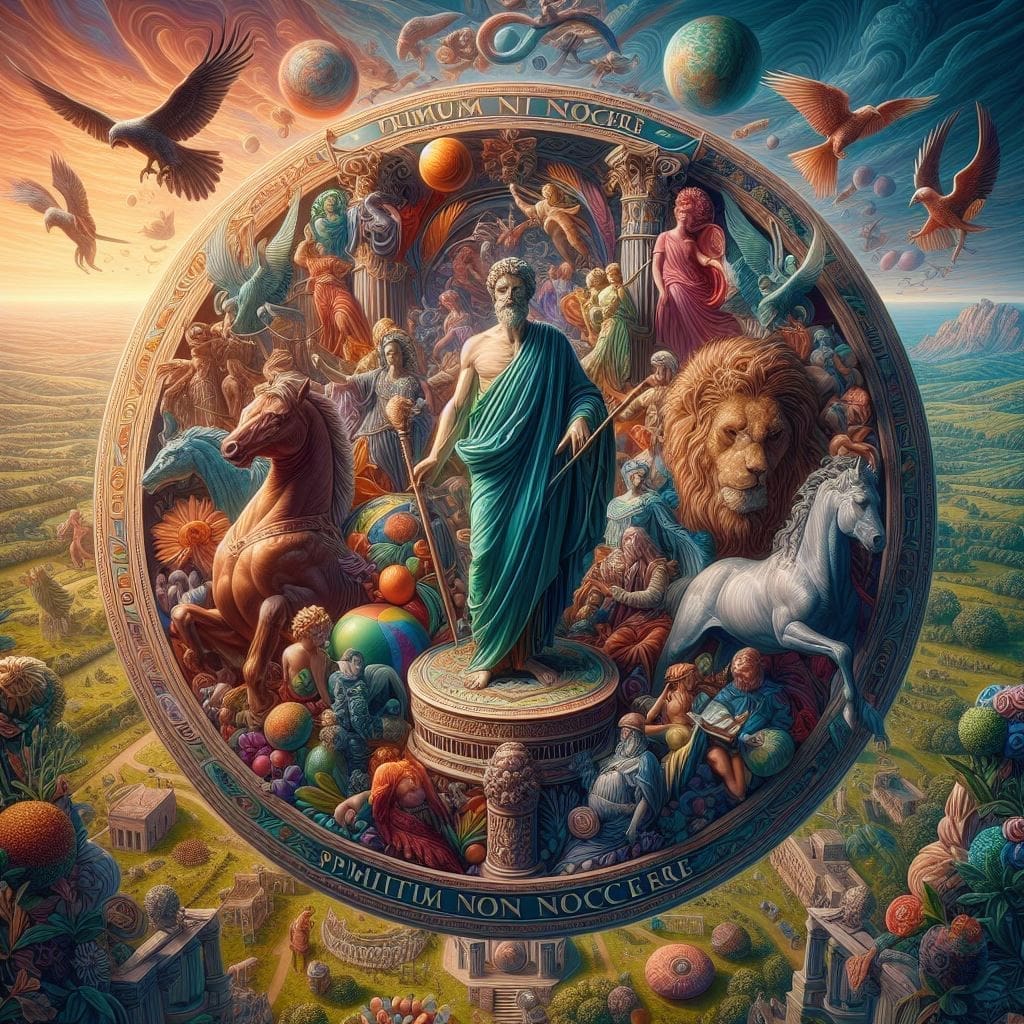
Primum non nocere, a Latin phrase meaning “first, do not harm,” is a fundamental principle in medicine. This principle emphasises the importance of ensuring the safety and well-being of patients above all else.
Advertisements
As healthcare providers, our primary goal is to help our patients and heal them from their ailments. However, in our pursuit of providing care, it is crucial that we do not inadvertently cause harm in the process. This principle serves as a reminder to always prioritise the safety and best interests of our patients.
There are many ways in which healthcare providers can adhere to the principle of primum non nocere. One of the most important ways is through proper diagnosis and treatment. It is essential that healthcare providers accurately diagnose a patient’s condition and provide appropriate treatment based on evidence-based practices. This helps to minimise the risk of harm and ensure the best possible outcomes for the patient.
In addition to proper diagnosis and treatment, it is also important for healthcare providers to communicate effectively with their patients. Patients should be informed of the risks and benefits of any proposed treatment options, as well as any potential side effects or complications that may arise. By providing patients with all the information they need to make informed decisions about their care, healthcare providers can work together with their patients to minimise the risk of harm.
Adhering to the principle of primum non nocere is not always easy, especially in a fast-paced healthcare environment where providers are often under pressure to care for multiple patients simultaneously. However, it is important for healthcare providers to always take the time to prioritise the safety and well-being of their patients above all else.
In conclusion, primum non nocere is a fundamental principle in medicine that reminds healthcare providers to first, do no harm. By prioritising patient safety and well-being, healthcare providers can ensure that they are providing the best possible care to their patients. It is a guiding principle that should always be at the forefront of every healthcare provider’s mind as they care for those in need.
The dialectical method is a powerful tool used in philosophy to analyse and understand complex ideas and arguments. It is the process of arriving at truth through the exchange of opposing viewpoints and the resolution of contradictions. Developed by the ancient Greek philosopher, Socrates, the dialectical method has been used by thinkers throughout history to deepen their understanding of the world around them.
Advertisements
At its core, the dialectical method involves the use of dialogue to explore different perspectives and challenge assumptions. By engaging in a back-and-forth conversation with others, individuals can uncover biases, clarify their own beliefs, and arrive at a more nuanced understanding of the topic at hand.
One of the key aspects of the dialectical method is the understanding that truth is not static, but rather evolves through the exploration of opposing viewpoints. By questioning and challenging one’s own beliefs, individuals can expand their intellectual horizons and arrive at a deeper understanding of the complexities of a given topic.
The dialectical method also emphasises the importance of rigorous reasoning and logical consistency. By identifying and resolving contradictions within an argument, individuals can strengthen their positions and arrive at more coherent conclusions.
Furthermore, the dialectical method encourages individuals to embrace uncertainty and engage with ambiguity. It challenges individuals to acknowledge the limitations of their own knowledge and to remain open to new perspectives and ideas.
Overall, the dialectical method is a valuable tool for anyone seeking to engage in critical thinking and deepen their understanding of the world. By embracing dialogue, questioning assumptions, and exploring opposing viewpoints, individuals can arrive at a more nuanced understanding of complex ideas and ultimately, arrive at truth.
In the realm of political theory, the concept of a political superstructure plays a crucial role in understanding the overarching structure of a society’s political system. The political superstructure refers to the institutions, organisations, and practices that form the framework of a society’s political governance.
Advertisements
At its core, the political superstructure is a complex web of relationships and power dynamics that shape the way a society is governed. It encompasses everything from the formal institutions of government, such as the executive, legislative, and judicial branches, to the informal networks of influence and decision-making that operate behind the scenes.
One of the key features of a political superstructure is its ability to shape the distribution of power within a society. The way in which political institutions are organised and structured can have a significant impact on who holds power, how decisions are made, and how resources are allocated. For example, a political superstructure that is centralised and authoritarian is likely to concentrate power in the hands of a few individuals or groups, while a more decentralised and democratic superstructure may distribute power more evenly among the population.
Additionally, the political superstructure also influences the way in which individuals and groups interact with their government and participate in the political process. In a well-functioning political superstructure, citizens have access to channels through which they can voice their concerns, participate in decision-making, and hold their government accountable. Conversely, in a dysfunctional superstructure, citizens may face barriers to political participation and be marginalised from the political process.
Another important aspect of the political superstructure is its relationship to other social structures, such as the economy, culture, and social institutions. These structures are interconnected and interdependent, and changes in one can have ripple effects throughout the others. For example, shifts in the economy can lead to changes in the political superstructure, as different groups vie for power and influence in response to changing economic conditions.
Overall, the concept of a political superstructure is a critical tool for analysing and understanding the complexities of a society’s political system. By examining the institutions, relationships, and power dynamics that make up the political superstructure, we can gain insight into how power is wielded, decisions are made, and society is governed. Ultimately, a robust understanding of the political superstructure is essential for building a more just, equitable, and democratic society.
When we think of reality, our minds often gravitate towards concrete objects and observable phenomena. However, German philosopher Georg Wilhelm Friedrich Hegel introduced a remarkable concept known as the Absolute Spirit, which challenges the conventional notions of reality. Hegel’s exploration of the Absolute Spirit provides us with a deeper understanding of the core essence of existence and our place within it.
Advertisements
In Hegel’s philosophy, the Absolute Spirit represents the highest form of reality and the pinnacle of human consciousness. It encompasses the totality of human knowledge, culture, history, and values. Hegel believed that the Absolute Spirit is the driving force behind the progress of human civilisation and the development of individual self-consciousness.
To grasp the idea of the Absolute Spirit, it is essential to understand Hegel’s dialectical method. According to Hegel, reality is not static but rather dynamic and constantly evolving. He argued that human knowledge and understanding progress through a process of thesis, antithesis, and synthesis. This dialectical process pushes us towards a higher level of consciousness and ultimately contributes to the development of the Absolute Spirit.
The Absolute Spirit is not limited to the individual or the subjective experience. It transcends individual perspectives and encompasses the collective consciousness of entire societies, cultures, and even humanity as a whole. It represents the unfolding of human history, as we continuously engage in the synthesis of ideas and values that shape our understanding of the world.
Hegel believed that the Absolute Spirit manifests itself in various forms, including art, religion, and philosophy. Art is an expression of the Absolute Spirit as it represents the human endeavour to capture the beauty and truth of existence. Religion, on the other hand, helps individuals connect with the Absolute Spirit through spiritual practices and rituals. Philosophy, according to Hegel, is the highest expression of the Absolute Spirit as it seeks to comprehend the essential nature of reality and our place within it.
Understanding the Absolute Spirit is not a passive intellectual pursuit but an active engagement. Hegel believed that individuals must actively participate in the dialectical process to develop their consciousness and contribute to the progress of humanity. It is through this engagement that we can tap into the rich potential of the Absolute Spirit and contribute to the collective development of human knowledge.
Critics of Hegel’s Absolute Spirit argue that it is a lofty and abstract concept that is difficult to grasp or prove. They claim that it is divorced from empirical reality and lacks concrete evidence. However, proponents argue that the concept of the Absolute Spirit provides a comprehensive framework to understand the interconnectedness of human consciousness and the progression of history.
Hegel’s notion of the Absolute Spirit challenges us to look beyond the surface-level understanding of reality. It invites us to explore the depths of our consciousness, engage actively with our world, and strive for a higher level of understanding. By acknowledging the presence of the Absolute Spirit in our lives, we can acknowledge the vital role of art, religion, and philosophy in shaping our individual and collective consciousness.
In conclusion, Hegel’s Absolute Spirit sheds light on the core of reality and our place within it. It represents the culmination of human knowledge, culture, and values, and invites us to actively participate in the dialectical process of progress. By embracing the concept of the Absolute Spirit, we can gain a deeper understanding of ourselves, the world, and the interconnectedness that binds us all.
Psychology, traditionally viewed as the scientific study of the human mind and behaviour, has come a long way in attempting to explain the complexities of our inner workings. From cognitive theories to psychoanalysis, psychologists have explored various theoretical frameworks to understand human behaviour. However, there is one approach that goes beyond the individualistic perspective and delves into the socio-economic forces that shape our thoughts, emotions, and actions – Marxist Psychology.
Advertisements
Rooted in the ideas of Karl Marx, Marxist Psychology seeks to resolve the age-old question of what it truly means to be human by examining the impact of socio-economic conditions on our mental processes. Unlike traditional psychology, which often looks at individuals in isolation, Marxist Psychology analyses the broader social context that influences individuals’ experiences and behaviours.
According to Marxist Psychology, our consciousness arises from our material conditions. The capitalist mode of production, with its inherent exploitation and inequalities, shapes the way we perceive ourselves and the world around us. For instance, individuals living in a society with stark income disparities are likely to experience feelings of alienation, frustration, and powerlessness – all of which can have detrimental effects on their mental well-being.
Furthermore, Marxist Psychology recognises the essential role ideology plays in shaping our beliefs and attitudes. Ideologies are the sets of ideas, values, and norms that become dominant in society and contribute to maintaining the existing power structures. Marxist psychologists argue that dominant ideologies serve the ruling class by justifying and perpetuating their dominance. For example, in a capitalist society, the ideology of individualism and meritocracy serves to legitimise wealth disparities and downplay systemic inequalities.
One of the main contributions of Marxist Psychology is its emphasis on praxis – the integration of theory and action in transforming society. Marxists believe that understanding the socio-economic roots of psychological issues is not enough. Instead, there is a need for collective action to challenge the underlying structures that perpetuate inequality and exploitation. By addressing the socio-economic conditions that contribute to mental distress, Marxist Psychology advocates for a more just and egalitarian society where individuals can truly flourish.
Critics of Marxist Psychology often argue that it reduces complex psychological phenomena to economic determinism. They contend that it overlooks the role of personal agency and the importance of individual differences in shaping behaviour. While it is true that individuals have agency, Marxist Psychology highlights that our agency is always mediated by the socio-economic context in which we exist.
In conclusion, Marxist Psychology offers a unique perspective in understanding the human condition by highlighting the impact of socio-economic conditions on our mental processes. It recognizes that our consciousness is not isolated but shaped by the prevailing economic structure and class struggle. By addressing the structural inequalities that underpin psychological distress, Marxist Psychology encourages a collective effort to transform society for the better. Whether one fully embraces this approach or not, it undeniably offers valuable insights into the complex interaction between society and psychology.
In a world dominated by social media, virtual reality, and endless digital distractions, the concept of unreality has taken on a whole new dimension. We are surrounded by carefully curated images and idealised representations of people’s lives, influencing our perceptions and, often unintentionally, distorting our sense of reality. In this blog post, we will delve deep into the realm of unreality, exploring its impact on our lives, relationships, and personal growth.
Advertisements
The Emergence of Unreality
With the ever-increasing role of technology, we have been thrust into a realm where distinguishing fact from fiction has become a daunting task. From Facetuned photos to meticulously constructed online personas, our digital existence often fails to represent the genuine experiences, flaws, and challenges that shape our lives. The line between authenticity and illusion continues to blur, leaving both creators and consumers trapped in a web of unreal desires and expectations.
The Illusion of Perfection
Unreality breeds an idealised version of ourselves, enticing us to chase perfection in every aspect of life. This never-ending pursuit can negatively impact mental health, self-esteem, and personal relationships. Constantly bombarded with unattainable standards, we often lose sight of what truly matters – our own happiness, growth, and fulfilment. It is crucial that we recognise the facade of perfection and learn to embrace our imperfections as an integral part of what makes us unique and genuine.
The Dichotomy of Connections
Social media platforms offer the illusion of connectivity, promising to bring people closer together. Paradoxically, they often foster a deeply unsettling sense of loneliness and disconnection. Online interactions lack the depth, intimacy, and vulnerability that real-life conversations facilitate. We must remember that behind every carefully crafted post or meticulously filtered photograph, there lies a complex, multifaceted human being with their own struggles, doubts, and insecurities. Genuine connections can only be nurtured by acknowledging and appreciating the authenticity of others.
The Impact on Personal Growth
Unreality has permeated our society to such an extent that even our personal goals and aspirations are clouded by an illusionary haze. We may find ourselves measuring our accomplishments against the highlight reels of others, inevitably leading to feelings of self-doubt and inadequacy. True personal growth, however, stems from embracing our own unique path and celebrating our progress on our own terms. By cultivating self-awareness and a sense of self-appraisal detached from external influences, we can embark on a journey that is authentic and fulfilling.
Breaking Free from the Chains of Unreality
To reclaim our sense of reality, it is pivotal that we consciously evaluate the kind of content we consume and share. We should seek opportunities to engage in authentic, meaningful conversations both online and offline, encouraging genuine connections to flourish. By focusing on our own growth and celebrating our individuality, we can step out of the shadow of unreality and embrace the beauty of imperfection.
Conclusion
Unreality has woven a complex web that challenges our perception of truth, authenticity, and self-identity. By acknowledging its enticing allure and understanding its impact on our lives, relationships, and personal growth, we empower ourselves to break free from its grasp. As we navigate this digital landscape, let us strive for genuine connections, self-acceptance, and a collective commitment to celebrating authenticity, both within ourselves and in the world around us.
In the realm of economic ideologies, two heavyweights have been vying for dominance since the 19th century: Marxism and Capitalism. Karl Marx, the influential German philosopher, economist, and social theorist, laid the groundwork for the Marxist ideology, while Capitalism, the backbone of the modern global economic system, has dominated much of the world for generations. This clash between Marxism and Capitalism has sparked countless debates, fuelled political movements, and shaped the course of history. Today, we will dive into the core principles, key differences, and the impact each ideology has had on society.
Advertisements
The basics: Marxism, at its core, is a critique of Capitalism, aiming to address the class struggle between the bourgeoisie (the ruling capitalist class) and the proletariat (the working class). Marx argued that Capitalism perpetuates inequality, as the capitalist class exploits the labour of the working class for profit, leading to social alienation and economic disparity. To address these ills, Marx proposed the establishment of a classless society, where the means of production are collectively owned and controlled by the workers.
On the other hand, Capitalism is an economic system in which the means of production and distribution are privately owned, driven by profit and competition. Proponents of this ideology emphasise the importance of individual freedom, private property rights, and voluntary exchange in fostering economic growth and societal progress. Capitalism thrives on the concept of a free market, where prices and production are determined by the forces of supply and demand, aiming to create efficiency and maximise prosperity.
One of the crucial distinctions between the two ideologies lies in their views on private property. While Capitalism champions and safeguards private property rights, Marxism advocates for its collective ownership. Marx criticised private property as a means for the capitalist class to accumulate wealth and maintain control over the means of production, often at the expense of the working class. Conversely, Capitalism maintains that private property is essential for individual liberty, economic incentives, and creating wealth.
Another significant point of divergence centres around wealth distribution and social equality. Marxism contends that Capitalism exacerbates income inequality and leads to exploitation. Marxists argue that by eliminating private ownership of the means of production and implementing a planned economy, wealth can be more equitably distributed, eradicating the class divide. Capitalism, however, believes in rewarding individual effort and merit, asserting that wealth inequality can stimulate innovation and economic growth, ultimately benefiting society as a whole.
It is important to note that both ideologies have had significant impacts throughout history. Capitalism, with its emphasis on competition and market forces, has fostered economic growth, technological advancements, and the creation of substantial prosperity in many nations. At the same time, it has been criticised for perpetuating inequality, generating environmental degradation, and creating cycles of economic crises.
Marxism, on the other hand, has inspired social movements, revolutions, and the formation of communist states. Yet, its implementation has often been accompanied by authoritarianism, economic inefficiencies, and the suppression of individual freedoms. The collapse of the Soviet Union and other communist regimes in the 20th century has led many to question the feasibility and overall success of Marxist ideals.
In today’s world, most countries adopt a mixed economic system, combining elements of both Marxism and Capitalism. Governments intervene in markets to ensure social welfare and address inequality, while maintaining private ownership and market competition. This hybrid approach aims to strike a balance between efficiency and equity, recognising the strengths and weaknesses of each ideology.
The debate between Marxism and Capitalism continues to shape political discourse and influence policy decisions worldwide. While both ideologies carry inherent strengths and weaknesses, finding the right equilibrium that prioritises economic prosperity, social justice, and individual freedoms remains a complex and ongoing task. As societies evolve, so too will the understanding and adaptations of these economic systems, striving to build prosperous and inclusive communities for all.