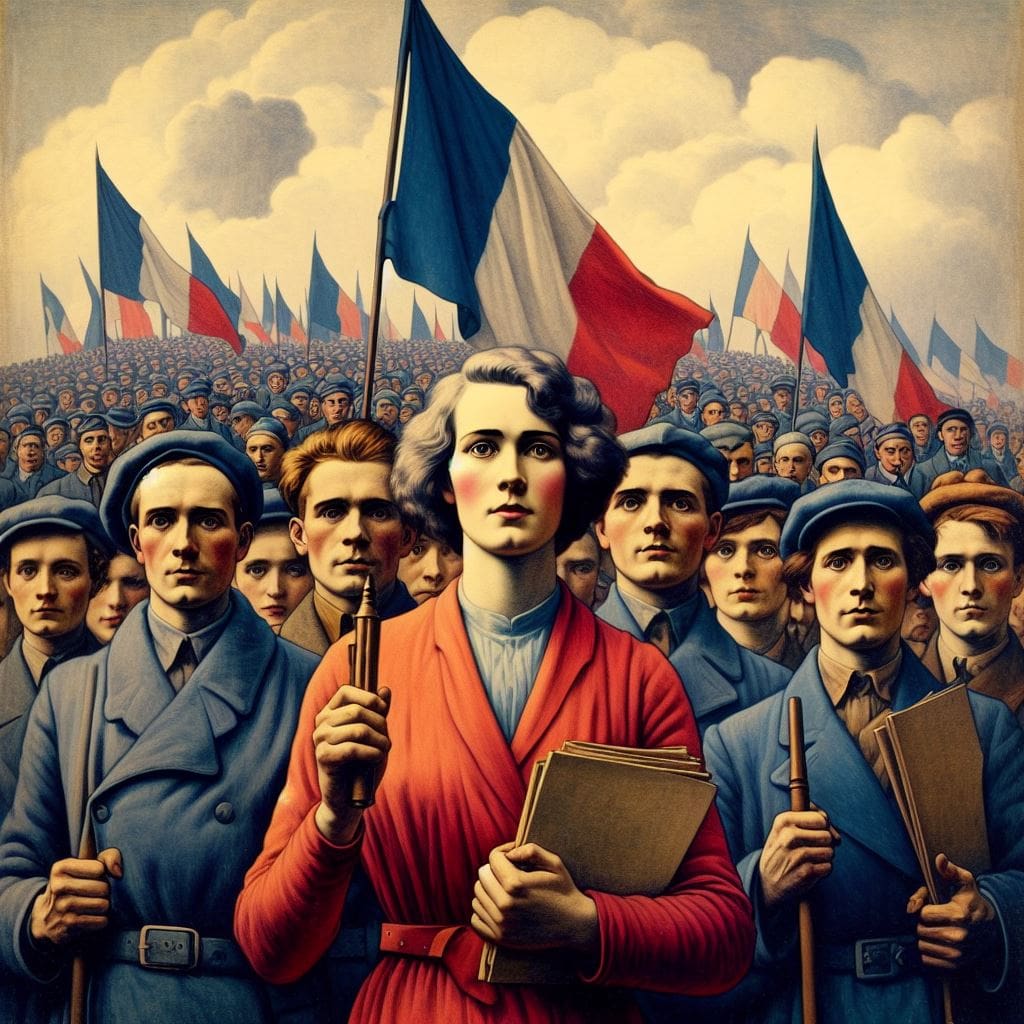
In the realm of economic ideologies, two heavyweights have been vying for dominance since the 19th century: Marxism and Capitalism. Karl Marx, the influential German philosopher, economist, and social theorist, laid the groundwork for the Marxist ideology, while Capitalism, the backbone of the modern global economic system, has dominated much of the world for generations. This clash between Marxism and Capitalism has sparked countless debates, fuelled political movements, and shaped the course of history. Today, we will dive into the core principles, key differences, and the impact each ideology has had on society.
The basics: Marxism, at its core, is a critique of Capitalism, aiming to address the class struggle between the bourgeoisie (the ruling capitalist class) and the proletariat (the working class). Marx argued that Capitalism perpetuates inequality, as the capitalist class exploits the labour of the working class for profit, leading to social alienation and economic disparity. To address these ills, Marx proposed the establishment of a classless society, where the means of production are collectively owned and controlled by the workers.
On the other hand, Capitalism is an economic system in which the means of production and distribution are privately owned, driven by profit and competition. Proponents of this ideology emphasise the importance of individual freedom, private property rights, and voluntary exchange in fostering economic growth and societal progress. Capitalism thrives on the concept of a free market, where prices and production are determined by the forces of supply and demand, aiming to create efficiency and maximise prosperity.
One of the crucial distinctions between the two ideologies lies in their views on private property. While Capitalism champions and safeguards private property rights, Marxism advocates for its collective ownership. Marx criticised private property as a means for the capitalist class to accumulate wealth and maintain control over the means of production, often at the expense of the working class. Conversely, Capitalism maintains that private property is essential for individual liberty, economic incentives, and creating wealth.
Another significant point of divergence centres around wealth distribution and social equality. Marxism contends that Capitalism exacerbates income inequality and leads to exploitation. Marxists argue that by eliminating private ownership of the means of production and implementing a planned economy, wealth can be more equitably distributed, eradicating the class divide. Capitalism, however, believes in rewarding individual effort and merit, asserting that wealth inequality can stimulate innovation and economic growth, ultimately benefiting society as a whole.
It is important to note that both ideologies have had significant impacts throughout history. Capitalism, with its emphasis on competition and market forces, has fostered economic growth, technological advancements, and the creation of substantial prosperity in many nations. At the same time, it has been criticised for perpetuating inequality, generating environmental degradation, and creating cycles of economic crises.
Marxism, on the other hand, has inspired social movements, revolutions, and the formation of communist states. Yet, its implementation has often been accompanied by authoritarianism, economic inefficiencies, and the suppression of individual freedoms. The collapse of the Soviet Union and other communist regimes in the 20th century has led many to question the feasibility and overall success of Marxist ideals.
In today’s world, most countries adopt a mixed economic system, combining elements of both Marxism and Capitalism. Governments intervene in markets to ensure social welfare and address inequality, while maintaining private ownership and market competition. This hybrid approach aims to strike a balance between efficiency and equity, recognising the strengths and weaknesses of each ideology.
The debate between Marxism and Capitalism continues to shape political discourse and influence policy decisions worldwide. While both ideologies carry inherent strengths and weaknesses, finding the right equilibrium that prioritises economic prosperity, social justice, and individual freedoms remains a complex and ongoing task. As societies evolve, so too will the understanding and adaptations of these economic systems, striving to build prosperous and inclusive communities for all.
Share this:

You Might Also Enjoy Reading