Radical atheism is a concept that challenges the traditional beliefs and practices associated with religion. It is a belief system that rejects the existence of a higher power or deity and promotes a worldview based on reason, science, and empirical evidence.
Advertisements
Radical atheists believe that religion is a form of superstition and that it hinders the progress of society. They argue that religious beliefs are irrational and lead to harmful consequences, such as discrimination, violence, and oppression. Radical atheists seek to critique and dismantle religious institutions and practices, advocating for a secular society that is free from the influence of religion.
One of the key tenets of radical atheism is that individuals should rely on their own critical thinking and scepticism rather than deferring to religious authorities or doctrines. They argue that belief in a higher power limits our ability to think critically and inquire into the nature of existence. Instead, radical atheists advocate for a worldview based on reason, evidence, and the scientific method.
Some critics of radical atheism argue that it is too confrontational and dogmatic in its rejection of religion. They contend that religion can provide comfort, meaning, and community for many individuals, and that radical atheism ignores the positive aspects of religion.
Despite these criticisms, radical atheism has gained traction in recent years as more people question traditional beliefs and seek alternatives to organised religion. With the rise of the internet and social media, radical atheists have been able to connect with like-minded individuals and share their ideas with a wider audience.
In conclusion, radical atheism challenges the status quo and offers a provocative alternative to traditional religious beliefs. While it may not be for everyone, radical atheism encourages individuals to think critically about their beliefs and consider alternative worldviews that are based on reason and evidence.
For centuries, societies and secret organisations have existed with the purpose of delving into the mysteries of the universe and harnessing ancient wisdom for personal enlightenment and power. These groups, known as Ancient Mystical Orders, have captivated the imagination of many throughout history.
Advertisements
One of the most famous mystical orders is the Rosicrucians, a group that claims to have ancient roots dating back to the time of Ancient Egypt. The Rosicrucians believe in the existence of a hidden knowledge that can only be accessed by those who are initiated into their order. Through a series of rituals and teachings, members of the Rosicrucians seek spiritual enlightenment and the attainment of wisdom beyond the physical realm.
Another well-known mystical order is the Freemasons, a society that has been shrouded in secrecy and speculation for centuries. The Freemasons are known for their elaborate rituals and symbolism, which are said to hold hidden meanings and esoteric knowledge. Members of the Freemasons seek to better themselves through self-improvement and the study of ancient philosophical and spiritual teachings.
The Hermetic Order of the Golden Dawn is another mystical order that gained popularity in the late 19th century. This group drew upon teachings from various mystical traditions, including Hermeticism, Kabbalah, and alchemy. Members of the Golden Dawn studied the occult sciences and practised ceremonial magic in an effort to expand their consciousness and tap into hidden powers.
While Ancient Mystical Orders have long been associated with secrecy and mystery, they have also been linked to a desire for personal growth and spiritual enlightenment. By delving into ancient wisdom and esoteric knowledge, members of these orders seek to unlock the secrets of the universe and achieve a higher state of consciousness.
Whether one believes in the powers and teachings of Ancient Mystical Orders or not, it cannot be denied that these groups have had a profound impact on the spiritual and philosophical landscape throughout history. Their influence can be seen in everything from literature and art to modern-day spirituality and self-help movements.
In a world that often feels chaotic and uncertain, the allure of Ancient Mystical Orders and their promise of hidden knowledge and enlightenment continues to captivate and inspire seekers of truth and wisdom. And while their practices and beliefs may remain shrouded in secrecy, the legacy of these ancient orders lives on, inviting us to explore the depths of our own inner mysteries.
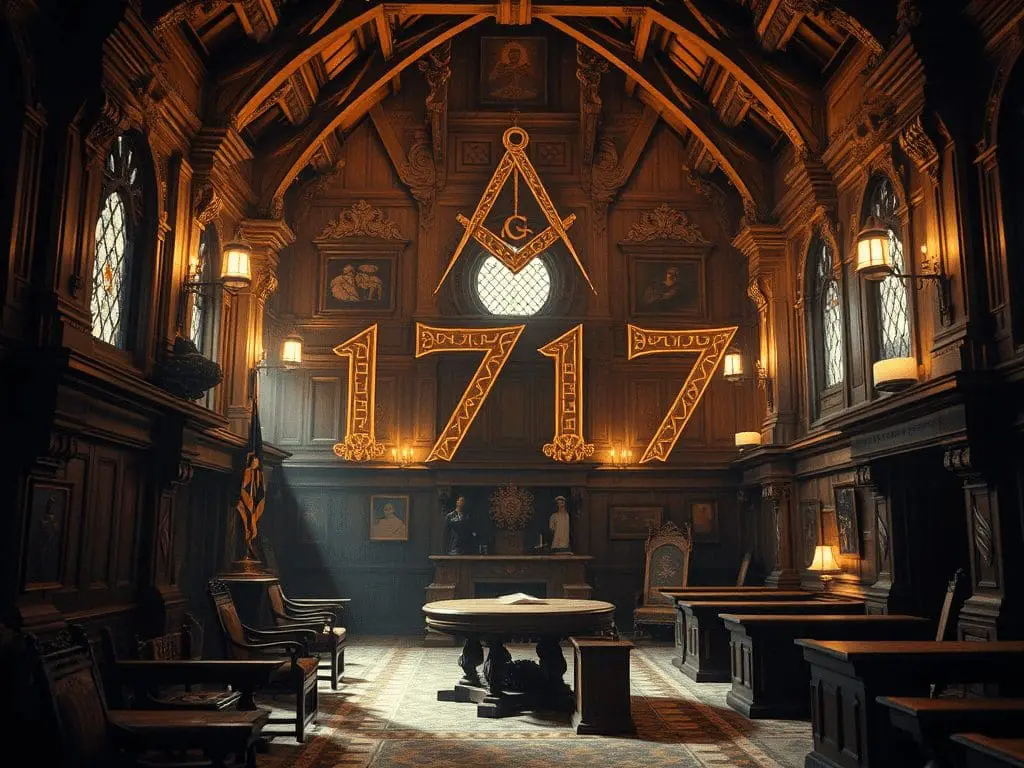
The year 1717 is a significant one in the history of Freemasonry. It marks the beginning of the so-called “Revival of Masonry,” a period when the fraternity experienced a resurgence in popularity and influence.
Advertisements
The roots of Freemasonry can be traced back to the medieval stonemasons’ guilds of Europe. These guilds were organisations of skilled craftsmen who built the cathedrals, castles, and other grand structures of the time. Over the centuries, the guilds evolved into social and fraternal organisations, and by the 17th century, Freemasonry had become a popular pastime for gentlemen across Europe.
However, by the early 18th century, Freemasonry was in decline. Membership was dwindling, and many lodges had fallen into disarray. The practices and rituals of the fraternity had become disjointed and disorganised, and there was a sense that Freemasonry was losing its sense of purpose and direction.
In 1717, a group of four lodges in London came together to form the Grand Lodge of England, the first official governing body of Freemasonry. This event is often considered the starting point of the “Revival of Masonry,” as it marked the beginning of a new era of growth and expansion for the fraternity.
Under the leadership of the Grand Lodge of England, Freemasonry experienced a period of reorganisation and revitalisation. Rituals and practices were standardised, and new lodges were established across England and eventually around the world. The fraternity’s membership grew rapidly, attracting men from all walks of life who were drawn to its principles of brotherhood, morality, and mutual support.
The Revival of Masonry in 1717 also marked a shift in the perception of Freemasonry. No longer seen as just a social club for gentlemen, Freemasonry began to be recognised for its charitable work, its commitment to moral and spiritual values, and its role in promoting tolerance and understanding among men of different backgrounds and beliefs.
Today, Freemasonry continues to thrive as a global fraternity, with millions of members around the world. The Revival of Masonry in 1717 set the stage for the modern era of Freemasonry, shaping the fraternity into the organisation it is today. As we reflect on this important chapter in Masonic history, we can appreciate the dedication and vision of those who worked to revive and preserve the traditions of this ancient and noble brotherhood.
Have you ever heard of the concept of Karmic Mass Weight? It’s a term that originates from the world of spirituality and metaphysics, and it refers to the idea that the energy of our past actions and thoughts can have a weight or influence on our present lives.
Advertisements
According to this belief, every action we take, every thought we have, and every intention we set creates a sort of energetic imprint that can influence the events and circumstances that manifest in our lives. This energy can either attract positive or negative experiences, depending on the quality of the actions and thoughts that created it.
In essence, Karmic Mass Weight is like a spiritual baggage that we carry with us throughout our lives. If we have accumulated a lot of negative energy through harmful actions or thoughts, we may find ourselves experiencing challenges and difficulties in various aspects of our lives. Conversely, if we have cultivated positive energy through acts of kindness, compassion, and love, we may find ourselves attracting more positive experiences and opportunities.
One of the key principles of Karmic Mass Weight is the idea of karma, which is the belief that our actions have consequences that come back to us in some form. This can manifest as the law of cause and effect, where the energy we put out into the world comes back to us in one way or another.
So how can we work with our Karmic Mass Weight to create a more positive and fulfilling life? The first step is to become more mindful of our actions, thoughts, and intentions. By cultivating awareness and taking responsibility for the energy we are putting out into the world, we can start to shift our Karmic Mass Weight towards a more positive direction.
Practices such as meditation, self-reflection, forgiveness, and acts of kindness can help us to cleanse and purify our energetic imprint, allowing us to release any negative energy that may be holding us back. By consciously choosing to cultivate more positive energy in our lives, we can start to attract more abundance, joy, and love into our experience.
Ultimately, the concept of Karmic Mass Weight reminds us of the interconnectedness of all things and the power we have to shape our own reality through our thoughts and actions. By becoming more mindful of our energy and the impact it has on our lives, we can begin to create a more harmonious and fulfilling existence for ourselves and those around us.
The United States is known for its freedom of religion and the right to practise any without fear of persecution. However, there are some regions in the country where the Bible is banned or restricted in some way.
Advertisements
In recent years, there have been several cases where the Bible has been banned or censored in public spaces such as schools and libraries, sparking debates about freedom of expression and the role of religion in education. In some cases, school boards have removed the Bible from library shelves or restricted its use in classrooms, citing concerns about separation of church and state. These actions have ignited discussions among educators, parents, and community members about the importance of teaching religious texts as part of a comprehensive education, while simultaneously addressing the legal and ethical implications of allowing religious materials in secular educational environments.
Advocates for access argue that the Bible’s literary and historical significance should not be overlooked, as it has influenced countless works of art, literature, and even moral philosophy throughout history. Meanwhile, opponents express fears of potential indoctrination and the violation of students’ rights to a neutral learning atmosphere. The tensions surrounding these controversies highlight the complex relationship between faith and public education, illustrating that the issue extends far beyond mere access to a book, as it ultimately touches upon fundamental questions of belief, identity, and the values we instil in future generations.
One of the most notable cases of the Bible being banned in the United States occurred in 2017, when an elementary school in Kentucky removed the Bible from its library after a parent complained that it was promoting Christianity. This decision sparked significant controversy and debate within the local community and beyond, as many supporters of the Bible’s presence argued that it is a historical text that conveys important cultural and moral lessons, irrespective of religious beliefs. The school district defended its decision, stating that it was in compliance with the First Amendment, which warrants the separation of church and state; however, critics countered that this removal represented an infringement on religious freedom and the right to access diverse viewpoints. As discussions intensified, the incident highlighted the ongoing tensions surrounding educational content, censorship, and the role of religious texts in public institutions, ultimately prompting a broader dialogue about how schools navigate the complexities of teaching ethics, history, and morality in a pluralistic society.
In June 2023, the Davis School District in Utah made a significant decision to reverse its earlier stance on the availability of religious texts in educational institutions, specifically the King James version of the Bible, which had been slated for removal from both elementary and middle school libraries. This decision came in response to numerous discussions within the community, where parents, educators, and students voiced their opinions on the importance of maintaining access to a wide range of literature, including religious texts that have shaped cultural and historical perspectives. The school district acknowledges the role of the Bible in influencing various aspects of literature, history, and moral education, thereby ensuring that students have the opportunity to engage with this pivotal text as part of their broader learning experience.
In another case, a public library in Florida removed the Bible from its shelves after receiving numerous complaints from patrons who found the religious text offensive and inappropriate for a public institution. This decision stirred significant controversy and ignited a heated debate among community members about the role of religious texts in public spaces. The library eventually reinstated the Bible after facing intense backlash from the community, including protests, petitions, and vocal support from local religious groups who argued that the removal was an infringement on their rights to access spiritual literature. The incident highlighted the ongoing struggle between freedom of expression and the sensibilities of diverse audiences, prompting further discussions on the need for policies that adequately address such conflicts in a way that respects all viewpoints.
While these cases are relatively rare, they highlight the ongoing debate about the place of religion in public spaces in the United States and the complexities that arise from it. Some people argue that the Bible, as a foundational text that has influenced countless individuals and cultural movements throughout history, should be treated like any other book and should be available for all to read in various community settings. They contend that this inclusion fosters a deeper understanding of different belief systems and encourages open dialogue among diverse groups. On the other hand, others firmly believe that the presence of religious texts, including the Bible, in public spaces violates the separation of church and state, a principle designed to ensure that government remains neutral in matters of faith. This dispute underscores a fundamental question about the boundaries of free expression versus the imperative of maintaining a secular public sphere, pushing society to scrutinize its values and priorities.
Ultimately, the issue of banning or censoring the Bible in the United States is a complex one that requires a delicate balance between freedom of religion and the rights of individuals to not be subjected to unwanted religious messages. As the country continues to grapple with these issues, it is important to remember the principles of religious freedom that are enshrined in the Constitution and to respect the beliefs of others, even when they differ from our own.
Aryan Christianity is a controversial and heavily debated topic within historical and religious circles. With conflicting interpretations and varying beliefs, it is important to understand the complexities surrounding this term.
Advertisements
The term “Aryan Christianity” refers to the idea that Christianity was originally practised by the Aryan race, a group of Indo-European people who migrated to various parts of Europe and Asia. Some proponents of this theory argue that Jesus Christ himself was Aryan, and that his teachings were corrupted by later non-Aryan influences.
One of the main proponents of Aryan Christianity was the German scholar Alfred Rosenberg, who was a leading ideologue of the Nazi party. In his book “The Myth of the Twentieth Century,” Rosenberg argued that Christianity had been distorted by Jewish influences and needed to be purged of these impurities in order to be restored to its original Aryan roots.
However, the idea of Aryan Christianity has been widely discredited by scholars and historians. There is no historical or archaeological evidence to support the claim that Christianity was originally practised by Aryans, and the notion of a pure Aryan religion has been dismissed as a racist and anti-Semitic distortion of history.
Furthermore, the concept of Aryan Christianity has been used as a justification for racist and supremacist ideologies, particularly during the rise of Nazism in Germany. By promoting the idea of a pure Aryan religion, proponents of this theory sought to elevate the status of the Aryan race above other races and cultures.
In reality, Christianity has always been a diverse and global religion, with followers from all races and backgrounds. The teachings of Jesus Christ transcend race and ethnicity, and are meant to unite humanity in love and compassion, rather than divide us based on racial or cultural differences.
In conclusion, the idea of Aryan Christianity is a dangerous and misguided ideology that has been used to justify racism and intolerance. It is important to reject this false narrative and embrace the true message of Christianity, which is one of inclusivity, acceptance, and love for all people, regardless of their race or background.
Consciousness is a topic that has puzzled philosophers, scientists, and thinkers for centuries. It is the state of being aware of and able to think about one’s own, feelings, and experiences. But what exactly is consciousness and how does it work?
Advertisements
One of the questions surrounding consciousness is the “hard problem” of how subjective experience arises from physical processes. In other words, how do our brains create the feeling of being alive and aware? This question has led to a wide range of theories and debates, from dualism (the belief that consciousness is separate from the physical body) to materialism (the belief that consciousness is simply a byproduct of brain activity).
Some scientists believe that consciousness arises from the complex interactions of neurons in the brain. According to this view, consciousness is an emergent property of the brain’s neural networks, much like how wetness emerges from the interactions of water molecules. Others argue that consciousness is a fundamental aspect of the universe, and that our brains simply tap into this universal field of awareness.
Regardless of the exact mechanism, one thing is clear: consciousness is a deeply mysterious and complex phenomenon. It is at the centre of our existence, shaping our perceptions, beliefs, and actions. It is what makes us human and separates us from other animals.
But beyond just understanding consciousness, there is also the question of how we can cultivate and expand our consciousness. Many spiritual traditions and practices, such as meditation, yoga, and mindfulness, aim to help individuals tap into higher levels of awareness and consciousness. By quieting the mind and focusing on the present moment, individuals can experience a deeper sense of connection to themselves, others, and the world around them.
In today’s fast-paced and distracted world, it is more important than ever to cultivate our consciousness and expand our awareness. By taking the time to reflect, meditate, and connect with our inner selves, we can tap into the vast potential of our consciousness and live more fulfilling and meaningful lives.
So, the next time you find yourself feeling overwhelmed or disconnected, take a moment to pause and reflect on your consciousness. Ask yourself: what does it mean to be conscious? How can I deepen my awareness and connection to myself and others? By exploring these questions, you may just unlock new levels of insight and understanding about the mysterious nature of consciousness.