
Tag: Theology

  • The Abrahamic Trio: Exploring the Shared Roots of Christianity, Islam, and Judaism

    The Abrahamic Trio: Exploring the Shared Roots of Christianity, Islam, and Judaism

    Advertisements

    Christianity, the largest of the three religions, traces its roots back to the teachings of Jesus Christ, who followers believe to be the son of God and the saviour of humanity. Christians believe in the Holy Trinity, consisting of God the Father, Jesus Christ the Son, and the Holy Spirit. They also believe in the importance of the New Testament, which contains the teachings of Jesus and his disciples. Christianity is centered around the belief in salvation through faith in Jesus Christ and the importance of living a life that reflects his teachings.

    Islam, the second-largest religion in the world, was founded in the 7th century by the prophet Muhammad. Muslims believe in one God, Allah, and in the teachings of Muhammad as revealed in the Quran, which they believe to be the word of God. Islam emphasises the importance of submission to the will of Allah and living a life according to the principles outlined in the Quran and the Hadith (sayings and actions of Muhammad). Muslims also believe in the five pillars of Islam, which include the declaration of faith, prayer, fasting, giving to charity, and making a pilgrimage to Mecca.

    Judaism, the oldest of the three religions, dates back to the ancient Israelites and their covenant with God as outlined in the Torah. Jews believe in one God and in the importance of following his commandments as laid out in the Torah and other sacred texts. Judaism places a strong emphasis on ethical behaviour, social justice, and the importance of community and family.

    While there are many differences between Christianity, Islam, and Judaism, there are also common values that they share. All three religions emphasise the importance of love, compassion, and justice, as well as the importance of caring for the less fortunate and living a life of purpose and meaning.

    Despite their shared values and beliefs, the history of relations between Christianity, Islam, and Judaism has been marked by conflict and tension. From the Crusades to the Israeli-Palestinian conflict, these three religions have often been at odds with each other, leading to misunderstandings and violence.

    In today’s world, it is more important than ever for followers of Christianity, Islam, and Judaism to come together in a spirit of mutual respect and understanding. By focusing on the common values and teachings that unite us, we can work towards a more peaceful and harmonious world for all. Let us strive to build bridges of understanding and cooperation, rather than walls of division and hatred.

  • Awakening within a Dream: Exploring Lucid Dreaming

    Awakening within a Dream: Exploring Lucid Dreaming

    Advertisements

    While the concept of lucid dreaming may seem like something out of a science fiction movie, it is actually a well-documented and studied phenomenon. In fact, research has shown that lucid dreaming is a skill that can be developed and honed with practice.

    One of the most common techniques used to induce lucid dreaming is reality checking. This involves regularly questioning whether you are dreaming or awake by performing simple tests like looking at the time, trying to read a piece of text, or trying to push your finger through your palm. By making reality checks a habit, you can train your brain to become more aware of your dream state.

    Another technique that is commonly used to induce lucid dreaming is keeping a dream journal. By recording your dreams immediately upon waking, you can become more attuned to the patterns and triggers that may indicate you are dreaming. This can help you recognise when you are in a dream and facilitate the transition into a lucid state.

    Lucid dreaming has been a topic of fascination for centuries, with reports of individuals experiencing and exploring this phenomenon dating back to ancient Tibetan Buddhist practices. In more recent years, lucid dreaming has gained popularity in the mainstream, with books, documentaries, and even virtual reality technologies dedicated to exploring and enhancing the lucid dreaming experience.

    So why should you consider exploring lucid dreaming? For one, it can be a thrilling and exhilarating experience to have full control over your dreams and be able to explore and create your own dream world. Additionally, lucid dreaming has been studied for its potential benefits in areas such as problem-solving, self-awareness, and even overcoming phobias and nightmares.

    If you are interested in exploring the world of lucid dreaming, there are plenty of resources available to help you get started. From books and online forums to workshops and retreats, there are endless opportunities to learn more about lucid dreaming and develop the skills to enhance your dream experiences.

    Overall, lucid dreaming is a fascinating and mysterious phenomenon that holds immense potential for exploration and self-discovery. Whether you are a seasoned dreamer or new to the world of lucid dreaming, there is no doubt that this unique experience has the power to captivate and enrich your dream world in ways you never thought possible.

  • Mystical Perspectives: Exploring the Depths of Kabbalistic Cosmology

    Mystical Perspectives: Exploring the Depths of Kabbalistic Cosmology

    Advertisements

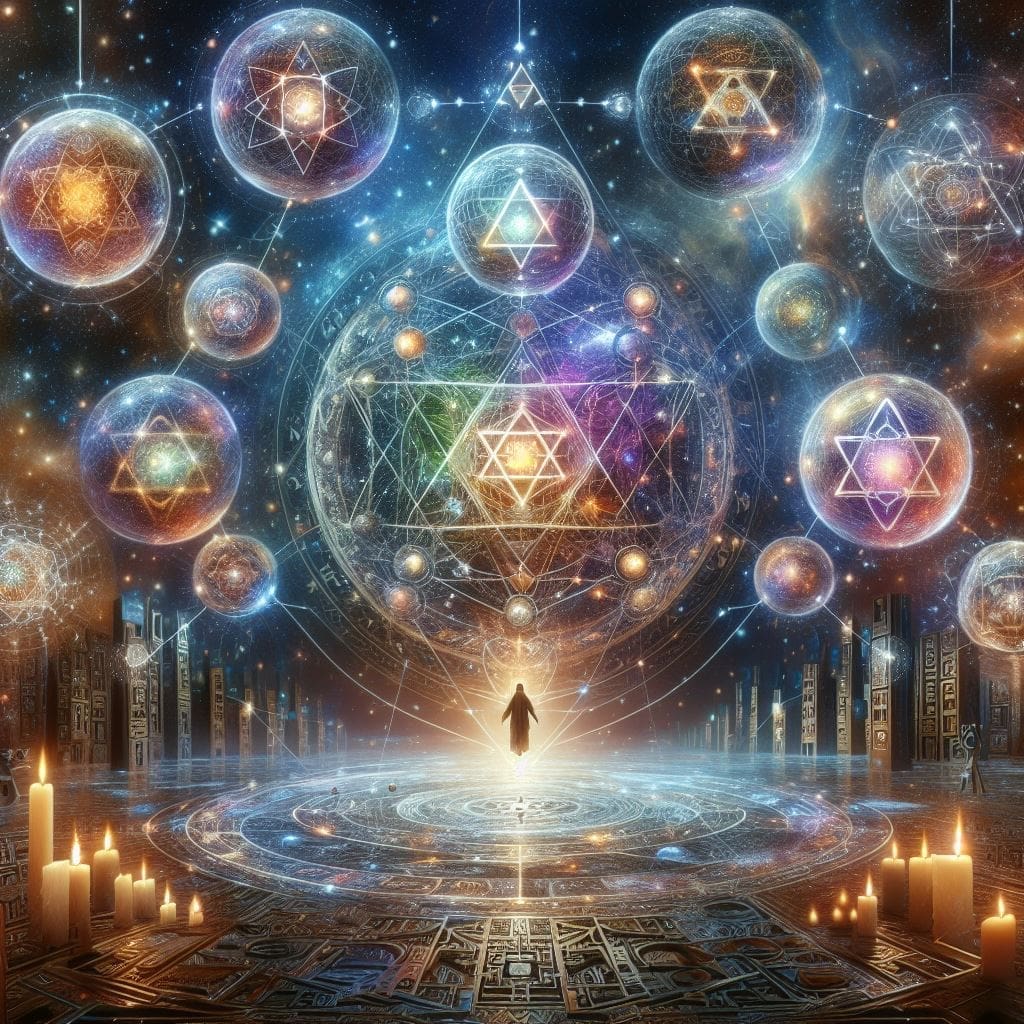
    At the core of Kabbalistic cosmology is the belief that the universe is a reflection of the divine, and that by understanding the nature of these spiritual forces, we can gain insight into the mysteries of the universe and our own true nature. The sefirot are often depicted as a tree, known as the Tree of Life or the Etz Chaim, with each sefirot representing a different aspect of the divine and the universe.

    One of the key concepts in Kabbalistic cosmology is the idea of the soul’s journey through the sefirot on its path back to the divine. According to Kabbalistic teachings, the soul descends from the divine into the physical world, where it must navigate and overcome various challenges in order to return to its original state of unity with the divine.

    Another important aspect of Kabbalistic cosmology is the belief in the interconnectedness of all things. According to Kabbalistic teachings, all of creation is connected by a series of spiritual pathways known as the sefirot, which serve as channels for divine energy to flow through and sustain the universe.

    Overall, Kabbalistic cosmology offers a rich and complex framework for understanding the universe and our place within it. By studying the teachings of Kabbalah, practitioners can gain a deeper understanding of the spiritual forces at work in the universe, and ultimately, develop a deeper connection to the divine and the world around them.

  • Exploring the Chemistry of Faith: The Elemental Truth

    Exploring the Chemistry of Faith: The Elemental Truth

    Advertisements

    Believe it or not, there is a scientific explanation for why faith can be so strong and unwavering in some individuals . The brain plays a key role in shaping our beliefs and feelings of faith. When we have faith in something, our brain releases chemicals that help reinforce and strengthen that belief.

    One of the key chemicals involved in the chemistry of faith is dopamine. Dopamine is a neurotransmitter that plays a crucial role in the brain’s reward system. When we have faith in something, our brain releases dopamine, which makes us feel good and reinforces our belief. This is why people often experience a sense of euphoria or happiness when they have a strong faith in something.

    Another important chemical involved in the chemistry of faith is oxytocin. Oxytocin is often referred to as the “love hormone” because it plays a key role in bonding and social interactions. When we have faith in something, our brain releases oxytocin, which helps strengthen our emotional connection to that belief. This is why faith can feel so comforting and reassuring to many individuals.

    Serotonin is another chemical that plays a role in the chemistry of faith. Serotonin is a neurotransmitter that helps regulate mood and emotions. When we have faith in something, our brain releases serotonin, which can help reduce feelings of anxiety and stress. This is why faith can be such a powerful coping mechanism for many people during difficult times.

    In addition to these chemicals, the brain also releases endorphins when we have faith in something. Endorphins are neurotransmitters that act as natural painkillers and mood enhancers. When we have faith in something, our brain releases endorphins, which can help us feel a sense of peace and contentment.

    So, the next time you feel a strong sense of faith in something, remember that there is a chemical basis for that belief. The release of dopamine, oxytocin, serotonin, and endorphins in the brain all play a role in strengthening our faith and belief in something greater than ourselves. Faith is not just a spiritual or emotional experience – it is also a chemical one.

  • The Role of Religion in the State Apparatus

    The Role of Religion in the State Apparatus

    Advertisements

    One of the primary functions of religion in the state apparatus is to provide a moral and ethical framework for governance. Many laws and policies are founded on religious principles and beliefs, shaping the values and norms of society. In some cases, religious institutions are directly involved in governing and decision-making processes, influencing policies on issues such as education, healthcare, and social welfare.

    Religion also plays a role in maintaining social cohesion and unity within a state. Shared religious beliefs and practices can foster a sense of community and solidarity among citizens, promoting social harmony and cooperation. In many countries, religious institutions serve as a platform for social and civic engagement, providing vital services and support to marginalised communities.

    However, the integration of religion into the state apparatus can also lead to challenges and conflicts. The imposition of religious laws and restrictions can infringe upon individual rights and freedoms, stifling dissent and diversity. Religious conflicts and divisions can also undermine social stability and political unity, fuelling tensions and violence within societies.

    Furthermore, the entanglement of religion and politics can create a hierarchical power structure where religious leaders hold significant influence over political decisions and policies. This can lead to the concentration of power and the marginalisation of minority groups who do not adhere to the dominant religious beliefs.

    In a democratic society, it is essential to strike a balance between respecting religious freedoms and maintaining the separation of church and state. Governments must uphold the principle of secularism, ensuring that all citizens have the freedom to practise their religious beliefs without undue interference from the state. At the same time, religious institutions should adhere to the rule of law and respect the rights and freedoms of all individuals, regardless of their religious affiliations.

    Ultimately, the role of religion in the state apparatus is a complex and nuanced issue that requires careful consideration and balance. While religion can provide a moral and ethical framework for governance and foster social cohesion, it must not be used to justify discrimination, oppression, or the violation of human rights. By promoting tolerance, inclusivity, and respect for diversity, societies can harness the positive aspects of religion while mitigating its potential negative consequences in the state apparatus.

  • Exploring Astral Projection: Beyond the Physical Realm

    Exploring Astral Projection: Beyond the Physical Realm

    Advertisements

    Astral projection, also known as an out-of-body experience, is the practice of deliberately leaving one’s physical body and travelling in a spiritual or astral form to different realms. This phenomenon has been practised for centuries by various cultures and spiritual traditions, and many believe it is a way to gain a deeper understanding of the self and the universe.

    The concept of astral projection is based on the idea that our consciousness is not limited to our physical body. It is believed that we have an energy body or astral body that is capable of travelling outside of our physical form. Through meditation, visualisation, and relaxation techniques, individuals can learn to separate their consciousness from their physical body and explore different planes of existence.

    Many people who have practised astral projection report feeling a sense of peace, freedom, and connectedness during their out-of-body experiences. They often describe meeting other beings, visiting different dimensions, and gaining insights into their own spiritual journey. Some even claim to have had profound spiritual awakenings and profound revelations about the nature of reality.

    While astral projection can be a powerful and transformative experience, it is important to approach it with caution and respect. It is essential to practise proper grounding and protection techniques to ensure a safe and positive journey. It is also important to set clear intentions and maintain a strong connection to your physical body, as astral projection can be disorienting and potentially harmful if not done properly.

    If you are interested in exploring astral projection, there are many resources available to help guide you on your journey. Books, workshops, and online communities can provide valuable information and support as you delve into this mystical practice. Remember to approach astral projection with an open mind and a willingness to learn, as it can be a profound and enlightening experience for those who are ready to explore the depths of their own consciousness.

    In conclusion, astral projection is a fascinating practice that has the potential to deepen your understanding of yourself and the universe. By exploring the realms beyond our physical limitations, you may uncover hidden truths about the nature of reality and your place within it. So, why not take the leap and embark on a journey into the astral realm? You never know what wonders await you on the other side.

  • Psychological Effects of Engaging in Metaphysical Practices and Rituals

    Psychological Effects of Engaging in Metaphysical Practices and Rituals

    Advertisements

    One of the key psychological benefits of engaging in metaphysical practices is the promotion of mindfulness and relaxation. Many metaphysical practices, such as meditation and yoga, involve focusing the mind and body on the present moment, which can help reduce stress and anxiety. By practising mindfulness through metaphysical rituals, individuals may experience a greater sense of peace and calm in their daily lives.

    Additionally, engaging in metaphysical practices can also foster a sense of connection and community. Many metaphysical practices involve rituals and ceremonies that are performed with others, creating a sense of unity and shared experience. This sense of community can help individuals feel supported and understood, leading to improved mental well-being.

    Furthermore, engaging in metaphysical practices can also help individuals tap into their intuition and inner wisdom. Practices such as tarot card readings or crystal healing can help individuals access their subconscious thoughts and feelings, leading to greater self-awareness and personal growth. By connecting with their intuition, individuals may gain valuable insights into their thoughts, emotions, and behaviours, ultimately leading to a deeper understanding of themselves.

    Despite the potential psychological benefits of engaging in metaphysical practices, it is important to approach these practices with an open mind and critical thinking. While these practices can be powerful tools for personal growth and self-discovery, it is essential to remain grounded and sceptical of any claims that seem too good to be true. By approaching metaphysical practices with a sense of curiosity and discernment, individuals can explore the psychological effects of these practices while maintaining a healthy sense of scepticism.

    In conclusion, engaging in metaphysical practices and rituals can have a profound impact on an individual’s psychological well-being. From promoting mindfulness and relaxation to fostering a sense of community and connection, these practices offer a unique opportunity for personal growth and self-discovery. By approaching these practices with an open mind and critical thinking, individuals can harness the psychological benefits of metaphysical practices while exploring the mysteries of the unseen forces that shape our reality.