Tag: Postmodernism

  • Philipp Rupprech: Contributions to Social Constructionism, Symbolic Interactionism, and Postmodernism

    Philipp Rupprech: Contributions to Social Constructionism, Symbolic Interactionism, and Postmodernism

    Advertisements

    One of Rupprech’s key theories is the concept of social constructionism. This theory posits that individuals and societies create their own reality through shared beliefs, symbols, and practices. Rupprech argues that our perceptions of reality are not fixed, but are instead constructed and negotiated through social interactions. This perspective challenges traditional views of reality as being objective and immutable, and emphasises the role of language, culture, and power dynamics in shaping our understanding of the world.

    Another important theory developed by Rupprech is the notion of symbolic interactionism. This theory focuses on the ways in which individuals create and interpret symbols to make meaning of their social interactions. Rupprech argues that symbols are central to the construction of social reality, as they provide a framework through which individuals can communicate, negotiate identities, and navigate social hierarchies. This theory highlights the importance of language, communication, and symbolism in shaping our social experiences and interactions.

    Rupprech’s work also contributes to the field of postmodernism, challenging traditional sociological theories that rely on grand narratives and universal truths. He argues that social reality is fragmented, constantly shifting, and contingent upon the cultural, historical, and social context in which it is situated. Rupprech’s postmodern perspective emphasises the importance of recognising and valuing diverse perspectives, as well as the fluid and contingent nature of social reality.

    In conclusion, Philipp Rupprech’s key theories have had a profound impact on the field of sociology, challenging traditional understandings of reality, identity, and social interactions. His work has pushed the boundaries of sociological thought and continues to inspire scholars to reexamine and rethink the ways in which society is structured and experienced.


  • The Psychology of Postmodernism

    The Psychology of Postmodernism

    Advertisements

    At its core, postmodernism questions the idea of an objective reality accessible to everyone. Instead, it posits that reality is socially constructed and subjective, varying from one individual or community to another. This shift in perspective, from a singular truth to multiple perspectives, has transformative effects on the psyche of individuals living in a postmodern society.

    One psychological consequence of postmodernism is the emphasis on individual experience and subjectivity. Postmodernism rejects the notion that there is a universally valid truth or a “correct” way of perceiving reality. Instead, it celebrates personal stories, experiences, and feelings as valid and equally valuable forms of knowledge. This emphasis on subjectivity can be liberating for individuals, as it empowers them to embrace their unique perspectives and reject authoritative narratives that may suppress their voices.

    However, the celebration of subjectivity also opens the door to uncertainty and scepticism. Without a shared reality or objective truth as a reference point, individuals may be left questioning the validity of their own beliefs and stances. This can lead to a sense of existential angst and an ongoing search for personal meaning and identity. In a postmodern world, individuals may constantly navigate a sea of conflicting narratives, leaving them in a perpetual quest for a stable anchor from which to validate their own experiences.

    Furthermore, postmodernism challenges the idea of progress and linear narratives, favouring fragmented and deconstructed accounts of reality. This fragmentation can lead to a sense of disorientation and loss of meaning, as individuals are confronted with a multitude of often contradictory perspectives. This can result in a fragmented sense of self, where individuals must constantly negotiate their identities in relation to the diverse narratives they encounter.

    Additionally, postmodernism’s distrust of metanarratives and overarching systems of power has fuelled scepticism towards authority and institutions. This scepticism can be seen as a reaction to historical abuses of power and the desire for more inclusive and egalitarian social structures. However, it can also fuel cynicism and a general distrust in established sources of knowledge and expertise.

    While postmodernism offers valuable insights into the construction of reality and the importance of diverse perspectives, it also presents challenges to the human psyche. The emphasis on subjectivity and the absence of widely accepted truths can lead to a sense of uncertainty and disorientation, requiring individuals to constantly navigate conflicting narratives and reconstruct their identities. Moreover, the scepticism towards authority and power structures can create scepticism and cynicism, potentially hindering progress and collective action.

    Understanding the psychological implications of postmodernism is essential for navigating the complexities of our modern world. By recognising the impact of subjectivity, uncertainty, and fragmentation, we can strive to find common ground, embrace diverse perspectives, and construct inclusive narratives that promote individual growth, social cohesion, and collective progress. Ultimately, the psychological effects of postmodernism compel us to reflect on the nature of reality, the power of personal experience, and the importance of community in shaping our ever-evolving understanding of the world.

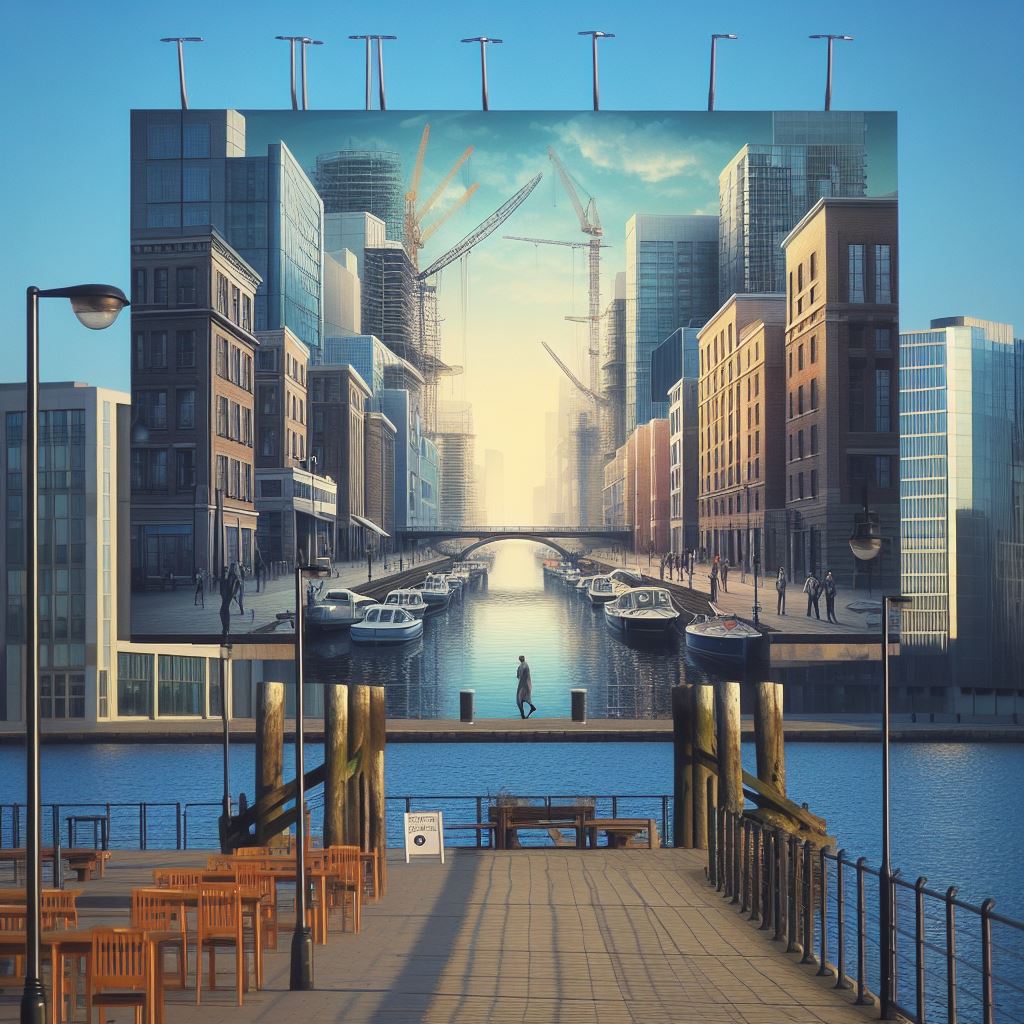
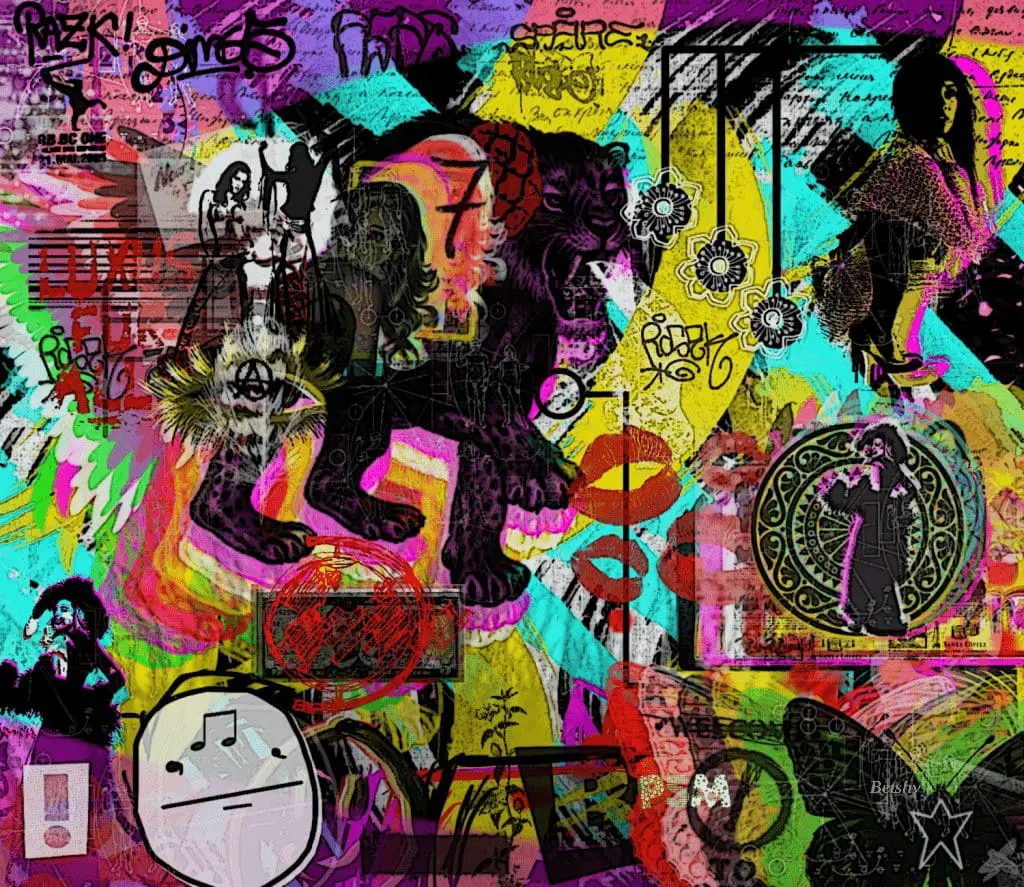
    Finally, here are some AI generated pictures of postmodernism

    Postmodern ART is interesting. I asked AI to generate images illustrating the concept of postmodernism, and showing postmodern realities. The images AI came up with are fascinating to analyse. The modernity of them also feel so familiar, as if postmodernism was more ingrained in our daily lives than previously thought. I hope you enjoy this small gallery.

    Advertisements
  • Postmodernist Creed

    Postmodernist Creed

    “One of the central tenets of the postmodernist creed is that the impersonal stereotypes of the media have saturated personal behavior, that the anonymous, corporate ‘they’ reaches out to touch the most intimate ‘you.’ The case has been overstated by those critics who stake the originality and authenticity of their theories on the claim that media culture has robbed experience of originality and authenticity. Still, there was a point to be made. For artists, stalking the cliches of advertising and the movies often has meant following them into the home; although by definition the imagery of postmodernist photography is drawn from the public sphere, its themes not infrequently are domestic. Thus it is that the beleaguered modernist tradition, in its aim to clarify personal experience, and the postmodernist juggernaut, eager to unmask Big Brother, meet (of all places) in the kitchen. The messages that they bring there may not be the same, but that is what makes for a lively conversation.”

    [Bibliography: MoMA – Galassi, 1991]

  • Postmodernism: Questions

    Postmodernism: Questions

    Media
    References
    Media

    References

    Oxford Dictionaries Online: Postmodernism

    Wild Goose Chase: Premodern vs. Modernism vs. Postmodern: A Theory

    Postmodernpsychology: Premodernism, Modernism & Postmodernism – An Overview     

    According to the Oxford English Dictionaries Online, postmodernism is “a late-20th-century style and concept in the arts, architecture, and criticism that represents a departure from modernism and has at its heart a general distrust of grand theories and ideologies as well as a problematical relationship with any notion of ‘art’”.

    Postmodernism arose as a social reaction to modernism, which explored the rationale of science  as an approach to understand reality and the world. It encouraged the objective observation of life in order to find the answers to every question asked. There were two areas that particularly composed the modern approach: empiricism, which initially studied the knowing through the senses and later evolved into scientific empiricism and methodology;  and the epistemological use of logic and reason. Modernism celebrated development and progress, and well as new discoveries and explanations in the industry.

    0
    1
    0

    • Could science and technology become the saviours of the human race?
    • How are new materials in the industry celebrated?
    • What is the continuity of the advances in warfare and weaponry?

    1

    • Is science a threat to humanity?
    • How is this threat represented in art, literature, music and film?
    • How can experience be explained as  machines. monsters, aliens; or simply “others”?

    The premodern period based its approach on the revelation of knowledge given from higher sources. It was often believed the the ultimate truth came from God, and the causality of daily events was attributed to supernatural forces. In this sense, authority was seen as mainly dogmatic. This can be appreciated through the historical study of the church and the privileged position it had in political endeavours. In contrast, modernism somehow took the power away from those based around dogma and handed it to those with logic, making scholars and scientists the new source of credible information. However, because not every single question can be answered through logic and reason, postmodernism encourages individual perspective.

    Whilst it celebrates science as a useful tool, it also maintains an open mentality towards the unexplained, and a more holistic approach to problems that cannot be solved through empirical methodology. It recognises spirituality as a valid source of knowledge. Politically speaking, postmodernism seeks to deploy previous authority sources by using a less hierarchical approach to power.

    0
    1
    0

    • What is the distinction between representation and reality?
    • What is the distinction between fact and fiction?
    • How does life imitate art?
    • How is information consumed nowadays?
    • What’s the importance of digitisation?
    • Has knowledge become democratised?
    • Is there such thing as an original source of knowledge?
    • What is reality?
    • How has technology changed the way we live our lives?
    • What is the impact of technology on the environment?

    1

    • Is there a reality to refer to?
    • Is science fiction future fact?
    • Is knowledge sourced from the Internet?
    • Can relationships be virtual?
    • Can modern society function without technology?
    • Who is the keeper of knowledge?
    • Is there such thing as an original author, artist, inventor, or originator?
    • Are ideas collective by nature?
    • How does it go from individual to collective?
    • Does it matter?
    • What happened to the ‘original idea’?
    • Does style matter more than substance?