

Tag: Philosophy

  • Friedrich Nietzsche: Key Concepts

    Friedrich Nietzsche: Key Concepts

    Advertisements

    One of the key concepts in Nietzsche’s philosophy is the idea of the “will to power.” For Nietzsche, all living beings are driven by a fundamental desire to assert their power and influence over their environment. This drive is not necessarily a conscious one, but rather a basic instinct that motivates all of our actions and decisions. Nietzsche believed that society and culture often suppress this will to power, leading to a sense of alienation and nihilism in individuals.

    Nietzsche also famously proclaimed the idea of the “Ubermensch,” or “Overman.” The Ubermensch is a hypothetical individual who has transcended conventional morality and societal norms, and has created his own values based on his own will to power. The Ubermensch is a figure of self-overcoming and self-realisation, who is able to embrace the chaos and uncertainty of existence without succumbing to despair or resentment.

    Another central concept in Nietzsche’s work is the idea of “eternal recurrence.” Nietzsche posited the theory that time is infinite and cyclical, and that all events and experiences will repeat themselves endlessly. This concept serves as a challenge to individuals to live their lives in a way that they would be willing to repeat them again and again, embracing both the joys and sorrows of existence.

    Nietzsche’s philosophy is often misunderstood and misinterpreted, in part due to his provocative and often ambiguous writing style. However, his ideas continue to resonate with readers and thinkers alike, as they grapple with questions of meaning, morality, and human nature. Nietzsche’s work remains a touchstone for those interested in exploring the complexities of the human condition and seeking to live authentically in a world that often seems chaotic and uncertain.

  • Overpopulation and Spiritual Discontent

    Overpopulation and Spiritual Discontent

    Advertisements

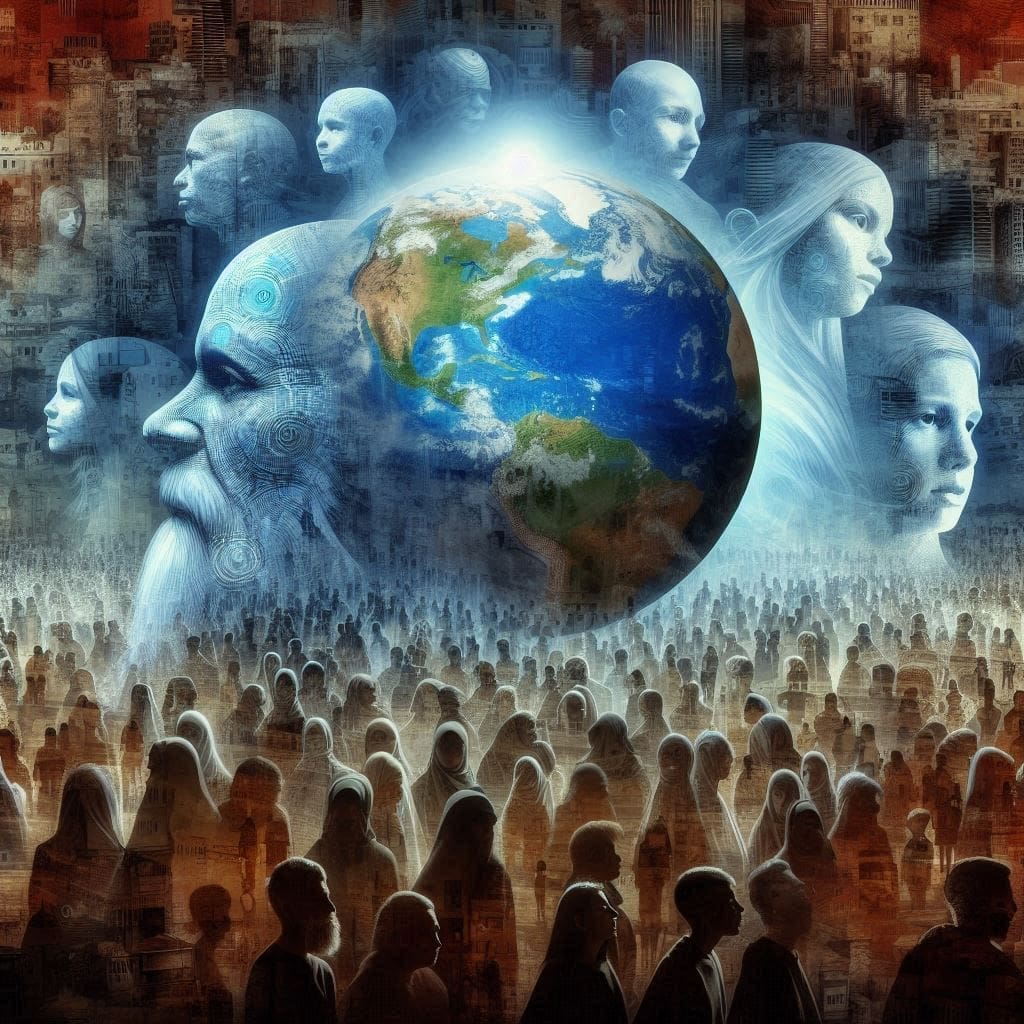
    But one aspect of overpopulation that is often overlooked is the impact it has on our spiritual well-being. Many people experience a sense of spiritual discontent in a world that feels overcrowded and chaotic. This can manifest in feelings of isolation, disconnection, and a lack of purpose or meaning in life.

    As the world becomes more crowded, our connections to others can become diluted. We may feel lost in a sea of people, struggling to find our place and form deep, meaningful relationships. This sense of disconnection can lead to feelings of loneliness and alienation, which can weigh heavily on our spiritual well-being.

    In addition, overpopulation puts a strain on our natural environment, leading to pollution, deforestation, and depletion of resources. This can disrupt our sense of harmony and connection to the earth, which many people find to be a source of spiritual nourishment.

    Furthermore, overpopulation can also exacerbate social inequalities and injustices, leading to feelings of anger, frustration, and hopelessness. When we see so many people struggling to survive, it can be difficult to maintain a sense of faith in humanity and a belief in the inherent goodness of people.

    So what can we do to combat this spiritual discontent in the face of overpopulation? One important step is to cultivate a sense of mindfulness and gratitude in our daily lives. By appreciating the small moments of beauty and connection that we encounter, we can find solace and meaning in the midst of chaos.

    We can also strive to build stronger, more meaningful connections with others, even in a crowded world. By fostering empathy, compassion, and understanding in our relationships, we can combat feelings of isolation and disconnection.

    Finally, we can work towards creating a more sustainable and equitable world for future generations. By advocating for policies that promote population control, environmental conservation, and social justice, we can help alleviate the strains that overpopulation places on our spiritual well-being.

    In conclusion, overpopulation is not just a problem of numbers – it is a problem that affects our spiritual well-being as well. By acknowledging and addressing the spiritual discontent that can arise in a crowded world, we can work towards creating a more harmonious and fulfilling existence for ourselves and for future generations.

  • Difference Between Atheism and Agnosticism

    Difference Between Atheism and Agnosticism

    Advertisements

    Atheism is the belief in the non-existence of gods. Atheists do not believe in any gods or higher powers and reject the idea of a divine being or beings. Atheism is often characterised by a lack of belief in supernatural entities and a reliance on empirical evidence and reason. Atheists may hold a variety of philosophical and moral beliefs, but at their core, they do not believe in the existence of a deity.

    On the other hand, agnosticism is the belief that the existence of a god or gods is unknown or unknowable. Agnostics do not take a definitive stance on the existence of a higher power and acknowledge that the question of god’s existence may never be answered definitively. Agnostics may be open to the possibility of a god but feel that there is not enough evidence to make a conclusive determination.

    One key difference between atheism and agnosticism is the certainty of belief. Atheism asserts a definite position on the existence of gods, while agnosticism allows for ambiguity and uncertainty. Atheists are confident in their disbelief, while agnostics are open to the possibility of a god but remain sceptical due to a lack of evidence.

    Another distinction between atheism and agnosticism is the scope of belief. Atheism specifically addresses belief in gods or higher powers, while agnosticism pertains to the ability to know or determine the existence of a god. Atheists may have strong convictions about the absence of gods, while agnostics focus on the limitations of human knowledge and understanding.

    In conclusion, atheism and agnosticism are two distinct positions on the existence of gods. Atheism asserts a lack of belief in gods, while agnosticism acknowledges the uncertainty and unknowability of the question. Both perspectives offer valuable insights into the nature of belief, scepticism, and the search for truth. Ultimately, the choice between atheism and agnosticism is a personal one that reflects an individual’s beliefs, values, and experiences.

  • Foucault’s Theories on Surveillance and Disciplinary Mechanisms

    Foucault’s Theories on Surveillance and Disciplinary Mechanisms

    Advertisements

    One of Foucault’s most influential works on this topic is his book “Discipline and Punish: The Birth of the Prison.” In this seminal work, Foucault traces the evolution of disciplinary mechanisms from medieval forms of punishment to the modern prison system. He argues that modern surveillance and control are not simply about punishing individuals for their transgressions, but rather about shaping and moulding them into compliant, productive members of society.

    Foucault introduces the concept of the “panopticon,” a hypothetical prison design in which a single guard can observe all inmates without them knowing whether they are being watched or not. This constant surveillance creates a sense of internalised discipline, as individuals regulate their own behaviour out of fear of being punished. The panopticon serves as a metaphor for how surveillance operates more broadly in society, shaping our actions and conformity to social norms.

    Foucault also explores the concept of “biopower,” or the ways in which institutions and governments exert control over populations through surveillance and regulation of bodies and behaviours. This form of power operates at the level of the population as a whole, rather than just on individual subjects. Biopower is evident in practices such as public health campaigns, surveillance technologies, and social welfare programs that aim to manage and control populations for the greater good.

    In addition to the panopticon and biopower, Foucault introduces the idea of “disciplinary society,” in which individuals are subject to constant surveillance and regulation in schools, prisons, hospitals, and other institutions. The goal of disciplinary society is to produce obedient, docile subjects who conform to societal expectations and norms.

    Foucault’s theories on surveillance and disciplinary mechanisms offer a critical lens through which to examine the dynamics of power and control in contemporary society. By analysing the ways in which institutions and individuals surveil and discipline one another, we can better understand the mechanisms of social control that shape our lives and behaviours. Foucault’s work continues to be relevant today, as we grapple with questions of privacy, surveillance, and power in an increasingly interconnected world.

  • Leonardo Da Vinci: Key Concepts of his Code

    Leonardo Da Vinci: Key Concepts of his Code

    Advertisements

    One of the key concepts that Da Vinci is known for is his emphasis on observation and experimentation. He believed that in order to truly understand something, one must first carefully observe it and then test it through experimentation. This approach to learning is evident in his meticulous drawings of the human body, as well as his detailed sketches of plants, animals, and machines. Da Vinci’s commitment to observation and experimentation laid the groundwork for the scientific method, which is still used by researchers and scientists to this day.

    Another key concept that Da Vinci championed was the idea of interdisciplinarity. He believed that in order to fully grasp the complexities of the world, one must be willing to explore multiple disciplines and perspectives. This holistic approach to learning is reflected in his work, which seamlessly blends art, science, and technology. Da Vinci’s interdisciplinary mindset allowed him to make connections between seemingly unrelated fields, leading to breakthroughs in areas such as anatomy, engineering, and optics.

    Da Vinci also valued the importance of creativity and imagination in his work. He saw art as a way to express his ideas and uncover the beauty of the natural world. Da Vinci’s imaginative spirit can be seen in his innovative designs for flying machines and his fantastical drawings of mythical creatures. His willingness to think outside the box and push the boundaries of what was believed to be possible set him apart from his contemporaries and continues to inspire artists and innovators today.

    In conclusion, Leonardo Da Vinci’s key concepts of observation and experimentation, interdisciplinarity, and creativity have had a profound impact on the worlds of art, science, and technology. His holistic approach to learning and his willingness to explore new ideas have left a lasting legacy that continues to influence and inspire generations of thinkers and creators. Da Vinci’s work serves as a testament to the power of curiosity, creativity, and a relentless pursuit of knowledge.

  • Beyond Humanity: Navigating the Post-Human Age

    Beyond Humanity: Navigating the Post-Human Age

    Advertisements

    This idea may sound like something out of a science fiction novel, but some experts believe that it could become a reality in the not-too-distant future. Advances in fields such as artificial intelligence , genetic engineering, and cybernetics are rapidly blurring the lines between humans and machines. And as technology continues to advance at an exponential rate, it is not too far-fetched to imagine a world in which humans have transcended their biological limitations and embraced a new, post-human form.

    But what would life in the post-human age look like? Some believe that it could bring about a new era of prosperity and enlightenment, with humans enjoying enhanced intelligence, longer lifespans, and an increased capacity for creativity and innovation. Others, however, fear that it could lead to a dystopian future in which humans are enslaved by machines or stripped of their individuality and autonomy.

    Regardless of the potential risks and rewards, the rise of the post-human age raises some important ethical and philosophical questions. What will it mean to be human in a world where biological and technological boundaries have become increasingly blurred? How will society adapt to the challenges and opportunities presented by these advancements? And what role will humans play in a world dominated by intelligent machines?

    As we continue to push the boundaries of what is possible in fields such as artificial intelligence and biotechnology, it is important to consider the implications of living in a post-human age. While the idea of merging with machines may seem like a distant fantasy, it is becoming increasingly clear that the lines between humans and technology are becoming increasingly blurred. And as we look towards the future, it is essential that we grapple with the ethical, social, and philosophical implications of this brave new world.

  • The Evolution of Humanity: Exploring the Possibilities of Transhumanist Philosophy

    The Evolution of Humanity: Exploring the Possibilities of Transhumanist Philosophy

    Advertisements

    At its core, transhumanism is about the belief that humans should actively seek to improve themselves and push the boundaries of what is possible. This can manifest in a variety of ways, from using medical technology to enhance physical capabilities to using cognitive enhancements to improve mental acuity. The ultimate goal of transhumanism is to create a future in which humans are not bound by the limitations of their biology, but rather are able to evolve and adapt in ways that were previously unimaginable.

    One of the key tenets of transhumanism is the idea of radical life extension. Proponents of transhumanism believe that through the use of technology, humans can potentially extend their lifespans indefinitely, allowing for the possibility of immortality. This idea has sparked fierce debate among ethicists and bioethicists, with some arguing that it could potentially have negative societal implications, such as exacerbating existing inequalities or creating a divide between the haves and have-nots.

    Another important aspect of transhumanist philosophy is the idea of enhancing human intelligence. Through the use of technologies such as brain-computer interfaces, neural implants, and cognitive enhancements, transhumanists believe that humans can greatly increase their cognitive abilities and potentially even create a new form of intelligence altogether. This idea raises a host of ethical questions, such as who should have access to these technologies and how they should be regulated.

    Despite the ethical concerns surrounding transhumanism, it is clear that the philosophy has the potential to radically transform our understanding of what it means to be human. By embracing the possibilities of technology and actively seeking to enhance ourselves, we may be able to create a future in which humanity is capable of achieving heights that were previously thought to be impossible. Ultimately, transhumanism challenges us to question our current limitations and consider the limitless possibilities that technology may hold for the future of humanity.