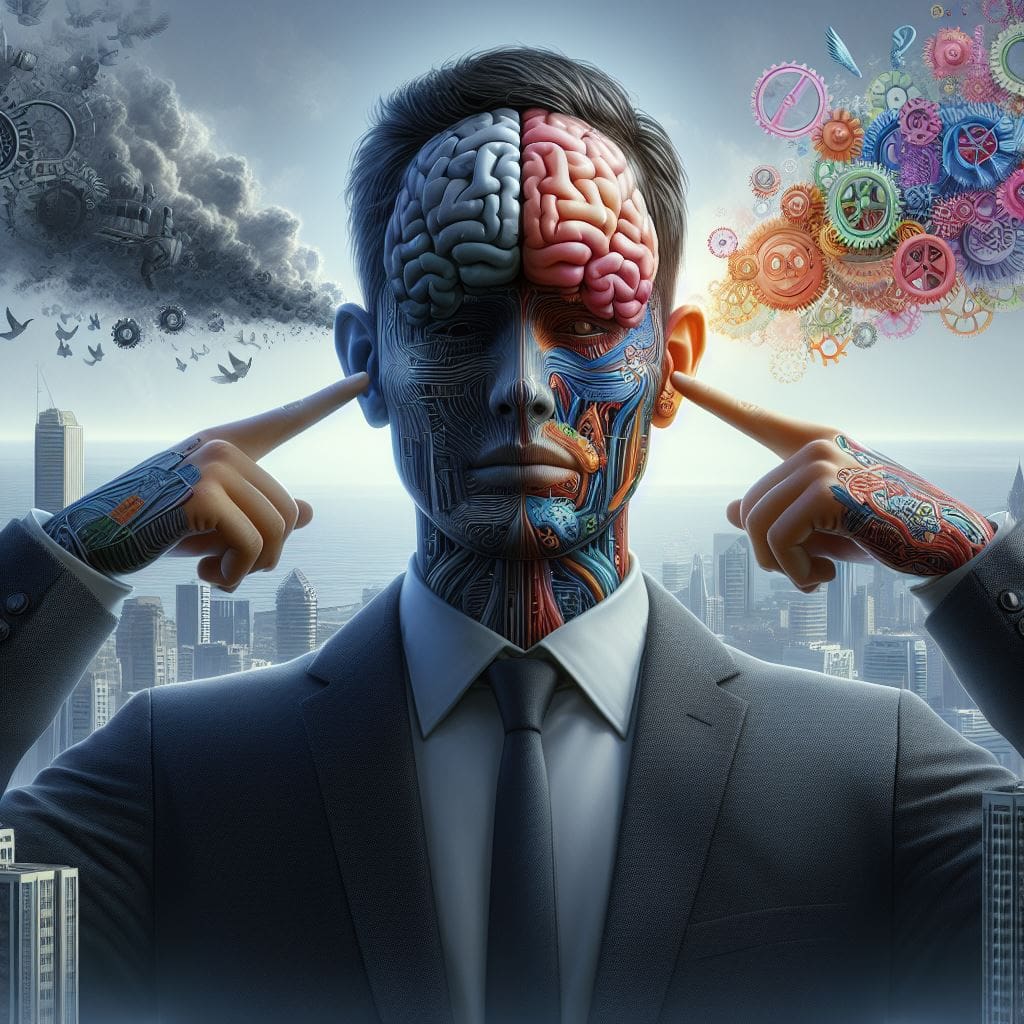
The overconfidence effect is a cognitive bias that causes individuals to have excessive confidence in their own abilities or knowledge, even when objective evidence suggests otherwise. This bias can have serious implications in various aspects of life, from decision-making to interactions with others.
Advertisements
One of the key characteristics of the overconfidence effect is that individuals tend to overestimate their own skills or knowledge, while underestimating the abilities of others. This can lead to a number of negative outcomes, such as making poor decisions based on faulty assumptions or not seeking help or feedback from others when it is needed.
In the workplace, the overconfidence effect can manifest itself in several ways. For example, a manager might believe they have all the answers and refuse to listen to input from their team members, leading to subpar performance and a lack of collaboration. Similarly, an employee might overestimate their own abilities and take on projects that are beyond their skill level, resulting in failure and potential harm to their career progression.
Additionally, it is important to continually challenge our assumptions and beliefs, rather than relying solely on our own intuition or past experiences. By remaining humble and willing to learn from others, we can avoid falling victim to the overconfidence effect and make better choices in both our personal and professional lives.
Have you ever found yourself sticking with something, whether it be a project, a job, or even a relationship, simply because you’ve already invested so much time, money, or effort into it? If so, you may have fallen victim to the sunk cost fallacy.
Advertisements
The sunk cost fallacy is a cognitive bias that leads us to make decisions based on the time, money, or resources we have already invested in something, rather than on the potential benefits of continuing to pursue it. In other words, we feel compelled to “stay the course” simply because we don’t want to admit that we’ve wasted our time or resources up to this point.
This way of thinking can be incredibly detrimental, as it leads us to make irrational decisions that are not based on logic or reason. For example, imagine you’ve been working on a project for months and have already sunk hundreds of hours into it, only to realise that it’s not going to be successful in the long run. Instead of cutting your losses and moving on to something more promising, you continue to pour your time and effort into the project simply because you don’t want to admit defeat.
The sunk cost fallacy can also manifest in our personal lives, such as staying in a toxic relationship because we’ve invested so much time and effort into making it work, or continuing to pursue a career that we’re not passionate about because we’ve already invested so much money into our education.
So how can we avoid falling prey to the sunk cost fallacy? The key is to remember that the past is in the past, and we cannot change the time, money, or effort we have already invested in something. Instead, we should focus on the present and future and make decisions based on what is best for us in the long run.
One way to combat the sunk cost fallacy is to reframe our thinking and consider the potential benefits of cutting our losses and moving on. By looking at the situation from a more objective perspective, we can make more rational decisions that are based on the potential outcomes and benefits, rather than on what we have already invested.
In conclusion, the sunk cost fallacy is a common cognitive bias that can lead us to make irrational decisions based on past investments rather than future potential. By recognising this bias and reframing our thinking, we can avoid falling into this trap and make decisions that are truly in our best interests. Remember, it’s never too late to cut your losses and start fresh.
Our brains are remarkable machines, capable of interpreting vast amounts of information and making split-second decisions. However, they are not infallible. Cognitive biases are the innate mental shortcuts and errors we unknowingly make, clouding our judgement and distorting the way we perceive the world. Understanding these biases can help us become more aware of our own thinking patterns and make better-informed decisions. In this blog post, we will delve into 15 common cognitive biases that affect our daily lives.
Advertisements
1. Confirmation Bias
We tend to seek information that confirms our existing beliefs, ignoring or dismissing contradicting evidence. This bias reinforces our own opinions but inhibits open-mindedness and critical thinking.
2. Anchoring Bias
The first piece of information we receive about a subject often becomes the reference point to which we anchor our subsequent judgements. This bias limits our ability to evaluate new information objectively.
3. Availability Heuristic
Our tendency to rely on readily available examples or information when making decisions can lead to inaccuracies. Events that are more memorable or vivid easily trump their statistical probability, distorting our thinking.
4. Bandwagon Effect
Human beings have an instinctive desire for social conformity. This bias leads us to adopt certain beliefs or behaviours simply because many others do, without critically examining their validity.
When we wrongly believe that past events will dictate future outcomes, we fall into this bias. For example, assuming a coin toss will be “heads” because it has landed on “tails” several times in a row.
7. Halo Effect
Based on one positive trait or aspect, we extend a positive judgement to other unrelated qualities. This bias leads us to make disproportionate judgements of individuals or products, based on limited information.
8. Illusory Superiority
Most people have an innate tendency to overestimate their abilities or qualities, considering themselves above average. This bias leads to self-delusion and an inflated sense of ego.
9. Negativity Bias
Negative events or experiences tend to have a stronger impact on our thoughts and emotions than positive ones. This bias evolved as a protective mechanism but can lead to a skewed perception of reality.
10. Outcome Bias
Judging decisions solely based on their outcomes, rather than assessing the reasoning behind them, is known as the outcome bias. This bias often ignores the role of luck or other external factors and can undermine critical thinking.
11. Overconfidence Effect
We tend to be overly confident in our abilities or judgements, even when the evidence suggests otherwise. This bias can inhibit learning, risking poor decision-making and missed opportunities.
12. Selective Perception
Our minds naturally filter and interpret information based on our existing beliefs, selectively perceiving what aligns with our worldview and ignoring contradictory evidence. This bias reinforces existing biases and prevents us from gaining a comprehensive understanding.
13. Sunk Cost Fallacy
When people continue pursuing a course of action because of resources or effort already invested, rather than evaluating its current or future value, they fall into this bias. This can lead to irrational decision-making and wastage of resources.
When faced with uncertain or risky decisions, we often choose options that promise no risk, even if they offer minimal benefits. This bias stems from our aversion to loss and can hinder personal growth and achievement.
Confirmation bias is a cognitive bias that affects every individual, often unconsciously, impacting the decision-making process and shaping our perspectives. As humans, we tend to seek out information that supports our pre-existing beliefs, while dismissing or disregarding contradictory evidence. Understanding confirmation bias and its far-reaching implications is crucial for making objective and rational judgements.
Advertisements
What is Confirmation Bias?
Confirmation bias refers to our inclination to favour information that supports our existing beliefs or opinions. This bias skews our perception and distorts reality, hindering the unbiased evaluation of evidence. While it is natural for humans to form opinions based on personal experiences and beliefs, confirmation bias adds an extra layer of complexity that can hinder critical thinking.
The Widespread Implications of Confirmation Bias
Confirmation bias is present in many aspects of our lives, and it has wide-ranging implications both individually and collectively. From political affiliations to religious beliefs and even consumer decisions, confirmation bias influences our thought processes, leading us to selectively search, interpret, and remember information that aligns with our preconceived notions.
In Politics and Media
Confirmation bias often fuels polarisation in politics, as individuals gravitate toward news sources that confirm their biases, reinforcing echo chambers of like-minded opinions. In turn, this can polarise societies and hinder constructive dialogue and compromise, leading to potential social unrest.
In Decision-Making
Confirmation bias can impair our ability to make rational decisions. Whether in personal relationships, business ventures, or educational pursuits, clinging to preconceived notions can lead to poor choices, missed opportunities, and an inability to adapt to changing circumstances.
Overcoming Confirmation Bias
While confirmation bias is deeply ingrained in our cognitive processes, there are strategies to minimise its negative impact:
1. Awareness and self-reflection: Acknowledge that we are all prone to confirmation bias and reflect on our own beliefs and opinions.
3. Consider counter-arguments: Encourage critical thinking by evaluating both supporting and opposing evidence. Question our own biases and challenge our assumptions to arrive at well-rounded conclusions.
4. Engage in open-mindedness: Adopt a flexible mindset and be open to changing our opinions when faced with compelling evidence.
5. Conscious consumption of media: Diversify our information sources and engage with reputable news outlets that provide balanced perspectives to avoid falling into echo chambers.
Conclusion
Confirmation bias is an inherent part of human cognition, but it can hinder our ability to think critically and make objective judgements. By recognising and actively combating confirmation bias, we can dismantle the barriers it creates and foster a more open-minded and inclusive society. Embracing diverse perspectives and being receptive to new information allows us to grow intellectually and make informed decisions. Striving for self-awareness and challenging our biases is an ongoing journey towards improving critical thinking skills and cultivating a more harmonious world.