Category: History

  • Sicario Culture: An Analysis of Violent Crime and Aggression in Colombia During the 80s and 90s

    Sicario Culture: An Analysis of Violent Crime and Aggression in Colombia During the 80s and 90s

    According to Blackburn (2005, pp. 211-223), “aggression describes the intentional infliction of harm, including psychological discomfort as well as injury, although it is sometimes loosely equated with vigour in competitive situations […] a constant need to discharge aggressive energy governs human behaviour […] anger is a socially constructed emotion […] In personality disorders, ego weakness results in the repression of aggression […] Ferguson and Rule, for example, suggest that anger is aroused not simply by the degree of perceived aversive treatment by others, but also by judgements of whether the aversion is intentional, malevolent, foreseeable, and unjustified”.

    The cycle of criminogenic behaviour

    Gillespie and Mitchell (2018, p. 85) describe individuals diagnosed with psychopathy as a personality disorder (ASPD) as “outwardly normal, but were nonetheless extremely callous and unable to express remorse or guilt, to the point where they seemed to be devoid of human emotion. The patients were typically of above average intelligence and seemingly charming, though lacked the capacity for love”. Psychopaths who go through the criminal justice system can at times exhibit great criminal versatility. The following is a diagram I designed to illustrate how such criminogenic needs and versatility develop and recur.

    Recidivism

    National homicide rates per 100 000 population, c. 1984

    Blackburn (2005) included a table in his chapter about violent crime and aggression where Colombia is listed as the country with the highest homicide rate in 1984 and this was published in the United Nations year-book (1988). Even though the data has changed massively, and Colombia has dramatically reduced its crime rates; such bloody past would have caused generational trauma without a doubt, and the Colombian people would have had to adapt to survive potential death anywhere at any time if they upset the wrong person. Many political leaders were assassinated in order to stop the people from interfering with the criminal business of the mafia. A lot of blood was shed, and the Colombian people were over-exposed to extreme levels of danger to the point where the entire nation was having a humanitarian crisis, which still echoes, and which is still being solved.

    CountryRate
    Colombia37.4
    Mexico17.9
    Brazil13.4
    Venezuela12.9
    USA 8.5
    Ecuador 7.1
    Argentina3.8
    Hungary2.7
    Canada2.3
    Italy2.1
    Australia1.9
    Poland1.6
    Austria1.4
    Israel1.4
    France1.3
    Scotland1.3
    New Zealand1.2
    FDR1.2
    Spain1.0
    Greece0.9
    England and Wales0.7
    Egypt0.5

    Source: United Nations (1988). Demographic yearbook. New York: United Nations Publishing.

    Case study: the criminal career of sicario alias Popeye

    The following video covers the developmental trajectory of Jhon Jairo Velasquez Vasquez’ criminal career, the political context in which he was rewarded with attention and money for being a hired gun; and how such media attention has led to some of the Colombian people seeing and treating him as a celebrity. Behind this story is a real case of a mental health crisis where the hypernormalisation of violence from recent decades was so extreme, that many people became desensitised to the actions of this type of individual, seeing no difference between what is right and what is wrong. Furthermore, this documentary analyses some of the confessions of Popeye as the primary psychopath that he was, and shows how what is ‘normal’ in a country, is ‘abnormal’ in other places. Popeye specialised in crime, and developed all the skills needed for the criminal business. This makes an interesting case for forensic psychology, and for media studies.

    References

    1989: un año para la memoria (2014) Youtube video, added by El Espectador [Online]. Available at https://www.youtube.com/watch?v=fDFsNNaTQIY&t=4s (Accessed 9 March 2020). 

    2015 Popeye Full TV Interview. Part 1 of 3. English Subtitles (2018) Youtube video, added by Colombian History X [Online]. Available at https://www.youtube.com/watch?v=M6NGWNrzg88 (Accessed 8 March 2020). 

    Blackburn, R. (2005) The Psychology of Criminal Conduct, West Sussex, John Wiley & Sons/ University of Liverpool, pp. 210-245.

    Escobar’s Hitman. Former drug-gang killer now loved and loathed in Colombia (2017) Youtube video, added by RT Documentary [Online]. Available at https://www.youtube.com/watch?v=BQy_LJdZ7qw (Accessed 8 March 2020).

    Gillespie, S. M. and Mitchell, I.J. (2018) ‘Psychopathy’, in Davies, G.M. and Beech, A.R. (eds), Forensic Psychology: Crime, Justice, Law, Interventions, 3rd ed, West Sussex, British Psychological Society/ John Wiley & Sons, pp. 85-100. 

    Popeye: The Jailhouse Interviews Pt. 1 – English Subtitles  (2018) Youtube video, added by Colombian History X [Online]. Available at https://www.youtube.com/watch?v=EaPw1EEPOCc  (Accessed 8 March 2020). 

    Popeye: The early years (2018) Youtube video, added by Colombian History X [Online]. Available at https://www.youtube.com/watch?v=ZAPsQ0P_4Q0  (Accessed 8 March 2020).

    United Nations (1988) Demographic Year-Book, New York, United Nations Publishing Division. 

  • The Psychology of Obedience to Authority: Lessons Learned from the Holocaust

    The Psychology of Obedience to Authority: Lessons Learned from the Holocaust

    Nazi Germany was a true source of critical inquiry for academics worldwide. The work of Adorno et al. about authoritarianism through psychoanalytic theory,  and the work of Stanley Milgram about obedience influenced by situational factors are at the core of modern forensic psychology practice. Authoritarianism can be described as an attitude spectrum encompassing all types of prejudices, that is, xenophobia; as well as extreme ideologies in regards to discipline and traditions, that is, conventionalism (McAvoy, 2012). This essay seeks to explore the studies conducted by the mentioned above pioneers of forensic psychology during the post-war period in relation to the holocaust events. 

    Xenophobic conventionalism was the main motivation driving the mass assassination of innocent people during WWII. This inspired Sanford to invite Adorno, Frenkel-Brunswik and Levinson to join his psychological investigation project in the US, and they became a team often cited as “Adorno et al.” due to Harvard alphabetical referencing rules. They were interested in uncovering the unconscious psychopathology of war criminals, and this led them to create the F-scale (McAvoy, 2012). Based on psychoanalytic theory, they administered questionnaires and interviews to the masses in order to validate their hypotheses which drew a  correlation between extreme childhood trauma and overboard adult attitudes to authority (McAvoy, 2012). The trials being held at Nuremberg, Germany, were a powerful motivator behind social psychology research after the war (Bayard, 2012). Stanley Milgram studied Adorno et al.’s work meticulously and was interested in understanding authoritarian obedience and how it related to irresponsible cruelty. After watching the globally broadcasted trial of Adolf Eichmann in television during 1961, Milgram realised that ordinary people were capable of committing great acts of violence when following orders (Banyard, 2012).  Through systematic procedures and pressure from authoritarian figures, a death toll that today approximates seventeen million minority individuals was achieved. Homosexuals, dissenters, jews, activists, disabled people, and foreigners; all brutally discriminated against and murdered (Holocaust Encyclopedia, 2019). Milgram designed a social experiment in order to better understand the link between conscience, executive obedience, and authority in organised war crimes.  

    Adorno et al. (1950, p. V) saw prejudice as a mental health virus: “Even a social disease has its periods of quiescence during which the social scientists […] can study it […] to prevent or reduce the virulence of the next outbreak”. They devised the F-scale with its subscales of ethnocentrism, politico-conservatism, and antisemitism (McAvoy, 2012). They used both, quantitative and qualitative methods: “Individuals were studied by means of interviews and special clinical techniques for revealing underlying wishes, fears, and defenses; groups were studied by means of questionnaires” (Adorno et al., 1950, p. 12). Tests had statements with predetermined scores that individuals could agree or disagree with. The interviews allowed the researchers to double-check whether a participant’s general demeanor matched the anti-democratic scores. Nevertheless, the overall study was not enough to determine the direction of the effect of authoritarianism, nor could this predict whether someone with the potential for fascism would actually act on their attitudes and join a fascist movement (McAvoy, 2012). “The modification of the potentially fascist structure cannot be achieved by psychological means alone. The task is comparable to that of eliminating neurosis, or delinquency, or nationalism from the world” (Adorno et al., 1950, p. 975). 

    Social psychologist Stanley Milgram was impacted by such results. He modified the F-scale that Adorno et al. had created (Milgram, n.d.).  After witnessing the trial of ordinary-looking Adolf Eichmann, Milgram (1962) wanted to understand the difference between free and forced obedience in everyday life. He (Milgram, 1965, p. 57) reported: “In its more general form the problem may be defined thus: If X tells Y to hurt Z, under what conditions will Y carry out the command of X and under what conditions will he refuse [?]”. Questions like these had led him to design the base condition to test 40 normal-looking young males in 1962. They each would arrive at Yale University and would be greeted by an experimenter wearing a white coat. An actor played the role of fellow participant.  Everything was standardised, from the laboratory, to the confederates, and the apparatus (Banyard, 2012). Participants were asked to administer potentially lethal electric shocks to the actor playing learner. The electric shock machine looked realistic, but was only a prop. Milgram found that indeed normal people had the potential to harm with some pressure from an authority figure. Milgram (1963, p. 371) called this phenomena “destructive obedience in the laboratory”. He then administered the questionnaires to ratify the participants’ valence. 

    The studies conducted by Adorno et al. (authoritarianism) and Stanley Milgram (obedience) gave forensic psychologists much detail in terms of personality, situational factors/influences, authority, and compliance in the system  (Byford, 2017). Monetary incentives were offered to participants in both studies: “This was the only way to insure that the staff of the Study would not be conscience-stricken” (Adorno et al., 1950, p. 26). WWII was a common theme in both approaches: “Gas chambers were built, death camps were guarded, daily quotas of corpses were produced with the same efficiency as the manufacture of appliances […] Obedience is the psychological mechanism that links individual action to political purpose” (Milgram, 1963, p. 371). Both experiments were carried out in the US, made use of pen and paper questionnaires, and included qualitative assessments; although the conditions, apparatuses, and  procedures were completely different. The results were controversial enough to elicit a lot of attention from the general public in both cases. Adorno et al.’s work was criticised for being based on psychoanalytic theory, and for the risk of acquiescence response bias (McAvoy, 2012). Milgram’s work got him in serious ethical trouble due to what he was able to uncover about his subjects; and how this impacted their real life, identities, and reputations (Banyard, 2012). Both teams reported their findings through writing, although Milgram also created a documentary about his experiment (Obedience, 1962). 

    As it can be observed, there are many substantial similarities between Adorno et al.’s and Milgram’s experiments, even if these are different when it comes to structure. One preceded the next, and one added to the other. Authority and its relation to obedience can be better appreciated by drawing a correlation between the two approaches studied above. The results shed light on personality, and how adult behaviour can be a result of individual differences, as well as of contextual circumstances. Adorno et. al studied the master, and Milgram studied the slave. The general conclusion? Both sides are equally dangerous. 

    References

    Adorno, T.W., Frenkel-Brunswik, E., Levinson, D.J. and Sanford, R.N. (1950) The Authoritarian Personality, New York, Harper.

    Banyard, P. (2012)  ‘Just following orders?’, in Brace, N. and Byford, J. (eds) Investigating Psychology, Oxford, Oxford University Press/Milton Keynes, The Open University, pp. 61-95.

    Byford, J. (2017) ‘The importance of replication’, in McAvoy, J. and Brace, N. (eds) Investigating Methods, Milton Keynes, The Open University, pp. 47-82.

    Holocaust Encyclopedia (2019) Documenting Number of Victims of the Holocaust and Nazi Persecution [Online]. Available at: https://web.archive.org/web/20190309193501/https://encyclopedia.ushmm.org/content/en/article/documenting-numbers-of-victims-of-the-holocaust-and-nazi-persecution (Accessed 2 April 2019)

    McAvoy, J. (2012) ‘Exposing the Authoritarian Personality”, in Brace N. and Byford, J. (eds) Investigating Psychology, Oxford, Oxford University Press/Milton Keynes, The Open University, pp. 14-56 

    Milgram, S. (n.d.). Modified “F” Scale, Opinion Questionnaire [Online]. Available at: https://search-alexanderstreet-com.libezproxy.open.ac.uk/view/work/bibliographic_entity%7Cbibliographic_details%7C2089868#page/1/mode/1/chapter/bibliographic_entity|bibliographic_details|2089868 (Accessed 2 April 2019)

    Milgram, S. (1962). ‘Free Obedience vs. Forced Obedience’ in Stanley Milgram Personal Papers [Online]. Available at: https://search.alexanderstreet.com/view/work/bibliographic_entity%7Cbibliographic_details%7C2089846 (Accessed 2 April 2019)

    Milgram, S. (1963). ‘Behavioral Study of Obedience’, in Journal of Abnormal and Social Psychology, pp. 371-372 [Online]. Available at: https://search.alexanderstreet.com/view/work/bibliographic_entity%7Cdocument%7C2082052 (Accessed 2 April, 2019)

    Milgram, S. (1965). ‘Some Conditions of Obedience and Disobedience to Authority’, in Human Relations, vol. 18, no. 1, pp. 57-76 [Online]. Available at: https://search-alexanderstreet-com.libezproxy.open.ac.uk/view/work/bibliographic_entity%7Cbibliographic_details%7C2082063#page/1/mode/1/chapter/bibliographic_entity|bibliographic_details|2082063 (Accessed 2 April, 2019)

    Obedience (1962) Directed by Stanley Milgram [Documentary]. New Haven, Yale University. Available at: https://search-alexanderstreet-com.libezproxy.open.ac.uk/view/work/bibliographic_entity%7Cvideo_work%7C2122979 (Accessed 2 April 2019)


  • Commercial Psychology

    Commercial Psychology

    Context:

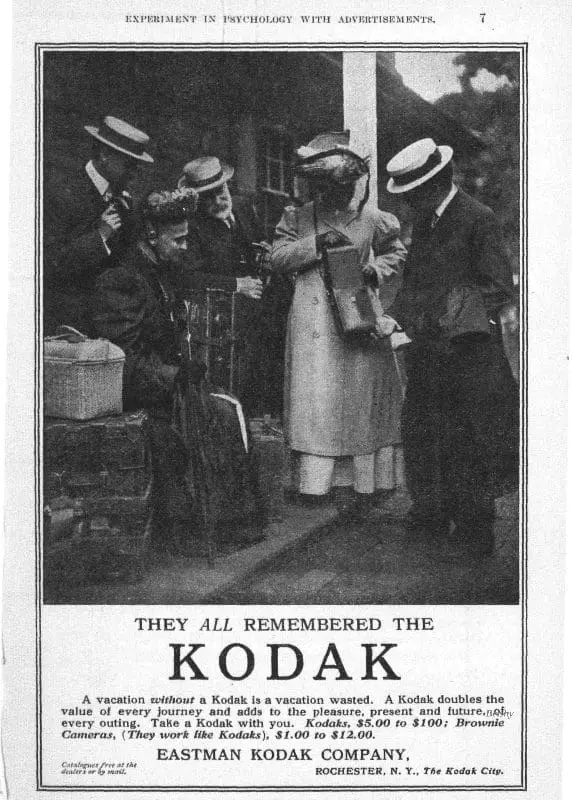
    A psychological experiment conducted by the army through Eastman Kodak Company advertisements as explained by Robert Yerkes in 1912. 

    Reference:

    Yerkes, R. M. et al. (1912) ‘The class experiment in psychology with advertisements as materials’, Journal of Educational Psychology. Warwick & York, 3(1), pp. 1–17. doi: 10.1037/h0072656.

    Download:

    The Class Experiment in Psychology- Robert Yerkes

  • Ellis Island

    Ellis Island

    Description:

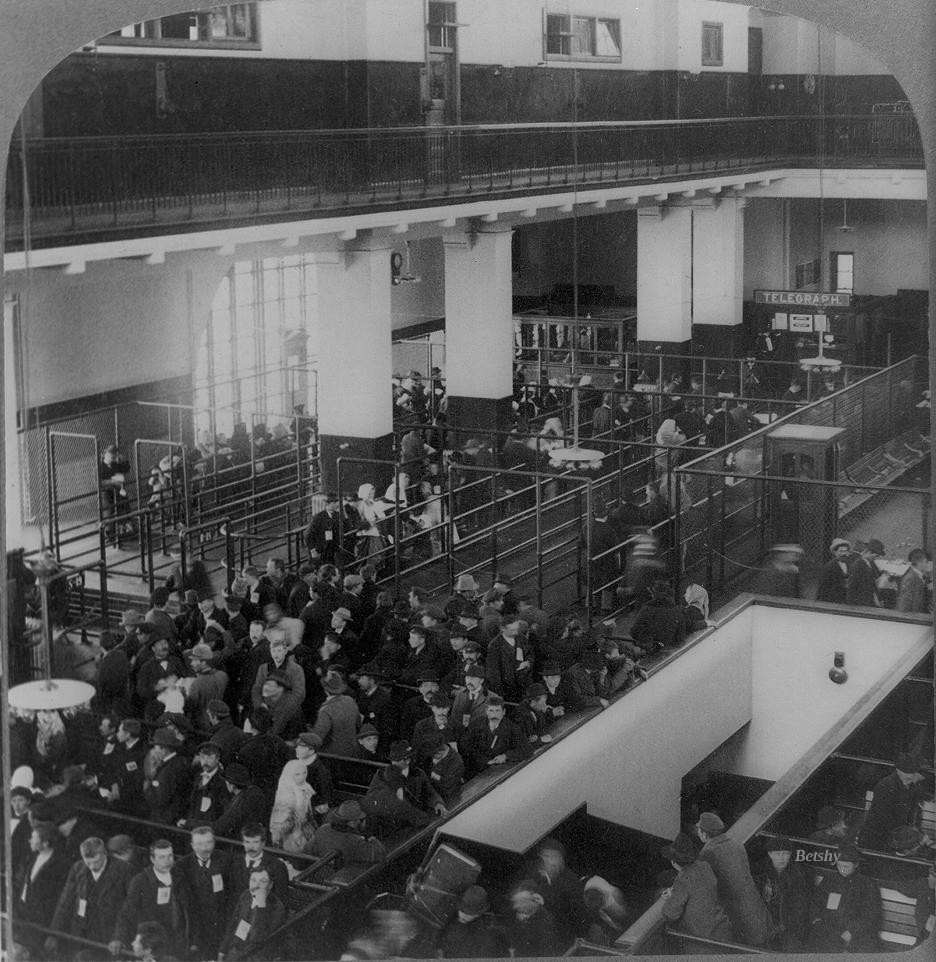
    Ellis Island was an immigration station which opened in 1892 with the purpose of screening all immigrants to identify and exclude the ones having a mental deficiency. Because many of the workers at this island were passionate about the eugenics movement, they became ideologically extreme to the point where they felt it was their duty to single out disabled immigrants in order to prevent what they considered to be genetically inherited criminal behaviours. By the time the island closed in 1954, 12 million immigrants had been processed, many of them under the Immigration Act 1924. Ellis Island’s history provides humanity with a reference to what xenophobia, discrimination, and inequality are about.; and how white supremacy has existed since before the world wars.

    References:

    Wikipedia: Ellis Island

    Wikipedia: Immigration Act 1924

    Byford, J., McAvoy, Jean and Banyard, P. (2014) Investigating intelligence, The Open University.

  • Against Antisemitism

    Against Antisemitism

    Yemenite Jews en route from Aden to Israel, during the Operation Magic Carpet (1949–1950).

    Context:

    NEWS REPORTS: “Last year, there were 1,652 antisemitic incidents in the UK, a 16% increase on the year before, including verbal abuse on the streets. If you fail to extend solidarity to a victim of antisemitism because you do not agree with their politics, then you do not truly oppose antisemitism at all”.

    FACTS AND FIGURES: “The most common type of incident involved verbal antisemitic abuse directed at Jewish people, with 724 incidents. There was a fall of 17% in the number of violent antisemitic assaults, from 149 in 2017 to 123 last year, including one classified by the CST as “extreme violence”. There were 78 incidents of damage or desecration to Jewish property.”

    TESTIMONY: “That isn’t to say someone who is the victim of abuse should not be criticised. I confess, dear reader, that I have one or two critics out there: I would never argue that I should be immune from scrutiny because I receive homophobia and death threats every day, or because I have been repeatedly chased by far-right activists “

    (The Guardian, 2019)

    References:

    The Guardian: Whatever Luciana Berger’s Politics, Labour Members Must Stand with her Against Antisemitism

    The Guardian: Antisemitic Incidents in UK at Record High for Third Year in a Row

    Wikipedia: Antisemitism

  • The Eighth Wonder

    The Eighth Wonder

    Description:

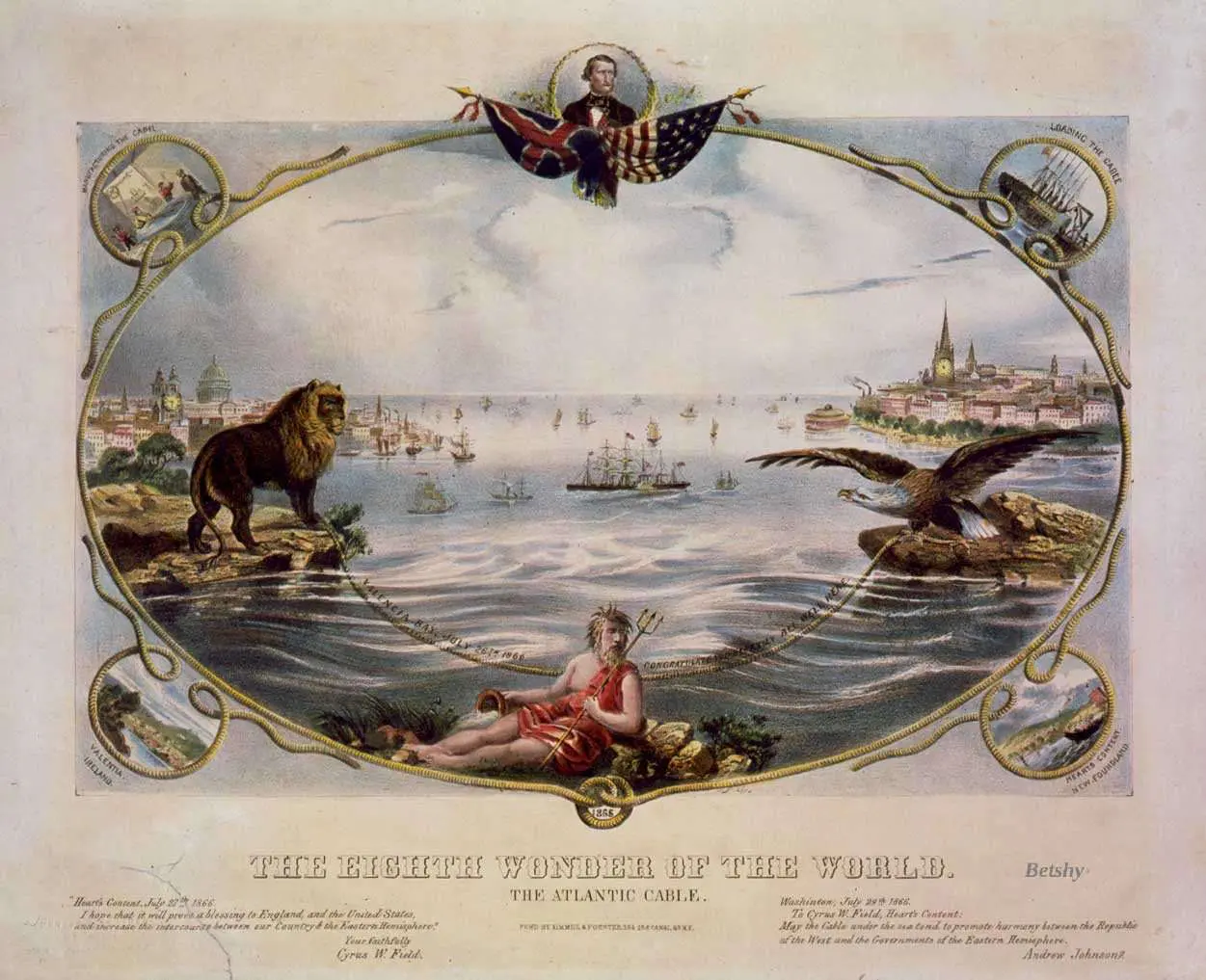
    The transatlantic cable, completed in July 1866, was the beginning of distance telecommunications. It was created by Cyrus W. Field and built in New York. 

    Reference:

    Atlantic Cable: The Eighth Wonder of the World

  • Electroshock Therapy

    Electroshock Therapy

    Description:

    A device “for giving general electric treatment for psychological effect, in psycho-neurotic cases” during the war. The electroconvulsive therapy  was first used on a human being in 1938.

    Licence:

    Bergonic Chair by Otis Historical Archives National Museum of Health and Medicine under  CC BY 2.0.