
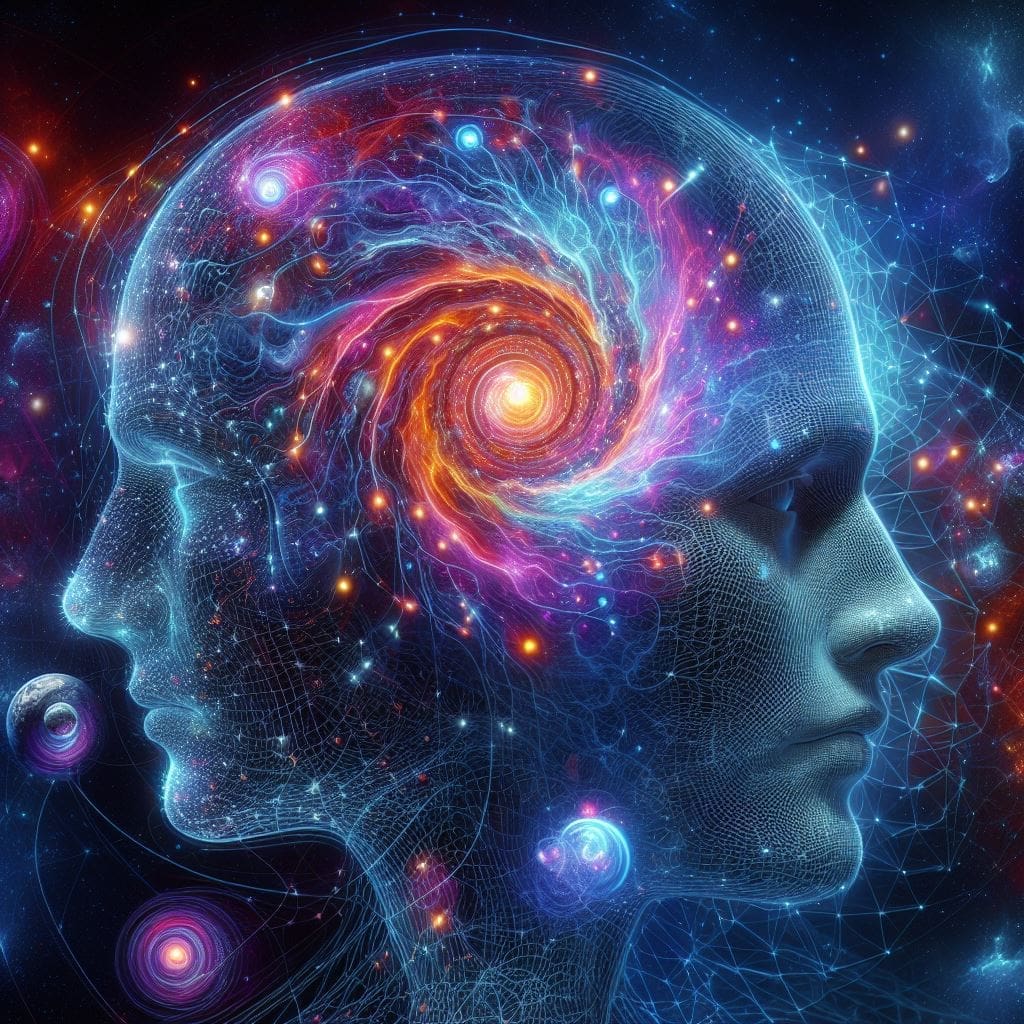

Quantum consciousness is a fascinating and complex topic that delves into the intersection of quantum physics and psychology. It proposes that the principles of quantum mechanics may play a role in the phenomenon of consciousness and the human mind.
One of the key ideas in quantum consciousness is the concept of superposition. In quantum mechanics, superposition refers to the ability of a particle to exist in multiple states simultaneously until it is observed or measured. This concept has been applied to consciousness, suggesting that our minds may have a similar capacity to exist in multiple states or potentialities at once.
Another important aspect of quantum consciousness is the idea of non-locality. In quantum physics, non-locality refers to the ability of particles to be correlated or connected regardless of the distance between them. This concept has been extrapolated to suggest that consciousness may also be non-local, existing beyond the confines of the physical brain.
One of the most famous proponents of the theory of quantum consciousness is physicist Roger Penrose, who has collaborated with anesthesiologist Stuart Hameroff to develop the Orch-OR theory. This theory posits that consciousness arises from quantum processes occurring within the microtubules of neurons in the brain.
The implications of quantum consciousness are profound and have the potential to revolutionise our understanding of the mind and human consciousness. It challenges traditional views of the brain as a purely biochemical and electrical system, suggesting that there may be deeper, more fundamental processes at play.
From a psychological perspective, quantum consciousness raises questions about the nature of reality, perception, and the self. It challenges the idea of a fixed, stable sense of self and instead suggests that consciousness is dynamic and ever-changing.
While the concept of quantum consciousness is still speculative and controversial, it offers a new and exciting lens through which to explore the mysteries of the mind. As our understanding of quantum physics and neuroscience continues to advance, we may come closer to unravelling the enigmatic nature of consciousness and unlocking the secrets of the quantum mind.
Share this:

You Might Also Enjoy Reading