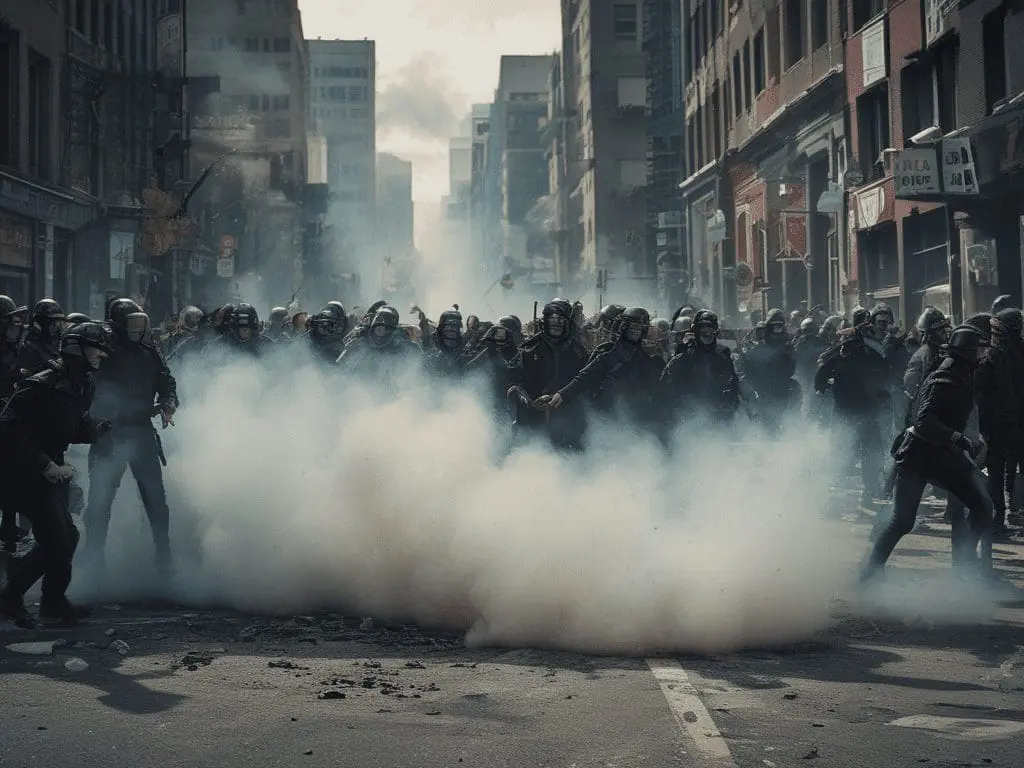

The recent rise in anti-Islam riots in the UK has sparked a heated debate about the psychology behind these violent outbursts. While some argue that these riots are simply a result of deep-seated prejudice and Islamophobia, others believe that there may be deeper psychological and societal factors at play.
One of the main reasons behind these riots is the fear of Sharia Law, the legal and moral code of Islam. Many British citizens have expressed concern that the implementation of Sharia Law in the UK would lead to the oppression of women, the punishment of non-believers, and the imposition of harsh punishments such as stoning and amputation. Rumours recently surfaced which stated that the Labour Party was going to implement this moral code in the UK.
This fear of Sharia Law is understandable due to how brutal some cultures have been to those whom they punish. The UK people have been raised with different values, and they perceive a threat to these values. Also, sharia law would be a primitive form of conservatism, and authoritarianism; and promotes outdated practices often associated with barbaric acts and patriarchy.
Furthermore, the media plays a significant role in shaping public perception and attitudes towards Islam and Sharia Law. Sensationalist headlines and biased reporting can perpetuate stereotypes and fuel fear and resentment towards Muslims, leading to a rise in anti-Islam sentiment. For instance, reporting that the GOV.UK places immigrants above natives is incorrect. The reality is that the current government administration is oppressing everyone equally.
In times of economic and social uncertainty, individuals may also look for scapegoats to blame for their problems. Muslims, as a religious minority, often become easy targets for this misplaced anger and frustration. The government victimises everyone and fuels these divisions.
To address the root causes of anti-Islam riots in the UK, it is essential to promote understanding and dialogue between different communities. Encouraging empathy and cultural exchange can foster a sense of unity and shared values, rather than division and hostility. Moreover, reassuring the UK public that such barbaric laws won’t be brought into the jurisdiction, might pacify the crowd.
Ultimately, tackling the psychology behind anti-Islam riots requires a multifaceted approach that addresses not only individual biases and prejudices but also the societal and systemic factors that contribute to discrimination and violence. By fostering a more inclusive and tolerant society, we can work towards a future where all individuals are treated with respect and dignity, regardless of their religious beliefs.
Share this:

You Might Also Enjoy Reading