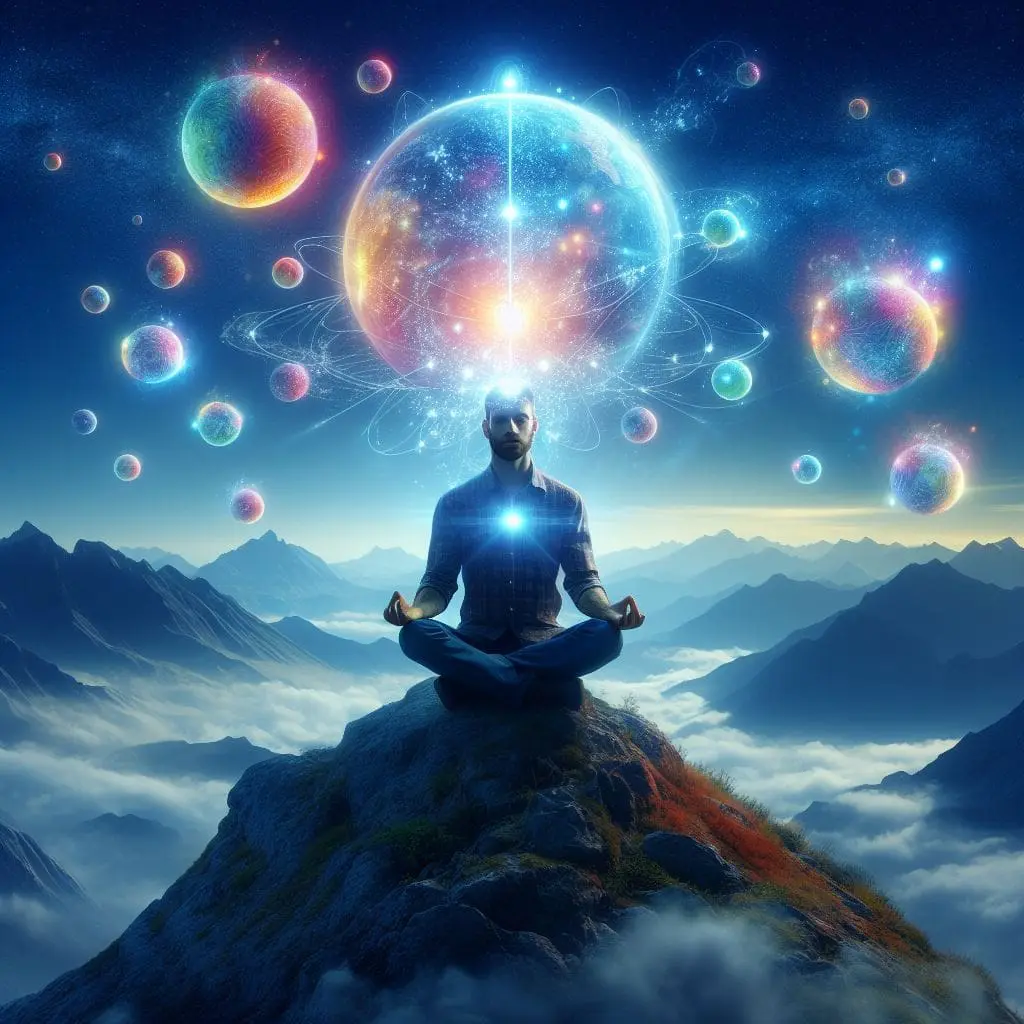

Consciousness is a fascinating and mysterious aspect of human experience. It is what allows us to perceive the world around us, to think, feel, and experience emotions. But where does consciousness reside? Is it limited to the brain or is it something that exists beyond the physical body?
This question is at the heart of the concept of the non-locality of consciousness. Non-locality refers to the idea that consciousness is not limited to a specific location in the brain or body, but rather is a universal and interconnected aspect of reality that transcends physical boundaries.
One of the most well-known proponents of the non-locality of consciousness is the renowned physicist, Erwin Schrödinger. In his book “What is Life?” he argued that consciousness is a fundamental aspect of the universe, existing independently of the physical body. He believed that consciousness is a universal phenomenon that connects all living beings and is not confined to the individual brain.
This idea is supported by various mystical and spiritual traditions, which have long held the belief that consciousness is an aspect of reality that exists beyond the physical body. In Eastern philosophy, for example, the concept of the “universal mind” or “collective consciousness” suggests that all beings are interconnected through a shared consciousness that transcends individuality.
Recent advances in quantum physics have also shed light on the non-locality of consciousness. Quantum entanglement, a phenomenon in which two particles become connected and can influence each other’s states instantaneously regardless of the distance between them, suggests a form of non-local communication that challenges our traditional understanding of space and time.
So what does the non-locality of consciousness mean for our understanding of reality? It suggests that consciousness is not confined to the physical body, but is a fundamental aspect of the universe that connects all living beings. It challenges the notion of individuality and separateness, pointing towards a more interconnected view of reality.
Ultimately, the concept of the non-locality of consciousness invites us to explore the nature of the mind and to consider the possibility that consciousness is more than just a byproduct of brain activity. It opens up new avenues for exploring the nature of reality and our place within it, inviting us to expand our understanding of consciousness and its role in shaping our experience of the world.
Share this:

You Might Also Enjoy Reading