Have you ever wondered what goes on in our minds? How do we experience the world around us? What is consciousness, and how does it shape our understanding of reality? These questions have fascinated philosophers, scientists, and psychologists for centuries. In this blog post, we delve into the intriguing field of psychology to explore the nature and complexities of consciousness.
Consciousness can be defined as the awareness of our thoughts, feelings, and experiences. It is the very essence of our existence, enabling us to perceive, reason, and make decisions. Yet, despite its significance, the study of consciousness remains a deeply enigmatic and elusive subject.
One way psychologists examine consciousness is through the use of introspection. This method involves self-observation and reflection, allowing individuals to become aware of their own mental processes. Through introspection, psychologists can gain insights into conscious experience and uncover the underlying mechanisms driving our thoughts and actions.
Another avenue of exploration lies in the study of altered states of consciousness. In certain circumstances, such as during meditation, hypnosis, or the consumption of psychoactive substances, our regular waking consciousness undergoes a shift. Researchers investigate these altered states to better understand the boundaries and variations of consciousness, shedding light on how it can expand or contract under different conditions.
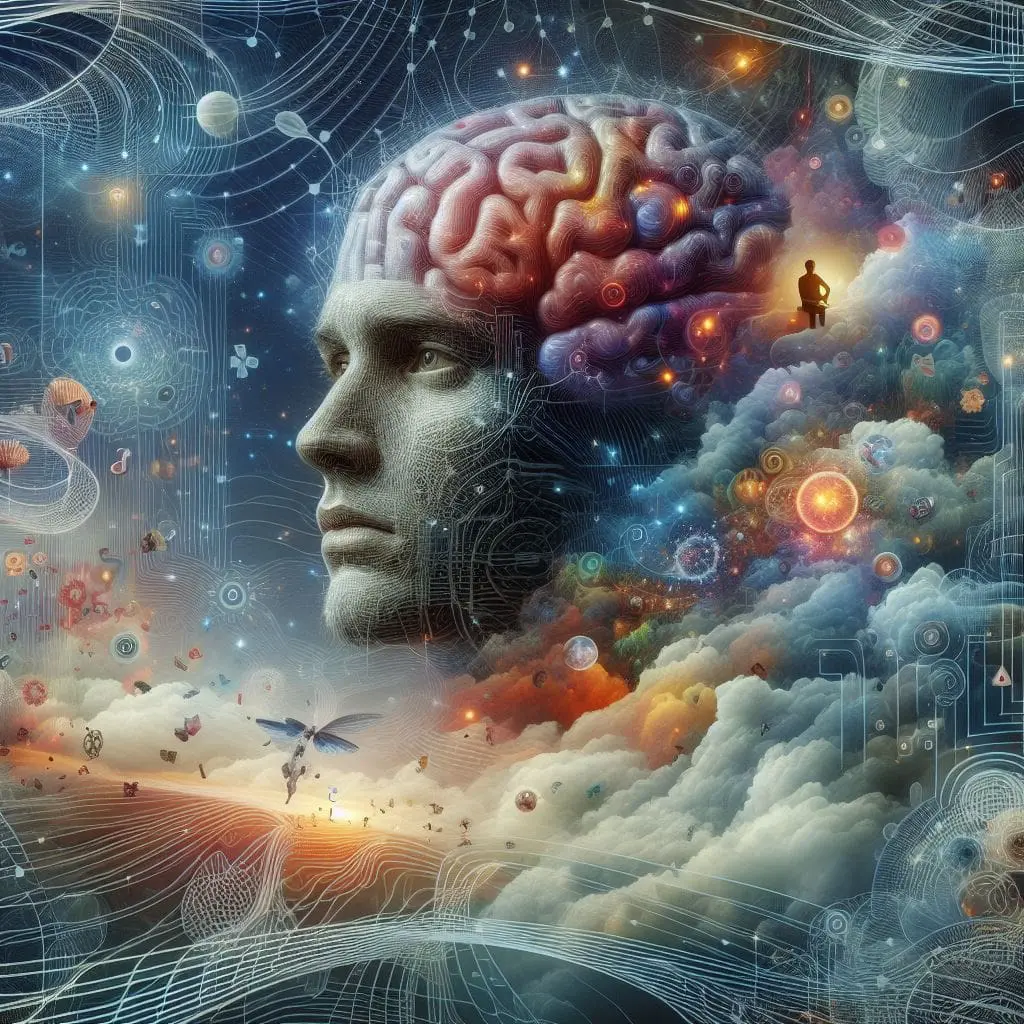
Moreover, the neuroscience perspective on consciousness has made significant contributions to our understanding. Advanced brain-imaging techniques, like functional magnetic resonance imaging (fMRI) and electroencephalography (EEG), have provided valuable insights into the neural correlates of consciousness. Scientists analyse the activity patterns and networks within the brain to unravel the intricate mechanisms at play when we are conscious.
One prominent theory in the field of psychology is the Global Workspace Theory. Proposed by Bernard Baars, this theory suggests that consciousness arises from the integration of information across multiple brain regions. According to this view, the brain treats certain information as essential and distributes it widely, allowing it to influence and guide our thoughts and actions. This theory has found resonance with the idea of attention as a crucial component of consciousness, as it directs and prioritises the flow of information in and out of our awareness.
In recent years, advances in artificial intelligence and machine learning have also contributed to our understanding of consciousness. Simulating the human mind through artificial constructs has led to insights into how complex patterns of information processing can create a sense of self-awareness. By developing computational models grounded in psychological principles, researchers are harnessing technology to explore the mysteries of consciousness.
However, as we dive into the depths of consciousness, we encounter several philosophical puzzles. The question of whether other beings possess consciousness or if it is a uniquely human trait remains unsolved. Exploring the ethical implications of consciousness, including animal rights and the moral responsibility toward artificial intelligence, is an ongoing challenge.
The psychology of consciousness is a captivating field that continues to evolve, offering new perspectives and challenging traditional ideas. By integrating knowledge from across disciplines, we inch closer to unravelling the complexities of our conscious experience. As we delve deeper, we gain a deeper appreciation for the wonders of the mind and the boundless possibilities that lie within the realm of consciousness.
In conclusion, the study of the psychology of consciousness is a fascinating journey into understanding the fundamental nature of our experiences. Through introspection, altered states, neuroscience, and artificial intelligence, researchers are steadily advancing our knowledge of consciousness. As the exploration continues, the psychological mysteries of consciousness unfold, revealing the intricate workings of the human mind.
Share this:

You Might Also Enjoy Reading