
Tag: Politics

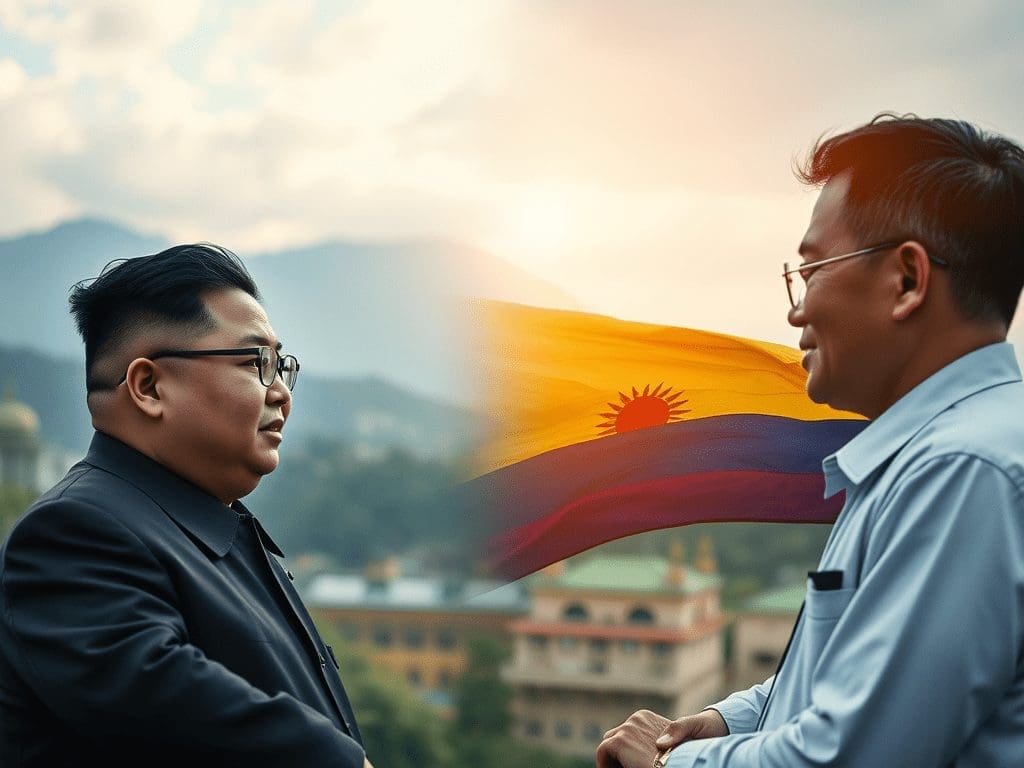
  • North Korea-Colombia Relations: A Complex Economic Partnership

    North Korea-Colombia Relations: A Complex Economic Partnership

    Advertisements

    One of the key areas of interaction between the two countries has been in the realm of trade. In recent years, North Korea has been looking to expand its trade partnerships beyond its traditional allies like China and Russia . Colombia, with its strong economy and growing international influence, presents an attractive partner for North Korea. There have been reports of North Korean companies looking to establish business ties in Colombia, particularly in the areas of mining and energy.

    However, these economic aspirations have been complicated by Colombia’s close ties with the United States. As a key ally of the US, Colombia has been under pressure to limit its interactions with North Korea, particularly in light of the ongoing tensions between North Korea and the US over the latter’s nuclear ambitions. This has led to some strains in the relationship between North Korea and Colombia, with the Colombian government taking steps to restrict trade with North Korea in line with US sanctions.

    Despite these tensions, there have been some positive developments in the relationship between North Korea and Colombia. In 2017, for example, North Korea’s ambassador to Cuba visited Colombia and met with government officials, signalling a potential thaw in relations. There have also been reports of cultural exchanges between the two countries, with North Korean musicians performing in Colombia and Colombian artists showcasing their work in North Korea.

    Overall, while North Korea and Colombia may not have a formal relationship, there are signs of potential cooperation and engagement between the two countries. As the global political landscape continues to evolve, it will be interesting to see how their relationship develops in the future.

  • Colombia-Iraq Relations: Strengthening Ties in Security, Trade, and Culture

    Colombia-Iraq Relations: Strengthening Ties in Security, Trade, and Culture

    Advertisements

    One of the main factors driving the closer ties between Colombia and Iraq is their shared commitment to fighting terrorism and promoting stability in the Middle East. Colombia has a long history of dealing with armed insurgencies, such as the FARC, and has valuable experience to offer in terms of counterinsurgency tactics and post-conflict reconstruction. In recent years, Colombian security experts have travelled to Iraq to provide training and assistance to Iraqi forces in their fight against terrorist groups like ISIS.

    In terms of trade, Colombia and Iraq have been working to increase their economic cooperation. Colombia is a major exporter of agricultural products, such as coffee, bananas, and flowers, while Iraq has a growing demand for these goods. In addition, Colombia has expertise in sectors such as energy, infrastructure, and healthcare that could benefit the Iraqi economy. Both countries have expressed interest in expanding their trade relations and exploring opportunities for investment.

    Cultural exchange is also an important aspect of Colombian-Iraqi relations. In recent years, there has been a growing interest in Colombian music, dance, and cuisine in Iraq, and vice versa. Colombian artists have performed in Iraqi cities, showcasing the vibrant culture of Colombia, while Iraqi musicians and artists have visited Colombia to share their talents with Colombian audiences. These cultural exchanges help to foster understanding and friendship between the two nations.

    Overall, the relationship between Colombia and Iraq is a testament to the power of diplomacy and collaboration in overcoming differences and building bridges between nations. By working together in areas such as security, trade, and cultural exchange, Colombia and Iraq are laying the groundwork for a stronger and more prosperous future for both countries. As they continue to deepen their ties, the potential for even greater cooperation between Colombia and Iraq is boundless.

  • Understanding Agitation Propaganda: Manipulation and Influence

    Understanding Agitation Propaganda: Manipulation and Influence

    Advertisements

    One of the key characteristics of agitation propaganda is its use of highly emotional language and imagery to convey a sense of urgency and importance. This can be seen in political speeches, advertisements, and news reports that aim to get people riled up about a particular issue or cause.

    Agitation propaganda is often used to mobilise support for a particular ideology or agenda, and can be used to manipulate people into taking action that they may not have otherwise considered. This is often achieved by demonising a particular group or individual, presenting them as a threat to society, and ultimately rallying people to take action against them.

    One of the dangers of agitation propaganda is that it can be used to spread misinformation and distort the truth. By playing on people’s emotions and fears, propagandists can manipulate facts and manipulate public opinion. This can have serious consequences, leading to division, conflict, and even violence.

    In today’s digital age, agitation propaganda is more prevalent than ever before. With the rise of social media platforms and online news outlets, it is easier for propagandists to spread their message to a wide audience. It is important for individuals to be vigilant and critical of the information they consume, and to question the motives behind the messages they are being exposed to.

    Ultimately, agitation propaganda is a powerful tool that can be used for both good and bad purposes. It is up to each individual to critically evaluate the messages they are being exposed to, and to resist being swayed by emotional appeals. By being aware of the tactics used in agitation propaganda, we can all work towards a more informed and rational society.

  • An Introduction to Centralism

    An Introduction to Centralism

    Advertisements

    One of the key principles of centralism is the belief that a strong central government is necessary to maintain order and stability within a country. Proponents argue that a centralised government can more effectively address national issues and ensure consistent policies across all regions. Additionally, centralism can help prevent fragmentation and disunity within a country by promoting a sense of national identity and unity.

    Centralism can take many forms, ranging from unitary systems where all power is held by the central government, to federal systems where power is shared between the central government and regional governments. In unitary systems, the central government has the authority to create and enforce laws, collect taxes, and make decisions on behalf of the entire nation. In federal systems, the central government shares power with regional governments, which may have their own legislative bodies and authority over certain areas such as education or healthcare.

    Critics of centralism argue that it can lead to the concentration of power in the hands of a few individuals or groups, potentially leading to authoritarian rule and suppression of democratic principles. They also point out that centralism can stifle innovation and diversity, as decisions are made at the national level rather than being tailored to the specific needs and preferences of each region.

    Despite these criticisms, centralism has been embraced by many countries around the world, including China, Russia, and France. These countries believe that a strong central government is necessary to maintain order and stability, particularly in large and diverse nations. Centralist policies can help ensure national security, economic growth, and social cohesion.

    In conclusion, centralism is a political ideology that advocates for a strong central government with the power to make decisions on behalf of the entire nation. While centralism has its advantages in terms of national unity and stability, it also presents challenges in terms of democracy and diversity. As countries continue to grapple with issues of governance and power distribution, the debate between centralism and decentralism is likely to continue.

  • Francisco de Miranda: Pan-Latin American Unity and Independence

    Francisco de Miranda: Pan-Latin American Unity and Independence

    Advertisements

    One of Miranda’s most important theories was his belief in the concept of pan-Latin American unity. He envisioned a united Latin America free from Spanish colonial rule, where all countries in the region would come together to form a powerful and independent federation . This idea of unity among the diverse nations of Latin America would later inspire other revolutionary leaders, such as Simón Bolívar, in their fight for independence.

    Miranda also believed in the importance of a strong centralised government to ensure the stability and prosperity of a newly independent Latin America. He argued that a federal republic, with power shared between a central government and individual states or provinces, would be the best way to govern the region. By promoting this model of government, Miranda hoped to prevent the chaos and infighting that often accompanied periods of political transition.

    Another key theory developed by Miranda was his belief in the importance of education and enlightenment for the success of a newly independent Latin American nation. He believed that a well-educated and informed citizenry would be better able to participate in the political process and contribute to the development of the nation. Miranda saw education as a tool for empowering individuals and fostering a sense of national identity and pride.

    Miranda’s theories on pan-Latin American unity, government structure, and education were ahead of their time and continue to be relevant in the present day. His ideas laid the groundwork for the independence movements that would ultimately lead to the liberation of Latin America from Spanish colonial rule.

    In conclusion, Francisco de Miranda’s key theories on pan-Latin American unity, government structure, and education were instrumental in shaping the independence movements in Latin America. His vision of a united and independent Latin America continues to inspire and guide generations of leaders in the region today. Miranda’s legacy as a revolutionary thinker and advocate for independence will forever be remembered in the annals of Latin American history.

  • Understanding Federalism: Key Features and Benefits in the United States

    Understanding Federalism: Key Features and Benefits in the United States

    Advertisements

    In the United States , federalism is enshrined in the Constitution, which outlines the powers of the federal government and the powers reserved for the states. The federal government is responsible for issues that affect the entire country, such as national defence and foreign policy, while the states have authority over matters that are more local in nature, such as education and transportation.

    One of the key features of federalism is the concept of dual sovereignty, where both the federal government and the states have their own spheres of authority. This allows for a level of flexibility and experimentation in governance, as states are able to tailor their policies to the specific needs of their citizens.

    Federalism also helps to promote accountability and responsiveness in government, as it allows for more direct involvement of citizens in the decision-making process. Citizens have the ability to influence policy at both the federal and state levels, through their elected representatives.

    However, federalism is not without its challenges. Disputes over the division of power between the federal government and the states can often lead to conflict and gridlock. Additionally, the system can lead to disparities in policy and services between states, as each state has the authority to set its own policies.

    Despite these challenges, federalism remains a key feature of the American system of government. By dividing power between the central government and the states, federalism helps to ensure a balance of power and promote accountability in government. It is a system that allows for flexibility and experimentation, while also providing for the protection of individual rights.

    In conclusion, federalism is an important aspect of the American system of government, one that plays a crucial role in ensuring a balance of power and accountability. It is a system that allows for diversity and experimentation, while also promoting responsiveness and citizen involvement in governance. As such, federalism remains a foundational principle of American democracy.

  • Syria Conflict: Military Operations and International Involvement

    Syria Conflict: Military Operations and International Involvement

    Advertisements

    One of the most prominent military operations in Syria is being conducted by the Syrian government forces, backed by allies such as Russia and Iran. This operation is primarily aimed at regaining control of territories held by rebel groups and terrorist organisations such as ISIS. The Syrian government forces have been making significant gains in recent months, reclaiming key areas in the country and pushing back against opposition forces.

    On the other side of the conflict, the United States and its coalition partners are also conducting military operations in Syria, primarily focused on combating ISIS. The US-led coalition has been carrying out airstrikes and supporting ground operations by local forces to weaken and ultimately defeat the terrorist group. While ISIS has been significantly weakened in recent years, pockets of resistance still remain in certain areas of Syria.

    Another major player in the Syrian conflict is Turkey, which launched a military operation in northern Syria in 2019 with the aim of creating a buffer zone along its border and pushing back against Kurdish forces. The Turkish military operation has led to clashes with Kurdish fighters and has raised concerns about the potential for further destabilisation in the region.

    Overall, the military operations in Syria are complex and multifaceted, with multiple actors pursuing their own agendas and objectives. The conflict shows no signs of abating anytime soon, and the situation on the ground remains volatile and unpredictable. As the various military forces continue to jockey for control and influence in Syria, the civilian population continues to bear the brunt of the ongoing violence and suffering.

    It is imperative that all parties involved in the Syrian conflict prioritise the protection of civilians and work towards a peaceful resolution to the conflict. The cycle of violence and destruction in Syria has already caused immense human suffering, and it is high time for all sides to come together and work towards a lasting and sustainable peace in the country. Only through cooperation and diplomacy can the cycle of violence be broken and the people of Syria be given a chance to rebuild their lives and their country.