Tag: Politics

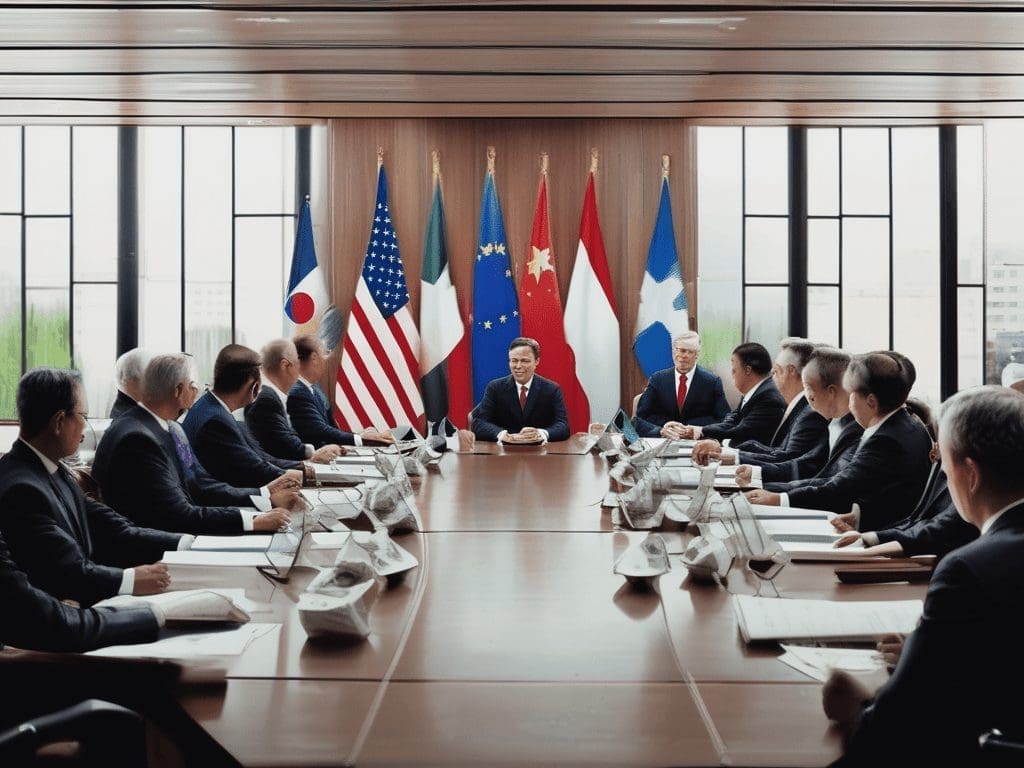
  • Creative Diplomacy: Innovating Foreign Policy for the 21st Century

    Creative Diplomacy: Innovating Foreign Policy for the 21st Century

    Advertisements

    At its core, creative diplomacy is about thinking outside the box and finding new ways to build bridges and foster understanding between nations. It recognises the power of art , culture, technology, and other forms of creative expression in promoting peace and cooperation.

    One example of creative diplomacy in action is the use of cultural exchanges and artistic collaborations to forge connections between countries. By showcasing the rich cultural traditions of different nations, diplomats can help to break down stereotypes and build trust between peoples. This not only fosters greater understanding, but also helps to promote mutual respect and cooperation on a global scale.

    Another key aspect of creative diplomacy is the use of technology to facilitate communication and collaboration between nations. In today’s digital age, social media and online platforms have become powerful tools for diplomats to engage with people around the world and promote dialogue on important issues. Virtual conferences, webinars, and other digital initiatives can help to bring together experts and leaders from different countries to discuss common challenges and find new ways to work together.

    In addition to cultural exchanges and technological innovations, creative diplomacy also encompasses a range of other approaches, such as public diplomacy, economic diplomacy, and track II diplomacy. These various tools and techniques can be used in combination to create a more holistic and effective approach to international relations.

    In conclusion, creative diplomacy offers a fresh and innovative approach to addressing the complex and interconnected challenges of the 21st century. By harnessing the power of creativity, innovation, and collaboration, diplomats can forge new connections, build trust, and find peaceful solutions to even the most intractable conflicts. As the world becomes increasingly interconnected, creative diplomacy will play an important role in shaping the future of international relations.

  • Russia’s Transphobic Legislation: Impact on Human Rights

    Russia’s Transphobic Legislation: Impact on Human Rights

    Advertisements

    One of the most controversial aspects of the legislation is the ban on transgender individuals from changing their gender marker on official documents such as passports and birth certificates. This effectively erases the existence of transgender individuals and denies them the basic right to self-identify and express their gender identity. This not only has practical implications for individuals trying to navigate daily life but also contributes to the marginalisation and discrimination faced by transgender people in Russian society.

    Additionally, the legislation includes provisions that restrict transgender individuals from accessing necessary healthcare services, such as hormone therapy and gender-affirming surgeries. These services are vital for the physical and mental well-being of transgender individuals and denying them access to them can have devastating consequences.

    Furthermore, the legislation introduces harsh penalties for anyone who violates the strict gender norms enforced by the state. This includes fines and imprisonment for individuals who engage in activities deemed to be in violation of traditional gender roles. This not only restricts the personal freedoms of individuals but also perpetuates harmful stereotypes and reinforces discrimination against LGBTQ+ individuals.

    The enactment of these transphobic laws is a clear violation of human rights and it is imperative that the international community speaks out against them. All individuals, regardless of their gender identity, deserve to be treated with dignity and respect and to have their human rights protected.

    It is essential that we stand in solidarity with transgender individuals in Russia and support their fight for equality and justice. By raising awareness about these discriminatory laws and advocating for change, we can help create a more inclusive and accepting society for all individuals, regardless of their gender identity.

  • How to Reduce Russophobia in the UK

    How to Reduce Russophobia in the UK

    Advertisements

    1. Educate yourself: One of the most important steps in reducing Russophobia is to educate yourself about Russian history, culture, and people. By gaining a better understanding of the country and its people, you can challenge stereotypes and misinformation that may contribute to negative attitudes towards Russia.

    2. Challenge stereotypes: When you hear or see negative stereotypes about Russians, don’t be afraid to speak up and challenge them. By questioning these stereotypes and presenting a more nuanced view of Russian people, you can help others see beyond the prejudices that fuel Russophobia.

    3. Engage with Russian communities: One of the best ways to combat Russophobia is to engage with Russian communities in the UK. By forming connections with Russian people, you can humanise them and break down barriers that may exist between different cultural groups.

    4. Support diversity and inclusion: Promoting diversity and inclusion in all areas of society can help to combat Russophobia by creating a more inclusive and accepting environment for all people, regardless of their background or nationality.

    5. Encourage dialogue and understanding: Finally, it’s important to encourage dialogue and understanding between people from different backgrounds. By fostering open and respectful conversations about Russia and its people, we can break down stereotypes and build bridges between communities.

    In conclusion, reducing Russophobia in the UK requires a concerted effort from individuals, communities, and society as a whole. By educating ourselves, challenging stereotypes, engaging with Russian communities, supporting diversity and inclusion, and promoting dialogue and understanding, we can work towards a more inclusive and tolerant society where fear and hatred have no place. Lets work together to combat Russophobia and build a more peaceful and harmonious world.

  • Human Rights Should Not Be Derogated for Education Purposes

    Human Rights Should Not Be Derogated for Education Purposes

    Advertisements

    Education is a fundamental human right in itself, crucial for the personal development and empowerment of individuals . It is through education that individuals are able to acquire knowledge and skills, access opportunities, and participate fully in society. However, in some cases, the right to education is prioritised over other human rights, leading to their derogation.

    One common example of this is the use of corporal punishment in schools as a means of discipline. Despite being recognised as a violation of the right to protection from cruel, inhuman, and degrading treatment, some educational institutions continue to use physical punishment as a way to maintain discipline among students. This not only infringes upon the rights of the children being subjected to such punishment but also perpetuates a culture of violence within schools.

    Furthermore, the right to freedom of expression is sometimes restricted in educational settings, particularly when it comes to controversial or sensitive topics. Students and educators may be censored or punished for expressing their views or engaging in discussions that challenge the status quo or go against the prevailing beliefs of the institution. This stifles intellectual curiosity, critical thinking, and diversity of thought, all of which are essential for a robust and inclusive educational environment.

    In some cases, the right to privacy is also compromised for the sake of education. Students may be subjected to invasive surveillance measures, such as constant monitoring of their online activities or the use of biometric data for attendance tracking. This not only violates their right to privacy but also creates a culture of mistrust and fear within the school community.

    It is important to remember that human rights are indivisible and interdependent – one right should not be derogated in order to uphold another. Education should be a space where human rights are respected and upheld, not sidelined in the pursuit of academic excellence or disciplinary control. Educators, administrators, and policymakers must prioritise the protection and promotion of human rights in all educational settings, ensuring that every individual is able to exercise their rights freely and without fear of reprisal.

    In conclusion, human rights should never be derogated for education purposes. It is essential for educational institutions to uphold and promote human rights as the foundation of a just and equitable society. By fostering a culture of respect for human rights within schools, we can create a nurturing and empowering environment that enables individuals to thrive and reach their full potential.

  • The Systemic Conspiracy Against Mr. Adebolajo in the UK

    The Systemic Conspiracy Against Mr. Adebolajo in the UK

    Advertisements

    However, as more details about the case emerged, it became clear that there was more to the story than initially met the eye. It appeared that there was a conspiracy against Mr. Adebolajo, the main perpetrator of the crime, which had led him to commit such a heinous act.

    As the trial progressed, it was revealed that Mr. Adebolajo had a troubled past, marked by experiences of racism and discrimination. He had also been radicalised by extremist groups who preyed on vulnerable individuals and filled their minds with twisted ideologies. He also lived in a racist community which marginalised, criminalised, and isolated him.

    Furthermore, it was uncovered that Mr. Adebolajo had a history of mental health issues and had been failed by the system multiple times. He had sought help for his problems, but had been ignored or dismissed, leaving him feeling isolated and hopeless.

    It was clear that Mr. Adebolajo was not solely responsible for his actions, but was a product of a society that had failed to support and protect him. The British Secret Intelligence Services (SIS) claim that there was no conspiracy against him, or any coordinated effort, but rather a culmination of systemic failures and injustices that had pushed him to the brink. However, as time has passed, it has become evidence that de facto conspiracies do exist, and that de jure cover-ups such as this case happen too.

    In the aftermath of the trial, there were calls for a more compassionate and understanding approach to criminal justice, one that focused on rehabilitation and support rather than punishment. The case of Mr. Adebolajo was a stark reminder of the dangers of neglecting those in need and the consequences of pushing individuals to the fringes of society.

    As we reflect on the conspiracy against Mr. Adebolajo, we must also consider the ways in which we can prevent similar tragedies from happening in the future. By addressing the root causes of radicalisation, mental health issues, and social exclusion, we can create a more just and equitable society for all.

  • The United States’ Geo-Centrism: A Barrier to Global Cooperation

    The United States’ Geo-Centrism: A Barrier to Global Cooperation

    Advertisements

    One of the most obvious examples of The United States’ geo-centrism is its tendency to view events and issues from a purely United Stateman perspective. This can be seen in the way that the country often expects other nations to conform to its own cultural norms and values, without considering the unique context and history of each country. This attitude can be seen in everything from trade agreements to military interventions, where the United States often takes a unilateral approach without consulting other nations or considering their perspectives.

    Geo-centrism can also be seen in the way that United Statemen often view themselves as exceptional or superior to other nations. This belief in United Stateman exceptionalism can be traced back to the country’s founding principles and has been reinforced over the years through various political and cultural narratives. This mindset can lead to a sense of entitlement and arrogance, where the United States believes that it has the right to dictate the terms of international relations and impose its will on other nations.

    In terms of foreign policy, geo-centrism can also be seen in the way that the United States often prioritises its own interests over those of other nations. This can lead to tensions and conflicts with other countries, as the United States seeks to maintain its dominant position in the global order. This attitude can be seen in everything from trade disputes to military interventions, where the United States often acts unilaterally without considering the potential consequences for other nations.

    Overall, the United States’ geo-centrism can be seen as a reflection of its position as a global superpower. However, this mindset can also lead to a narrow and self-centred view of the world, which can limit the country’s ability to effectively engage with other nations and address complex global challenges. In order to build a more peaceful and prosperous world, it is important for the United States to move beyond its geo-centrism and embrace a more inclusive and cooperative approach to international relations.

  • Critically Examining NATO’s Biased Narratives and Propaganda

    Critically Examining NATO’s Biased Narratives and Propaganda

    Advertisements

    One of the key biases in NATO’s narrative is its portrayal of its own actions and intentions as inherently good and just. This can lead to a lack of critical examination of NATO’s policies and practices, as they are often framed as necessary for maintaining peace and security. This bias can be dangerous, as it can justify harmful actions and interventions in the name of security, without adequately considering the consequences for those affected.

    Propaganda is also a significant factor in shaping NATO’s narrative. NATO often relies on simplistic and sensationalised messaging to garner support for its actions and interventions. This can involve demonising certain countries or groups, or presenting a distorted view of the situation in order to justify military intervention.

    For example, in the lead-up to the NATO intervention in Libya in 2011, the narrative presented to the public was one of a humanitarian intervention to protect civilians from a brutal dictator. However, the reality was much more complex, with the intervention leading to a destabilised state and ongoing conflict. This example highlights the dangers of relying on propaganda to justify military action, as it can lead to disastrous consequences.

    It is important for the public to critically engage with NATO’s narrative and consider the biases and propaganda that may be present. By questioning the narrative presented by NATO and demanding transparency and accountability, we can ensure that the organisation fulfils its mission of promoting peace and security in a responsible and ethical manner.