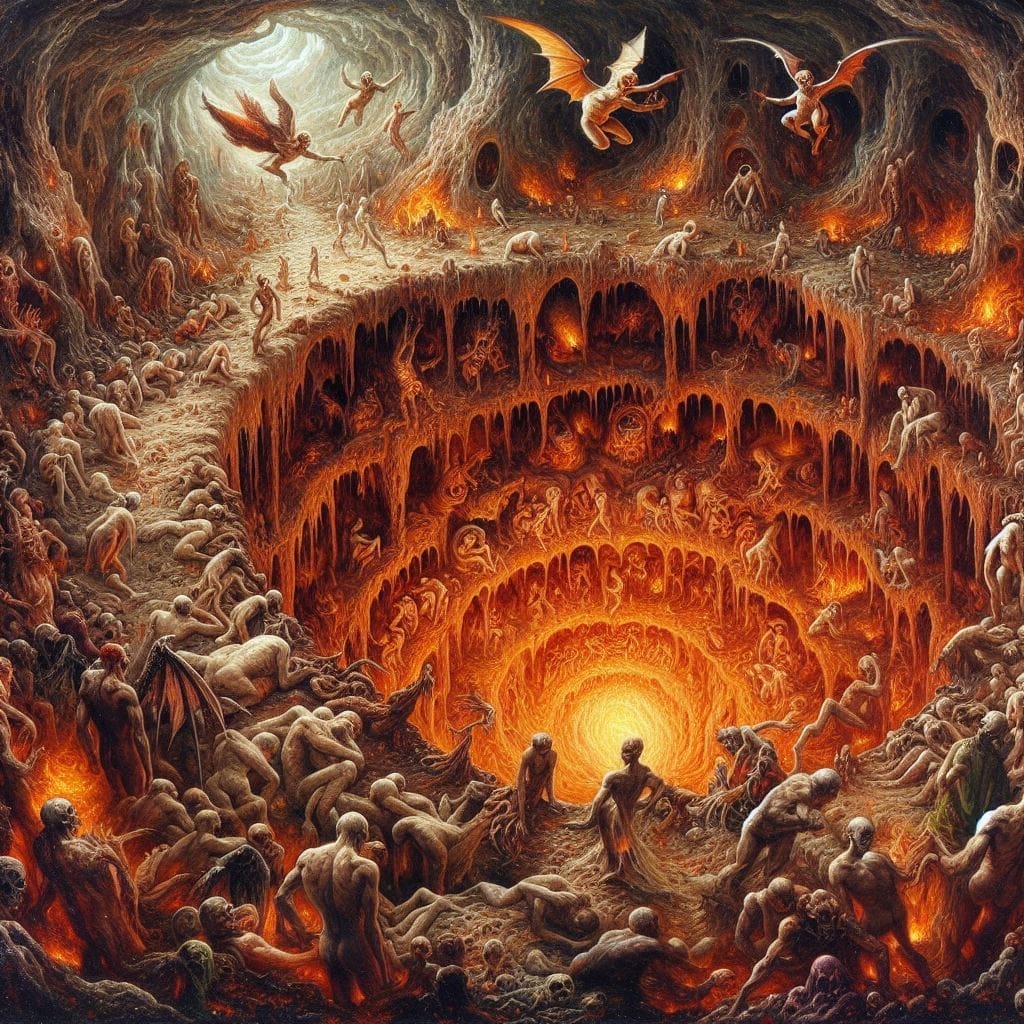
Dante Alighieri’s “Inferno” is a classic piece of literature that has captivated readers for centuries with its vivid depiction of Hell. In this epic poem, Dante takes the reader on a journey through the nine circles of Hell, each one representing a different sin and punishment.
The first circle of Hell is Limbo, where unbaptised but virtuous pagans reside. The second circle is for the lustful, where they are punished by being blown around in a fierce wind. The third circle is for the gluttonous, who are forced to lie in a slushy mess of garbage and filth. Each circle of Hell is meticulously described by Dante, with grotesque and haunting imagery that serves to emphasise the severity of the sins being punished.
One of the most iconic moments in “Inferno” is Dante’s encounter with Satan himself at the centre of Hell. Satan is depicted as a three-headed monster, each head chewing on a different sinner – Judas, Brutus, and Cassius. This image of Satan as the ultimate punisher of sinners is a powerful reminder of the consequences of one’s actions in life.
Throughout the poem, Dante encounters various historical figures and individuals who have committed sins that have landed them in Hell. Each encounter serves as a lesson for Dante, as he learns about the consequences of sin and the importance of living a virtuous life.
Ultimately, “Inferno” is a cautionary tale about the consequences of sin and the importance of living a moral and virtuous life. By vividly depicting the horrors of Hell, Dante creates a powerful reminder of the eternal consequences of one’s actions. The poem serves as a testament to the enduring power of literature to provoke thought and reflection on the human condition.