Francisco Franco, also known as ‘El Caudillo,’ was a Spanish dictator who ruled the country from 1939 until his death in 1975. During his regime, Franco oversaw the establishment of concentration camps where political opponents and dissidents were sent to be imprisoned, tortured, and often executed.
Advertisements
The most infamous of these camps was the notorious “Valle de los Caídos” (Valley of the Fallen) located near Madrid. Built as a monument to the fallen soldiers of the Spanish Civil War, the site became a symbol of Franco’s oppressive rule. Prisoners at Valle de los Caídos were subjected to harsh conditions, forced labour, and brutal treatment. Many were executed without trial, their bodies buried in unmarked graves on the premises.
In addition to Valle de los Caídos, Franco’s regime operated numerous other concentration camps throughout Spain. These facilities were used to detain anyone deemed a threat to Franco’s authoritarian rule, including political dissidents, labour activists, intellectuals, and members of minority groups. Conditions in these camps were often overcrowded and unsanitary, leading to widespread suffering and death among the inmates.
The legacy of Franco’s concentration camps continues to haunt Spain to this day. The country’s transition to democracy following Franco’s death in 1975 has been marked by efforts to uncover the truth about the atrocities committed during his regime. In recent years, there have been calls for the Spanish government to officially recognise and apologise for the crimes committed in these camps, as well as to provide reparations to the families of the victims.
Remembering the horrors of Franco’s concentration camps is essential to ensuring that such atrocities are never repeated. By acknowledging the past and honouring the memory of those who suffered and died in these camps, we can work towards a better future for all. It is crucial that we continue to educate ourselves and others about the dark chapter in Spain’s history and to strive for justice and reconciliation for the victims of Franco’s brutal regime.
Nicolaus Copernicus, born in 1473, made profound contributions to the field of astronomy, forever altering humanity’s perception of the cosmos. His pioneering heliocentric model, proposing that the sun, rather than the Earth, lay at the centre of the solar system, transformed our understanding of celestial bodies and their movements. This revolutionary concept challenged centuries of prevalent belief in a geocentric universe, sparking a paradigm shift that ultimately catalysed the scientific revolution. Copernicus’s groundbreaking work not only reshaped astronomy but also had far-reaching implications for the advancement of scientific inquiry and critical thinking. His legacy endures as a testament to the power of human curiosity and the pursuit of knowledge.
Advertisements
One of the key concepts introduced by Copernicus was the idea that the Earth revolves around the sun, rather than the other way around. This was a radical departure from the prevailing geocentric model that had been held for centuries. Copernicus’s heliocentric model not only provided a more accurate description of the movements of the planets, but it also challenged the religious and philosophical beliefs of the time. The shift from a geocentric to a heliocentric model had profound effects on our understanding of the cosmos, marking a pivotal moment in the history of science. It sparked debates, controversy, and eventually led to significant advancements in astronomy and physics. Copernicus’s groundbreaking work laid the foundation for future scientific inquiry and laid the groundwork for the scientific revolution that would follow in the centuries to come. His contributions continue to shape our understanding of the universe and the way we perceive our place within it.
Another important concept introduced by Copernicus was the idea of uniform circular motion. He proposed that the planets move in perfect circles around the sun, a theory that was later refined by Johannes Kepler. This concept laid the foundation for Kepler’s laws of planetary motion, which describe the elliptical orbits of the planets. Kepler’s laws revolutionised the understanding of celestial mechanics and provided a solid mathematical framework for describing the motion of celestial bodies. Through his meticulous observations and mathematical analyses, Kepler demonstrated that the planets move in elliptical paths with the sun at one of the foci. This profound insight not only corrected the inaccuracies of the previously held model of uniform circular motion but also established a more accurate representation of the solar system’s dynamics. Furthermore, Kepler’s laws contributed significantly to the development of modern physics and laid the groundwork for Newton’s law of universal gravitation, marking a pivotal moment in the history of scientific progress.
Copernicus also made significant contributions to our understanding of the size and distance of the planets in the solar system. By carefully measuring the positions of the planets in the sky, he was able to calculate their relative distances from the sun. This work helped to lay the groundwork for later astronomers, such as Tycho Brahe and Kepler, to refine our understanding of the solar system.
Overall, Copernicus’s key concepts revolutionised astronomy and laid the groundwork for the scientific revolution. His heliocentric model challenged the prevailing beliefs of the time and paved the way for future generations of scientists to expand our knowledge of the universe. Today, Copernicus is remembered as one of the greatest astronomers in history, whose work continues to inspire and influence scientists around the world.
The sinking of the Titanic is one of the most well-known tragedies in history, with countless books, movies, and documentaries seeking to uncover the truth behind the fateful night of April 14, 1912. While the official story tells us that the Titanic struck an iceberg and sank, many conspiracy theories have emerged over the years, suggesting that there is more to the story than meets the eye.
Advertisements
One of the most popular conspiracy theories surrounding the Titanic’s sinking is that it was not actually an accident, but a deliberate act of sabotage. Proponents of this theory point to a number of seemingly suspicious factors that suggest foul play was involved. For example, some believe that the ship was deliberately sent off course in order to create the perfect conditions for a disaster.
Another theory suggests that the Titanic was swapped with its sister ship, the Olympic, in an insurance scam orchestrated by the White Star Line. Proponents of this theory point to a number of inconsistencies in the official account of the sinking, such as the lack of experienced crew members on board and the unusual circumstances surrounding the evacuation of the ship.
Perhaps the most shocking theory surrounding the Titanic’s sinking is that it was orchestrated by the Illuminati as a way to eliminate a group of powerful individuals who were opposed to their plans for world domination. According to this theory, the Titanic was sunk in order to eliminate a number of prominent figures who were opposed to the Illuminati’s control over society.
While these conspiracy theories may seem far-fetched to some, they continue to capture the imagination of many who are intrigued by the mystery surrounding the Titanic’s sinking. Whether or not there is any truth to these theories remains to be seen, but one thing is for certain: the sinking of the Titanic will continue to be one of the most enduring mysteries in history.
Aramaic, one of the oldest languages in the world, holds a mystical and spiritual significance for many individuals. Its roots can be traced back to the ancient Semitic languages of the Near East, and it was the language spoken by Jesus Christ during his time on earth. This ancient language has a rich history and tradition, particularly in the realm of mysticism.
One of the most well-known forms of Aramaic mysticism is the practice of reciting and meditating on the Lord’s Prayer in its original Aramaic form. Known as the “Abun d’bashmaya” or “Our Father who art in heaven,” this prayer is believed to have special power and significance when spoken in its original language. Many practitioners of Aramaic mysticism believe that reciting this prayer can bring about profound spiritual transformation and healing.
In addition to prayer and meditation, Aramaic mysticism also incorporates various rituals, symbols, and practices to deepen one’s spiritual connection. These can include the use of sacred icons, incantations, and visualisations to invoke the divine presence and access higher states of consciousness.
While Aramaic mysticism may seem esoteric and obscure to some, it has a deep and profound resonance for those who are drawn to its beauty and mystery. Its teachings offer a pathway to spiritual growth, healing, and enlightenment, inviting individuals to explore the depths of their souls and connect with the divine in a profound and transformative way.
Whether you are a spiritual seeker or simply curious about ancient wisdom traditions, exploring the world of Aramaic mysticism can be a fascinating and rewarding journey. By delving into the mystical teachings and practices of this ancient tradition, you may uncover hidden truths about yourself and the universe, and deepen your connection to the divine in ways you never thought possible. Let the sacred language of Aramaic be your guide on a spiritual journey back in time, to a place of deep wisdom and profound spiritual insight.
In a world where monarchies have traditionally held power and influence for centuries, there is a rising movement that seeks to challenge the status quo and question the legitimacy of these ancient institutions. The Antimonarchic Movement is gaining momentum as people around the world become more disillusioned with the idea of hereditary rule and the privilege that comes with it.
Advertisements
At its core, the Antimonarchic Movement is a push for more democracy and equality in society. It challenges the notion that one individual or family should hold power simply by virtue of their bloodline, and instead advocates for elected leaders who are accountable to the people they serve. Many monarchs around the world hold significant political power, despite being figureheads in their respective countries. The Antimonarchic Movement argues that this system is outdated and no longer serves the best interests of the populace.
One of the main arguments against monarchy is the inherent inequality it perpetuates. In a monarchic system, some individuals are born into privilege and power, while others will never have the same opportunities simply because of their social status. The Antimonarchic Movement aims to level the playing field and create a more equitable society where everyone has a chance to succeed based on their merit and hard work, rather than their family background.
The movement is also critical of the excessive wealth and lifestyle enjoyed by many monarchs, especially in a time of growing economic inequality. While millions struggle to make ends meet, monarchs often live in luxury and are supported by taxpayer money. This discrepancy has sparked outrage among many who feel that this extravagant lifestyle is no longer justifiable in the modern world.
The Antimonarchic Movement is not just a theoretical concept – it has real-world implications and has led to significant changes in some countries. For example, many nations have abolished their monarchies in favour of republics, where leaders are elected by the people. In other countries, monarchs have been stripped of their political power and reduced to ceremonial roles.
While the Antimonarchic Movement faces challenges and opposition from those who support the traditional monarchy system, it continues to grow as more people question the legitimacy of hereditary rule. As the world becomes increasingly interconnected and democratic values become more widespread, it is likely that the Antimonarchic Movement will continue to gain momentum and push for a more equal and just society for all.
The Sagrada Familia Basilica, located in Barcelona, Spain, is a stunning architectural masterpiece that has been under construction for over a century. Designed by the renowned architect Antoni Gaudí, the basilica is a testament to his unique style and vision.
Advertisements
Construction of the Sagrada Familia began in 1882, and Gaudí dedicated the last years of his life to the project before he tragically died in 1926. Despite his death, work on the basilica continued, and it is still ongoing to this day. The estimated completion date is set for 2026, which will mark the centenary of Gaudí’s death.
One of the most striking features of the Sagrada Familia is its intricate and detailed facades. Each facade tells a different story from the Bible, with elaborate sculptures and intricate designs that are truly awe-inspiring. The basilica’s interior is just as breathtaking, with towering columns and colourful stained glass windows that create a sense of ethereal beauty.
Gaudí was known for his organic and naturalistic design elements, and these can be seen throughout the Sagrada Familia. From the tree-like columns that support the ceiling to the fruit-inspired decorations, the basilica is a true reflection of Gaudí’s love for nature and his desire to create something truly unique and innovative.
Visitors to the Sagrada Familia can explore the basilica’s interior, climb to the top of the towers for a panoramic view of Barcelona, and learn more about Gaudí’s life and work in the museum located on site. It is a truly unforgettable experience that offers a glimpse into the mind of one of the greatest architects of all time.
The Sagrada Familia Basilica is not just a building – it is a work of art, a labour of love, and a symbol of Barcelona. It has become an iconic landmark in the city and a must-see for anyone visiting Barcelona. So next time you find yourself in Barcelona, be sure to visit the Sagrada Familia and marvel at the beauty and brilliance of Gaudí’s masterpiece.
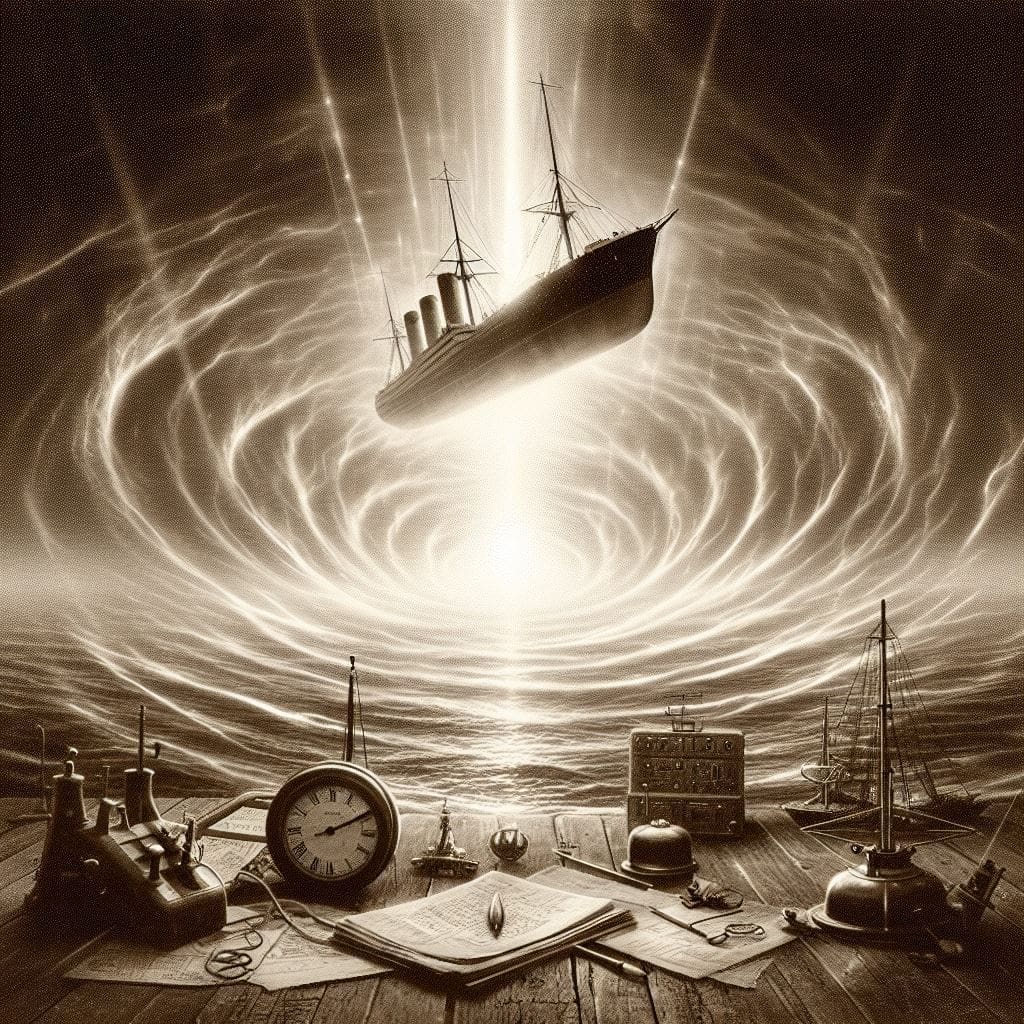
The Philadelphia Experiment is a mysterious event that has intrigued conspiracy theorists and sci-fi enthusiasts for decades. It is said to have taken place in October 1943, during World War II, when the U.S. Navy allegedly conducted a secret experiment that made a Naval destroyer disappear and reappear at a different location. This enigmatic occurrence has sparked numerous theories and speculations about the nature of the experiment, its purported objectives, and the potential consequences of such a feat. The story has been the subject of various books, documentaries, and movies, contributing to its enduring legacy in popular culture. Alleged accounts of the event often intertwine elements of science fiction with historical context, creating a captivating narrative that continues to captivate the imagination of many.
Advertisements
According to the legend, the Navy was conducting experiments in invisibility and teleportation in an effort to create a cloaking device for their ships. The USS Eldridge, a destroyer escort, was supposedly fitted with powerful electromagnetic generators that were meant to bend light around the ship, making it invisible to enemy radar and observers.
The supposed experiment, also known as the Philadelphia Experiment, has been a subject of much speculation and conspiracy theories. The story goes that during the experiment, the USS Eldridge not only became invisible but also teleported to another location. This mysterious event has captured the imagination of many, leading to various accounts and retellings of the story over the years.
However, during the experiment, something went terribly wrong. Witnesses claimed that the ship not only disappeared from view, but also travelled through time and space, reappearing at a different location before quickly returning to its original position. Some crew members were said to have suffered from severe physical and psychological effects, including nausea, disorientation, and a sense of time displacement.
As the witnesses’ accounts of the incident circulated, the scientific community was plunged into a fervent debate. The very fabric of reality seemed to have been distorted by the unprecedented events surrounding the ill-fated experiment. The ship’s inexplicable journey through time and space defied all known laws of physics, prompting intense scrutiny from physicists, engineers, and theorists alike.
Reports of the crew’s harrowing experiences on board the vessel only added to the mystique and the concern surrounding the incident. The descriptions of severe physical and psychological effects suffered by the crew members, including debilitating nausea, profound disorientation, and an eerie sense of time displacement, painted a chilling picture of the perils they had faced.
In the wake of this inexplicable phenomenon, experts and researchers scrambled to make sense of the inexplicable events, striving to decipher the enigma that had rocked the very foundations of scientific understanding. The lingering question loomed large: Could the ill-fated experiment have inadvertently breached the boundaries of our known universe, opening a gateway to uncharted and perilous realms? The quest for answers had only just begun, and the stakes could not have been higher.
The alleged details of the experiment, including the involvement of renowned scientists and the dramatic consequences that followed, have been widely debated and sensationalised. Despite the lack of concrete evidence, the legend of the Philadelphia Experiment continues to be a topic of fascination, inspiring numerous books, movies, and discussions about the potential capabilities of advanced military technology.
The government has denied any involvement in such experiments, and many sceptics dismiss the Philadelphia Experiment as nothing more than a hoax or urban legend. However, some conspiracy theorists believe that the government covered up the true nature of the experiment and its devastating effects on the crew.
The enduring allure of such stories serves as a testament to the enduring power of mystery and intrigue in popular culture, where the line between fact and fiction often becomes blurred. Whether rooted in truth or purely speculative, the tale of the USS Eldridge and its supposed brush with invisibility and teleportation continues to captivate the imagination of curious minds around the world.