Tag: dailyprompt

  • Jewish Views on Jesus & the Virgin Birth: The Panthera Factor

    Jewish Views on Jesus & the Virgin Birth: The Panthera Factor

    Advertisements

    Historical Context: Jesus in 1st-Century Judea

    Jesus lived in a tumultuous period of Jewish history, under Roman occupation in 1st-century Judea. The Jewish people were divided among various sects—Pharisees, Sadducees, Essenes, and Zealots—each with differing views on how to navigate Roman rule and what the Messiah would bring. The Tanakh, particularly passages like Isaiah 11:1-9 and Ezekiel 37:24-28, describes the Messiah as a descendant of David who would restore the kingdom of Israel, rebuild the Temple, and usher in an era of universal peace. Jesus, however, did not fulfill these expectations, as his death by crucifixion under Roman authority (around 30 CE) and the subsequent rise of Christianity as a separate religion led most Jewish authorities to reject his messianic claims (Vermes, 1973).

    The earliest non-Christian reference to Jesus comes from the Jewish historian Flavius Josephus in his Antiquities of the Jews (c. 93 CE). In Book 18, Chapter 3, Josephus describes Jesus as a “wise man” and teacher who was crucified under Pontius Pilate, but this passage, known as the Testimonium Flavianum, is widely debated. Scholars like Ehrman (1999) argue that it was likely altered by later Christian scribes to show Jesus more favourably, casting doubt on its reliability as a Jewish perspective (Ehrman, 1999, p. 59). For most Jews of the time, Jesus was likely seen as one of many charismatic leaders or would-be messiahs, not a figure of lasting significance.

    Jewish Texts and the Polemical Response to Christianity

    As Christianity grew, particularly after becoming the state religion of the Roman Empire in the 4th century under Constantine, Jewish communities faced increasing pressure and persecution. This historical tension shaped Jewish responses to Christian claims about Jesus, often leading to critical or dismissive portrayals in Jewish texts. The Talmud, compiled between the 3rd and 6th centuries CE, contains a few passages that some scholars believe refer to Jesus, though the identification is debated due to the commonality of the name “Yeshu” (a shortened form of Yeshua) at the time (Schäfer, 2007).

    In Sanhedrin 43a, a figure named Yeshu is described as being executed for sorcery and leading Israel astray, with his execution occurring on the eve of Passover. This timeline aligns with the New Testament account of Jesus’ crucifixion, but the details differ—the Talmud states he was stoned and hanged, not crucified (Schäfer, 2007, p. 64). Another passage, in Shabbat 104b, refers to a “Yeshu ben Panthera,” implying that this Yeshu was the son of a woman named Miriam (Mary) and a man named Panthera, not her husband. These references are not historical accounts but polemical responses to Christianity, aiming to delegitimise Jesus’ divinity by portraying him as a sorcerer or heretic (Talmud, Shabbat 104b, n.d.).

    The Toledot Yeshu, a medieval Jewish text likely dating to the 6th century or later, expands on these Talmudic references. It presents a detailed, polemical biography of Jesus, claiming that his mother, Miriam, was seduced or raped by a Roman soldier named Panthera, resulting in Jesus’ birth. The text portrays Jesus as a false prophet who used magic to deceive people, a narrative designed to counter Christian claims of his divinity (Horbury, 2011). The Toledot Yeshu was widely circulated in Jewish communities during the Middle Ages as a way to resist Christian proselytising and persecution, reflecting the deep tensions between the two faiths.

    The Panthera Theory: A Polemical Counter-Narrative

    The Panthera theory, which suggests that Jesus’ biological father was a Roman soldier named Panthera (or Pandera), originates in these early Jewish polemics but was later amplified by external sources. The earliest reference appears in the Talmud, as noted in Shabbat 104b, where “Yeshu ben Pathera” is mentioned, implying illegitimacy. Some scholars suggest that “Pandera” may be a play on the Greek word parthenos (virgin), a mocking distortion of the Christian Virgin Birth narrative (Levine, 2006, p. 102). This linguistic jab would have been particularly pointed in a culture where legitimacy and lineage were crucial, as illegitimacy could exclude someone from the “assembly of the Lord” (Deuteronomy 23:2).

    The Panthera story gained wider attention through the 2nd-century Greek philosopher Celsus, a pagan critic of Christianity. In his work The True Word (c. 178 CE), preserved through quotations in Origen’s Contra Celsum, Celsus claims that Jesus was the illegitimate son of a Roman soldier named Panthera. He alleges that Mary was unfaithful to Joseph and invented the story of a divine birth to cover her shame, a rumour he claims to have heard from Jewish sources (Origen, 1980, p. 32). Celsus’ account aligns with the Talmudic references, indicating that the Panthera story was a known Jewish polemic by the 2nd century, though his intent was to discredit Christianity, not to provide a historical record.

    In the 19th century, a tombstone discovered in Bingerbrück, Germany, belonging to a Roman soldier named Tiberius Julius Abdes Panthera, reignited interest in the theory. The inscription indicates that Panthera was a soldier from Sidon who served in the Roman army and died around 40 CE, meaning he was alive during the time of Jesus’ birth (c. 4–6 BCE) (Tabor, 2006). Some scholars, like James Tabor, have speculated that this Panthera could be the figure mentioned in Jewish and pagan sources, suggesting a Roman soldier stationed in Judea might have had an encounter with a Jewish woman like Mary (Tabor, 2006, p. 65). However, most historians dismiss this connection as speculative. The name “Panthera” (meaning “panther” in Latin) was not uncommon, and there’s no direct evidence linking this soldier to Mary or Jesus. The tombstone’s location in Germany, far from Judea, further weakens the theory (Ehrman, 1999).

    Polemical Issues: The Role of the Panthera Theory in Jewish-Christian Relations

    The Panthera theory is best understood as a polemical tool rather than a historical fact. Its purpose was to undermine Christian claims about Jesus’ divinity, particularly the Virgin Birth, which was a cornerstone of Christian theology. For Jewish communities, the story served as a way to resist Christian proselytising and assert their own religious identity in the face of growing Christian dominance. By suggesting Jesus was illegitimate, Jewish polemicists could challenge the idea of his divine origin, a concept fundamentally at odds with Jewish monotheism, which emphasises the indivisible nature of God (Deuteronomy 6:4) (Schäfer, 2007).

    This polemic was particularly significant during the Middle Ages, when Jewish communities faced intense persecution from Christian authorities. The Toledot Yeshu and similar texts were not just theological arguments but acts of cultural survival, providing a narrative that countered Christian claims and bolstered Jewish resilience (Horbury, 2011). However, these polemics also contributed to mutual hostility, as Christians often responded with their own anti-Jewish writings, leading to a cycle of animosity that persisted for centuries.

    From a modern Jewish perspective, the Panthera theory is largely seen as a historical curiosity rather than a serious claim. Scholars like Amy-Jill Levine emphasise Jesus’ Jewish identity, focusing on his role as a teacher within his 1st-century context rather than debating his parentage (Levine, 2006). The question of Jesus’ father—whether Joseph, a Roman soldier, or a divine being—is secondary to the broader Jewish rejection of his messianic and divine status. For Jews, the focus remains on the Torah, Talmud, and Jewish law, with Jesus occupying a peripheral role in religious discourse.

    Conclusion: A Legacy of Polemic and Perspective

    Jewish perspectives on Jesus’ origins, including the Panthera theory, reflect a complex interplay of history, theology, and polemic. The Talmudic references and the Toledot Yeshu portray Jesus as a figure of controversy, using the Panthera story to challenge Christian claims of a virgin birth. While these narratives served a purpose in their historical context—resisting Christian dominance and preserving Jewish identity—they lack credible evidence as historical accounts. The Panthera theory, amplified by figures like Celsus and later speculation about the Panthera tombstone, remains a product of religious rivalry rather than fact. For Jewish audiences today, Jesus is best understood as a historical figure within his Jewish context, not a theological one, with the Pantera story serving as a reminder of the fraught history of Jewish-Christian relations.

    References

    Ehrman, B.D. (1999) Jesus: Apocalyptic Prophet of the New Millennium. Oxford: Oxford University Press.

    Horbury, W. (2011) ‘The Toledot Yeshu as a Source for Jewish-Christian Polemic’, in Schäfer, P. (ed.) The Toledot Yeshu in Context. Tübingen: Mohr Siebeck, pp. 45–67.

    Levine, A.-J. (2006) The Misunderstood Jew: The Church and the Scandal of the Jewish Jesus. San Francisco: HarperOne.

    Origen (1980) Contra Celsum. Translated by H. Chadwick. Cambridge: Cambridge University Press. Available at: https://archive.org/details/contra-celsum-origen (Accessed: 6 April 2025).

    Schäfer, P. (2007) Jesus in the Talmud. Princeton: Princeton University Press. Available at: https://press.princeton.edu/books/paperback/9780691143187/jesus-in-the-talmud (Accessed: 6 April 2025).

    Tabor, J.D. (2006) The Jesus Dynasty: The Hidden History of Jesus, His Royal Family, and the Birth of Christianity. New York: Simon & Schuster.

    Talmud, Shabbat 104b (n.d.) Babylonian Talmud. Available at: https://www.sefaria.org/Shabbat.104b?lang=bi (Accessed: 6 April 2025).

    Vermes, G. (1973) Jesus the Jew: A Historian’s Reading of the Gospels. London: Collins.
  • Editor’s Journal #8: Youtube Banned my Channel

    Editor’s Journal #8: Youtube Banned my Channel

    Advertisements

    Here in the United Kingdom , one can observe the criminal justice system’s desperate attempt to make space in prisons for those who express their opinions against Islam and against illegal migration online. However, as many have posited; there seems to be a two-tier systemic bias which leaves a selected few impune (e.g. paedophiles and rapists), whilst other groups are harshly punished for doing minor offences.

    The criminal justice system of England is so overwhelmed, that there have been initiatives to take house arrests to the next level of crime and punishment, due to overcrowded prisons (Syal, R., The Guardian, 2014 ). Anti-Islam activists and journalists are being imprisoned callously, whilst antisemitic behaviours are hypernormalised, and not prosecuted.

    For instance, I believe that Youtube was antisemitic against my channel. They charged me with spam allegations after I uploaded a video of my new Tanakh (a sacred religious book), where I expressed excitement in regards to learning Hebrew and Judaism. The video lasted about a minute, and was certainly not spam. I find Youtube’s decision to be antisemitic, and it confirms that antisemitism is systemically and culturally ingrained in modern times.

    All this means that I will have to create my own video gallery, and that I cannot be trusting other websites to look after my digital legacy in any way. What I had built for so many years was quickly destroyed by Youtube, and whilst I feel devastated by these actions; I am now more determined than ever to redirect my energy into my website, where I rule, and where I decide what’s acceptable or not.

    I also know that Youtube is openly Russophobic and has actively banned prolific Russian channels such as Russia Today (RT), who had to also create their own video gallery as a result. It is certainly terrifying to see how Google has some corruption in its structure. This type of scenario might be why a Russian court fined Google with $20 decillion (RT, 2024). The scope of the damages is enormous, and the direct discrimination against demonised social groups such as the Russian people, and the Jewish people is undeniable.

    Whilst my single case will never make it to newspaper headlines, it is still notable that Youtube has acted in Nazi ways to ethnically cleanse the digital space, and I am one of those people who have been unjustly censored for having Jewish and/or Russian content. This means I will have to start from zero, and all of my followers were lost. I will notify you, dear readers, when I have a video gallery ready again.

  • Editor’s Journal #7: How I Am Feeling

    Editor’s Journal #7: How I Am Feeling

    Daily writing prompt
    How are you feeling right now?

    How I Feel In General

    I generally feel so so, as I am currently going through very difficult circumstances. I have been harassed by my neighbour for years and the police seems to protect the criminal , so I am a bit scared of reality as it is in my life. All this has caused me mental unwellness, as well as physical ailments. Furthermore, I also am affected by the wider environment, such as politics, etc. It’s been an isolating and distressing experience, making it hard for me to trust others and feel safe in my own home. The ongoing stress has taken a toll on my well-being, leading to sleepless nights and a constant feeling of unease. As I navigate through these challenges, I find it difficult to find solace and relief from the weight of the situation. The impact of external factors, like political turmoil and social unrest, has only added to the complexity of my daily struggles, creating a sense of overwhelming uncertainty about the future.

    How I feel About Politics

    When it comes to politics, I feel very stressed out as the war between Western countries and Russia seems to be escalating at great speed. The UK government continues to arm and fund Ukraine, whilst simultaneously provoking Russia. I feel these actions are reckless and place our country at great risk. The increasing tension in the international arena has made me concerned about the potential consequences for global stability. The propaganda and diplomatic confrontations only seem to exacerbate the situation, leading to a growing sense of unease about the future. It’s troubling to witness the deteriorating relations between major powers, and I can’t help but worry about the impact on everyday citizens. The uncertainties surrounding the geopolitical landscape have undoubtedly added a heavy burden of anxiety to my daily life.

  • Editor’s Journal #6: Things I’ve Learned Blogging

    Editor’s Journal #6: Things I’ve Learned Blogging

    Advertisements

    Behaviour is important

    One of the words that comes up the most in blog posts is ‘behaviour’ or ‘behaviours’. This tells me that for me behaviour is important. And indeed it is, for instance, a lot of of what I do behind the scenes is analyse reader behaviour. Yes, what people do matters.

    Patience is a must

    To start a blog and see it grow takes time. Somehow, as a blogger, you will inevitably learn to be patient if you are to survive. Most things related to blogging certainly require patience.

    SEO is a long-term project

    Apart from being patient, I have also have had to learn to manage my projects in a long-term basis as things like SEO take time to take effect.

    Not everything is going to turn out as you expect

    Blogging is a very experimental process, and there are many failures before an achievement. It’s important to maintain optimistic about goals. It takes several failures before achieving success.

    People are valuable

    Different people with diverse interests are valuable to blogging. I mean, what’s the point of blogging if no one is going to read you? The reader is essential to the business of blogging, and so I value my readers and ensure I provide high quality content.

    Daily writing prompt
    What were your parents doing at your age?

    Both of my parents were working at my age, trying to make a living. They were very good looking, and active socially. My mother was a volleyball player, and she was a model too. She was always at an event when she was not taking care of me. I barely remember much of when they were my age, though, as I was only a toddler when my mother was my age. At the time, my Dad was a hippy. They are both very hard-working individuals and this has always been the case.

    Advertisements
  • Editor’s Journal #5: My Day at the Office

    Editor’s Journal #5: My Day at the Office

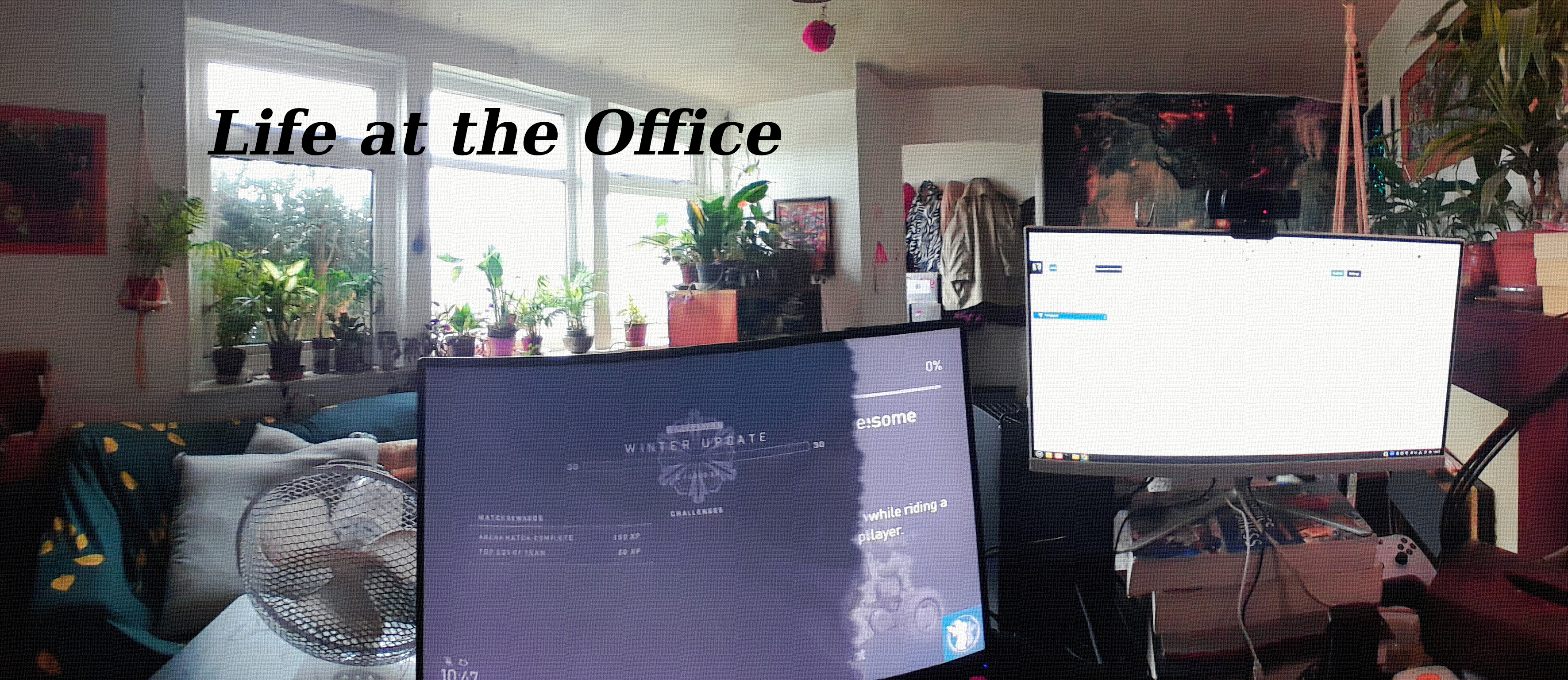
    I wake up every morning around 7-8 A.M. and come into my office immediately with a coffee, take my morning medications, and start working on blog posts that I programme and schedule.

    Every day, I use artificial intelligence to generate images for the blog posts, so I have gained a lot of practice in generating outputs from prompts. I also monitor the chat that I have incorporated on the blog, and work on each blog post, format it, edit it, and then schedule it.

    I have several cups of coffee every day, which are necessary. I also enjoy playing Halo Infinite, and play everyday. I find that having a fun thing to do at work makes work less tiring.

    I finish every early evening just before dinner, although there are days when I finish earlier, and days when I finish later. It all depends on how much I play during the day. So yeah, work for me is pretty chilled, and it is a healthy environment.

    Writing Prompt

    Daily writing prompt
    Something on your “to-do list” that never gets done.

    Oh Gosh! it has to be fixing my bedside table. I have put it on my to-do list and I have been postponing the task for weeks, and still feel no motivation to do it. I spend all of my energy on this blog, which even though only posts six blog posts every day, those six blog posts are hard work when you are a sole worker doing everything for the blog. But I do enjoy my work, and enjoy it even more when people read my stuff and leave comments.

    Final Thoughts

    As it can be seen, my day at the office is very important to me, and this is why I have many plants, a videogames console, and an arts corner in the office. This is to keep the environment healthy for my use. Furthermore, I need to get that bedside table fixed once and for all.

    Advertisements
  • Editor’s Journal #4: Living a Long Life

    Editor’s Journal #4: Living a Long Life

    Daily writing prompt
    What are your thoughts on the concept of living a very long life?

    The mysteries of death are those which people can only imagine until the time of death arrives. One moment we are alive, the next we are gone who knows where. It is unclear what happens after death although more and more people begin to believe in the concept of reincarnation.

    I certainly hope I am one of those who reach an old age, although it is so unpredictable. People die every day, some unexpectedly, and this is why all I can do is hope I am not one of those casualties. I certainly hope I reach 90 or even 100 years old.

    Planning for a long-life is what I do, of course. I have long-term plans that assume I am going to be alive in the next few decades. It would be a shame if my plans were suddenly disrupted by the prospect of death.

    As someone who is a mystic, I wish I could plan ahead for my next reincarnation; however, this seems to be beyond my current level of knowledge. So all I can do is hope that my experience of death is painless, and that my transition to the afterlife is smooth and pleasant.

    Things You Can do To Live a Long Life

    Living a long and healthy life is a common desire for many people. While genetics and luck play a role, there are several habits and lifestyle choices that can contribute to longevity.

    1. Healthy Diet: Consuming a balanced diet rich in fruits, vegetables, whole grains, lean proteins, and healthy fats can support overall well-being and longevity.
    2. Regular Exercise: Engaging in regular physical activity, such as walking, swimming, or yoga, can help maintain a healthy weight, improve cardiovascular health, and boost overall longevity.
    3. Stress Management: Finding healthy ways to manage stress, such as meditation, mindfulness, or hobbies, can positively impact both physical and mental health, potentially leading to a longer life.
    4. Social Connections: Cultivating strong social connections and relationships can contribute to a sense of belonging, reduced feelings of loneliness, and overall well-being, which are linked to longevity.
    5. Avoiding Harmful Habits: Minimizing or avoiding harmful habits such as smoking, excessive alcohol consumption, and drug abuse can significantly improve one’s chances of living a longer and healthier life.
    6. Regular Health Check-ups: Regular medical check-ups and screenings can help detect and manage health issues early, potentially preventing them from becoming more serious.
    7. Mental Stimulation: Engaging in activities that provide mental stimulation, such as reading, puzzles, or learning new skills, can help maintain cognitive function as we age.

    While there are no guarantees when it comes to longevity, adopting healthy habits and making positive lifestyle choices can certainly improve the chances of living a long and fulfilling life.

    Conclusion

    It is difficult to know for sure how long each of us will live, but we can always hope and plan for a long life, and a pleasant transition into the afterlife. Regardless of when we die, we will feel better if we make the most of life and live each day with the urgency that it might be the last.

  • Editor’s Journal #3: A New Year Begins

    Editor’s Journal #3: A New Year Begins

    𝐇𝐀𝐏𝐏𝐘 𝟐𝟎𝟐𝟒, 𝐄𝐕𝐄𝐑𝐘𝐎𝐍𝐄! May your new year be prosperous. This new year found me working hard for the Betshy blog which is growing slowly but steadily. In 2023, I found me focused on exploring questions that answer mysteries of life, such as: Is there life after death?

    I also just published a video on my Youtube Channel called ‘Welcome to Israel’ showcasing footage from Israel about their culture and ways, as perceived by me. It has been a productive year to its very end! This year has indeed been a very creative one too.

    Furthermore, this year I have had so many experiences, both good and bad ones. I have learned that I want to believe there is more to life than just a mere passage through age and time. We all die, so we should always make the best to achieve our goals. This is where the answer to this edition’s daily writing prompt fits perfectly.

    Daily writing prompt
    Do you spend more time thinking about the future or the past? Why?

    I think of both, as well as the present. If I could choose, I would ideally spend more time thinking of the future. However, my episodic competes with my prospective memory, ultimately both shaping my semantic memory. So at any given moment, I am bombarded with memories trigger by different stimuli, as well as reminders of things that I am working on, or things I will be doing in the future.

    Because we are at a time in which we are transitioning from 2023 into a new year, I feel it is even more important to think ahead into the future in order to evaluate our goals and methods for achieving those. It is good to have a plan and to be prepared for contingencies. I hope your new year is prosperous! Take care.