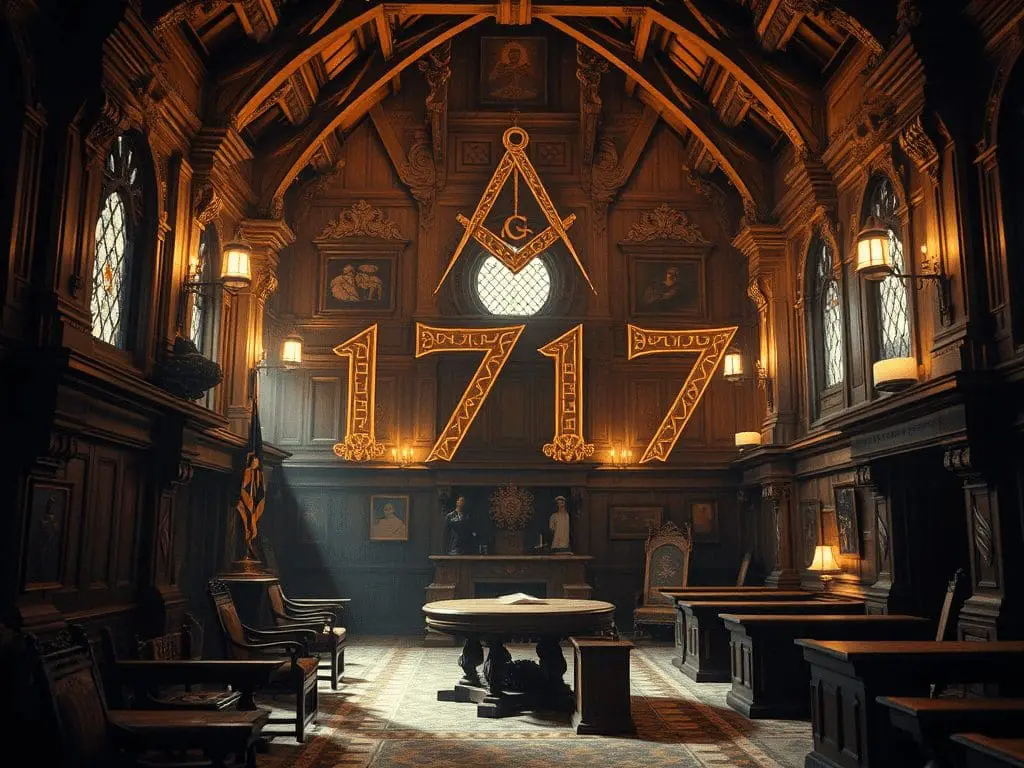

The year 1717 is a significant one in the history of Freemasonry. It marks the beginning of the so-called “Revival of Masonry,” a period when the fraternity experienced a resurgence in popularity and influence.
The roots of Freemasonry can be traced back to the medieval stonemasons’ guilds of Europe. These guilds were organisations of skilled craftsmen who built the cathedrals, castles, and other grand structures of the time. Over the centuries, the guilds evolved into social and fraternal organisations, and by the 17th century, Freemasonry had become a popular pastime for gentlemen across Europe.
However, by the early 18th century, Freemasonry was in decline. Membership was dwindling, and many lodges had fallen into disarray. The practices and rituals of the fraternity had become disjointed and disorganised, and there was a sense that Freemasonry was losing its sense of purpose and direction.
In 1717, a group of four lodges in London came together to form the Grand Lodge of England, the first official governing body of Freemasonry. This event is often considered the starting point of the “Revival of Masonry,” as it marked the beginning of a new era of growth and expansion for the fraternity.
Under the leadership of the Grand Lodge of England, Freemasonry experienced a period of reorganisation and revitalisation. Rituals and practices were standardised, and new lodges were established across England and eventually around the world. The fraternity’s membership grew rapidly, attracting men from all walks of life who were drawn to its principles of brotherhood, morality, and mutual support.
The Revival of Masonry in 1717 also marked a shift in the perception of Freemasonry. No longer seen as just a social club for gentlemen, Freemasonry began to be recognised for its charitable work, its commitment to moral and spiritual values, and its role in promoting tolerance and understanding among men of different backgrounds and beliefs.
Today, Freemasonry continues to thrive as a global fraternity, with millions of members around the world. The Revival of Masonry in 1717 set the stage for the modern era of Freemasonry, shaping the fraternity into the organisation it is today. As we reflect on this important chapter in Masonic history, we can appreciate the dedication and vision of those who worked to revive and preserve the traditions of this ancient and noble brotherhood.
Share this:

You Might Also Enjoy Reading