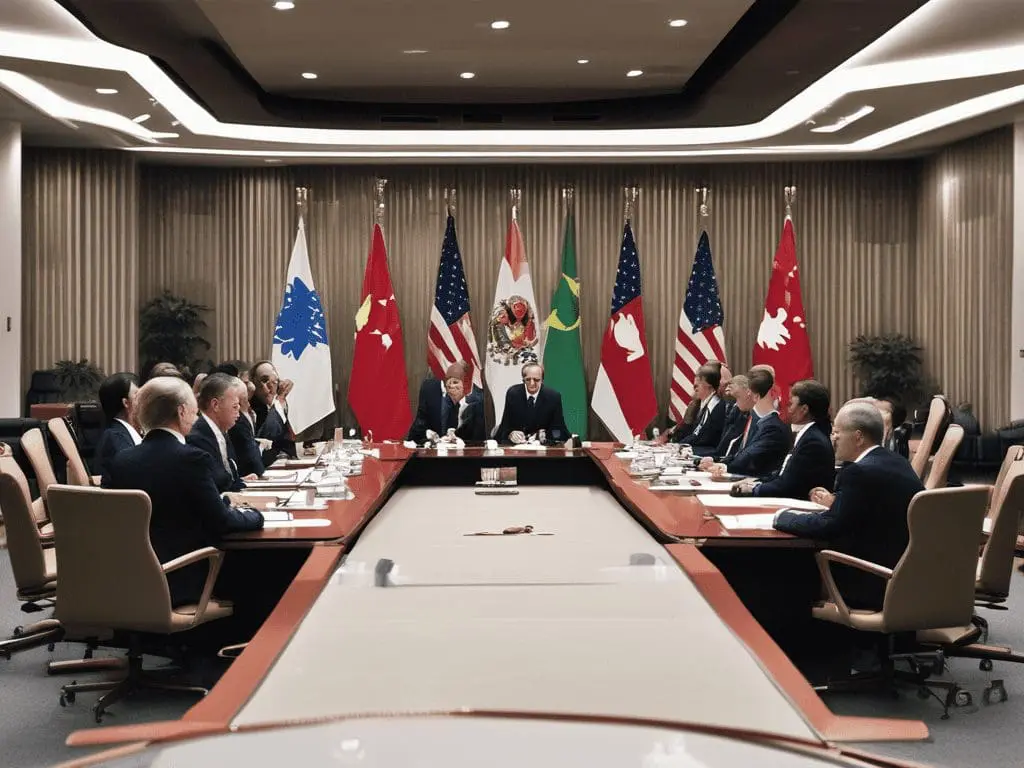

Multilateral diplomacy is an essential tool in today’s complex global landscape. As the world becomes more interconnected, countries must work together to address common challenges and achieve shared goals. Multilateral diplomacy involves negotiations and cooperation between three or more countries to find solutions to common problems.
One of the key benefits of multilateral diplomacy is that it allows countries to pool their resources and share the burden of addressing complex issues. For example, in the case of climate change, no single country can solve the problem alone. By working together through organisations like the United Nations or the Paris Agreement, countries can develop joint strategies and initiatives to reduce greenhouse gas emissions and protect the environment.
Multilateral diplomacy also promotes dialogue and understanding between countries, helping to prevent conflicts and build trust. By bringing together countries with different perspectives and interests, multilateral diplomacy encourages dialogue and compromise, leading to more sustainable and inclusive solutions.
Furthermore, multilateral diplomacy helps to uphold international norms and standards, promoting peace, security, and human rights around the world. Through multilateral forums, countries can coordinate efforts to combat terrorism, prevent nuclear proliferation, and protect civilians in conflict zones. These shared commitments help to strengthen the rule-based international order and promote stability and cooperation.
However, multilateral diplomacy also faces challenges. Negotiating with multiple countries can be complex, time-consuming, and at times, frustrating. Different countries may have competing interests and priorities, making it difficult to reach consensus on important issues. Additionally, countries may sometimes prioritise their own national interests over the collective good, leading to gridlock and inaction.
Despite these challenges, multilateral diplomacy remains an essential tool for addressing global challenges and promoting peace and cooperation. In an increasingly interconnected world, countries must work together to find solutions to common problems and build a more secure and prosperous future for all. By embracing the principles of dialogue, cooperation, and shared responsibility, multilateral diplomacy offers a pathway towards a more peaceful and sustainable world.
Share this:

You Might Also Enjoy Reading