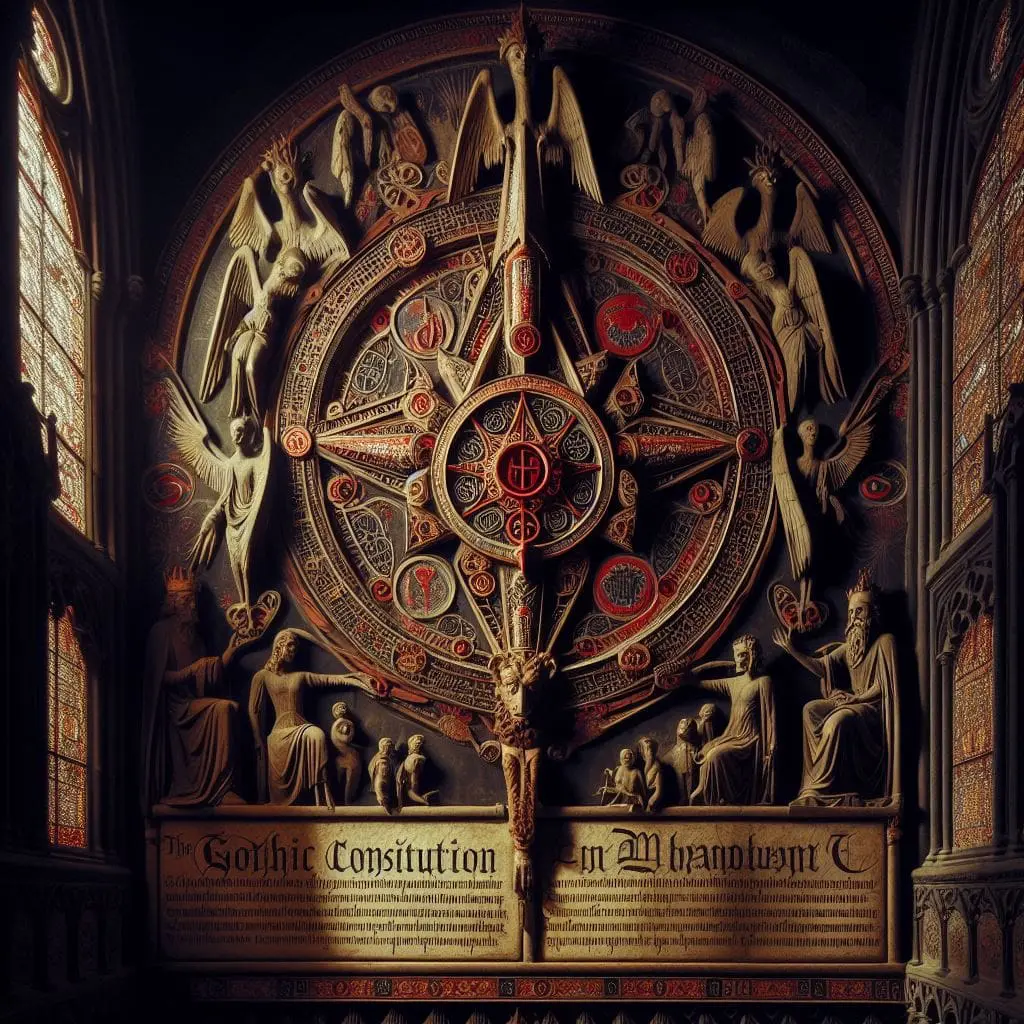

The Gothic Constitutions of 926, also known as the Edictum of Good Laws, is a historic document that showcases the legal system of the Visigothic Kingdom in the Iberian Peninsula. These constitutions were established by King Ordoño II of Leon, who reigned from 914 to 924, and are considered to be one of the earliest examples of written legal codes in the region.
The Gothic Constitutions of 926 cover a wide range of legal issues, including property rights, marriage, inheritance, and crimes. They were designed to provide a clear framework for the administration of justice and to uphold the rights and responsibilities of the citizens of the kingdom. This document played a crucial role in shaping the legal system of medieval Spain and had a long-lasting impact on the development of the legal codes in the region.
One of the most significant aspects of the Gothic Constitutions of 926 is that they were written in the vernacular language of the Visigoths, which was a blend of Latin and the Visigothic language. This made the laws more accessible to the general population and helped to ensure that they were understood and followed by all citizens. The document also includes provisions for the protection of individual rights and the promotion of social justice, reflecting a progressive approach to governance for its time.
The Gothic Constitutions of 926 are a testament to the sophistication and complexity of the legal system of the Visigothic Kingdom. They demonstrate the importance that was placed on the rule of law and the rights of the people, and they continue to be studied and analysed by historians and legal scholars to this day. The document provides valuable insights into the legal and social structures of medieval Spain and serves as a reminder of the enduring legacy of the Visigoths in the region.
In conclusion, the Gothic Constitutions of 926 are a significant historical document that sheds light on the legal system of the Visigothic Kingdom and its impact on the development of the legal codes in medieval Spain. This document serves as a reminder of the importance of the rule of law and the protection of individual rights, and it continues to be a valuable resource for scholars and historians interested in the legal history of the Iberian Peninsula.
Share this:

You Might Also Enjoy Reading