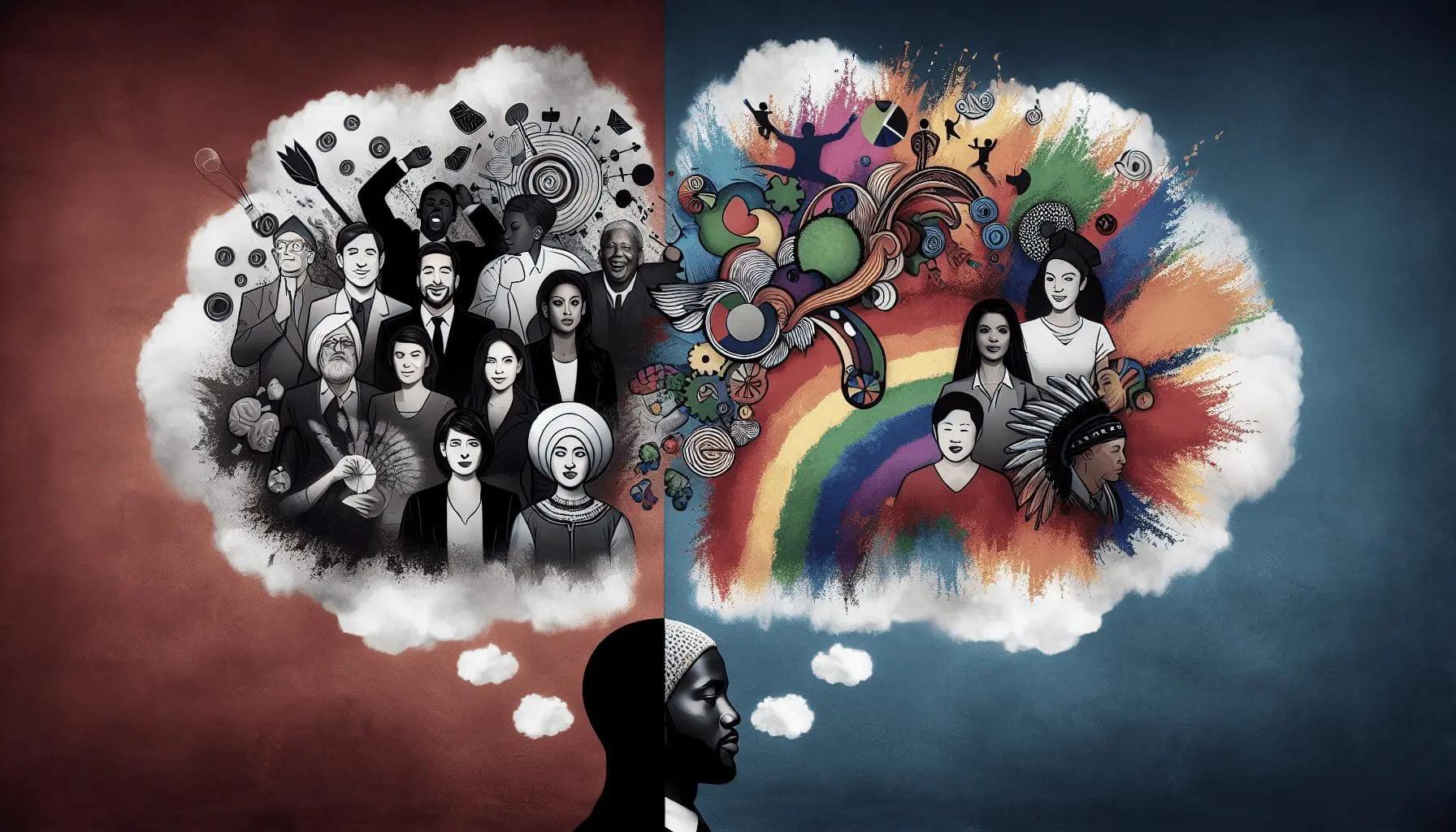
In the realm of political theory, the concept of a political superstructure plays a crucial role in understanding the overarching structure of a society’s political system. The political superstructure refers to the institutions, organisations, and practices that form the framework of a society’s political governance.
At its core, the political superstructure is a complex web of relationships and power dynamics that shape the way a society is governed. It encompasses everything from the formal institutions of government, such as the executive, legislative, and judicial branches, to the informal networks of influence and decision-making that operate behind the scenes.
One of the key features of a political superstructure is its ability to shape the distribution of power within a society. The way in which political institutions are organised and structured can have a significant impact on who holds power, how decisions are made, and how resources are allocated. For example, a political superstructure that is centralised and authoritarian is likely to concentrate power in the hands of a few individuals or groups, while a more decentralised and democratic superstructure may distribute power more evenly among the population.
Additionally, the political superstructure also influences the way in which individuals and groups interact with their government and participate in the political process. In a well-functioning political superstructure, citizens have access to channels through which they can voice their concerns, participate in decision-making, and hold their government accountable. Conversely, in a dysfunctional superstructure, citizens may face barriers to political participation and be marginalised from the political process.
Another important aspect of the political superstructure is its relationship to other social structures, such as the economy, culture, and social institutions. These structures are interconnected and interdependent, and changes in one can have ripple effects throughout the others. For example, shifts in the economy can lead to changes in the political superstructure, as different groups vie for power and influence in response to changing economic conditions.
Overall, the concept of a political superstructure is a critical tool for analysing and understanding the complexities of a society’s political system. By examining the institutions, relationships, and power dynamics that make up the political superstructure, we can gain insight into how power is wielded, decisions are made, and society is governed. Ultimately, a robust understanding of the political superstructure is essential for building a more just, equitable, and democratic society.
Share this:

You Might Also Enjoy Reading









Post does not have featured image