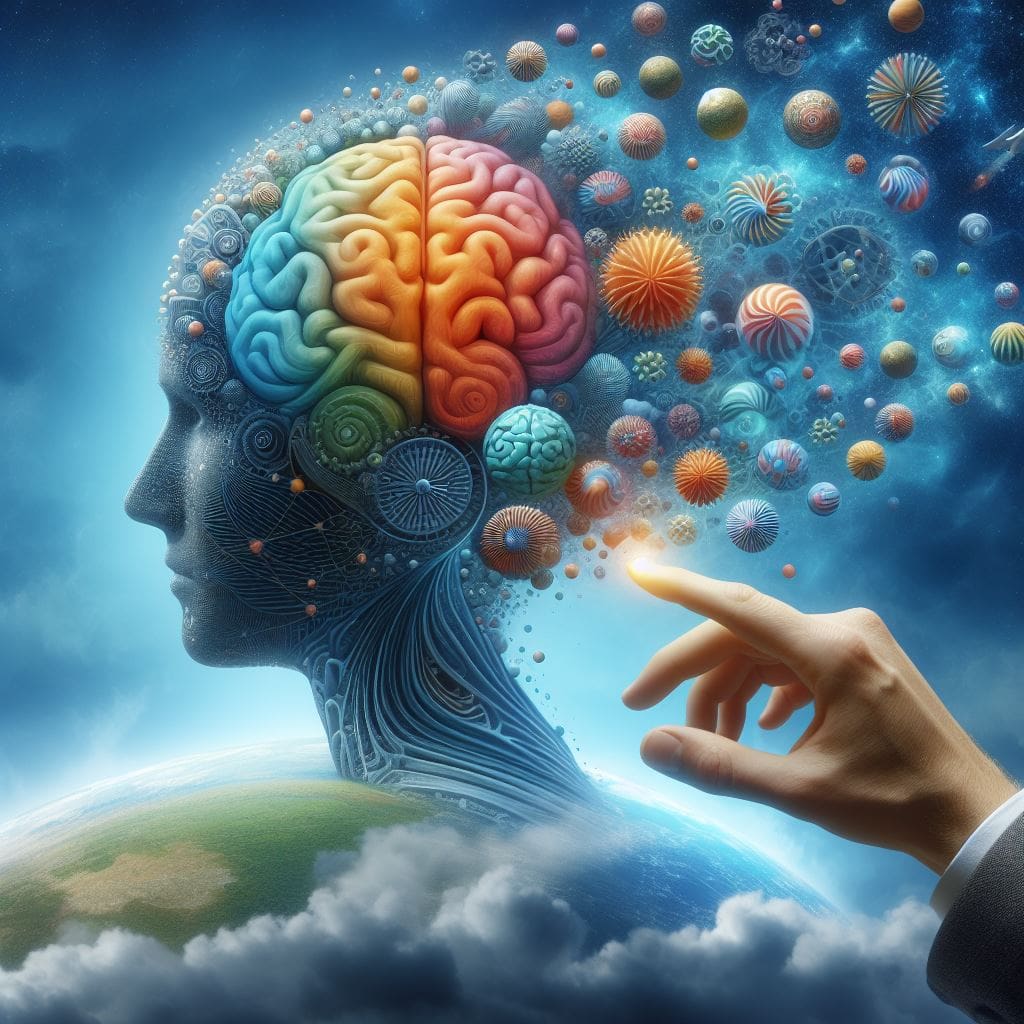
In recent years, there has been a revolutionary breakthrough in the field of artificial intelligence (AI) and machine learning. One particular advancement that has gained significant attention and become the driving force behind many cutting-edge applications is neural networks. These powerful systems have been instrumental in solving complex problems and mimicking human intelligence in ways we never thought possible. So, what exactly are neural networks and why are they causing a stir in the tech world? Let’s delve into this fascinating technology and explore its potential.
Neural networks, also known as artificial neural networks (ANN), are computational models inspired by the structure and functionalities of the human brain. Mimicking the network of interconnected neurons, neural networks consist of several layers of interconnected nodes, commonly called artificial neurons or simply ‘artificial neurons.’ These artificial neurons are responsible for processing and transmitting information throughout the network.
The real magic happens when these artificial neurons work collectively to solve problems. Each neuron within a neural network receives input signals from other neurons and applies a function to them, combining and transforming the data into a meaningful output. This output then gets passed on to subsequent layers until the final output is achieved. This parallel processing capability allows neural networks to carry out highly complex tasks with remarkable speed and accuracy.
The potential applications of networks are diverse and ever-expanding. From image and speech recognition to natural language processing, neural networks have transformed the way we interact with technology. Autonomous vehicles virtual personal assistants, and even smart home devices owe their capabilities to the advancements in neural network technology. Medical diagnostics, financial risk analysis, and fraud detection are other domains where neural networks have proved invaluable.
One of the remarkable characteristics of neural networks is their ability to learn and improve over time. Through a process called training, the network adjusts its parameters based on a given dataset. This process is often iterative, with the network refining its predictions and minimising errors at each step. The training is typically supervised, where the desired output is provided, or unsupervised, allowing the network to discover patterns and relationships on its own.
Deep learning, a subset of machine learning, has gained immense popularity thanks to neural networks. With their deep layers of interconnected nodes, deep neural networks have shown tremendous promise in handling increasingly complex tasks. They enable the development of models that can automatically extract features from raw data, eliminating the need for manual feature engineering. This characteristic, combined with their ability to process vast amounts of data, has made deep neural networks the go-to choice for tackling grand challenges in AI.
However, neural networks are not without their limitations. The training phase can be computationally expensive, requiring large datasets and substantial computing power. Additionally, deep neural networks are often considered ‘black boxes,’ as their decision-making processes are not easily interpretable. This lack of transparency raises ethical concerns, as biases and unfairness can inadvertently be encoded within the decision-making algorithms.
Despite these challenges, the power of neural networks cannot be overstated. The remarkable achievements, such as defeating human champions in complex games like Go and Jeopardy, have demonstrated their potential. With ongoing research, advancements, and efforts towards addressing their limitations, neural networks will continue to transform industries and contribute to shaping the future of AI.
In conclusion, neural networks are a groundbreaking technology that has revolutionised the field of machine learning. Inspired by the human brain, these computational models have proven their ability to perform highly complex tasks, making significant impacts in various domains from healthcare to autonomous vehicles. As we venture further into the era of AI, the capabilities of neural networks will undoubtedly play a pivotal role in shaping the world we live in.
Share this:

You Might Also Enjoy Reading