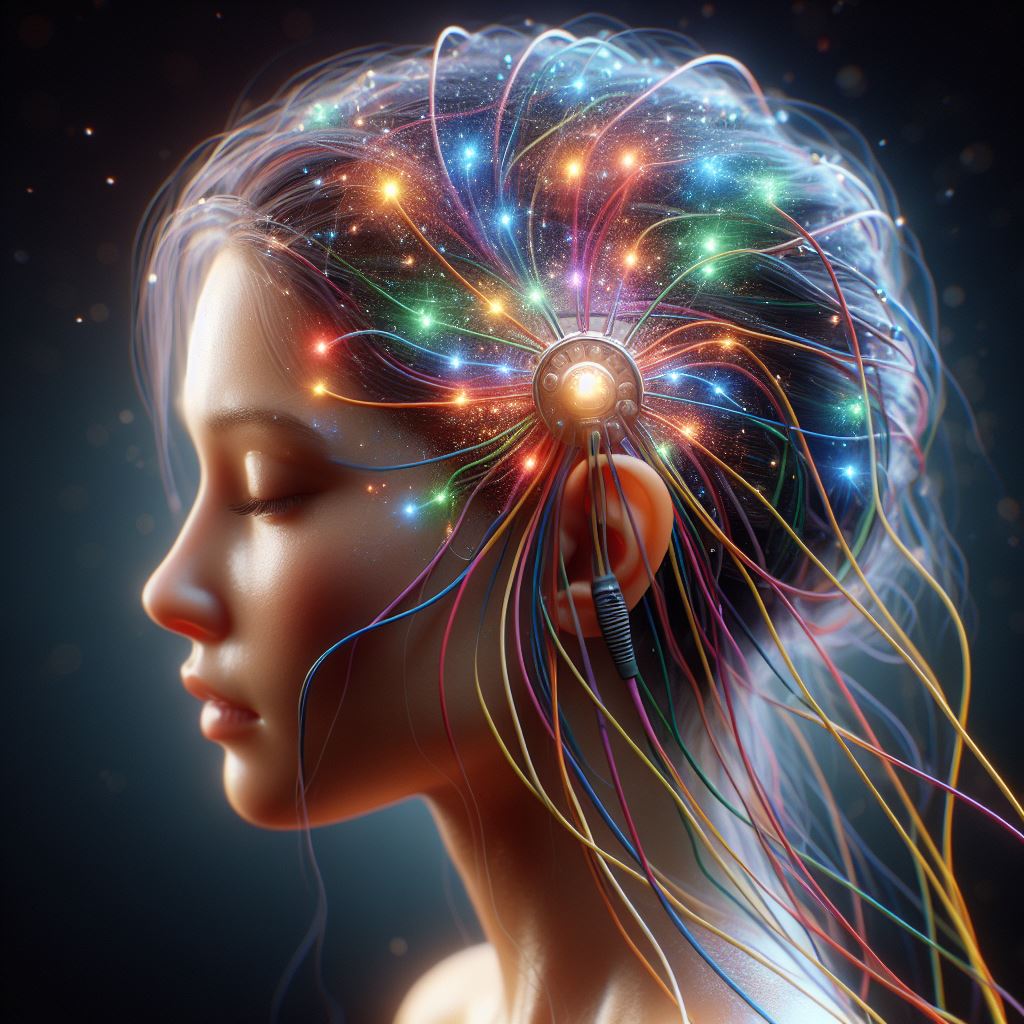
Quantum physics, often regarded as one of the most perplexing and awe-inspiring branches of science, has revolutionised our understanding of the fundamental nature of reality. However, when delving deeper into the realm of quantum physics, intriguing connections emerge between this intricate scientific field and the enigmatic workings of the human mind. This blog post aims to explore the deep connection between psychology and quantum physics, shedding light on how these two seemingly disconnected areas can offer insights into the mysteries of consciousness, perception, and the nature of existence itself.
1. The Observer Effect: The Role of Consciousness
At the heart of quantum physics lies the observer effect, the notion that the act of observing causes an inherent change in the behaviour of particles. Surprisingly, this leads us to question the relationship between consciousness and reality.
Some theories propose that consciousness plays a vital role in shaping reality, asserting that our thoughts, perceptions, and expectations have the power to influence the quantum world. Thus, it implies that our individual minds are intrinsically connected to the fabric of the universe.
2. Superposition and Parallel States: The Power of Possibility
Quantum physics introduces us to the concept of superposition, which suggests that particles can exist in multiple states simultaneously until observed or measured. Similarly, psychology recognises the power of perception, suggesting that an individual’s state of mind influences their subjective experience.
Drawing parallels, the superposition concept raises intriguing questions about the potential for parallel subjective realities, where our experiences and perceptions diverge into an array of possibilities. Could our personal experiences be influenced by an infinite number of parallel states of consciousness?
3. Entanglement: The Interconnectedness of Minds
Quantum entanglement refers to a phenomenon in which particles become inherently linked, sharing information and characteristics regardless of the distance between them. Remarkably, this notion of interconnectedness finds echoes within psychology, where theories propose that our minds are interconnected through shared experiences, empathy, and collective consciousness.
The ideas of entanglement and shared consciousness invite us to reconsider the boundaries between individuals and explore how interconnectedness can shape human perception, empathy, and social dynamics.
4. Uncertainty Principle: Embracing the Unknown
The Heisenberg Uncertainty Principle states that simultaneous measurements of certain properties of particles are fundamentally uncertain. While the uncertainty principle deals with particles, it invites us to ponder the nature of uncertainty in human psychology. Psychology, with its exploration of perceptions, biases, and the limits of knowledge, encourages a more nuanced understanding of uncertainty as an intrinsic part of the human experience.
Conclusion
The intertwining of quantum physics and psychology may seem unlikely at first glance; however, exploring this connection reveals fascinating parallels that broaden our understanding of both fields. While psychology unravels the complexities of the human mind, quantum physics challenges our perceptions of reality and the role of consciousness. Together, they forge a path toward a more integrated understanding of our existence, offering glimpses into the interconnected dance between the microscopic world of atoms and the vast landscape of human consciousness. By delving into this uncharted territory, we can continue to unfold the mysteries that lie at the intersection of these captivating domains.
Share this:

You Might Also Enjoy Reading