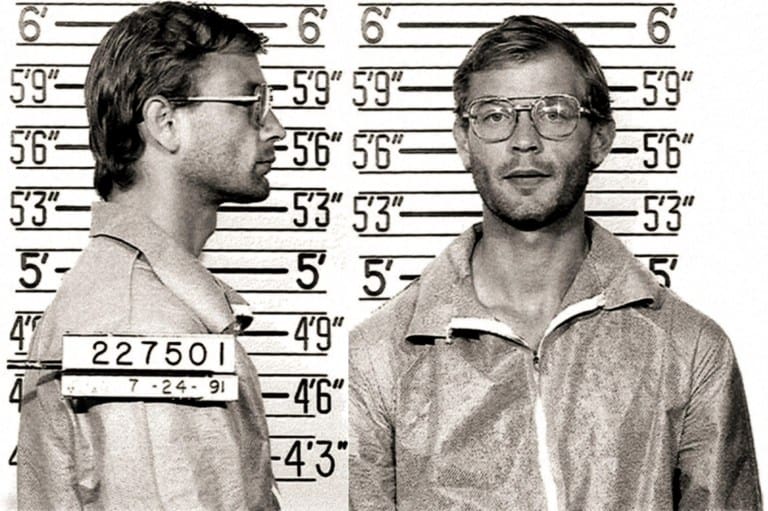


Because simply watching the docuseries on Netflix is not enough, I decided to read the book by Michaud and Aynesworth (2019) which contains the transcripts from conversations with Theodore Robert Bundy, also known as the All-American Boy (Loftus and Ketcham, 1991).
This book provides real insight into Bundy’s psychological discourse, and it can be observed that his superego mainly served as a reminder not to get caught. He could not control his impulses, and this is why he left such a high death toll. His moral degeneracy can be appreciated in his described thinking process, where he expresses how he felt it was not difficult at all to maintain such secret life hidden away from the consciousness of those who were part of his personal circle: “I became expert at projecting something very different. That I was very busy. It is clear now, I think, that a huge part of my life was hidden from everyone – secret, as it were. It didn’t take much effort” (p. 16). One thing that can be noticed throughout the conversations is that Ted Bundy had a form of self-serving bias which was compounded by his belief about what he called the psychological “condition”. He expressed his states of narcissistic melancholia mixed with helplessness in relation to what can be described as his criminogenic, sadistic needs and the satisficing of these. He expressed that at times he would lay with the corpses he created until these were putrid.
What I find particularly difficult to comprehend when it comes to studying Ted Bundy as a prototypical psychopath is that at times some of the statements he made about his experience posited that he had the capacity to feel fear, which goes beyond the scope of primary psychopathy: “I thought I was going to die every night the first few days I was in jail back in October of 1975. I was scared to death! Daily. I thought they were going to kill me” (p. 23). Was he saying the truth? I don’t know. However, some of his other statements did reveal his malignant personality, such as when speaking about the way in which he perceived his victims as objects: “Except he is not killing a person. He is killing an image” (p. 65). Whose image? is the question I have. Psychodynamic theorists would of course instantly say that perhaps he wanted to recreate the image of the woman who he had the most contempt against, his own mother.
Bundy truly believed that this “condition”- as he called it- was to blame for all of his behaviour; nevertheless, unable to meet the M’Naghtan rules, he was not found to be eligible to claim criminal insanity and even prominent expert witnesses and forensic psychologists such as Elizabeth Loftus (1991) describe having been disturbed by his sophisticated mannerisms and inappropriate body language and responses to contexts. In other words, Bundy had a theory of mind (ToM) deficit, and a surplus of self-esteem. Moreover, his construct of reality was based on self-justifications and false beliefs. The way in which he described his “disease” in third person was as follows: “what’s happening is that we’re building up the condition and what may have been a predisposition for violence becomes a disposition. And as the condition develops and its purposes or its characteristics become more well defined, it begins to demand more of the attention and time of the individual” (p. 71). Such cluster of personality traits and behaviour is classed in the DSM-5 as antisocial personality disorder (ASPD).
What’s interesting is that Bundy describes having been influenced by his peers’ concepts of the attractive woman when choosing his victims. This was perhaps the case because as a malignant narcissist, his desire to have complete control over such beautiful images meant that he needed to kill them in order to control everything about their interaction. According to Bundy he murdered his victims because he wanted to leave no living witness of his sexual atrocities. As the moral imbecile that he was, he even washed some of his victims’ hair and did their make up in order to have sex with their corpses until the rotting nature of death made it impossible to do so. This shows the utter perversion of this individual, and this is synthesised by his own words: “A certain amount of the need of that malignant condition had been satisfied through the sexual release. That driving force would recede somewhat, allowing the normal individual’s mental mechanisms to again begin to take hold” (p. 90).
What makes this a great book is that it is made up of transcripts mainly and this allows the reader to see the pathetically perverse side of Bundy that is so easily forgotten when watching his charming ways on camera right until the evening before he was finally executed in 1989. It truly feels like talking with this serial killer. A truly recommended reading for anyone interested in this particular case study or in understanding antisocial personality disorder more deeply.
References
Michaud, S.G. and Aynesworth, H. (2019) Ted Bundy: Conversations with a Killer, London, Mirror Books.
Loftus, E. and Ketcham, K. (1991) Witness for the Defense: The Accused, the Eyewitness, and the Expert Who Puts Memory on Trial, New York, St. Martin’s Press, pp. 61-91.
Share this:

You Might Also Enjoy Reading