Tag: Religion

  • The Concept of Satan is Outdated

    The Concept of Satan is Outdated

    Advertisements

    In today’s world, we have a more nuanced understanding of human behaviour and the factors that influence our actions. Psychological and sociological research has shown that our actions are often guided by a combination of internal motivations, external influences, and societal norms . The idea that a single supernatural being can be responsible for all evil in the world seems simplistic and outdated in light of these more complex understandings.

    Furthermore, the concept of Satan as a figure who tempts individuals to sin and leads them astray is based on a rigidly dualistic view of good and evil. This black-and-white perspective fails to take into account the complexities of human nature and the gray areas that exist in moral decision-making. It also overlooks the fact that individuals are capable of making choices and taking responsibility for their own actions, rather than attributing them to external forces.

    Moreover, the concept of Satan as a figure of eternal punishment and damnation is increasingly at odds with modern religious and spiritual perspectives that emphasise compassion, forgiveness, and the possibility of redemption. Many religious traditions now emphasise the importance of personal growth, self-reflection, and ethical living as paths to spiritual enlightenment, rather than focusing on fear-based narratives of punishment and damnation.

    In light of these shifts in societal values and beliefs, it is clear that the concept of Satan as a malevolent supernatural being is becoming increasingly outdated. Instead of attributing evil to a single external source, we must acknowledge the complexities of human nature and the multiple factors that contribute to our actions. By embracing a more nuanced and compassionate understanding of morality and ethics, we can move beyond the outdated concept of Satan and strive towards a more inclusive and understanding society.

  • Pope Gregory Clemente Dominguez y Gomez (Pope Gregory XVIII)

    Pope Gregory Clemente Dominguez y Gomez (Pope Gregory XVIII)

    Advertisements

    In 1978, Clemente and a small group of followers declared him to be Pope Gregory XVII, despite the fact that there was already a Pope John Paul I reigning at the time. Clemente’s followers believed that John Paul I was an imposter and that Clemente was the rightful successor to St. Peter.

    The self-proclaimed Pope Gregory XVII faced backlash from the Vatican and mainstream Catholicism , who condemned him as a false prophet and excommunicated him from the Church. Despite this, Clemente continued to gain followers and build a network of churches under his leadership.

    Throughout his tenure as pope, Clemente made controversial declarations and predictions, including the end of the world in the year 2000. When that prediction did not come to pass, many of his followers began to question his legitimacy.

    In 2005, Clemente Dominguez y Gomez passed away, leaving behind a legacy of division and controversy within the Catholic Church. His followers still maintain that he was the true pope and continue to venerate him as a holy figure.

    The story of Pope Gregory XVIII serves as a cautionary tale about the dangers of charismatic leaders who claim divine authority. It reminds us to always question and discern the motives of those who claim to speak for God. Ultimately, the true authority of the Catholic Church rests not in any individual leader, but in the teachings and traditions that have been passed down through centuries of faith.

  • Christian Spiritists

    Christian Spiritists

    Advertisements

    Christian Spiritism is a religious movement that blends elements of Christianity with the practice of spirit communication. The movement has its roots in the teachings of French educator Allan Kardec, who popularised the notion of communicating with spirits to gain insights and guidance in one’s life.

    Christian Spiritists believe in the existence of spirits, both good and bad, and believe that by communicating with them through mediums, they can gain knowledge and wisdom. They also believe in the concept of reincarnation, where the soul is reborn multiple times to learn and grow spiritually.

    One of the core beliefs of Christian Spiritism is that Jesus Christ is a spiritual guide and teacher, along with other spiritual beings like angels and saints. They see Jesus as the ultimate example of love, compassion, and humility, and strive to embody these virtues in their own lives.

    Christian Spiritists often gather in small groups to participate in spiritual practices such as meditation, prayer, and mediumship. They believe that through these practices, they can strengthen their connection with the spiritual realm and receive messages from higher beings.

    Some Christian Spiritists also engage in acts of charity and service to others, believing that helping those in need is a way to demonstrate love and compassion, as taught by Jesus.

    While Christian Spiritism may be considered unconventional by some traditional Christian denominations, many followers find solace and guidance in this unique blend of spiritual beliefs and practices. Ultimately, Christian Spiritists seek to find meaning and purpose in their lives through their connection with the spiritual realm and their unwavering faith in God and Jesus Christ.

  • What Are the World’s Newest Religions?

    What Are the World’s Newest Religions?

    Advertisements

    One of the newest religions to gain attention is Pastafarianism. This satirical religion, also known as the Church of the Flying Spaghetti Monster, was created in 2005 as a response to the teaching of intelligent design in schools. Pastafarians believe in a deity made of spaghetti and meatballs, and their main goal is to promote the separation of church and state.

    Another recent religion is Jedism, inspired by the Jedi Order in the Star Wars franchise. Followers of Jedism believe in the Force, a mystical energy that binds the universe together. They follow the teachings of the Jedi Code and strive for peace, harmony, and self-improvement.

    The Order of the Satanic Temple is a modern religious movement that advocates for secularism and social justice. While often misunderstood as worshipers of the devil, members of the Satanic Temple do not believe in a literal Satan but rather use it as a symbol of rebellion against traditional religious institutions.

    Other new religions include Raelism, a UFO religion founded in the 1970s by Claude Vorilhon, who claims to have been contacted by extraterrestrial beings, and the Church of Euthanasia, which promotes voluntary population control and environmental sustainability.

    These new religions offer alternative perspectives and beliefs in a rapidly changing world. While some may view them as controversial or unconventional, they provide a platform for individuals to explore and express their spirituality in a way that resonates with them. As the world continues to diversify, it will be interesting to see how these new religions evolve and shape the religious landscape in the years to come.

  • Allan Kardec: Key Theories

    Allan Kardec: Key Theories

    Advertisements

    One of the key theories proposed by Allan Kardec is the idea of reincarnation. According to Kardec, the soul is eternal and goes through a cycle of multiple lives in different bodies in order to learn and grow spiritually . This belief in reincarnation is central to the Spiritist belief system and is a key aspect of understanding the purpose of life and the process of evolution of the soul.

    Another central theory put forth by Kardec is the idea of the spirit world and the existence of spirits who have passed on to the afterlife. Kardec believed that communication with these spirits is possible through mediums who have the ability to connect with the spiritual realm. This belief in communication with spirits has led to the development of practices such as mediumship and sΓ©ances in the Spiritist community.

    Kardec also emphasised the importance of moral and ethical development in spiritual growth. He believed that humans have a responsibility to cultivate virtues such as love, compassion, and humility in order to progress on the spiritual path. Kardec’s teachings emphasise the importance of living a life of service to others and following a code of conduct that aligns with spiritual values.

    Overall, Allan Kardec’s key theories have had a lasting impact on the spiritual community and continue to influence spiritual seekers around the world. His emphasis on reincarnation, communication with spirits, and ethical development have inspired countless individuals to explore the deeper dimensions of life and the mysteries of the afterlife. Allan Kardec’s teachings remind us of the potential for personal growth and spiritual evolution that exists within each of us, and encourage us to strive towards a higher state of consciousness and understanding.

  • The Noetic Science of Prayer

    The Noetic Science of Prayer

    Advertisements

    Noetic science, a term coined by astronaut Edgar Mitchell, is the study of how consciousness and intention can influence the physical world. In the context of prayer, this means that the thoughts and intentions behind our prayers may have a direct impact on our health and well-being. Research in this field has shown that prayer can have a powerful effect on our bodies, minds, and even on the world around us.

    One study, conducted by researchers at the University of California, found that patients who were prayed for by strangers showed a significant improvement in their recovery from surgery compared to those who were not prayed for. Another study, published in the Journal of Alternative and Complementary Medicine, found that patients who received distant healing (a form of spiritual healing that does not involve physical contact) experienced a decrease in symptoms of anxiety and depression.

    But how exactly does prayer work to bring about these changes? Noetic scientists believe that prayer may act as a form of energetic communication between the person praying and the recipient of the prayer. This communication may help to shift the recipient’s energy field in a positive direction, leading to improved health and well-being.

    In addition to its effects on physical health, prayer has also been shown to have a positive impact on mental health. Research has found that people who engage in regular prayer or meditation experience lower levels of stress, anxiety, and depression. This is believed to be due to the calming and centring effect of prayer, which can help to reduce the negative effects of chronic stress on the body and mind.

    Ultimately, the field of noetic science suggests that prayer is not just a spiritual practice, but a powerful tool for healing and transformation. By harnessing the power of our thoughts and intentions, we can tap into a deeper level of consciousness that has the potential to bring about positive change in our lives and in the world around us.

    Incorporating prayer into our daily routine, whether through traditional religious practices or personal rituals, may help us to cultivate a sense of connection and well-being that can have far-reaching effects on our health and happiness. As the field of noetic science continues to expand, we may uncover even more ways in which prayer can be used as a tool for healing and personal growth. So the next time you find yourself in need of support or guidance, consider turning to prayer as a means of tapping into the power of consciousness and intention.

  • The Mystical Souls: Esoteric Sufis of Islam

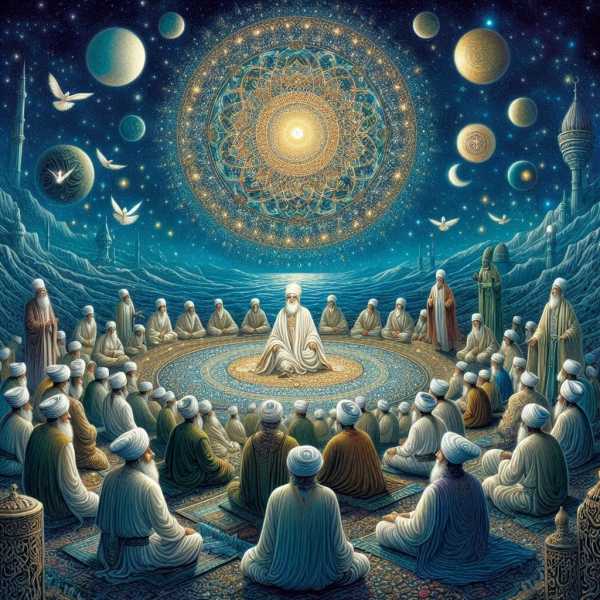
    The Mystical Souls: Esoteric Sufis of Islam

    Advertisements

    Sufism, often considered the inner dimension of Islam, is a mystical tradition that emphasises the development of the soul and the connection between the individual and the divine. Sufis believe in the power of love, compassion, and spiritual growth as a means to achieve union with the Divine.

    One of the key practices of Sufism is dhikr, the remembrance of God through repetitive chanting or meditation. This practice, along with other spiritual exercises, helps Sufis to transcend the limitations of their ego and connect with the divine presence within themselves.

    The esoteric Sufis, or the Mystical Souls, take this practice a step further by delving into the deeper mysteries of the universe and exploring the hidden meanings of Quranic verses and Hadiths. They seek to understand the subtle nuances of existence and the interconnectedness of all creation.

    These spiritual seekers are often seen as the guides and teachers of the Sufi tradition, leading others on the path to spiritual enlightenment and self-realisation. Through their wisdom and insight, the esoteric Sufis inspire others to cultivate a deeper connection with God and a greater understanding of the cosmos.

    The Mystical Souls of Islam are not bound by the constraints of traditional religious practices or dogma. They are free spirits who roam the spiritual realms, seeking the divine truth that lies at the heart of all existence. Through their mystical experiences and profound insights, they invite others to embark on their own spiritual journey and discover the hidden treasures of the soul.

    In today’s fast-paced and materialistic world, the teachings of the Mystical Souls offer a much-needed respite for those seeking meaning and purpose in their lives. Their esoteric wisdom and spiritual guidance serve as a beacon of light, illuminating the path towards spiritual fulfilment and inner peace.

    In conclusion, the Mystical Souls of Islam are the spiritual pioneers and mystics of the Sufi tradition. They bring a depth of insight and wisdom to the practice of Islam, inspiring others to explore the mystical dimensions of faith and connect with the divine essence within themselves. Through their teachings and guidance, the esoteric Sufis continue to enrich the spiritual landscape of Islam and inspire others to embark on their own journey of self-discovery and enlightenment.