
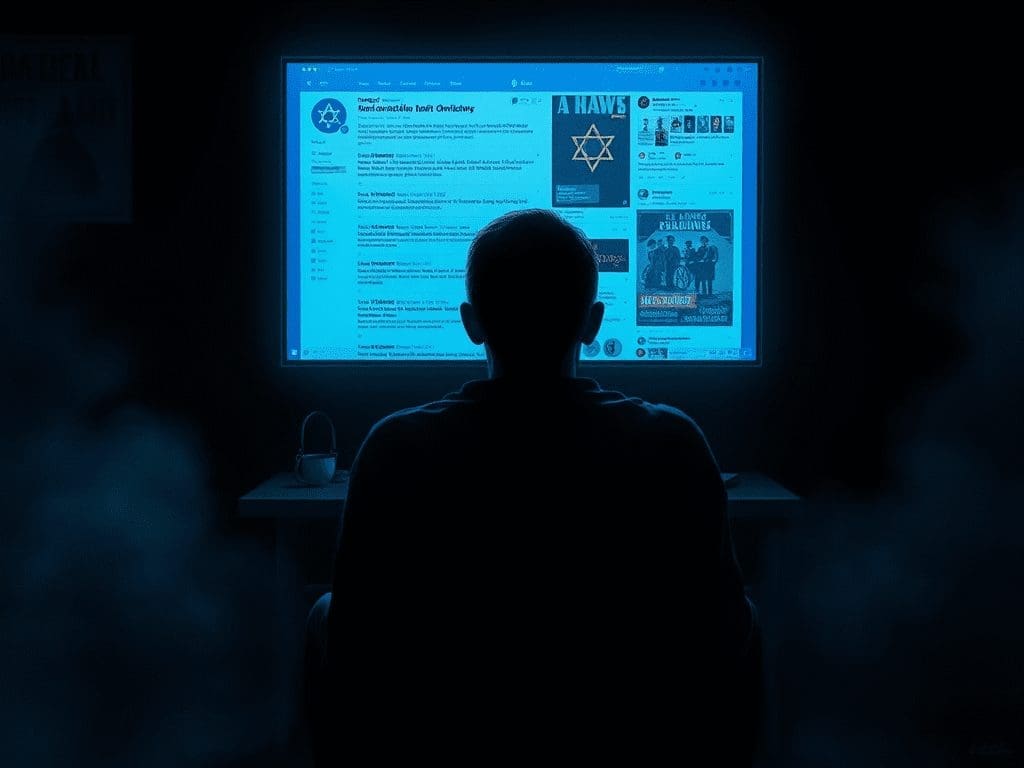
In recent years, the rise of digital antisemitism has become a troubling trend that is spreading globally. From hateful propaganda on social media platforms to Holocaust denial websites, there is a concerning normalisation of anti-Jewish sentiment online that is seeping into the real world with dangerous consequences.
The information warfare is very real. I’ve had to block people who seemed to harass me simply for being into Judaism. I have witnessed how Palestinian propaganda is Goebbelian in nature, and yet, barely anyone seems to be educated enough to tell when information is weaponised. People will let the media manipulate their emotions; and often the new propaganda overrides the education they received at school about the Nazi Holocaust. Despite all efforts, the public have easily become antisemitic really fast. Politicians are making profits out of war.
One of the main reasons for the increase in digital antisemitism is the anonymity and accessibility of the internet. People can hide behind pseudonyms and fake profiles while spreading hateful messages without facing any consequences. This has emboldened individuals and groups to express their antisemitic views more openly, leading to a normalisation of hate speech that can quickly spread and influence others.
People think that October 7th was not brutal, but it certainly was, marking a pivotal moment that shook the foundations of our beliefs about safety and humanity. Then we have some Christians claiming they are the “new Israel” and invalidating Jewish people’s existence, a stance that not only marginalises an entire community but also deepens societal divides. The world is hectic, mad, and dangerous as never before; political tensions are rising, and misinformation spreads like wildfire, leaving many in a state of confusion and fear. These are dark ages, where compassion seems to be overshadowed by strife, and the basic tenets of coexistence are challenged daily, urging us to reconsider how we engage with one another in a rapidly changing landscape.
Social media platforms, in particular, have become breeding grounds for antisemitism. Posts demonising Jews or denying the Holocaust are not only allowed to stay up but often go viral, reaching a wide audience and perpetuating harmful stereotypes. Algorithms that prioritise engagement and controversial content only exacerbate the issue, pushing antisemitic messages further into the mainstream. It is happening in Telegram group chats. There are horrible stickers which demonise the Jew, and these cartoons are similar to Nazi cartoons published just before World War II. A decade ago, all this would have been unacceptable. But since jihadist propaganda spread, it has shockingly become hypernormalised to hate the Jewish people.

Rabbi Shraga Simmons (Aish, 2024) explained how digital platforms such as Wikipedia are currently being weaponised against Israel and the Jewish people, highlighting the alarming trend of misinformation and biased narratives that often distort historical facts and present a skewed portrayal of events. This manipulation of online resources not only undermines the integrity of educational platforms but also fosters a climate of misunderstanding and hostility towards Israel. By examining specific examples, Rabbi Simmons sheds light on the broader implications of such digital warfare, urging the Jewish community and supporters of Israel to remain vigilant and proactive in countering these narratives with truth and factual evidence. Furthermore, my Youtube channel was banned after I posted a short video of my Tanakh. I was accused of “Spam”. Clearly, this was an injustice, and a great loss for me.
The problem is how this digital antisemitism leads to direct discrimination and hate crime against Jews all over the world. The consequences of this digital antisemitism are far-reaching and troubling. It can fuel real-world violence and discrimination against Jewish individuals and communities. In the past few years, we have seen a rise in hate crimes targeting Jews, including deadly attacks on synagogues and verbal harassment on the streets. The normalisation of antisemitism online only serves to validate these hateful actions and make them seem more acceptable to those who hold prejudiced views.
For instance, recently an Italian restaurant refused to serve a Jewish couple as a result of antisemitic information about the war in Gaza. They were told by the hotel manager: “Good morning. We inform you that the Israeli people as those responsible for genocide are not welcome customers in our structure” (The Associated Press, Market Beat, 2024). They had used Booking.com to make the reservation, and this incident naturally led the Booking company to remove the specific hotel from their services, and even the Israeli Ministry of Foreign Affairs investigated the situation.
It is crucial that we address this issue head-on and work towards combating digital antisemitism. Social media companies must take a stronger stance against hate speech on their platforms and enforce their community guidelines more rigorously. Education and awareness campaigns can also help to debunk myths and stereotypes about Jewish people, promoting understanding and tolerance instead.
Ultimately, it is up to all of us to stand up against digital antisemitism and all forms of hate speech. By actively challenging and calling out antisemitic rhetoric whenever we encounter it, we can help to create a more inclusive and welcoming online environment for everyone. Let us work together to dismantle the normalisation of antisemitism and build a world where discrimination and hatred have no place.